Architectural Record
search
cart
facebook twitter linkedin youtube
  • Sign In
  • Subscribe
  • Sign Out
  • My Account
Architectural Record
  • NEWS
    • Latest News
    • Awards
    • Interviews
    • Obituaries
    • Podcasts
      • Design:Ed Podcast
      • Sponsored Podcasts
  • OPINION
    • Book Reviews / Excerpts
    • Exhibition Reviews
    • Forum
  • EXCLUSIVES
    • Videos
    • Design Vanguard
    • Top 300 Firms
    • Sponsored Content
    • Sponsored eBooks
    • From the Archives
  • CONTINUING ED
    • Editorial Continuing Ed
    • CE Center
    • CE Academies
  • PROJECTS
    • Buildings By Type
    • Reuse & Renovation
    • Museums & Arts Centers
    • Colleges & Universities
    • Multifamily Housing
    • Interiors
    • Lighting
    • Kitchen & Bath
  • HOUSES
    • Record Houses
    • House of the Month
    • Featured Houses
  • PRODUCTS
    • Products by Category
    • Record Products of the Year
    • Latest Products
  • EVENTS
    • Dates & Events
    • Record on the Road
    • Innovation Conference
    • Sustainability in Practice
    • Women In Architecture
    • Webinars
    • Ad Excellence Awards
    • Submit an Event
  • CONNECT
    • Ask RECORD AI
    • Newsletters
    • Contact
    • Advertise
    • Editorial Calendar
    • Store
    • Customer Service
  • SUBMIT
    • Submission Guidelines
    • RECORD Competitions
  • MAGAZINE
    • Subscribe
    • My Account
    • Digital Edition
    • Current Issue
    • Firm Pass
    • Historic Archive
Architecture News

Lebbeus Woods: 1940-2012
By Mark Lamster
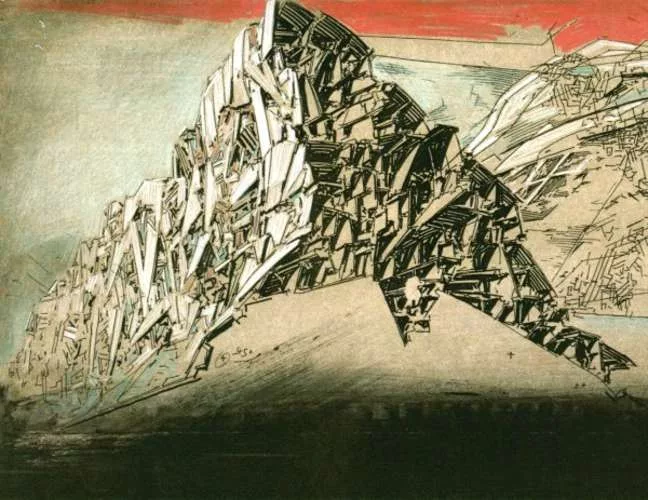
Woods' 'Labyrinthine Wall,' a protective wall abstraction for Bosnia.
Lebbeus Woods: 1940-2012
Woods' 'Labyrinthine Wall,' a protective wall abstraction for Bosnia.
Image courtesy Lebbeus Woods
Lebbeus Woods: 1940—2012
Lebbeus Woods: 1940-2012
Lebbeus Woods: 1940—2012
Photo courtesy UCA Rochester
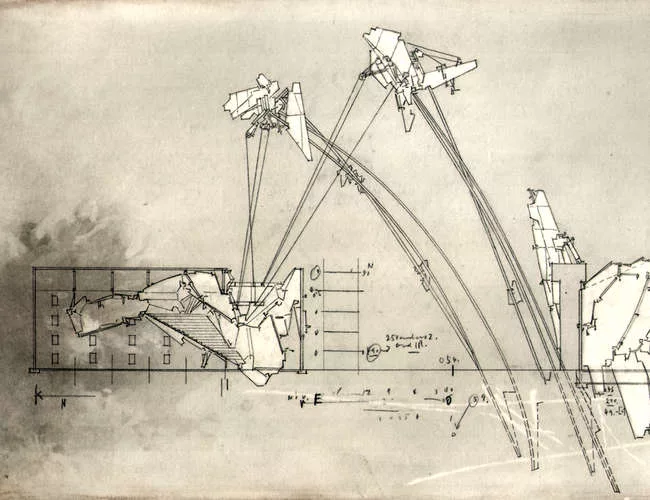
Woods's proposal for housing in Sarajevo, Bosnia following the siege of the city from 1992-96.
Lebbeus Woods: 1940-2012
Woods's proposal for housing in Sarajevo, Bosnia following the siege of the city from 1992-96.
Image courtesy Lebbeus Woods
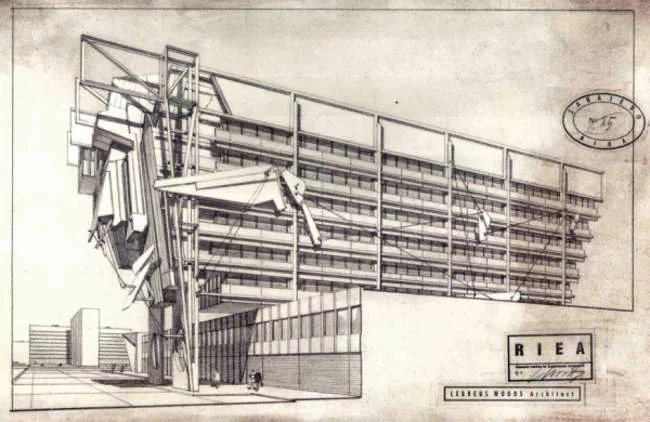
Woods' plan for a redesign of the Electrical Management Building in Sarajevo.
Lebbeus Woods: 1940-2012
Woods' plan for a redesign of the Electrical Management Building in Sarajevo.
Image courtesy Lebbeus Woods
“From the beginning, John Johansen has been an iconoclast and a fighter  for architecture as he saw it, as he believed it could be, given the  right mix of intelligence and daring,” wrote
Lebbeus Woods: 1940-2012
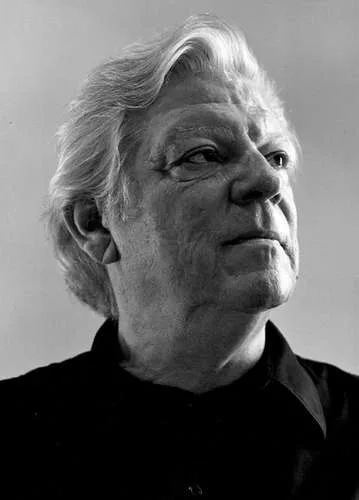
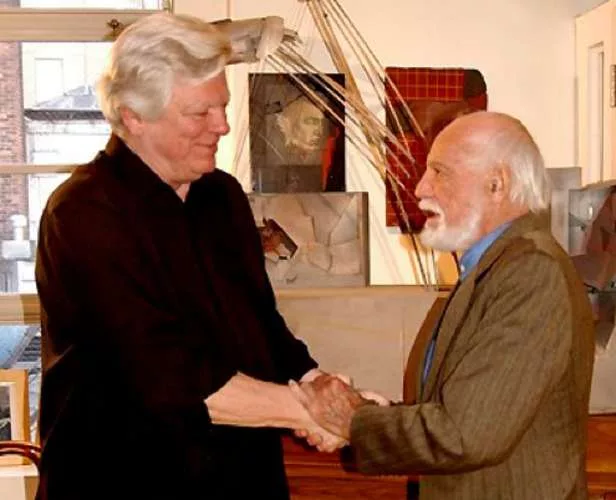
“From the beginning, John Johansen has been an iconoclast and a fighter for architecture as he saw it, as he believed it could be, given the right mix of intelligence and daring,” wrote Lebbeus Woods (left) in John Johansen: A Life in the Continuum of Modern Architecture, published by l'Arca Edizioni in 1996. Read RECORD's John Johansen obituaty.
Photo © John M. Johansen
Woods' 'Labyrinthine Wall,' a protective wall abstraction for Bosnia.
Lebbeus Woods: 1940—2012
Woods's proposal for housing in Sarajevo, Bosnia following the siege of the city from 1992-96.
Woods' plan for a redesign of the Electrical Management Building in Sarajevo.
“From the beginning, John Johansen has been an iconoclast and a fighter  for architecture as he saw it, as he believed it could be, given the  right mix of intelligence and daring,” wrote
October 31, 2012

Woods' "Labyrinthine Wall," a protective wall abstraction for Bosnia.

Lebbeus Woods, the visionary draftsman and educator considered by many to be the conscience of the architectural profession, died at home in New York City on Tuesday morning at the age of seventy-two. The causes were natural, but observers could hardly fail to note that his death came with Hurricane Sandy’s inundating waters still flooding New York. No architect had devoted more energy to the consequences of catastrophic urban failure than Woods.

The last of the great paper architects, Woods achieved cult-idol status among architects for his post-apocalyptic landscapes of dense lines and plunging perspectives. Deconstructivist in the most literal of ways, they were never formalist exercises. Instead, they conveyed the architect’s deep reservations as to the nature of contemporary society, and particularly its penchant for violence. He eschewed practice, claiming an interest in architectural ideas rather than the quotidian challenges of commercial building. “I want to address problems that clients are not commissioning architects to address,” he said in a 2002 interview.

That experimental mindset is evident in his largest built work, “Light Pavilion,” a recently completed installation of angled girders set in the void of a Chengdu tower designed by his friend Steven Holl. “The freedom of spirit in architecture that Lebbeus embodied carried with it a rare idealism,” Holl said in a statement emailed October 30. “Lebbeus had very passionate beliefs and a deep philosophical commitment to architecture.”

An exhibition devoted solely to Woods’s work is scheduled to open at the San Francisco Museum of Modern Art on February 16, 2013 (it will run until June 2). Woods himself was to have turned in plans for the installation this week. Their status is uncertain.

Woods was a towering figure, in all ways. Tall and bluff, with a sweeping canopy of white hair and a basso-profundo voice that told of decades of hard drinking and cigarettes, he could command any room. That appearance belied a nature both gentle and generous. Though he could be a demanding critic—on his popular blog, he recently castigated Zaha Hadid for losing her principles—he had a tendency, unusual among architects, to spread credit and compliments easily. “He was the first well known architect to reach out to us,” wrote Architecture for Humanity’s Cameron Sinclair, on the organization’s website October 30. On the other hand, Woods was unapologetic in defending his own creative integrity. He won a large settlement from the producers of the film 12 Monkeys (1995) after filing a lawsuit against director Terry Gilliam for copying his work.

Woods was born in 1940, in Lansing, Michigan. As an undergraduate he studied engineering at Purdue, and received his master’s degree in architecture from the University of Illinois, in 1964. He then joined the office of the late Eero Saarinen, then under the direction of Kevin Roche and John Dinkeloo, and worked on their landmark Ford Foundation building in New York. It was only in the 1970s that he devoted himself fully to his experimental studies, financing his project with work as a delineator for New York’s top architectural firms.

In 1988, Woods co-founded the Research Institute for Experimental Architecture and began teaching at the Cooper Union. His visions of urban spaces ravaged by war were published in numerous books, among them Anarchitecture, War and Architecture, and Radical Reconstruction. “He stood for the possibility of a bravely experimental approach to architecture,” says Henry Urbach, a frequent Woods collaborator who is now director of the Philip Johnson Glass House. “He was particularly attentive to architecture's political dimension, to the way in which ruptures of different sorts, either natural disasters or switches of political regime, could have a profound influence on what we build and why."

Those post-apocalyptic visions were shaped by his personal history. His father, an Air Force colonel who was present at the atomic testing on Bikini Atol, died of a rare form of leukemia when Woods was just thirteen. Woods believed the cause was radiation poisoning, though the military would not admit it.

At the time of his death, Woods claimed to be at work on a book on World War II and architecture, one presumably informed by that history. His health had been in decline for some time. He traveled in a motorized chair, and had recently stepped away from his blog. In a final post—title, “Goodbye [sort of]”—he announced he was quitting it for “various health and other issues,” and to concentrate on his book. “I must say that it has been a privilege to have communicated with so many bright and energetic readers,” he wrote. “Thank you for all you have given.”

Mark Lamster is an architectural critic and historian based in New York, and a contributing editor at Design Observer.

Share This Story

Looking for a reprint of this article?
From high-res PDFs to custom plaques, order your copy today!

Mark Lamster is architecture critic of the Dallas Morning News and a professor at the architecture school of the University of Texas at Arlington.

Post a comment to this article

Report Abusive Comment

Subscription Center
  • Create an Account
  • Start a Subscription
  • Manage My Account
  • Sign Up for Newsletters
  • Visit Customer Service
  • Update Preferences

More Videos

Sponsored Content

Sponsored Content is a special paid section where industry companies provide high quality, objective, non-commercial content around topics of interest to the Architectural Record audience. All Sponsored Content is supplied by the advertising company and any opinions expressed in this article are those of the author and not necessarily reflect the views of Architectural Record or its parent company, BNP Media. Interested in participating in our Sponsored Content section? Contact your local rep!

close
  • cold storage facility
    Sponsored byCarlisle SynTec Systems

    How Architects Can Design More Continuous Cold Storage Envelopes

  • TAMLYN XtremeTrim Exterior Trim
    Sponsored byTamlyn

    Designing Cleaner Panel Facades: Why Exterior Trim Details Matter

  • Building with Vapor Barriers
    Sponsored byReef Industries, Inc.

    Vapor Barriers Help Control Moisture in Tighter Building Designs

DESIGN:ED Podcast
Listen to Architectural Record’s DESIGN:ED Podcast

Events

June 23, 2026

Enhancing Fire Resistance with Advanced PVC Solutions

Credits: 1 AIA LU/HSW; 1 AIBD P-CE; 0.1 ICC CEU; 1 IIBEC CEH

Evaluate advanced PVC solutions that improve fire resistance, support WUI compliance, and enhance resilience in residential and commercial building design.

June 25, 2026

Designing Glass Railing Systems that Enhance Aesthetics and Meet Code

Credits: 1 AIA LU/HSW; 1 AIBD P-CE; 0.1 ICC CEU

Upon course completion, participants will possess a deeper understanding of glass railings to help ensure that safety, aesthetic, and performance objectives are achieved.

View All Submit An Event

Products

2026 Architect's Square Foot Costbook

2026 Architect's Square Foot Costbook

See More Products

Popular Stories

SanDiegoAirport

Top 300 Architecture Firms of 2026

Lorcan O' Herilhy

California Architect Lorcan O’Herlihy Has Died, Age 66

Obama Presidential Center, Chicago

The Obama Presidential Center Opens on Chicago’s South Side

Spoonbill Ranch

Johnsen Schmaling Architects Integrates Spoonbill Ranch into a Pristine Landscape

CCA, Studio Gang

The Winners of the AIA’s 2026 Architecture Award Range from Collegiate Rowing Hubs to Housing for the Homeless

Enhancing Fire Resistance with Advanced PVC Solutions - Free Webinar - June 23, 2026

Related Articles

  • Ever the Visionary, Lebbeus Woods Gets Real

    See More
  • SFMOMA Exhibit Showcases Lebbeus Woods's Work but Little Else

    See More
  • Build Nothing and They Will Come

    See More
×

The latest news and information

#1 Source for Architectural Design, News and Products

SUBSCRIBE
  • RESOURCES
    • Advertise
    • Contact Us
    • Submit
    • Store
  • ACCOUNT CENTER
    • Create an Account
    • Start a Subscription
    • Manage My Account
    • Sign Up for Newsletters
    • Visit Customer Service
    • Update Preferences
  • PRIVACY
    • PRIVACY POLICY
    • TERMS & CONDITIONS
    • DO NOT SELL MY PERSONAL INFORMATION
    • PRIVACY REQUEST
    • ACCESSIBILITY
  • SERVICES
    • Marketing Services
    • Reprints
    • Market Research
    • List Rental
    • Survey/Respondent Access
  • STAY CONNECTED
    • Linkedin
    • Facebook
    • Instagram
    • YouTube
    • X (Twitter)

Copyright ©2026. All Rights Reserved BNP Media, Inc. and BNP Media II, LLC.

Design, CMS, Hosting & Web Development :: ePublishing