Architectural Record
search
cart
facebook twitter linkedin youtube
  • Sign In
  • Subscribe
  • Sign Out
  • My Account
Architectural Record
  • NEWS
    • Latest News
    • Awards
    • Interviews
    • Obituaries
    • Podcasts
      • Design:Ed Podcast
      • Sponsored Podcasts
  • OPINION
    • Book Reviews / Excerpts
    • Exhibition Reviews
    • Forum
  • EXCLUSIVES
    • Videos
    • Design Vanguard
    • Top 300 Firms
    • Sponsored Content
    • Sponsored eBooks
    • From the Archives
  • CONTINUING ED
    • Editorial Continuing Ed
    • CE Center
    • CE Academies
  • PROJECTS
    • Buildings By Type
    • Reuse & Renovation
    • Museums & Arts Centers
    • Colleges & Universities
    • Multifamily Housing
    • Interiors
    • Lighting
    • Kitchen & Bath
  • HOUSES
    • Record Houses
    • House of the Month
    • Featured Houses
  • PRODUCTS
    • Products by Category
    • Record Products of the Year
    • Latest Products
  • EVENTS
    • Dates & Events
    • Record on the Road
    • Innovation Conference
    • Sustainability in Practice
    • Women In Architecture
    • Webinars
    • Ad Excellence Awards
    • Submit an Event
  • CONNECT
    • Ask RECORD AI
    • Newsletters
    • Contact
    • Advertise
    • Editorial Calendar
    • Store
    • Customer Service
  • SUBMIT
    • Submission Guidelines
    • RECORD Competitions
  • MAGAZINE
    • Subscribe
    • My Account
    • Digital Edition
    • Current Issue
    • Firm Pass
    • Historic Archive
Architecture News

Japanese School Restoration Wins the 2012 World Monuments Fund/Knoll Modernism Prize
By Naomi Pollock, FAIA
Hizuchi Elementary School, pre-restoration.
Japanese School Restoration Wins the 2012 World Monuments Fund/Knoll Modernism Prize
Hizuchi Elementary School, pre-restoration.
Photo © Architectural Institute of Japan Shikoku Chapter/Photographer KITAMURA Toru
Hizuchi Elementary School, pre-restoration.
Japanese School Restoration Wins the 2012 World Monuments Fund/Knoll Modernism Prize
Hizuchi Elementary School, pre-restoration.
Photo © Architectural Institute of Japan Shikoku Chapter/Photographer KITAMURA Toru
Hizuchi Elementary School, pre-restoration.
Japanese School Restoration Wins the 2012 World Monuments Fund/Knoll Modernism Prize
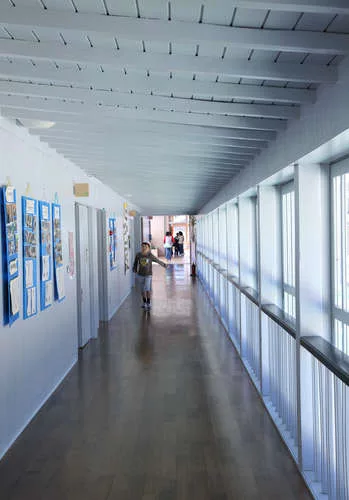
Hizuchi Elementary School, pre-restoration.
Photo © Architectural Institute of Japan Shikoku Chapter/Photographer KITAMURA Toru
Hizuchi Elementary School, pre-restoration.
Japanese School Restoration Wins the 2012 World Monuments Fund/Knoll Modernism Prize
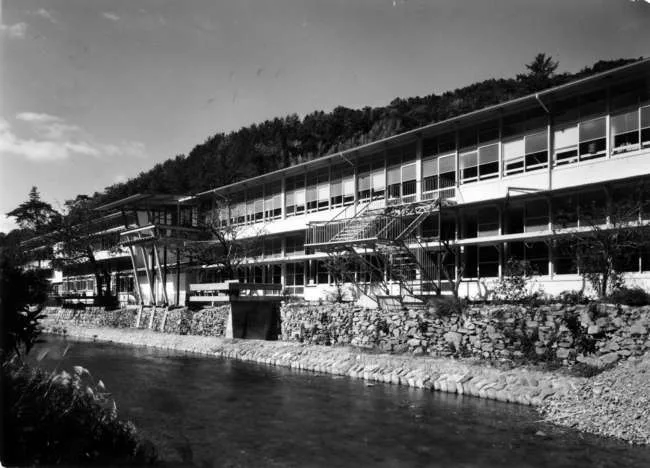
Hizuchi Elementary School, pre-restoration.
Photo © Architectural Institute of Japan Shikoku Chapter/Photographer KITAMURA Toru
Hizuchi Elementary School, pre-restoration.
Japanese School Restoration Wins the 2012 World Monuments Fund/Knoll Modernism Prize
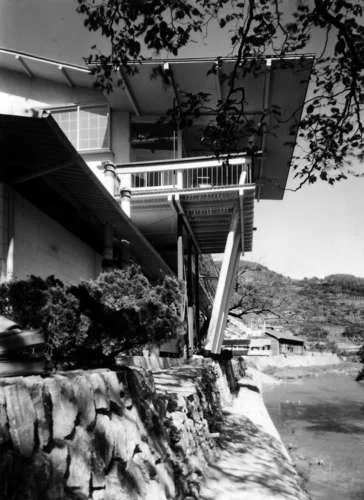
Hizuchi Elementary School, pre-restoration.
Photo © Architectural Institute of Japan Shikoku Chapter/Photographer KITAMURA Toru
Hizuchi Elementary School, pre-restoration.
Japanese School Restoration Wins the 2012 World Monuments Fund/Knoll Modernism Prize
Hizuchi Elementary School, pre-restoration.
Photo courtesy of Matsumura Family
Another historic view of Hizuchi Elementary School.
Japanese School Restoration Wins the 2012 World Monuments Fund/Knoll Modernism Prize
Another historic view of Hizuchi Elementary School.
Photo courtesy of Matsumura Family
Hizuchi Elementary School, pre-restoration.
Another historic view of Hizuchi Elementary School.
November 9, 2012

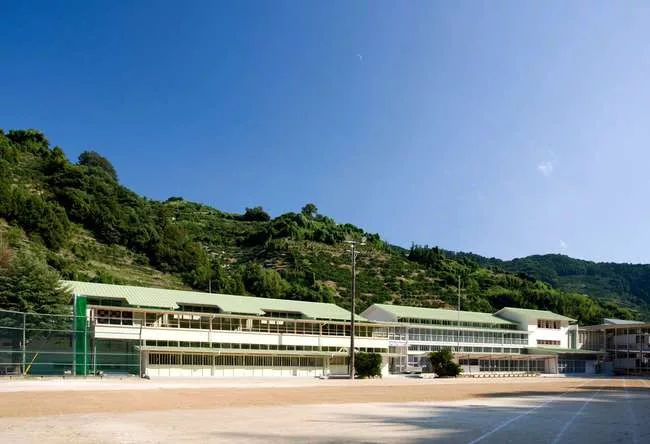
Faced with a dwindling birth rate and a rising elderly population, Japan has been closing schools right and left.  But thanks to a group of concerned citizens, architects, and academics, the Hizuchi Elementary School—an exquisite example of Japan’s homegrown brand of Modernism located in a small town on the island of Shikoku—was restored beautifully instead. On November 13, the efforts of the Architectural Consortium that spearheaded the historic building’s salvation will be honored when they are presented with the 2012 World Monuments Fund/Knoll Modernism Prize at the Museum of Modern Art in New York City.

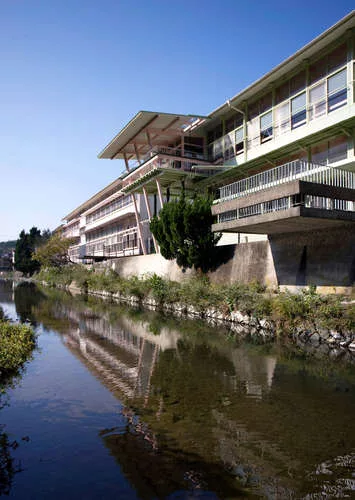
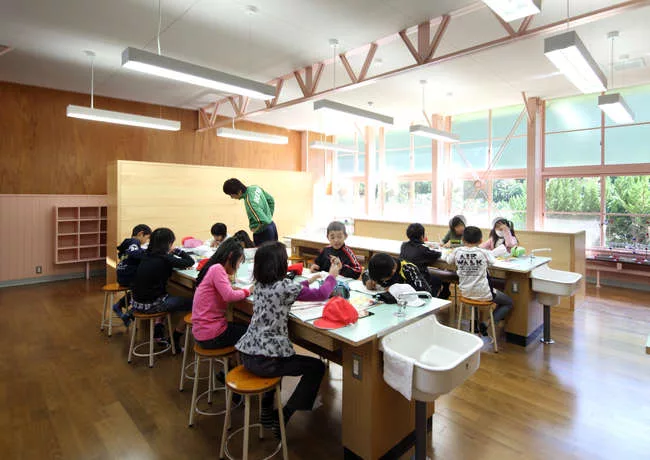
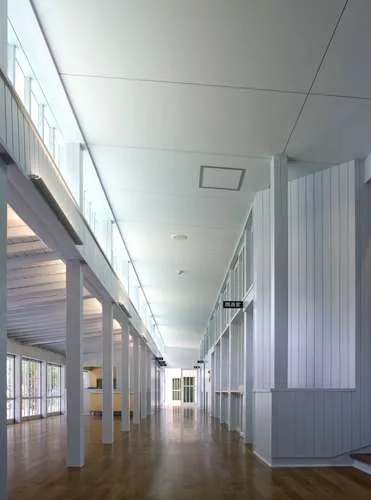
Completed in the late 1950s, the building was designed by Masatsune Matsumura who trained with one of Frank Lloyd Wright’s disciples, Kameki Tsuchiura. Though Modern in character, the two-story school was made of wood, Japan’s traditional building material of choice. Unlike most of the country’s timber buildings, it incorporated plenty of glass, flooding the interior with daylight rare for a Japanese public school.

Running alongside the Kiki River, the narrow building consists of a sequence of spaces interspersed with light wells and united by a long, glass-enclosed corridor. While window walls admit natural light into the six classrooms, an outdoor balcony jutting out from the library overlooks the river. But as codes evolved, the building was deemed seismically unsound and no longer met child safety standards. When a typhoon ravaged the town in 2004, the aged school was seriously damaged, triggering a heated debate over whether to demolish or save the building.

In 2005, prompted by the potential loss of such a significant structure, concerned local citizens teamed up with a group of architectural experts: Professor Hiroyuki Suzuki of Aoyama Gakuin University, Professor Kiyotada Magata of Ehime University, Professor Yoshiaki Hanada of Kobe Design University, Professor Mikio Koshihara of Tokyo University, Kouichi Wada, president of Wada Architectural Design Atelier, and Kazutomi Takechi, CEO of Atelier A & A Ltd. This consortium successfully persuaded authorities to preserve the historic structure. Over the next three years the building was stripped down to its wood frame and then meticulously brought back to life in accordance with the current seismic code—Japan’s first post-war, wooden school building to receive this upgrade.  After years of deterioration and benign neglect, the Hizuchi school now looks much as Matsumura envisioned it over 50 years ago.

The reconstruction entailed saving some parts of the structure and discarding others. Existing glass panels had to be replaced with safety glass, and worn out elements were reproduced, such as the ceramic tiles, which were recast in the original molds. Almost all of the columns and architectural fittings, however, were reused. Back in service for the past three years, the community is delighted to see the building being used to educate children once again—though many of the restored classrooms have been configured for modification should student enrollment wane in the future as anticipated.

While no one likes to see the number of school aged kids decline, the school’s refurbishment and its international recognition may at least predict a rosier future for 20th century buildings in Japan, a country with a poor track record for preserving its more recent architectural treasures.  “Even though [the school] is small and local, it still communicates the value of saving,” asserts Consortium member and architectural historian Hiroyuki Suzuki. “It can be a model for saving [other] old buildings.”

Naomi R. Pollock is the Toyko-based special international correspondent for Record.

Share This Story

Looking for a reprint of this article?
From high-res PDFs to custom plaques, order your copy today!

Contributing Editor Naomi Pollock, FAIA, is the author of Japanese Design Since 1945: A Complete Sourcebook and the forthcoming Vanishing Japan: Modern Architecture Gone But Not Forgotten,

Post a comment to this article

Report Abusive Comment

Subscription Center
  • Create an Account
  • Start a Subscription
  • Manage My Account
  • Sign Up for Newsletters
  • Visit Customer Service
  • Update Preferences

More Videos

Sponsored Content

Sponsored Content is a special paid section where industry companies provide high quality, objective, non-commercial content around topics of interest to the Architectural Record audience. All Sponsored Content is supplied by the advertising company and any opinions expressed in this article are those of the author and not necessarily reflect the views of Architectural Record or its parent company, BNP Media. Interested in participating in our Sponsored Content section? Contact your local rep!

close
  • cold storage facility
    Sponsored byCarlisle SynTec Systems

    How Architects Can Design More Continuous Cold Storage Envelopes

  • TAMLYN XtremeTrim Exterior Trim
    Sponsored byTamlyn

    Designing Cleaner Panel Facades: Why Exterior Trim Details Matter

  • Building with Vapor Barriers
    Sponsored byReef Industries, Inc.

    Vapor Barriers Help Control Moisture in Tighter Building Designs

DESIGN:ED Podcast
Listen to Architectural Record’s DESIGN:ED Podcast

Events

June 25, 2026

Designing Glass Railing Systems that Enhance Aesthetics and Meet Code

Credits: 1 AIA LU/HSW; 1 AIBD P-CE; 0.1 ICC CEU

Upon course completion, participants will possess a deeper understanding of glass railings to help ensure that safety, aesthetic, and performance objectives are achieved.

June 30, 2026

Generator Selection and Sizing for Outage-Ready Homes

Credits: 1 AIA LU/HSW; 1 AIBD P-CE; 0.1 ICC CEU

Explore how propane-powered systems and whole-home generators can improve energy resilience, reduce electrical loads, and lower long-term residential costs.

View All Submit An Event

Products

2026 Architect's Square Foot Costbook

2026 Architect's Square Foot Costbook

See More Products

Popular Stories

Obama Presidential Center, Chicago

The Obama Presidential Center Opens on Chicago’s South Side

Lorcan O' Herilhy

California Architect Lorcan O’Herlihy Has Died, Age 66

Spoonbill Ranch

Johnsen Schmaling Architects Integrates Spoonbill Ranch into a Pristine Landscape

Image of Bruce Springsteen Center for American Music

The CookFox-designed Bruce Springsteen Center for American Music Opens in New Jersey

Kìwekì Point, Ottawa, Canada

Perched High Above the Ottawa River, Kìwekì Point Showcases Sweeping Views of the Canadian Capital Region

Designing Glass Railing Systems that Enhance Aesthetics and Meet Code - Free Webinar - June 25, 2026

Related Articles

  • Casa sobre el Arroyo

    The Amancio Williams–Designed Casa Sobre el Arroyo Wins 2024 World Monuments Fund/Knoll Modernism Prize

    See More
  • Africa Hall

    2026 World Monuments Fund/Knoll Modernism Prize Goes to the UN’s Africa Hall in Ethiopia

    See More
  • Dutch Firms Win Modernism Preservation Prize

    See More

Related Products

See More Products
  • Web-Regenerative-school4-1920x1125.jpg

    Creating the Regenerative School

See More Products
×

The latest news and information

#1 Source for Architectural Design, News and Products

SUBSCRIBE
  • RESOURCES
    • Advertise
    • Contact Us
    • Submit
    • Store
  • ACCOUNT CENTER
    • Create an Account
    • Start a Subscription
    • Manage My Account
    • Sign Up for Newsletters
    • Visit Customer Service
    • Update Preferences
  • PRIVACY
    • PRIVACY POLICY
    • TERMS & CONDITIONS
    • DO NOT SELL MY PERSONAL INFORMATION
    • PRIVACY REQUEST
    • ACCESSIBILITY
  • SERVICES
    • Marketing Services
    • Reprints
    • Market Research
    • List Rental
    • Survey/Respondent Access
  • STAY CONNECTED
    • Linkedin
    • Facebook
    • Instagram
    • YouTube
    • X (Twitter)

Copyright ©2026. All Rights Reserved BNP Media, Inc. and BNP Media II, LLC.

Design, CMS, Hosting & Web Development :: ePublishing