Architectural Record
search
cart
facebook twitter linkedin youtube
  • Sign In
  • Subscribe
  • Sign Out
  • My Account
Architectural Record
  • NEWS
    • Latest News
    • Awards
    • Interviews
    • Obituaries
    • Podcasts
      • Design:Ed Podcast
      • Sponsored Podcasts
  • OPINION
    • Book Reviews / Excerpts
    • Exhibition Reviews
    • Forum
  • EXCLUSIVES
    • Videos
    • Design Vanguard
    • Top 300 Firms
    • Sponsored Content
    • Sponsored eBooks
    • From the Archives
  • CONTINUING ED
    • Editorial Continuing Ed
    • CE Center
    • CE Academies
  • PROJECTS
    • Buildings By Type
    • Reuse & Renovation
    • Museums & Arts Centers
    • Colleges & Universities
    • Multifamily Housing
    • Interiors
    • Lighting
    • Kitchen & Bath
  • HOUSES
    • Record Houses
    • House of the Month
    • Featured Houses
  • PRODUCTS
    • Products by Category
    • Record Products of the Year
    • Latest Products
  • EVENTS
    • Dates & Events
    • Record on the Road
    • Innovation Conference
    • Sustainability in Practice
    • Women In Architecture
    • Webinars
    • Ad Excellence Awards
    • Submit an Event
  • CONNECT
    • Ask RECORD AI
    • Newsletters
    • Contact
    • Advertise
    • Editorial Calendar
    • Store
    • Customer Service
  • SUBMIT
    • Submission Guidelines
    • RECORD Competitions
  • MAGAZINE
    • Subscribe
    • My Account
    • Digital Edition
    • Current Issue
    • Firm Pass
    • Historic Archive
Architecture News

New Urbanism Takes Root in China

By Lydia Lee
Yuelai Eco-City, one of 17 transit-oriented  developments (TODs) that Peter Calthorpe has designed for the northern  Chongqing area, is scheduled to break ground on its  2,500-acre site this summer an
New Urbanism Takes Root in China
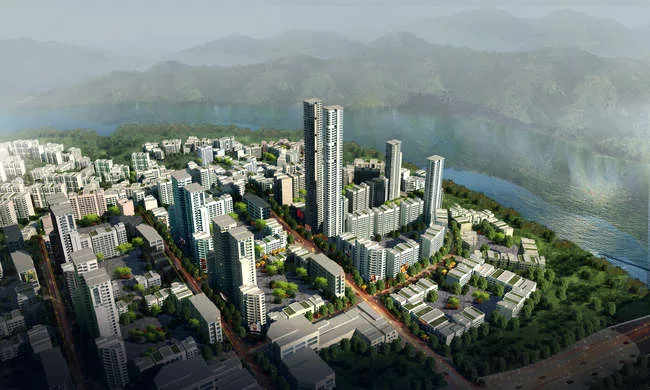
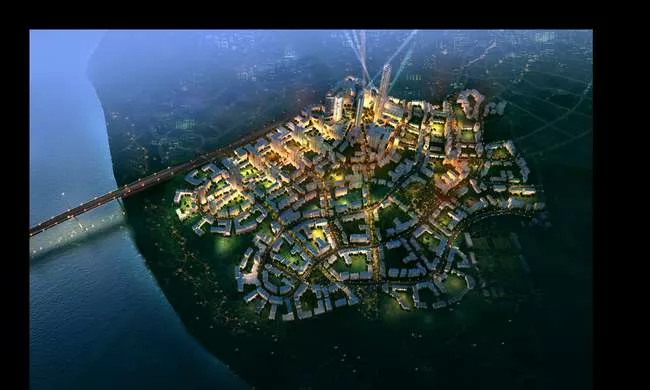
Yuelai Eco-City, one of 17 transit-oriented developments (TODs) that Peter Calthorpe has designed for the northern Chongqing area, is scheduled to break ground on its 2,500-acre site this summer and will eventually accommodate 100,000 to 250,000 residents.
Image courtesy Calpthorpe Associates
New Urbanism Takes Root in China
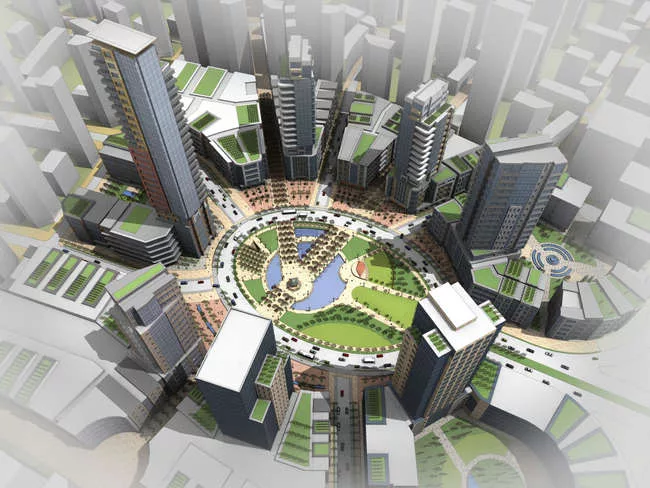
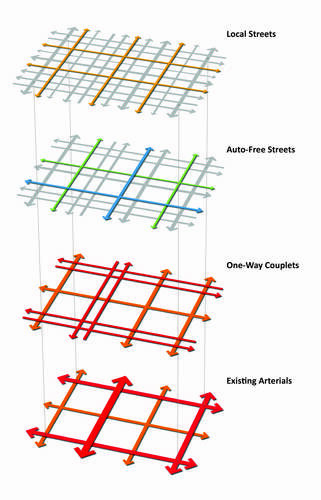
Image courtesy Calpthorpe Associates
New Urbanism Takes Root in China
Image courtesy Calpthorpe Associates
New Urbanism Takes Root in China
Image courtesy Calpthorpe Associates
New Urbanism Takes Root in China
Image courtesy Calpthorpe Associates
Yuelai Eco-City, one of 17 transit-oriented  developments (TODs) that Peter Calthorpe has designed for the northern  Chongqing area, is scheduled to break ground on its  2,500-acre site this summer an
New Urbanism Takes Root in China
February 14, 2013

Yuelai Eco-City, one of 17 transit-oriented developments (TODs) that Peter Calthorpe has designed for the northern Chongqing area, is scheduled to break ground on its 2,500-acre site this summer and will eventually accommodate 100,000 to 250,000 residents.

Record-breaking pollution levels in Beijing this winter are one visible symptom of the bind China has gotten itself into with its rapid urbanization and infatuation with the automobile.  As China accelerates its urban development to accommodate an estimated 300 million people moving from the countryside to cities by 2020, it is turning to people like California architect and planner Peter Calthorpe to help it design better cities—and quickly.

“You have to recalibrate your brain when you work in China,” says Calthorpe. “It’s not like the U.S., where we take tiny little steps in redevelopment and then fight over them for the next 10 years.  In China, you’ll see cities designed for one and two million people built from scratch in a few years. The question is: how do you turn that activity into something benign?”

Calthorpe, who helped pioneer the movement known as the New Urbanism back in the early 1990s, is probably best known for helping Portland, Oregon, become a model for mass transit and hipster bicyclists. New Urbanism promotes neighborhoods with a mix of housing and commercial uses that can be easily navigated by pedestrians and bicyclists. Calthorpe first worked in China back in 2002, doing a city plan in Tianjin for some private developers. After he groused to a friend at the nonprofit Energy Foundation that China’s sustainability efforts were too narrowly focused on renewable energy, the foundation asked him to create design principles for Chinese cities to minimize their carbon footprint. In 2009, officials in Beijing awarded him two out of eight Eco-District pilot projects planned nation-wide.

In Kunming, Calthorpe has designed Chenggong New Town, reworking an existing master plan for the central district by organizing the densest areas around the transit stations, turning the main thoroughfares into couplets of one-way streets, adding pedestrian walkways and local streets, and creating a network of open spaces. Work has begun on the town with roads, parks, businesses, a high-speed rail station, and blocks of housing now under construction. A second project, Yuelai Eco-City, is one of 17 transit-oriented developments (TODs) that Calthorpe has designed for the northern Chongqing area. Yuelai Eco-City is scheduled to break ground on its 2,500-acre site this summer and will eventually accommodate 100,000 to 250,000 residents.

One of the big problems Calthorpe sees in China is the segregation of uses into single-function areas that lack diversity. “If everyone’s going downtown in the morning and leaving in the evening, you get massive congestion,” he says. “If you zone for mixed-use around transit stations, you have a better chance of getting the right balance  of jobs and housing.” Calthorpe has fine-tuned the concept of TODs based on his experiences in other countries, emphasizing the need to match density to transit capacity. Yuelai Eco-City will have only two subway stations (on one metro line), so its layout focuses more on housing and less on commercial uses. On the other hand, Chenggong New Town will have a high-density commercial center at the intersection of two transit lines.

To coax people back to walking and biking, Calthorpe is also implementing something unthinkable in the U.S.: auto-free streets. “The density is so great here, you can really take out the cars and the streets will still be filled with people,” he says. It’s all part of his plan for defeating the “superblock”—Soviet-style mega-developments that stretch for more than 400 meters, separated by multi-lane roads.  Calthorpe proposes a much finer grid: blocks that are 90-150 meters long and are divided by a mix of local streets, auto-free streets, pairs of one-way roads, and, ideally, a high-capacity transit stop every 800 meters. In Chenggong New Town, he is replacing the city’s current arterial road with a pair of one-way streets separated by a greenbelt. “It will reduce delays for through traffic while encouraging pedestrians,” he says. Located in a mountainous area, Yuelai Eco-City will have escalators (like those in Hong Kong) to handle the steepest slopes, and a series of streets that are auto-free but serviced a fleet of electric buses.

Smaller blocks promote a return to the traditional Chinese courtyard layout for buildings and the kind of  ground-floor shops that are being displaced by giant enclosed malls. “Instead of destroying the urban fabric, we want to encourage local economies, fresh food, and busy streets that people already have and like now,” says Calthorpe.

Share This Story

Looking for a reprint of this article?
From high-res PDFs to custom plaques, order your copy today!

Lydia Lee is a freelance writer in the San Francisco Bay Area, focused on architecture and design.

Post a comment to this article

Report Abusive Comment

Subscription Center
  • Create an Account
  • Start a Subscription
  • Manage My Account
  • Sign Up for Newsletters
  • Visit Customer Service
  • Update Preferences

More Videos

Sponsored Content

Sponsored Content is a special paid section where industry companies provide high quality, objective, non-commercial content around topics of interest to the Architectural Record audience. All Sponsored Content is supplied by the advertising company and any opinions expressed in this article are those of the author and not necessarily reflect the views of Architectural Record or its parent company, BNP Media. Interested in participating in our Sponsored Content section? Contact your local rep!

close
  • TAMLYN XtremeTrim Exterior Trim
    Sponsored byTamlyn

    Designing Cleaner Panel Facades: Why Exterior Trim Details Matter

  • Building with Vapor Barriers
    Sponsored byReef Industries, Inc.

    Vapor Barriers Help Control Moisture in Tighter Building Designs

  • Duct Interior with Prodeq System
    Sponsored byHenry, a Carlisle Company

    Designing Resilient Water Containment Systems

DESIGN:ED Podcast
Listen to Architectural Record’s DESIGN:ED Podcast

Events

June 16, 2026

Focus on the Façade: Exploring Steel, Timber & Fire-Rated Curtain Walls and Channel Glass Systems

Credits: 1 AIA LU/HSW; 1 AIBD P-CE; 0.1 ICC CEU

Explore modern façade and glazing systems that enhance daylighting, fire safety, and thermal performance while expanding architectural design possibilities.

June 18, 2026

Rebooting the Aging Office Building

Credits: 1 AIA LU/HSW; 1 AIBD P-CE; 0.1 ICC CEU; 1 PDH

Explore façade retrofit strategies and award-winning design concepts that can transform aging office buildings into healthier, higher-performing workplaces for today’s hybrid workforce.

View All Submit An Event

Products

2026 Architect's Square Foot Costbook

2026 Architect's Square Foot Costbook

See More Products

Popular Stories

SanDiegoAirport

Top 300 Architecture Firms of 2026

Coronado Bridge

The Architect’s Guide to San Diego

Crane Cove, ONO

Design Vanguard 2026 Winners

House on a Hill

Design Vanguard 2026: Forma

House A on a Hill

Design Vanguard 2026: Santiago Valdivieso

Focus on the Facade - Free Webinar - June 16, 2026

Related Articles

  • The Eight

    A Timber-and-Steel Office Tower by Pickard Chilton Takes Root on Seattle’s Eastside

    See More
  • New Museums in China

    See More
  • In China, Old Factory Gets a New Identity

    See More

Related Products

See More Products
  • image7.jpg

    Contemporary Architecture in China Towards A Critical Pragmatism

  • 047177751X.gif

    Sustainable Urbanism: Urban Design With Nature

See More Products
×

The latest news and information

#1 Source for Architectural Design, News and Products

SUBSCRIBE
  • RESOURCES
    • Advertise
    • Contact Us
    • Submit
    • Store
  • ACCOUNT CENTER
    • Create an Account
    • Start a Subscription
    • Manage My Account
    • Sign Up for Newsletters
    • Visit Customer Service
    • Update Preferences
  • PRIVACY
    • PRIVACY POLICY
    • TERMS & CONDITIONS
    • DO NOT SELL MY PERSONAL INFORMATION
    • PRIVACY REQUEST
    • ACCESSIBILITY
  • SERVICES
    • Marketing Services
    • Reprints
    • Market Research
    • List Rental
    • Survey/Respondent Access
  • STAY CONNECTED
    • Linkedin
    • Facebook
    • Instagram
    • YouTube
    • X (Twitter)

Copyright ©2026. All Rights Reserved BNP Media, Inc. and BNP Media II, LLC.

Design, CMS, Hosting & Web Development :: ePublishing