Architectural Record
search
cart
facebook twitter linkedin youtube
  • Sign In
  • Subscribe
  • Sign Out
  • My Account
Architectural Record
  • NEWS
    • Latest News
    • Awards
    • Interviews
    • Obituaries
    • Podcasts
      • Design:Ed Podcast
      • Sponsored Podcasts
  • OPINION
    • Book Reviews / Excerpts
    • Exhibition Reviews
    • Forum
  • EXCLUSIVES
    • Videos
    • Design Vanguard
    • Top 300 Firms
    • Sponsored Content
    • Sponsored eBooks
    • From the Archives
  • CONTINUING ED
    • Editorial Continuing Ed
    • CE Center
    • CE Academies
  • PROJECTS
    • Buildings By Type
    • Reuse & Renovation
    • Museums & Arts Centers
    • Colleges & Universities
    • Multifamily Housing
    • Interiors
    • Lighting
    • Kitchen & Bath
  • HOUSES
    • Record Houses
    • House of the Month
    • Featured Houses
  • PRODUCTS
    • Products by Category
    • Record Products of the Year
    • Latest Products
  • EVENTS
    • Dates & Events
    • Record on the Road
    • Innovation Conference
    • Sustainability in Practice
    • Women In Architecture
    • Webinars
    • Ad Excellence Awards
    • Submit an Event
  • CONNECT
    • Ask RECORD AI
    • Newsletters
    • Contact
    • Advertise
    • Editorial Calendar
    • Store
    • Customer Service
  • SUBMIT
    • Submission Guidelines
    • RECORD Competitions
  • MAGAZINE
    • Subscribe
    • My Account
    • Digital Edition
    • Current Issue
    • Firm Pass
    • Historic Archive
Architecture News

Build Nothing and They Will Come
By Christopher Hawthorne
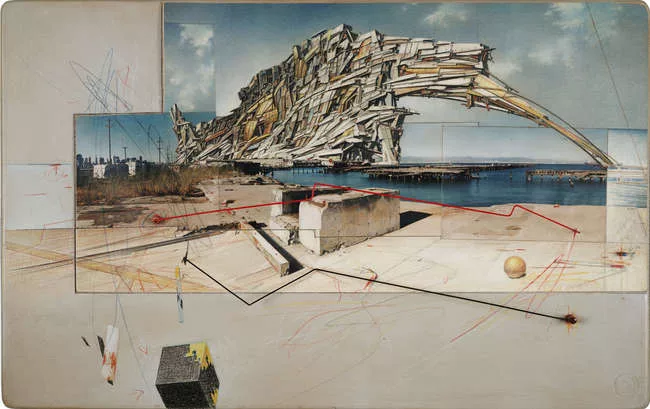
<p class='MsoListParagraph'><em></em>Lebbeus Woods,<em> San Francisco Project: Inhabiting the Quake, Quake City, </em>1995, graphite and pastel on paper, 14.5 inches by 23 inches</p>
Paper Warrior

Lebbeus Woods, San Francisco Project: Inhabiting the Quake, Quake City, 1995, graphite and pastel on paper, 14.5 inches by 23 inches
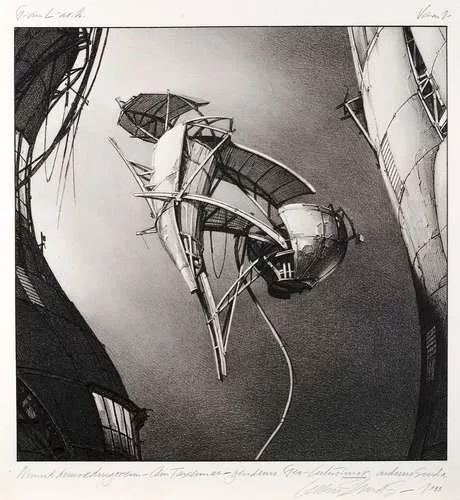
Image courtesy SFMOMA
<p class='MsoListParagraph'><em></em>Lebbeus Woods,<em> Photon Kite</em>, from the series <em>Centricity</em>, 1988, graphite on paper, 24 inches by 22 inches</p>
Paper Warrior

Lebbeus Woods, Photon Kite, from the series Centricity, 1988, graphite on paper, 24 inches by 22 inches
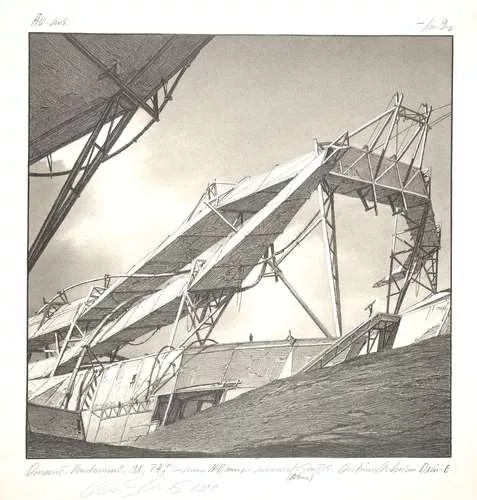
Image courtesy SFMOMA
<p class='MsoListParagraph'><em></em>Lebbeus Woods,<em> Unified Urban Field</em>, from the series <em>Centricity</em>, 1987, graphite on paper, 24 inches by 23 inches</p>
Paper Warrior

Lebbeus Woods, Unified Urban Field, from the series Centricity, 1987, graphite on paper, 24 inches by 23 inches
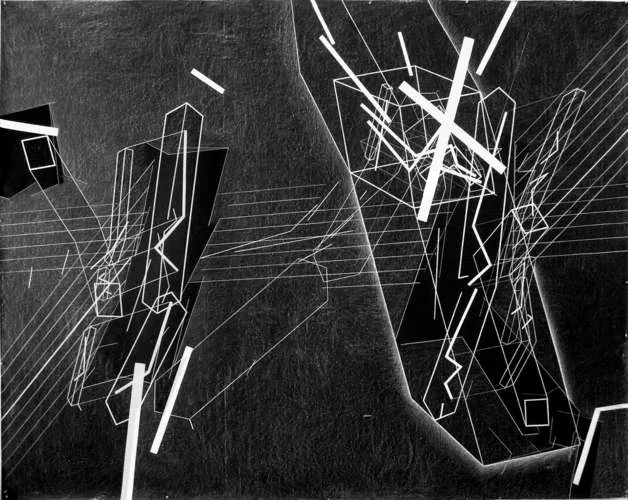
Image courtesy SFMOMA
<p class='MsoListParagraph'><em></em>Lebbeus Woods,<em> Conflict Space 4</em>, 2006, crayon and acrylic on linen, 74 inches by 120 inches</p>
Paper Warrior

Lebbeus Woods, Conflict Space 4, 2006, crayon and acrylic on linen, 74 inches by 120 inches
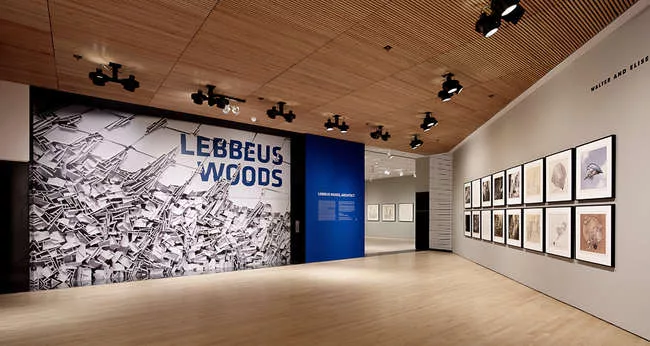
Image courtesy SFMOMA
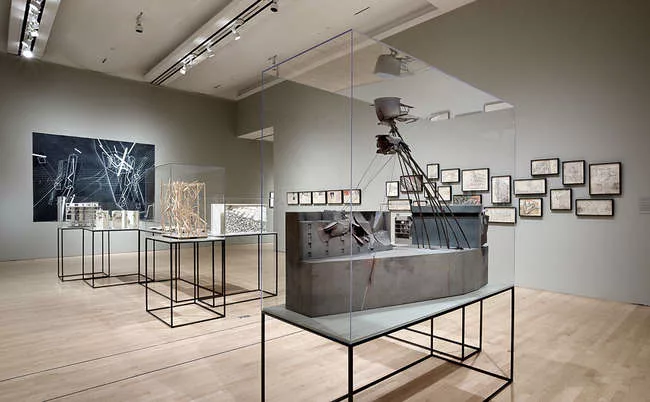
Installation view of <em>Lebbeus Woods, Architect</em>
Paper Warrior
Installation view of Lebbeus Woods, Architect
Photo © Matthew Millman
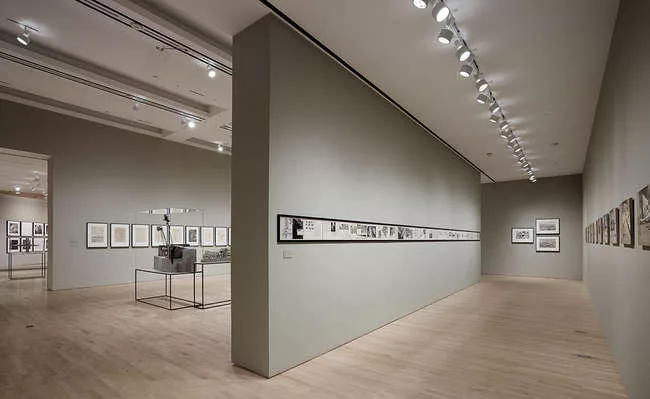
Installation view of <em>Lebbeus Woods, Architect</em>
Paper Warrior
Installation view of Lebbeus Woods, Architect
Photo © Matthew Millman
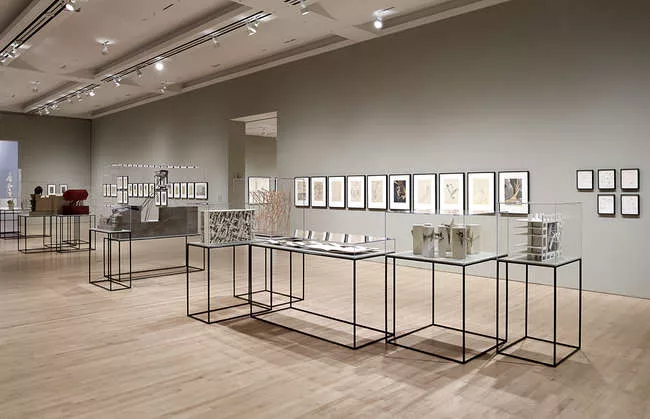
Installation view of <em>Lebbeus Woods, Architect</em>
Paper Warrior
Installation view of Lebbeus Woods, Architect
Photo © Matthew Millman
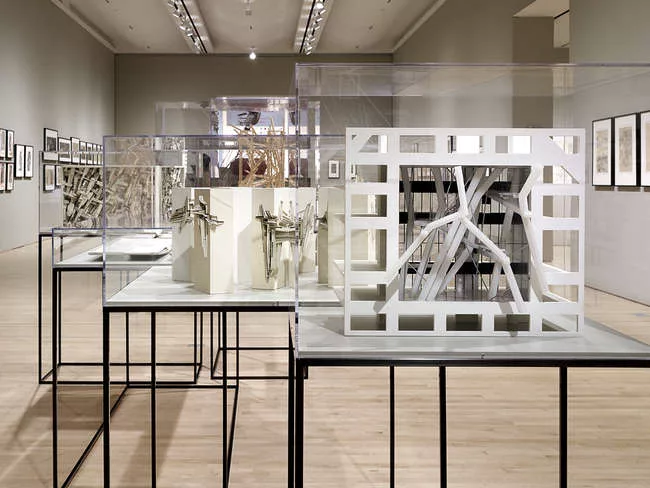
Installation view of <em>Lebbeus Woods, Architect</em>
Paper Warrior
Installation view of Lebbeus Woods, Architect
Photo © Matthew Millman
Installation view of <em>Lebbeus Woods, Architect</em>
Paper Warrior
Installation view of Lebbeus Woods, Architect
Photo © Matthew Millman
<p class='MsoListParagraph'><em></em>Lebbeus Woods,<em> San Francisco Project: Inhabiting the Quake, Quake City, </em>1995, graphite and pastel on paper, 14.5 inches by 23 inches</p>
<p class='MsoListParagraph'><em></em>Lebbeus Woods,<em> Photon Kite</em>, from the series <em>Centricity</em>, 1988, graphite on paper, 24 inches by 22 inches</p>
<p class='MsoListParagraph'><em></em>Lebbeus Woods,<em> Unified Urban Field</em>, from the series <em>Centricity</em>, 1987, graphite on paper, 24 inches by 23 inches</p>
<p class='MsoListParagraph'><em></em>Lebbeus Woods,<em> Conflict Space 4</em>, 2006, crayon and acrylic on linen, 74 inches by 120 inches</p>
Installation view of <em>Lebbeus Woods, Architect</em>
February 28, 2013

Lebbeus Woods, San Francisco Project: Inhabiting the Quake, Quake City, 1995, graphite and pastel on paper, 14.5 inches by 23 inches.

Lebbeus Woods, who died last year at age 72, was among the most singularly gifted and stubbornly consistent architects in American history. His fantastically dense drawings in pencil and graphite imagined not just new kinds of buildings?some burrowed into the earth and others floating in the air or through space?but new cities and new worlds. Though he is often connected with the Deconstructivist movement and with architects like Zaha Hadid, Thom Mayne, and Daniel Libeskind, his work also directly recalls earlier figures and precedents in architecture, from Piranesi to Archigram.

If Woods's talent was plain to see, his legacy and what it means for practicing architects remain less so, as a stirring if incomplete new exhibition at the San Francisco Museum of Modern Art makes clear. Organized by Joseph Becker and Jennifer Dunlop Fletcher, assistant curators in the museum's architecture and design department, the show (which runs through June 2) was in the works well before Woods died last fall. It is packed full of examples of his often breathtaking talents as a draftsman and conjurer of alternative architectural universes.

A group of framed drawings from Woods's 1986?87 Centricity series lines one wall just outside the entrance to the exhibition, an appetizer before the visual riches to come. Inside are more framed drawings (dozens of them), models in glass cases, sketchbooks, and snippets of manifestos. Pride of place is given to a brilliant proposal, from 1980, for a monument to Albert Einstein designed to be sent into space, to drift eternally. In drawing equally from technology, philosophy, science fiction, and architectural history?in this case Boull?e's cenotaph for Newton?it is typically dense with allusion. Some of the work on view responds to specific sites and political crises, as in a series of proposals for Sarajevo (1993?94) and Berlin (1990). Other items are more poetic, such as colored-pencil drawings from Woods's 1989 Aerial Paris project.

What the show fails to do?or even try to do, really?is address Woods's complicated relationship with, and tremendous influence on, his architectural peers. We've just emerged from a dizzying and arguably unprecedented period in Western architectural history in which nearly every skilled architect, no matter how adventurous or unorthodox, who wanted to make the jump from drawing to building, or from theory to practice, was able to do so.

Libeskind, Hadid, Mayne, Rem Koolhaas, Wolf Prix?all of Woods's philosophical brethren, the architects he came of age with in the 1970s and '80s?not only took that leap but, after making it, quickly began building on a prolific global scale. Even John Hejduk, like Woods a faculty member at Cooper Union in New York, became a practicing architect in something like the traditional manner.

Only Woods was content to spend his career teaching, writing (often on his own terrific blog), and drawing. Born in Michigan in 1940, he worked early on for Eero Saarinen's office. But by his mid-30s Woods had dedicated himself exclusively to experimental, theoretical projects. Near the end of his life his close friend Steven Holl gave him the chance to design a four-story-tall installation embedded in the facade of Holl's Sliced Porosity Block in Chengdu, China; part sculpture, part dystopian sky deck, Woods's contribution to the building was close in spirit to his sketchbooks.

Beyond that one project, Woods's talent stayed on the page. And this is what makes his career truly unusual. There have always been figures like him in architecture. But he may be the only one who had both the opportunity to build and the will, or maybe just the disposition, to ignore that opportunity with seeming ease over several decades.

The distance that opened up between Woods and his onetime comrades in paper architecture?a distance that only grew over time?is a fascinating chasm to contemplate, to peer into. The SFMOMA exhibition generally pretends it's not there (never mentioning other architects or really exploring Woods's decision not to build), as if the curators were worried that visitors might fall in. But that rabbit hole of a gap promises more revelations?about Woods, and about contemporary architecture?than even this beautiful and deeply rewarding show can provide.

Christopher Hawthorne is the architecture critic of the Los Angeles Times.

Share This Story

Looking for a reprint of this article?
From high-res PDFs to custom plaques, order your copy today!

Christopher Hawthorne was the architecture critic of the Los Angeles Times from 2004 to 2018 and served as Los Angeles's first Chief Design Officer.

Post a comment to this article

Report Abusive Comment

Subscription Center
  • Create an Account
  • Start a Subscription
  • Manage My Account
  • Sign Up for Newsletters
  • Visit Customer Service
  • Update Preferences

More Videos

Sponsored Content

Sponsored Content is a special paid section where industry companies provide high quality, objective, non-commercial content around topics of interest to the Architectural Record audience. All Sponsored Content is supplied by the advertising company and any opinions expressed in this article are those of the author and not necessarily reflect the views of Architectural Record or its parent company, BNP Media. Interested in participating in our Sponsored Content section? Contact your local rep!

close
  • TAMLYN XtremeTrim Exterior Trim
    Sponsored byTamlyn

    Designing Cleaner Panel Facades: Why Exterior Trim Details Matter

  • Building with Vapor Barriers
    Sponsored byReef Industries, Inc.

    Vapor Barriers Help Control Moisture in Tighter Building Designs

  • Duct Interior with Prodeq System
    Sponsored byHenry, a Carlisle Company

    Designing Resilient Water Containment Systems

DESIGN:ED Podcast
Listen to Architectural Record’s DESIGN:ED Podcast

Events

June 10, 2026

Rethinking Stormwater – The Power of Porous Paving

Credits: 1 AIA LU/HSW; 1 AIBD P-CE; 0.1 ICC CEU

Learn how porous paving systems support stormwater management, reduce heat island effects, and enhance sustainable site design performance.

June 11, 2026

Very Early Warning Fire Detection for Mission-Critical Facilities

Credits: 1 AIA LU/HSW; 1 AIBD P-CE; 0.1 ICC CEU

Examine advanced fire detection strategies that support uptime and enhance safety in data centers and other mission-critical facilities.

View All Submit An Event

Products

2026 Architect's Square Foot Costbook

2026 Architect's Square Foot Costbook

See More Products

Popular Stories

Coronado Bridge

The Architect’s Guide to San Diego

Practice Matters illustration

What’s in a (Firm’s) Name? Thinking About Succession and Legacy

Practice Matters illustration

By the Numbers: Counting America's Architects

Inward House

Inward House by VeeV Design Studio

Riverdale House by Studio Lau

Riverdale House by Studio Lau

Broader Sustainability of CMU - Free Webinar - May 21, 2026

Related Articles

  • Down They Come

    See More
  • Taking the Pulse of Architecture

    See More
  • Cathleen McGuigan

    Where Do Building Materials Come From?

    See More

Related Products

See More Products
  • 047177751X.gif

    Sustainable Urbanism: Urban Design With Nature

See More Products
×

The latest news and information

#1 Source for Architectural Design, News and Products

SUBSCRIBE
  • RESOURCES
    • Advertise
    • Contact Us
    • Submit
    • Store
  • ACCOUNT CENTER
    • Create an Account
    • Start a Subscription
    • Manage My Account
    • Sign Up for Newsletters
    • Visit Customer Service
    • Update Preferences
  • PRIVACY
    • PRIVACY POLICY
    • TERMS & CONDITIONS
    • DO NOT SELL MY PERSONAL INFORMATION
    • PRIVACY REQUEST
    • ACCESSIBILITY
  • SERVICES
    • Marketing Services
    • Reprints
    • Market Research
    • List Rental
    • Survey/Respondent Access
  • STAY CONNECTED
    • Linkedin
    • Facebook
    • Instagram
    • YouTube
    • X (Twitter)

Copyright ©2026. All Rights Reserved BNP Media, Inc. and BNP Media II, LLC.

Design, CMS, Hosting & Web Development :: ePublishing