Architectural Record
search
cart
facebook twitter linkedin youtube
  • Sign In
  • Subscribe
  • Sign Out
  • My Account
Architectural Record
  • NEWS
    • Latest News
    • Awards
    • Interviews
    • Obituaries
    • Podcasts
      • Design:Ed Podcast
      • Sponsored Podcasts
  • OPINION
    • Book Reviews / Excerpts
    • Exhibition Reviews
    • Forum
  • EXCLUSIVES
    • Videos
    • Design Vanguard
    • Top 300 Firms
    • Sponsored Content
    • Sponsored eBooks
    • From the Archives
  • CONTINUING ED
    • Editorial Continuing Ed
    • CE Center
    • CE Academies
  • PROJECTS
    • Buildings By Type
    • Reuse & Renovation
    • Museums & Arts Centers
    • Colleges & Universities
    • Multifamily Housing
    • Interiors
    • Lighting
    • Kitchen & Bath
  • HOUSES
    • Record Houses
    • House of the Month
    • Featured Houses
  • PRODUCTS
    • Products by Category
    • Record Products of the Year
    • Latest Products
  • EVENTS
    • Dates & Events
    • Record on the Road
    • Innovation Conference
    • Sustainability in Practice
    • Women In Architecture
    • Webinars
    • Ad Excellence Awards
    • Submit an Event
  • CONNECT
    • Ask RECORD AI
    • Newsletters
    • Contact
    • Advertise
    • Editorial Calendar
    • Store
    • Customer Service
  • SUBMIT
    • Submission Guidelines
    • RECORD Competitions
  • MAGAZINE
    • Subscribe
    • My Account
    • Digital Edition
    • Current Issue
    • Firm Pass
    • Historic Archive
Architecture News

Exhibition: OMA/Progress
By Christopher Hawthorne
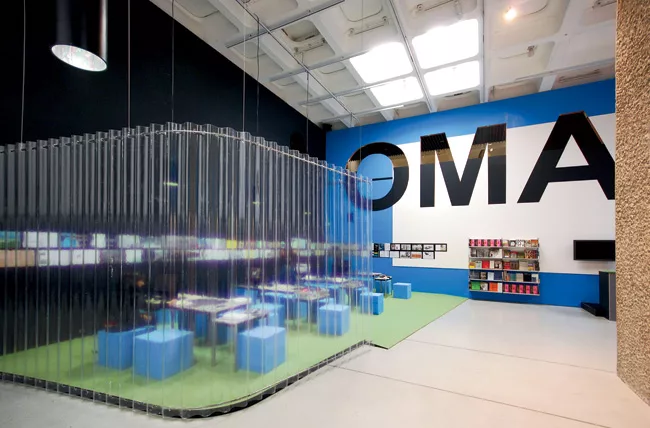
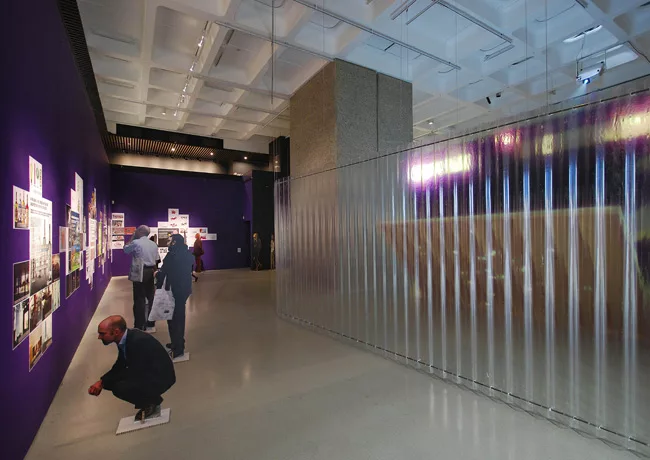
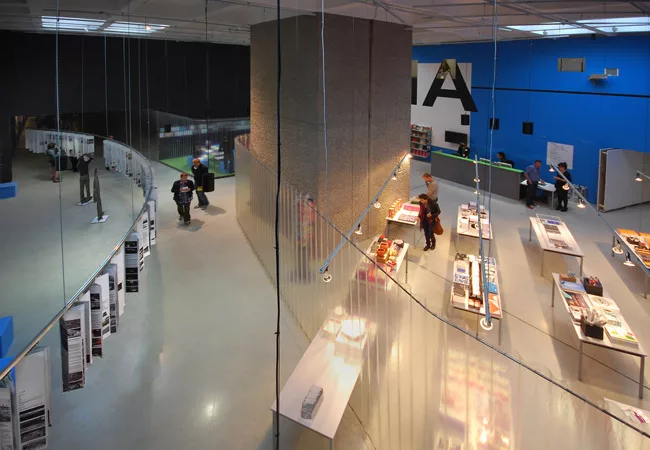
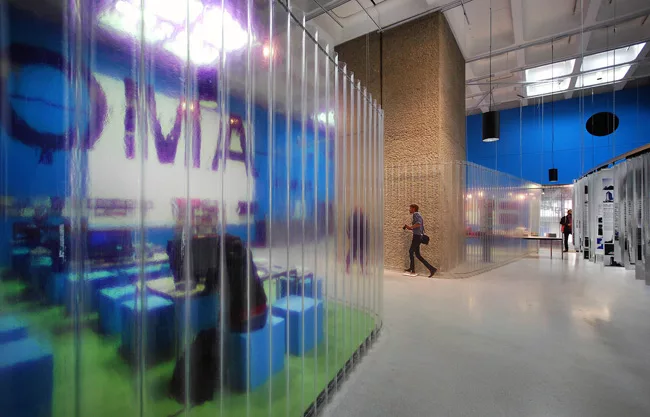
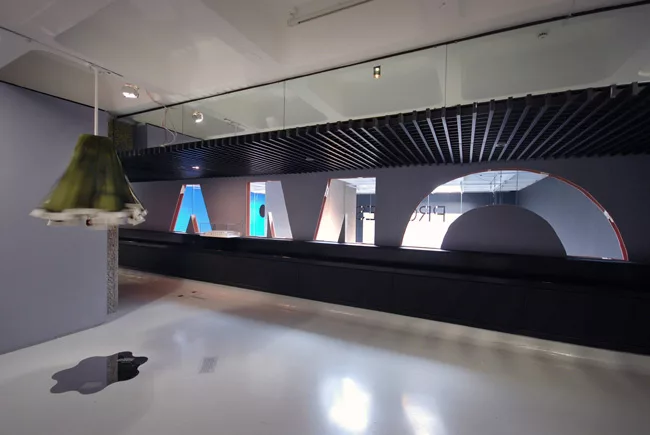
Organized by the Belgian design collective Rotor, the exhibition includes stools made from the same blue foam that OMA uses for its study-models.
Exhibition: OMA/Progress
Barbican Art Gallery, London
Organized by the Belgian design collective Rotor, the exhibition includes stools made from the same blue foam that OMA uses for its study-models.
Photography © OMA/Courtesy Barbican Art Gallery
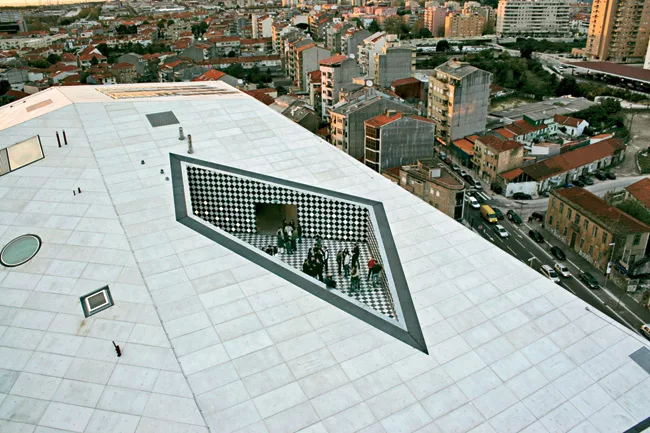
One of OMA’s many projects scattered around the globe, the Casa de Música opened in Porto, Portugal, in 2005.
Exhibition: OMA/Progress
Barbican Art Gallery, London
One of OMA’s many projects scattered around the globe, the Casa de Música opened in Porto, Portugal, in 2005.
Photography © OMA/Courtesy Barbican Art Gallery
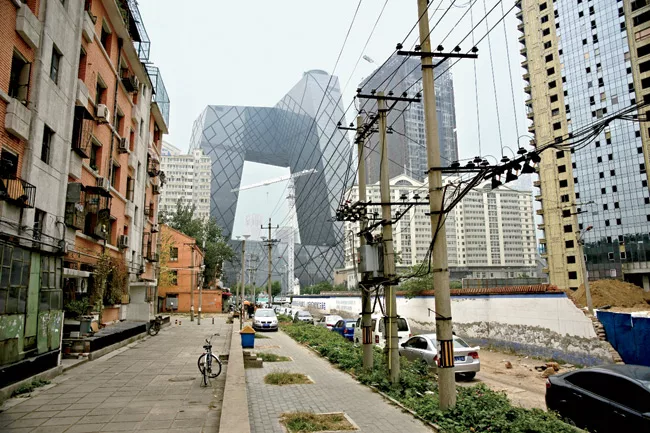
OMA reimagined the skyscraper with its CCTV project in Beijing, bending the tower into a  two-legged structure connected at the top.
Exhibition: OMA/Progress
Barbican Art Gallery, London
OMA reimagined the skyscraper with its CCTV project in Beijing, bending the tower into a two-legged structure connected at the top.
Photography © OMA/Courtesy Barbican Art Gallery
Exhibition: OMA/Progress
Barbican Art Gallery, London
Photography © OMA/Courtesy Barbican Art Gallery
Exhibition: OMA/Progress
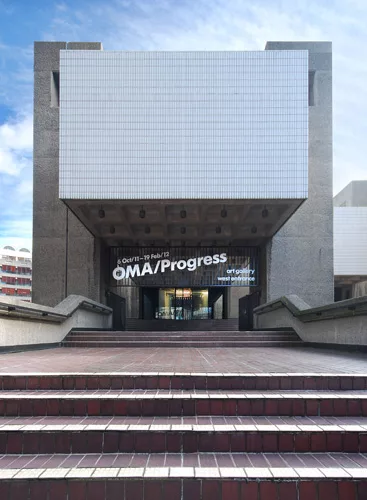
Barbican Art Gallery, London
Photography © OMA/Courtesy Barbican Art Gallery
Exhibition: OMA/Progress
Barbican Art Gallery, London
Photography © OMA/Courtesy Barbican Art Gallery
Exhibition: OMA/Progress
Barbican Art Gallery, London
Photography © OMA/Courtesy Barbican Art Gallery
Exhibition: OMA/Progress
Barbican Art Gallery, London
Photography © OMA/Courtesy Barbican Art Gallery
Exhibition: OMA/Progress
Barbican Art Gallery, London
Photography © OMA/Courtesy Barbican Art Gallery
Exhibition: OMA/Progress
Barbican Art Gallery, London
Photography © OMA/Courtesy Barbican Art Gallery
Exhibition: OMA/Progress
Barbican Art Gallery, London
Photography © OMA/Courtesy Barbican Art Gallery
Exhibition: OMA/Progress
Barbican Art Gallery, London
Photography © OMA/Courtesy Barbican Art Gallery
Exhibition: OMA/Progress
Barbican Art Gallery, London
Photography © OMA/Courtesy Barbican Art Gallery
Exhibition: OMA/Progress
Barbican Art Gallery, London
Photography © OMA/Courtesy Barbican Art Gallery
Exhibition: OMA/Progress
Barbican Art Gallery, London
Photography © OMA/Courtesy Barbican Art Gallery
Exhibition: OMA/Progress
Barbican Art Gallery, London
Photography © OMA/Courtesy Barbican Art Gallery
Exhibition: OMA/Progress
Barbican Art Gallery, London
Photography © OMA/Courtesy Barbican Art Gallery
Exhibition: OMA/Progress
Barbican Art Gallery, London
Photography © OMA/Courtesy Barbican Art Gallery
Organized by the Belgian design collective Rotor, the exhibition includes stools made from the same blue foam that OMA uses for its study-models.
One of OMA’s many projects scattered around the globe, the Casa de Música opened in Porto, Portugal, in 2005.
OMA reimagined the skyscraper with its CCTV project in Beijing, bending the tower into a  two-legged structure connected at the top.
Exhibition: OMA/Progress
January 16, 2012

A sprawling show in London tries to capture the manic pace and self-conscious ways of Rem’s firm.

Photography © Lyndon Douglas

Organized by the Belgian design collective Rotor, the exhibition includes stools made from the same blue foam that OMA uses for its study-models.

In the late summer of 2010, the Belgian Pavilion was the talk of the Venice Architecture Biennale. Curated by Rotor, a young Brussels-based design collective, the pavilion was a beautifully sincere, irony-free study of the ways that architecture ages and is worn down by daily use. In the midst of the Biennale, which is often obsessed with new buildings and gymnastic forms, it was a subtly radical display.

One of OMA’s many projects scattered around the globe, the Casa de Música opened in Porto, Portugal, in 2005.

The notoriety Rotor gained with that job helped it win its most prestigious commission to date: organizing a massive retrospective of the Office for Metropolitan Architecture that opened in October at London’s Barbican Art Gallery and runs through February 19. Working on a project of this kind with Rem Koolhaas, who founded OMA in London in 1975 with Madelon Vriesendorp and Elia and Zoe Zenghelis, couldn’t have been easy; though OMA picked Rotor to organize the show, Koolhaas seems constitutionally incapable of a hands-off approach.

Nearly all of the wall text in the exhibition OMA/Progress was written by Rotor, but it occasionally includes annotations in Koolhaas’s handwriting. Considering the age difference between the curators and their subject—Rotor’s members are mostly under 40, Koolhaas is 67—it’s not difficult to read the result as something of an Oedipal production.

Readers may interject here that OMA is not simply Rem, and vice versa. (At the moment, the firm has seven partners, including Koolhaas.) From its earliest years, OMA, as its intentionally bland, collective name indicates, has been at pains to promote the idea that it is a collaborative office. As Koolhaas put it in a recent interview. “It’s not purely my voice. It’s more of an orchestration.” One of the small pleasures of the exhibition is reading the fine-print credits on some of the projects and being reminded of all the talent OMA has cultivated and sent out into the architecture world over the years. (Those alumni include Winy Maas, Dan Wood and Amale Andraos, Bjarke Ingels, Farshid Moussavi and Alejandro Zaera-Polo, Minsuk Cho, and many more.) At the same time, of course, Koolhaas is among the brightest single stars in the architectural sky, with a blazing self-regard to match.

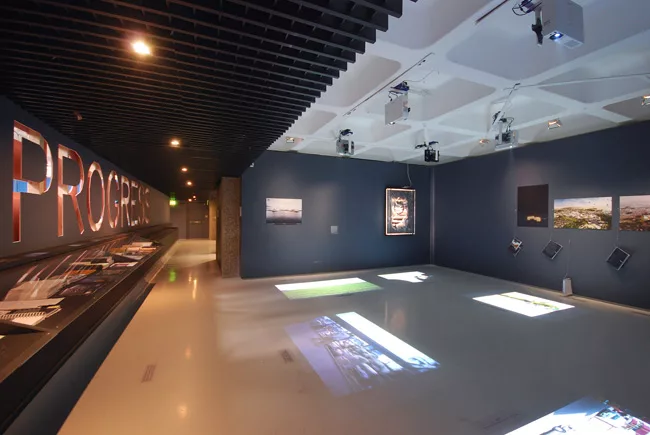
One of the exhibition’s strengths is the sidelong, conscientiously indirect way it approaches these themes. If it can be tough to parse the authorship of an OMA building, the same is true of the show. Rotor establishes its control over the proceedings not with top-down gestures of authority, but by means of a strategically messy, agglomerative strategy.

Koolhaas gets to contribute to this museum-world version of a Wikipedia page on OMA’s evolution—but he is one of many would-be historians tweaking the text.

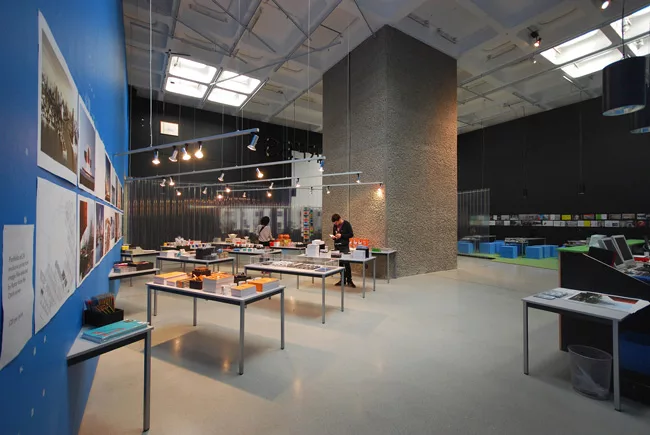
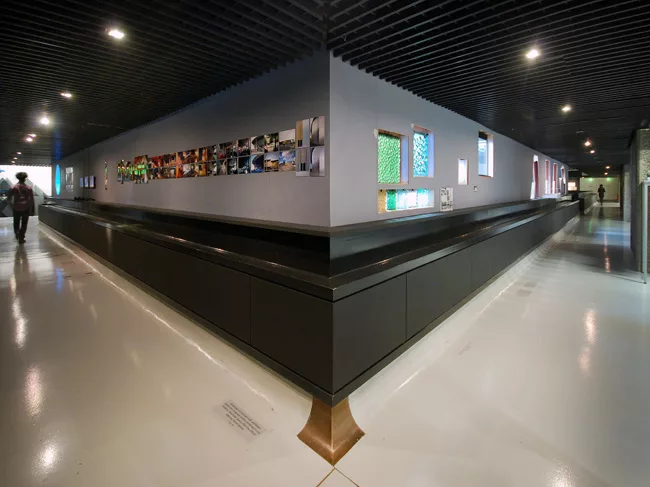
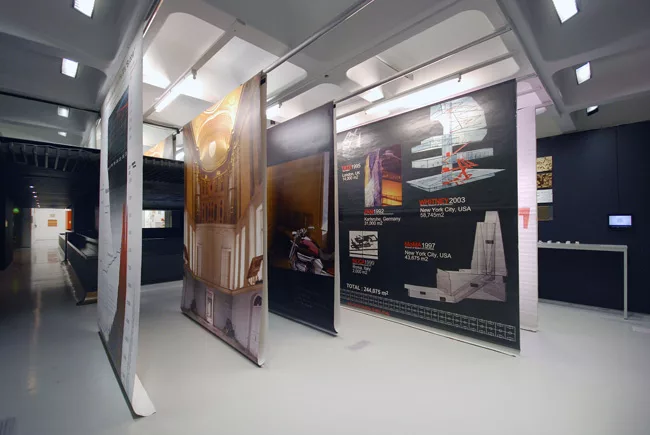
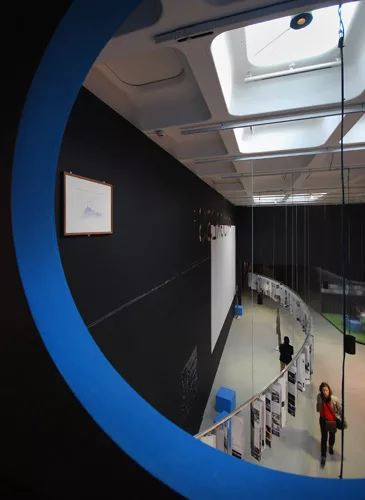
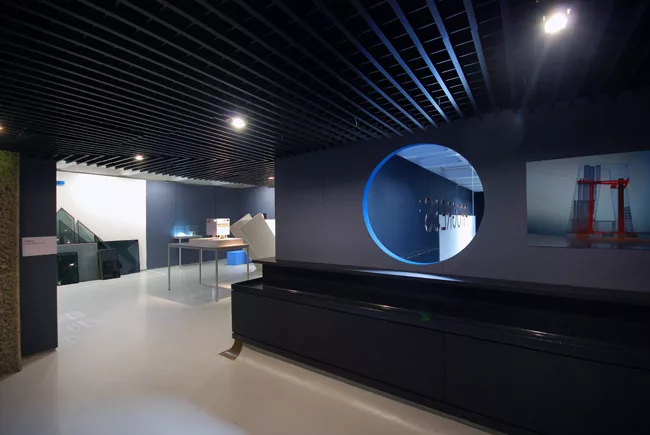
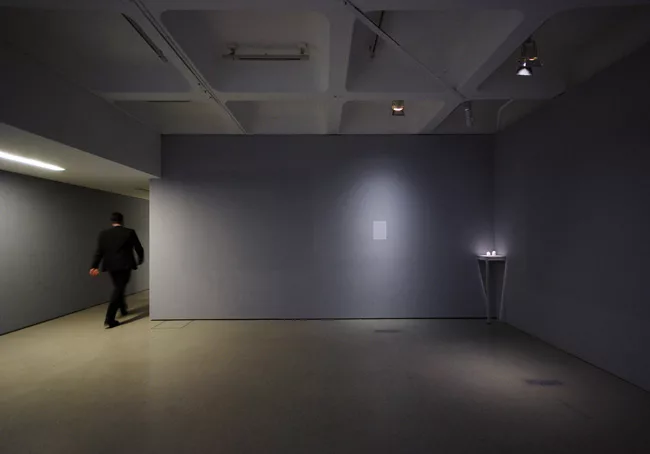
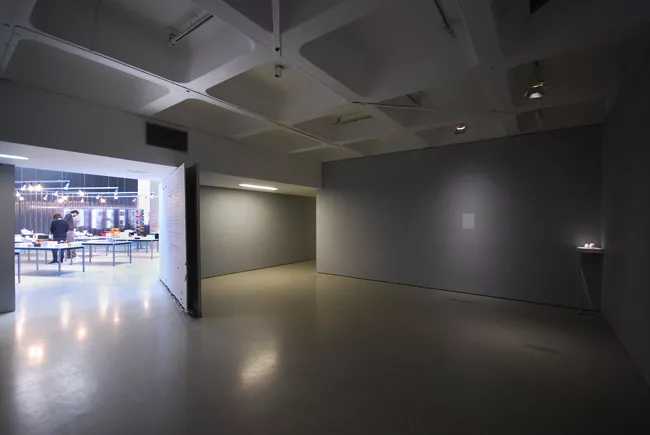
The first two rooms feature densely arranged boards that OMA itself produced for many of its best-known projects. It’s a way for Rotor to acknowledge that OMA, a famously self-critical office, has in essence been curating its own output for years. But as it turns out, that hall of mirrors is something of a false start. After making your way through it—and past a special OMA gift shop—you come to a piece of unadorned, beat-up drywall that officially announces the exhibition, with a guard stationed there to take your ticket.

The wall text at this second entry point begins with a surprisingly banal statement of curatorial purpose. “The problem with architecture shows is that they can’t show what they promise: architecture,” it reads, reviving a complaint about architecture exhibitions that has been endlessly rehashed in recent years. It continues: “This exhibition gives an outsider view of the insides of a particular architecture office. OMA/Progress is a portrait that consists mostly of found materials, materials that exist for reasons other than this exhibition.”

Yet prominently displayed in the very next room is a note from Koolhaas to his architectural associates, which the curators point out was “found pinned on the kitchen wall of the OMA office in New York.” Dated 1998, it includes the following admonition: “It is crucial that each of you take responsibility for the preservation, maintenance and, if necessary, repair of models, drawings and other evidence of architectural research.”

There are certainly moments when this curatorial strategy—raise an idea only to immediately undermine it, as Koolhaas and OMA have done so often over the years—seems too clever by half. But in the galleries that follow, as the exhibition snakes across two floors of the Barbican, Rotor’s approach manages to produce a deft, fitting portrait of contemporary architecture’s most complex and influential firm, one that can seem self-satisfied and self-flagellating at the same time.

The show is exhaustingly thorough. (As Rowan Moore wrote in The Observer, “Don’t expect to understand or even see it all. Nobody will, not even the people who made it.”) There are rooms on OMA buildings that move (the famous house in Bordeaux); on projects that were put on ice by the economic crisis (a vertiginous condo tower for Twenty-second Street in Manhattan) or dramatically modified to save money (Cornell’s Milstein Hall); and on designs dominated by the truss (CCTV in Beijing, the Wyly Theater in Dallas). There are inside jokes (squared-off stools made of the same blue foam that OMA uses for its intentionally crude models). There is a slideshow that shuffles through every digital image'3.5 million in all'stored on every one of the firm’s servers.

There is also a small section the curators call the “secret room”; its walls are plastered with documents found in OMA’s administrative files and its recycling bins. The most poignant is a written request by an anonymous young staffer, made nearly a year in advance, for two days of vacation. There is also an RFQ mailed by Harvard University on June 30, 2008, noting that proposals are due back in “July 2008.”

That manic pace—and the complexity of contemporary architectural practice—is something that OMA has embraced from its earliest days and has incorporated into its work in direct, strategic fashion. As if to illustrate that idea, the exhibition includes the boards for an ill-fated OMA proposal for Universal Studios in Los Angeles, commissioned by Edgar Bronfman, Jr. The accompanying description of the scheme, written by the firm, compares the Universal job to other famous architecture for corporate America, including Mies van der Rohe’s Seagram Building in New York, an earlier Bronfman-family commission: “It soon became apparent that the commission was less straightforward than it seemed. Where in ’54 Seagram was a single entity with a clear identity that would be relatively stable during the five-year minimum that any architectural enterprise takes from beginning to end, that was no longer the case: by the mid-’90s, the substance and nature of any corporation was in constant flux, if not turmoil.”

This is the culture for which OMA has always designed buildings, and the one Rotor has so energetically tried to recreate inside the Barbican. Forget the crystal-clear Modernist dictates that drove Mies; flux and turmoil are the muses for our age. I don’t know if that counts as progress, but it seems to be just the way OMA likes it.

Share This Story

Looking for a reprint of this article?
From high-res PDFs to custom plaques, order your copy today!

Christopher Hawthorne was the architecture critic of the Los Angeles Times from 2004 to 2018 and served as Los Angeles's first Chief Design Officer.

Post a comment to this article

Report Abusive Comment

Subscription Center
  • Create an Account
  • Start a Subscription
  • Manage My Account
  • Sign Up for Newsletters
  • Visit Customer Service
  • Update Preferences

More Videos

Sponsored Content

Sponsored Content is a special paid section where industry companies provide high quality, objective, non-commercial content around topics of interest to the Architectural Record audience. All Sponsored Content is supplied by the advertising company and any opinions expressed in this article are those of the author and not necessarily reflect the views of Architectural Record or its parent company, BNP Media. Interested in participating in our Sponsored Content section? Contact your local rep!

close
  • TAMLYN XtremeTrim Exterior Trim
    Sponsored byTamlyn

    Designing Cleaner Panel Facades: Why Exterior Trim Details Matter

  • Building with Vapor Barriers
    Sponsored byReef Industries, Inc.

    Vapor Barriers Help Control Moisture in Tighter Building Designs

  • Duct Interior with Prodeq System
    Sponsored byHenry, a Carlisle Company

    Designing Resilient Water Containment Systems

DESIGN:ED Podcast
Listen to Architectural Record’s DESIGN:ED Podcast

Events

June 16, 2026

Focus on the Façade: Exploring Steel, Timber & Fire-Rated Curtain Walls and Channel Glass Systems

Credits: 1 AIA LU/HSW; 1 AIBD P-CE; 0.1 ICC CEU

Explore modern façade and glazing systems that enhance daylighting, fire safety, and thermal performance while expanding architectural design possibilities.

June 18, 2026

Rebooting the Aging Office Building

Credits: 1 AIA LU/HSW; 1 AIBD P-CE; 0.1 ICC CEU; 1 PDH

Explore façade retrofit strategies and award-winning design concepts that can transform aging office buildings into healthier, higher-performing workplaces for today’s hybrid workforce.

View All Submit An Event

Products

2026 Architect's Square Foot Costbook

2026 Architect's Square Foot Costbook

See More Products

Popular Stories

SanDiegoAirport

Top 300 Architecture Firms of 2026

Coronado Bridge

The Architect’s Guide to San Diego

House A on a Hill

Design Vanguard 2026: Santiago Valdivieso

Dusk House

Design Vanguard 2026: ONO

Crystal Bridges Museum of American Art expansion

Safdie Architects Returns to the Crystal Bridges Museum of American Art for Major Expansion

Focus on the Facade - Free Webinar - June 16, 2026

Related Articles

  • Dior Denver

    OMA New York Designs Dior Exhibition at the Denver Art Museum

    See More
  • The Controversy Over L.A.'s 'Sculpturalism' Show

    See More
  • Build Nothing and They Will Come

    See More

Related Products

See More Products
  • Architectural Record - January 2026

    Architectural Record January 2026 Issue

See More Products
×

The latest news and information

#1 Source for Architectural Design, News and Products

SUBSCRIBE
  • RESOURCES
    • Advertise
    • Contact Us
    • Submit
    • Store
  • ACCOUNT CENTER
    • Create an Account
    • Start a Subscription
    • Manage My Account
    • Sign Up for Newsletters
    • Visit Customer Service
    • Update Preferences
  • PRIVACY
    • PRIVACY POLICY
    • TERMS & CONDITIONS
    • DO NOT SELL MY PERSONAL INFORMATION
    • PRIVACY REQUEST
    • ACCESSIBILITY
  • SERVICES
    • Marketing Services
    • Reprints
    • Market Research
    • List Rental
    • Survey/Respondent Access
  • STAY CONNECTED
    • Linkedin
    • Facebook
    • Instagram
    • YouTube
    • X (Twitter)

Copyright ©2026. All Rights Reserved BNP Media, Inc. and BNP Media II, LLC.

Design, CMS, Hosting & Web Development :: ePublishing