Architectural Record
search
cart
facebook twitter linkedin youtube
  • Sign In
  • Subscribe
  • Sign Out
  • My Account
Architectural Record
  • NEWS
    • Latest News
    • Awards
    • Interviews
    • Obituaries
    • Podcasts
      • Design:Ed Podcast
      • Sponsored Podcasts
  • OPINION
    • Book Reviews / Excerpts
    • Exhibition Reviews
    • Forum
  • EXCLUSIVES
    • Videos
    • Design Vanguard
    • Top 300 Firms
    • Sponsored Content
    • Sponsored eBooks
    • From the Archives
  • CONTINUING ED
    • Editorial Continuing Ed
    • CE Center
    • CE Academies
  • PROJECTS
    • Buildings By Type
    • Reuse & Renovation
    • Museums & Arts Centers
    • Colleges & Universities
    • Multifamily Housing
    • Interiors
    • Lighting
    • Kitchen & Bath
  • HOUSES
    • Record Houses
    • House of the Month
    • Featured Houses
  • PRODUCTS
    • Products by Category
    • Record Products of the Year
    • Latest Products
  • EVENTS
    • Dates & Events
    • Record on the Road
    • Innovation Conference
    • Sustainability in Practice
    • Women In Architecture
    • Webinars
    • Ad Excellence Awards
    • AIA 2026 Videos
    • Submit an Event
  • CONNECT
    • Ask RECORD AI
    • Newsletters
    • Contact
    • Advertise
    • Editorial Calendar
    • Store
    • Customer Service
  • SUBMIT
    • Submission Guidelines
    • RECORD Competitions
  • MAGAZINE
    • Subscribe
    • My Account
    • Digital Edition
    • Current Issue
    • Firm Pass
    • Historic Archive
Architecture NewsAdaptive Reuse and Renovation

Glory of Spangen Social Housing Complex Restored
By Thomas Wensing
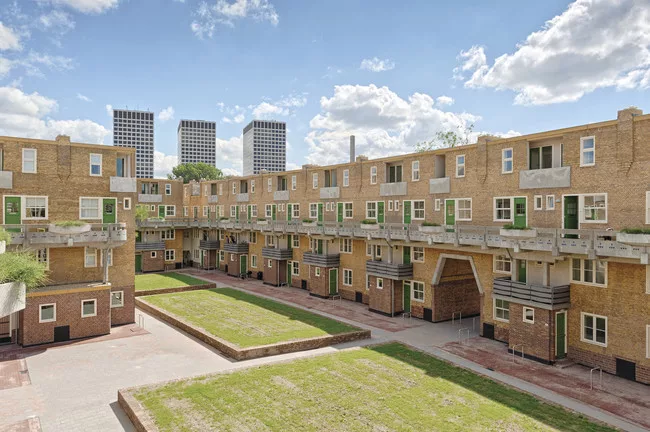
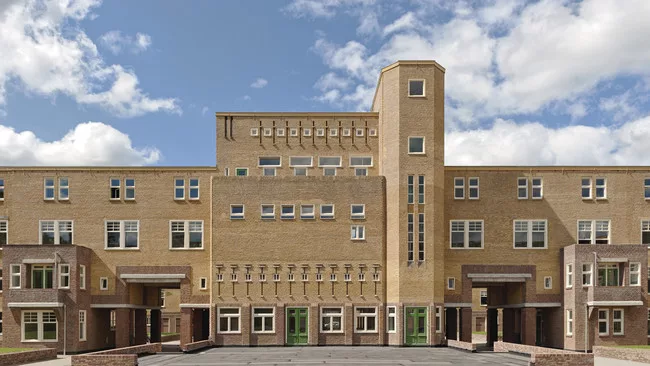
Molenaar & Co, Hebly Theunissen, and Michael van Gessel led a pristine renovation of the Spangen social-housing complex, which pioneered public deck access.
Glory of Spangen Social Housing Complex Restored
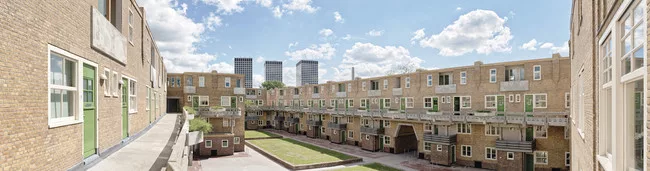
Molenaar & Co, Hebly Theunissen, and Michael van Gessel led a pristine renovation of the Spangen social-housing complex, which pioneered public deck access.
Photo © Bas Kooij
Glory of Spangen Social Housing Complex Restored
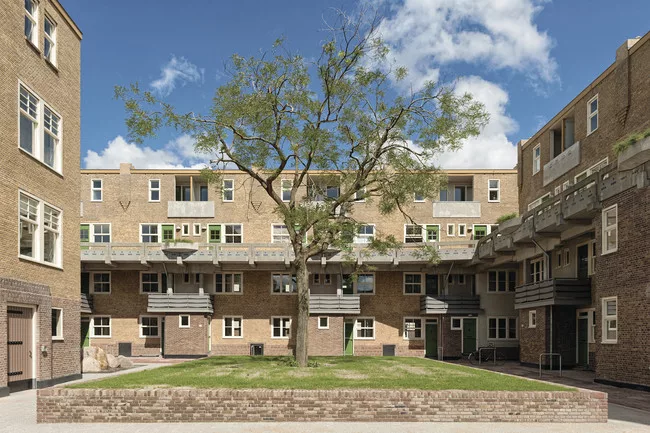

Photo © Bas Kooij
Glory of Spangen Social Housing Complex Restored

Photo © Bas Kooij
Glory of Spangen Social Housing Complex Restored
Photo © Bas Kooij
Glory of Spangen Social Housing Complex Restored
Photo courtesy Rotterdam Municipal Archives
Glory of Spangen Social Housing Complex Restored
Photo courtesy Rotterdam Municipal Archives
Molenaar & Co, Hebly Theunissen, and Michael van Gessel led a pristine renovation of the Spangen social-housing complex, which pioneered public deck access.
Glory of Spangen Social Housing Complex Restored
January 16, 2014

Molenaar & Co, Hebly Theunissen, and Michael van Gessel led a pristine renovation of the Spangen social-housing complex, which pioneered public deck access.

The revolutionary Spangen social-housing complex (1919-1921) in Rotterdam, by Michiel Brinkman, has recently been immaculately restored. The project pioneered “street in the sky” deck access, an idea that famously inspired Alison and Peter Smithson’s design of the 1950s Golden Lane housing project in London. The Spangen estate, or Justus van Effen complex, is a rectangular four-story brick urban block, centered around two large courts. Concrete balconies give access to the duplex apartments on the top floors. In its heyday, the project offered many shared amenities, like a public bathhouse located between the two courtyards. A communal spirit was further promoted by making the decks publicly accessible; large cargo lifts allowed tradesmen to reach tenants’ front doors.

In 2006, Spangen’s owner, housing corporation Woonstad, embarked on a $41.1 million renovation of the run-down 194,630-square-foot complex. A previous 1985 renovation, by Leo de Jonge, was cost-driven; in spite of the building’s landmark status, the modernization of the units took precedence over maintaining the building’s architectural integrity. The 264 units were merged into 164 larger ones, the original interiors stripped, window frames replaced with aluminum, and the masonry painted white and gray.

For the most recent renovation (2010-2012), the goal of the design team—Molenaar & Co, Hebly Theunissen, and Michael van Gessel—was to restore the quality of the original architecture while meeting current standards of energy efficiency and comfort. The plan of the original 500-square-foot units was restored, and some units were combined to create 2,000-square-foot town houses (for a total of 154 units). The yellow-and-red-brick facade was cleaned and repaired, and woodwork was painted in original shades of white, green, and ochre.

Woonstad offered some units for sale, while maintaining others as affordable rentals, placing small businesses in the former bathhouse. The project benefits from the income mix, but the part-privatization of this iconic social housing project also reflects an unfortunate development in the once-progressive housing policies of the Netherlands. The housing corporations were privatized in 1994 and can no longer afford to add new social housing, let alone drive urban regeneration as they used to. A tax initiated in 2013 on the assets of the housing corporations will result in higher rents for lower-income tenants and is likely to bring building of social housing to a close, a reality that mocks the spirit of collectivity in which Spangen was originally conceived.

Share This Story

Looking for a reprint of this article?
From high-res PDFs to custom plaques, order your copy today!

Post a comment to this article

Report Abusive Comment

Subscription Center
  • Create an Account
  • Start a Subscription
  • Manage My Account
  • Sign Up for Newsletters
  • Visit Customer Service
  • Update Preferences

More Videos

Sponsored Content

Sponsored Content is a special paid section where industry companies provide high quality, objective, non-commercial content around topics of interest to the Architectural Record audience. All Sponsored Content is supplied by the advertising company and any opinions expressed in this article are those of the author and not necessarily reflect the views of Architectural Record or its parent company, BNP Media. Interested in participating in our Sponsored Content section? Contact your local rep!

close
  • 3D configurator
    Sponsored byDoorBird

    How DoorBird’s 3D Configurator Is Redefining Customization Across Residential and Commercial Design

  • interior of modern office
    Sponsored byCurrent

    The Downlight's Second Life: Why Below-Ceiling Serviceability Is the Specification Detail That Matters Most

  • cold storage facility
    Sponsored byCarlisle SynTec Systems

    How Architects Can Design More Continuous Cold Storage Envelopes

DESIGN:ED Podcast
Listen to Architectural Record’s DESIGN:ED Podcast

Events

July 22, 2026

Water Containment Waterproofing: Best Practices and System Selection

Credits: 1 AIA LU/HSW; 1 AIBD P-CE; 0.1 ICC CEU

Examine waterproofing strategies for water containment structures that enhance durability, prevent failures, and support long-term building performance.

July 29, 2026

Adaptive Reuse Reimagined: Designing Multifamily Housing from Existing Buildings

Credits: 1 AIA LU/HSW; 1 AIBD P-CE; 0.1 ICC CEU; 1 IIBEC CEH

Examine adaptive reuse envelope strategies that improve energy performance, preserve architectural character, and transform existing buildings into high-performing multifamily housing.

View All Submit An Event

Products

Architectural Detailing: Function, Constructibility, Aesthetics, 4th Edition

Architectural Detailing: Function, Constructibility, Aesthetics, 4th Edition

See More Products

Popular Stories

7480 N Delaware

A Portland Apartment Building by Daniel Toole Architecture Stands as a Study in Adaptation

Goldring Woldenberg Park

Continuing Education: Postindustrial Waterfronts

Chacarita Alta Housing

In Paraguay’s Capital, MOS and Adamo-Faiden Rethink Public Housing for Residents of Informal Settlements

Kaya, San Diego

With San Diego’s Kaya, Jeff Svitak Melds Housing Density with Community

Tang Wing, NY Historical

RAMSA Completes an Inconspicuous Addition to the New York Historical

Water Containment Waterproofing: Best Practices and System Selection - Free Webinar - July 22, 2026

Related Articles

  • Twin Parks Northwest, Site 4, 333 East 181st Street, The Bronx, Prentice & Chan, Ohlhausen, January 9, 2022

    The Site of New York City’s Worst Fire in Decades, Twin Parks Northwest Was Once a Model of Social Housing

    See More
  • Social Housing

    Design of the Public Realm: Social Housing

    See More
  • Caserne Exelmans, Paris

    Brunnquell André Architectes Converts Former Military Barracks in Paris into a Social Housing Hub

    See More

Related Products

See More Products
  • Architectural Record - December 2025

    Architectural Record Decvember 2025 Issue

See More Products
×

The latest news and information

#1 Source for Architectural Design, News and Products

SUBSCRIBE
  • RESOURCES
    • Advertise
    • Contact Us
    • Submit
    • Store
  • ACCOUNT CENTER
    • Create an Account
    • Start a Subscription
    • Manage My Account
    • Sign Up for Newsletters
    • Visit Customer Service
    • Update Preferences
  • PRIVACY
    • PRIVACY POLICY
    • TERMS & CONDITIONS
    • DO NOT SELL MY PERSONAL INFORMATION
    • PRIVACY REQUEST
    • ACCESSIBILITY
  • SERVICES
    • Marketing Services
    • Reprints
    • Market Research
    • List Rental
    • Survey/Respondent Access
  • STAY CONNECTED
    • Linkedin
    • Facebook
    • Instagram
    • YouTube
    • X (Twitter)

Copyright ©2026. All Rights Reserved BNP Media, Inc. and BNP Media II, LLC.

Design, CMS, Hosting & Web Development :: ePublishing