Architectural Record
search
cart
facebook twitter linkedin youtube
  • Sign In
  • Subscribe
  • Sign Out
  • My Account
Architectural Record
  • NEWS
    • Latest News
    • Awards
    • Interviews
    • Obituaries
    • Podcasts
      • Design:Ed Podcast
      • Sponsored Podcasts
  • OPINION
    • Book Reviews / Excerpts
    • Exhibition Reviews
    • Forum
  • EXCLUSIVES
    • Videos
    • Design Vanguard
    • Top 300 Firms
    • Sponsored Content
    • Sponsored eBooks
    • From the Archives
  • CONTINUING ED
    • Editorial Continuing Ed
    • CE Center
    • CE Academies
  • PROJECTS
    • Buildings By Type
    • Reuse & Renovation
    • Museums & Arts Centers
    • Colleges & Universities
    • Multifamily Housing
    • Interiors
    • Lighting
    • Kitchen & Bath
  • HOUSES
    • Record Houses
    • House of the Month
    • Featured Houses
  • PRODUCTS
    • Products by Category
    • Record Products of the Year
    • Latest Products
  • EVENTS
    • Dates & Events
    • Record on the Road
    • Innovation Conference
    • Sustainability in Practice
    • Women In Architecture
    • Webinars
    • Ad Excellence Awards
    • Submit an Event
  • CONNECT
    • Ask RECORD AI
    • Newsletters
    • Contact
    • Advertise
    • Editorial Calendar
    • Store
    • Customer Service
  • SUBMIT
    • Submission Guidelines
    • RECORD Competitions
  • MAGAZINE
    • Subscribe
    • My Account
    • Digital Edition
    • Current Issue
    • Firm Pass
    • Historic Archive
Architecture News

David Benjamin of The Living Breaks the Mold
By Laura Mirviss
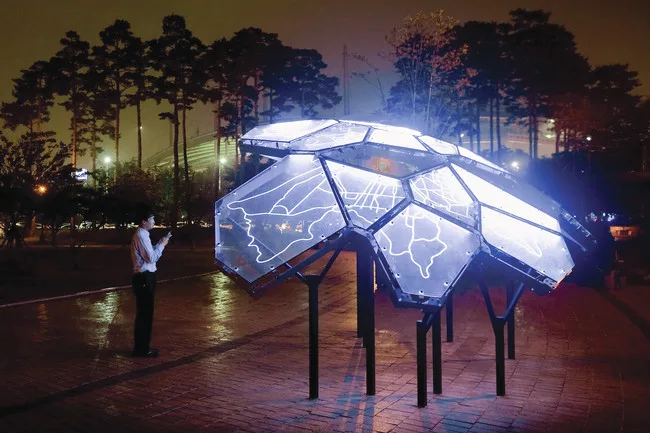
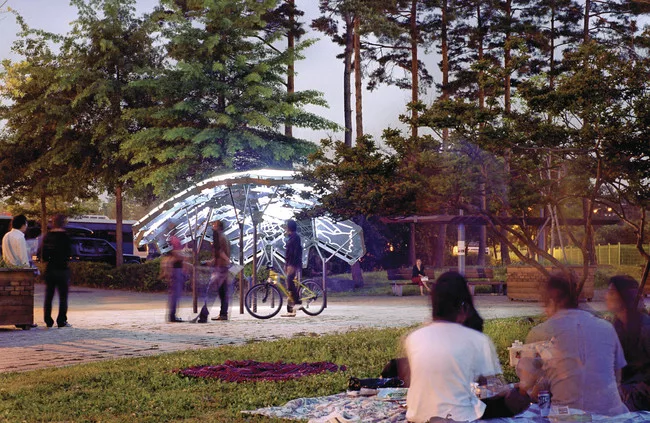
Living Light, 2009<br />The Living<br />Seoul<br />This permanent pavilion in a public park uses LEDs and data from government-monitored sensors to map air quality throughout the city.
David Benjamin of The Living Breaks the Mold
Living Light, 2009
The Living
Seoul
This permanent pavilion in a public park uses LEDs and data from government-monitored sensors to map air quality throughout the city.

Image courtesy The Living
Living Light, 2009<br />The Living<br />Seoul<br />This permanent pavilion in a public park uses LEDs and data from government-monitored sensors to map air quality throughout the city.
David Benjamin of The Living Breaks the Mold
Living Light, 2009
The Living
Seoul
This permanent pavilion in a public park uses LEDs and data from government-monitored sensors to map air quality throughout the city.
Image courtesy The Living
Street Life, 2009<br />The Living<br />Shenzhen &amp; Hong Kong Bi-city Biennale<br />The architects installed hidden electronic displays in the bottom of plastic soup bowls used by street food vendor
David Benjamin of The Living Breaks the Mold
Street Life, 2009
The Living
Shenzhen & Hong Kong Bi-city Biennale
The architects installed hidden electronic displays in the bottom of plastic soup bowls used by street food vendors. When unassuming customers finished their meals, they found a digital message scrolling across the bottom of their bowls, written by the curators of the Biennale.
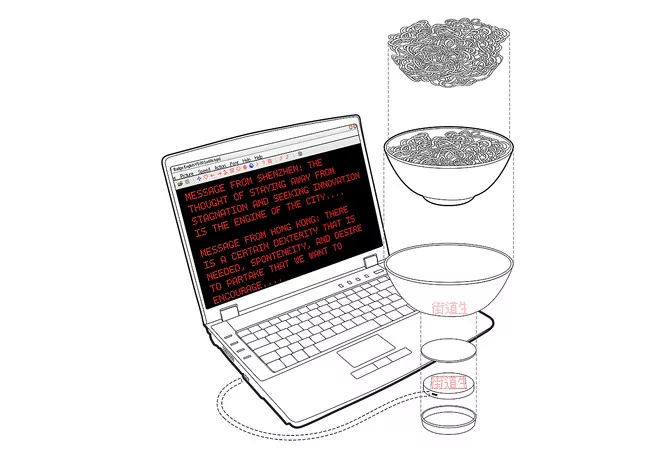
Image courtesy The Living
Street Life, 2009<br />The Living<br />Shenzhen &amp; Hong Kong Bi-city Biennale<br />The architects installed hidden electronic displays in the bottom of plastic soup bowls used by street food vendor
David Benjamin of The Living Breaks the Mold
Street Life, 2009
The Living
Shenzhen & Hong Kong Bi-city Biennale
The architects installed hidden electronic displays in the bottom of plastic soup bowls used by street food vendors. When unassuming customers finished their meals, they found a digital message scrolling across the bottom of their bowls, written by the curators of the Biennale.

Image courtesy The Living
Eco Park at Pier 35, 2014 (expected)<br />The Living, in collaboration with SHoP, Natalie Jeremijenko, and the New York City Economic Development Corporation (NYCEDC)<br />New York City<br />The proje
David Benjamin of The Living Breaks the Mold
Eco Park at Pier 35, 2014 (expected)
The Living, in collaboration with SHoP, Natalie Jeremijenko, and the New York City Economic Development Corporation (NYCEDC)
New York City
The project, slated for permanent installation in summer 2014, will use sensors on live mussels to track water quality in the East River in New York. (Studies show that mussels open and close their shells in accordance with pollution levels.)
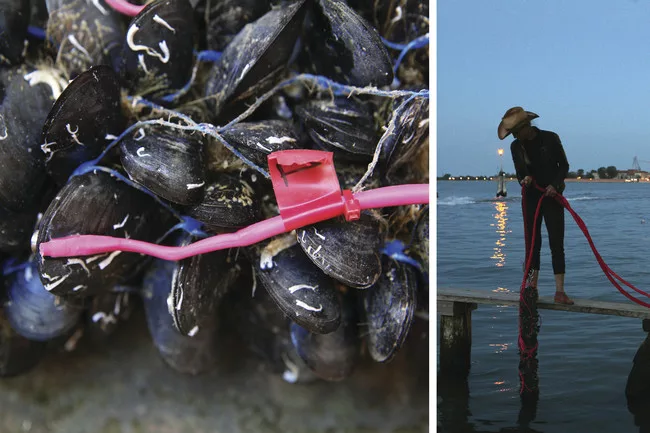
Image courtesy The Living
Eco Park at Pier 35, 2014 (expected)<br />The Living, in collaboration with SHoP, Natalie Jeremijenko, and the New York City Economic Development Corporation (NYCEDC)<br />New York City<br />The proje
David Benjamin of The Living Breaks the Mold
Eco Park at Pier 35, 2014 (expected)
The Living, in collaboration with SHoP, Natalie Jeremijenko, and the New York City Economic Development Corporation (NYCEDC)
New York City
The project, slated for permanent installation in summer 2014, will use sensors on live mussels to track water quality in the East River in New York. (Studies show that mussels open and close their shells in accordance with pollution levels.)
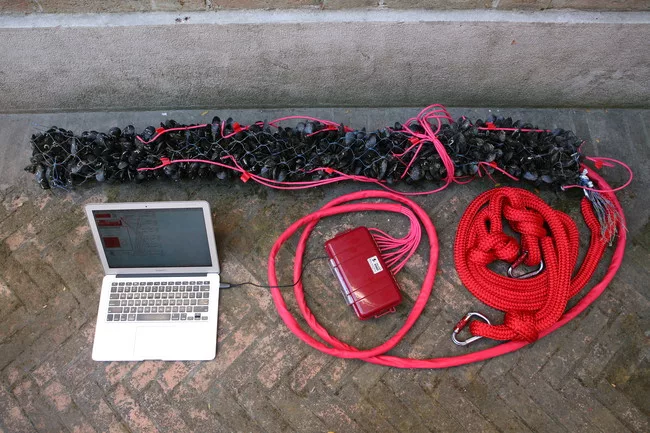
Image courtesy The Living
Eco Park at Pier 35, 2014 (expected)<br />The Living, in collaboration with SHoP, Natalie Jeremijenko, and the New York City Economic Development Corporation (NYCEDC)<br />New York City<br />The proje
David Benjamin of The Living Breaks the Mold
Eco Park at Pier 35, 2014 (expected)
The Living, in collaboration with SHoP, Natalie Jeremijenko, and the New York City Economic Development Corporation (NYCEDC)
New York City
The project, slated for permanent installation in summer 2014, will use sensors on live mussels to track water quality in the East River in New York. (Studies show that mussels open and close their shells in accordance with pollution levels.)
Image courtesy The Living
David Benjamin of The Living
David Benjamin of The Living Breaks the Mold
David Benjamin of The Living
Image courtesy The Living
Living Light, 2009<br />The Living<br />Seoul<br />This permanent pavilion in a public park uses LEDs and data from government-monitored sensors to map air quality throughout the city.
Street Life, 2009<br />The Living<br />Shenzhen &amp; Hong Kong Bi-city Biennale<br />The architects installed hidden electronic displays in the bottom of plastic soup bowls used by street food vendor
Eco Park at Pier 35, 2014 (expected)<br />The Living, in collaboration with SHoP, Natalie Jeremijenko, and the New York City Economic Development Corporation (NYCEDC)<br />New York City<br />The proje
David Benjamin of The Living
March 6, 2014

Living Light, 2009
The Living
Seoul
This permanent pavilion in a public park uses LEDs and data from government-monitored sensors to map air quality throughout the city.

David Benjamin, the principal of Brooklyn-based firm The Living, is not one for convention. His research interests—mussels, slime mold, bone growth, to name a few—are not exactly mainstream. But his unusual design approach—the application of biological systems to architecture, coupled with a geeky software and programming sensibility—has led to collaborations with a string of big-name clients, including 3M, Airbus, Autodesk, and Kanye West, on mostly experimental and research-based projects.

Since founding his practice in 2006, little of Benjamin’s work—developing new materials using synthetic biology, writing design modeling software, and using live mussels to track water quality in the East River in New York—would be categorized as architecture, at least in the traditional sense.

But two new commissions—a new building at Princeton and the MoMA P.S. 1 Young Architects’ 2014 summer installation—are allowing the firm to segue into more customary architecture projects for the first time. The MoMA scheme, in particular, has garnered considerable buzz for its unusual building materials—bricks made out of corn stocks and mycelium, a root material in mushrooms.

Benjamin will present his recent work tonight, in the first of eight lectures given by the 2014 winners of the Architectural League’s Emerging Voices competition.

Click through the slide show to see more of The Living’s work.

Share This Story

Looking for a reprint of this article?
From high-res PDFs to custom plaques, order your copy today!

Laura Mirviss was a staff writer and editor for Architectural Record between 2012 and 2015.

Post a comment to this article

Report Abusive Comment

Subscription Center
  • Create an Account
  • Start a Subscription
  • Manage My Account
  • Sign Up for Newsletters
  • Visit Customer Service
  • Update Preferences

More Videos

Sponsored Content

Sponsored Content is a special paid section where industry companies provide high quality, objective, non-commercial content around topics of interest to the Architectural Record audience. All Sponsored Content is supplied by the advertising company and any opinions expressed in this article are those of the author and not necessarily reflect the views of Architectural Record or its parent company, BNP Media. Interested in participating in our Sponsored Content section? Contact your local rep!

close
  • cold storage facility
    Sponsored byCarlisle SynTec Systems

    How Architects Can Design More Continuous Cold Storage Envelopes

  • TAMLYN XtremeTrim Exterior Trim
    Sponsored byTamlyn

    Designing Cleaner Panel Facades: Why Exterior Trim Details Matter

  • Building with Vapor Barriers
    Sponsored byReef Industries, Inc.

    Vapor Barriers Help Control Moisture in Tighter Building Designs

DESIGN:ED Podcast
Listen to Architectural Record’s DESIGN:ED Podcast

Events

June 23, 2026

Enhancing Fire Resistance with Advanced PVC Solutions

Credits: 1 AIA LU/HSW; 1 AIBD P-CE; 0.1 ICC CEU; 1 IIBEC CEH

Evaluate advanced PVC solutions that improve fire resistance, support WUI compliance, and enhance resilience in residential and commercial building design.

June 25, 2026

Designing Glass Railing Systems that Enhance Aesthetics and Meet Code

Credits: 1 AIA LU/HSW; 1 AIBD P-CE; 0.1 ICC CEU

Upon course completion, participants will possess a deeper understanding of glass railings to help ensure that safety, aesthetic, and performance objectives are achieved.

View All Submit An Event

Products

2026 Architect's Square Foot Costbook

2026 Architect's Square Foot Costbook

See More Products

Popular Stories

Lorcan O' Herilhy

California Architect Lorcan O’Herlihy Has Died, Age 66

Obama Presidential Center, Chicago

The Obama Presidential Center Opens on Chicago’s South Side

Spoonbill Ranch

Johnsen Schmaling Architects Integrates Spoonbill Ranch into a Pristine Landscape

West Village Penthouse

Design Vanguard 2026: Brent Buck Architects

Trinity University Business & Humanities District

AIA Announces 2026 COTE Top Ten Awardees

Enhancing Fire Resistance with Advanced PVC Solutions - Free Webinar - June 23, 2026

Related Articles

  • David Benjamin's The Living Evolves

    See More
  • Princeton School of Architecture

    The Embodied Computation Lab by David Benjamin at the Princeton School of Architecture

    See More
  • CAB The Living

    Names to Know at the 2017 Chicago Architecture Biennial: The Living

    See More

Related Products

See More Products
  • 1444336282.gif

    The Handbook of Interior Design

  • 0470130628.gif

    Sustainable Design: The Science of Sustainability and Green Engineering

See More Products
×

The latest news and information

#1 Source for Architectural Design, News and Products

SUBSCRIBE
  • RESOURCES
    • Advertise
    • Contact Us
    • Submit
    • Store
  • ACCOUNT CENTER
    • Create an Account
    • Start a Subscription
    • Manage My Account
    • Sign Up for Newsletters
    • Visit Customer Service
    • Update Preferences
  • PRIVACY
    • PRIVACY POLICY
    • TERMS & CONDITIONS
    • DO NOT SELL MY PERSONAL INFORMATION
    • PRIVACY REQUEST
    • ACCESSIBILITY
  • SERVICES
    • Marketing Services
    • Reprints
    • Market Research
    • List Rental
    • Survey/Respondent Access
  • STAY CONNECTED
    • Linkedin
    • Facebook
    • Instagram
    • YouTube
    • X (Twitter)

Copyright ©2026. All Rights Reserved BNP Media, Inc. and BNP Media II, LLC.

Design, CMS, Hosting & Web Development :: ePublishing