Architectural Record
search
cart
facebook twitter linkedin youtube
  • Sign In
  • Subscribe
  • Sign Out
  • My Account
Architectural Record
  • NEWS
    • Latest News
    • Awards
    • Interviews
    • Obituaries
    • Podcasts
      • Design:Ed Podcast
      • Sponsored Podcasts
  • OPINION
    • Book Reviews / Excerpts
    • Exhibition Reviews
    • Forum
  • EXCLUSIVES
    • Videos
    • Design Vanguard
    • Top 300 Firms
    • Sponsored Content
    • Sponsored eBooks
    • From the Archives
  • CONTINUING ED
    • Editorial Continuing Ed
    • CE Center
    • CE Academies
  • PROJECTS
    • Buildings By Type
    • Reuse & Renovation
    • Museums & Arts Centers
    • Colleges & Universities
    • Multifamily Housing
    • Interiors
    • Lighting
    • Kitchen & Bath
  • HOUSES
    • Record Houses
    • House of the Month
    • Featured Houses
  • PRODUCTS
    • Products by Category
    • Record Products of the Year
    • Latest Products
  • EVENTS
    • Dates & Events
    • Record on the Road
    • Innovation Conference
    • Sustainability in Practice
    • Women In Architecture
    • Webinars
    • Ad Excellence Awards
    • Submit an Event
  • CONNECT
    • Ask RECORD AI
    • Newsletters
    • Contact
    • Advertise
    • Editorial Calendar
    • Store
    • Customer Service
  • SUBMIT
    • Submission Guidelines
    • RECORD Competitions
  • MAGAZINE
    • Subscribe
    • My Account
    • Digital Edition
    • Current Issue
    • Firm Pass
    • Historic Archive
Architecture News

Design Roulette: Architects Set Loose in the World

By Clifford A. Pearson
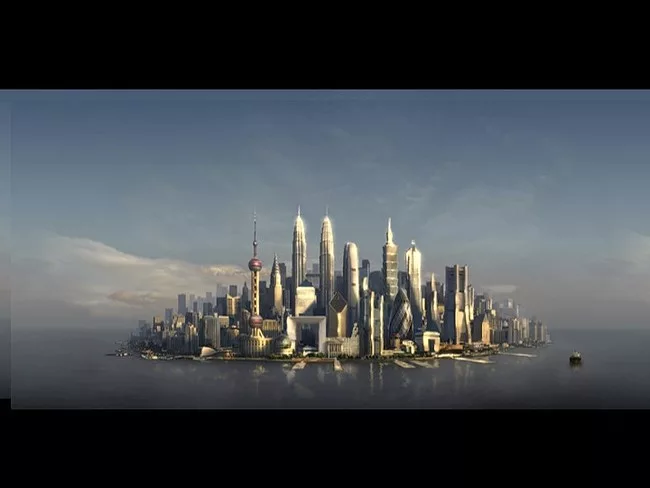
With tall buildings screaming for attention, the skylines of fast-growing cities can seem the same.
Design Roulette: Architects Set Loose in the World
With tall buildings screaming for attention, the skylines of fast-growing cities can seem the same.
Image courtesy Christopher Lee
Many of the fastest growing cities in the world are also in places with high seismic activity.
Design Roulette: Architects Set Loose in the World
Many of the fastest growing cities in the world are also in places with high seismic activity.
Image courtesy Emily So
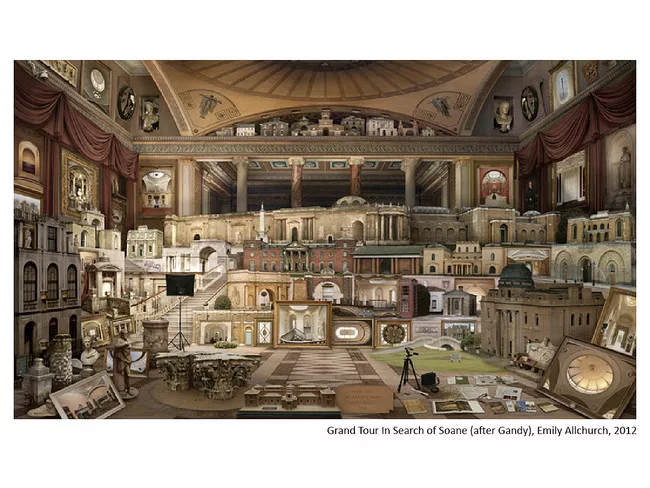
The “grand tour” remains a deeply rooted tradition among architects, though the places they visit today may be different from the most popular destinations in previous eras.
Design Roulette: Architects Set Loose in the World
The “grand tour” remains a deeply rooted tradition among architects, though the places they visit today may be different from the most popular destinations in previous eras.
Image courtesy Sam Jacoby
With tall buildings screaming for attention, the skylines of fast-growing cities can seem the same.
Many of the fastest growing cities in the world are also in places with high seismic activity.
The “grand tour” remains a deeply rooted tradition among architects, though the places they visit today may be different from the most popular destinations in previous eras.
June 20, 2014

With tall buildings screaming for attention, the skylines of fast-growing cities can seem the same.

A discussion of design and geography at the Architectural Association in London this spring turned into an examination of difference and uniformity in the work of architects practicing globally. Presented by Asia Design Forum (ADF), a nonprofit think tank, the event was the sixth in a series of Design Roulettes held in different cities since 2010 and the first one outside of Asia. “So many buildings in Asia today are designed in places like London or New York that we thought it made sense to bring this on-going conversation to the U.K.,” said Ken Yeang, a director of ADF.

Christopher Lee, a principal at Serie Architects, which has offices in London, Mumbai, and Beijing, noted that the drive to create buildings that stand out has, ironically, made many cities around the world feel the same. Look at the skylines of fast-growing cities and you’ll find tall buildings screaming for attention but still getting lost in the crowd. That’s because many architects try to create difference out of novelty, using extreme forms to establish identity, said Lee. “Globalization, though, is not new,” he stated, showing a photograph of one of Le Corbusier’s buildings in Chandigarh. Examining Corb’s work in Chandigarh, Lee described it as “both ancient and modern, both universal and specific.”

Responding to Lee, Paul Finch, program director of the World Architecture Festival and deputy chairman of the UK Design Council, asked, “Why does global capital demand novelty rather than innovation?” Lee answered that most big clients just want buildings that look different and don’t want to spend the time or money on design that goes beyond the superficial.

Emily So, a civil engineer and lecturer at the department of architecture at the University of Cambridge, offered a different perspective on design and geography—presenting a map of the world with cities at risk of earthquakes. A satellite photo of Earth at night showed that many cities in high seismic areas are also some of the biggest and fastest growing. “We have a fatal attraction with building in dangerous seismic zones,” noted So. As a result, architects and engineers in these areas have a responsibility to design new buildings and retrofit old ones in ways that accommodate the severe stresses of earthquakes. Culture and politics, though, can make this more difficult, especially when it comes to writing and enforcing building codes and providing funding for seismic upgrades.

“Global architecture is about exporting ideas and creating brand names,” stated Mustafa Chehabeddine, a design principal in the London office of Kohn Pedersen Fox. But at the same time, architects need to respond to local culture and conditions. For example, at a new 40-million-passenger terminal complex at Abu Dhabi International Airport, Chehabeddine’s team at KPF is using “the texture and grain” of the building—its materials and surfaces—to connect it to its particular context.

Melissa Woolford, who runs a consultancy firm called Nous Collaborative and is setting up the Museum of Architecture in London, challenged attendees to rethink the way they practice architecture. Instead of using only a fee-for-service model, can architects learn from businesses such as McDonalds and Netflix and adopt aspects of the franchise or subscription models? For example, subscription businesses establish on-going relationships with their clients or customers, something that might help architects during periods of weak economic activity.

Although it may include different stops today, the “grand tour” remains a deeply rooted tradition among architects, noted Sam Jacoby, an architect and the director of the Projective Cities program at the Architectural Association. From Sir John Soane on the Continent to Venturi and Scott Brown in Las Vegas and Rem Koolhaas in Lagos, architects keep exploring the world in search of “the exotic,” said Jacoby. But we usually see what we expect to see, bringing our own particular perspective and cultural baggage with us. Many architects, stated Jacoby, “use geography as a means of disciplinary appropriation.”

In the 21st century, we can travel the world via the Internet, said Shahira Fahmy, an Egyptian architect currently working as a visiting professor at Columbia’s Graduate School of Architecture, Planning, and Preservation. And now that Google is releasing old maps dating back to 2007, we can travel back in time and see how places have changed in the course of the past seven years—pursuing “an archaeology of the recent past.” For example, if we look at Cairo, Fahmy’s hometown, we will notice the enormous growth at the city’s periphery since 2007. “The built environment reflects changes in society and politics,” Fahmy said.

“When architects start practicing abroad, what happens?” asked Finch. Some architects find themselves working outside their stylistic comfort zone, he noted, “which can push them in new directions.” He cited Cesar Pelli and the Petronas Towers in Kuala Lumpur as an example of an architect expressing himself in a new way in response to a foreign context. “But if you’re a brand,” such as Zaha Hadid or Frank Gehry, foreign clients don’t really want you to change, said Finch. A third response to a new context is the one taken by Wilkinson Eyre in its Gardens on the Bay in Singapore. In this project, the British firm brought its ideas of sustainability to the tropics, exploring ways of reducing energy use in a set of glass-and-steel greenhouses.

For more information on the London Design Roulette and previous ones held in Singapore, Hong Kong, Shanghai, Kuala Lumpur, and Beijing, visit asiadesignforum.org.

Clifford A. Pearson is a deputy editor of Architectural Record and a director of Asia Design Forum.

Share This Story

Looking for a reprint of this article?
From high-res PDFs to custom plaques, order your copy today!

Cliff portrait 2 0t5a1761 0031

Contributing editor Clifford Pearson is the co-author, with A. Eugene Kohn, of The World By Design, and writes about architecture and urbanism.

Post a comment to this article

Report Abusive Comment

Subscription Center
  • Create an Account
  • Start a Subscription
  • Manage My Account
  • Sign Up for Newsletters
  • Visit Customer Service
  • Update Preferences

More Videos

Sponsored Content

Sponsored Content is a special paid section where industry companies provide high quality, objective, non-commercial content around topics of interest to the Architectural Record audience. All Sponsored Content is supplied by the advertising company and any opinions expressed in this article are those of the author and not necessarily reflect the views of Architectural Record or its parent company, BNP Media. Interested in participating in our Sponsored Content section? Contact your local rep!

close
  • TAMLYN XtremeTrim Exterior Trim
    Sponsored byTamlyn

    Designing Cleaner Panel Facades: Why Exterior Trim Details Matter

  • Building with Vapor Barriers
    Sponsored byReef Industries, Inc.

    Vapor Barriers Help Control Moisture in Tighter Building Designs

  • Duct Interior with Prodeq System
    Sponsored byHenry, a Carlisle Company

    Designing Resilient Water Containment Systems

DESIGN:ED Podcast
Listen to Architectural Record’s DESIGN:ED Podcast

Events

June 10, 2026

Rethinking Stormwater – The Power of Porous Paving

Credits: 1 AIA LU/HSW; 1 AIBD P-CE; 0.1 ICC CEU

Learn how porous paving systems support stormwater management, reduce heat island effects, and enhance sustainable site design performance.

June 11, 2026

Very Early Warning Fire Detection for Mission-Critical Facilities

Credits: 1 AIA LU/HSW; 1 AIBD P-CE; 0.1 ICC CEU

Examine advanced fire detection strategies that support uptime and enhance safety in data centers and other mission-critical facilities.

View All Submit An Event

Products

2026 Architect's Square Foot Costbook

2026 Architect's Square Foot Costbook

See More Products

Popular Stories

Practice Matters illustration

What’s in a (Firm’s) Name? Thinking About Succession and Legacy

Coronado Bridge

The Architect’s Guide to San Diego

Practice Matters illustration

By the Numbers: Counting America's Architects

Riverdale House by Studio Lau

Riverdale House by Studio Lau

House on a Hill

Design Vanguard 2026: Forma

Broader Sustainability of CMU - Free Webinar - May 21, 2026

Related Articles

  • Inside Imola Ceramics' booth

    In Orlando, Thousands Convene for the Largest Tile and Stone Show in the World

    See More
  • The Most Beautiful Office Building in the World

    See More
  • Moving Up in the World

    See More

Related Products

See More Products
  • GlobalData_logo_blue_header.png

    Construction in the US - Key Trends and Opportunities to 2023

  • 3dthinking.jpg

    3D Thinking in Design and Architecture: From Antiquity to the Future

See More Products
×

The latest news and information

#1 Source for Architectural Design, News and Products

SUBSCRIBE
  • RESOURCES
    • Advertise
    • Contact Us
    • Submit
    • Store
  • ACCOUNT CENTER
    • Create an Account
    • Start a Subscription
    • Manage My Account
    • Sign Up for Newsletters
    • Visit Customer Service
    • Update Preferences
  • PRIVACY
    • PRIVACY POLICY
    • TERMS & CONDITIONS
    • DO NOT SELL MY PERSONAL INFORMATION
    • PRIVACY REQUEST
    • ACCESSIBILITY
  • SERVICES
    • Marketing Services
    • Reprints
    • Market Research
    • List Rental
    • Survey/Respondent Access
  • STAY CONNECTED
    • Linkedin
    • Facebook
    • Instagram
    • YouTube
    • X (Twitter)

Copyright ©2026. All Rights Reserved BNP Media, Inc. and BNP Media II, LLC.

Design, CMS, Hosting & Web Development :: ePublishing