Architectural Record
search
cart
facebook twitter linkedin youtube
  • Sign In
  • Subscribe
  • Sign Out
  • My Account
Architectural Record
  • NEWS
    • Latest News
    • Awards
    • Interviews
    • Obituaries
    • Podcasts
      • Design:Ed Podcast
      • Sponsored Podcasts
  • OPINION
    • Book Reviews / Excerpts
    • Exhibition Reviews
    • Forum
  • EXCLUSIVES
    • Videos
    • Design Vanguard
    • Top 300 Firms
    • Sponsored Content
    • Sponsored eBooks
    • From the Archives
  • CONTINUING ED
    • Editorial Continuing Ed
    • CE Center
    • CE Academies
  • PROJECTS
    • Buildings By Type
    • Reuse & Renovation
    • Museums & Arts Centers
    • Colleges & Universities
    • Multifamily Housing
    • Interiors
    • Lighting
    • Kitchen & Bath
  • HOUSES
    • Record Houses
    • House of the Month
    • Featured Houses
  • PRODUCTS
    • Products by Category
    • Record Products of the Year
    • Latest Products
  • EVENTS
    • Dates & Events
    • Record on the Road
    • Innovation Conference
    • Sustainability in Practice
    • Women In Architecture
    • Webinars
    • Ad Excellence Awards
    • Submit an Event
  • CONNECT
    • Ask RECORD AI
    • Newsletters
    • Contact
    • Advertise
    • Editorial Calendar
    • Store
    • Customer Service
  • SUBMIT
    • Submission Guidelines
    • RECORD Competitions
  • MAGAZINE
    • Subscribe
    • My Account
    • Digital Edition
    • Current Issue
    • Firm Pass
    • Historic Archive
Architecture News

Maki's Aga Khan Museum Makes Its Debut
By Lisa Rochon
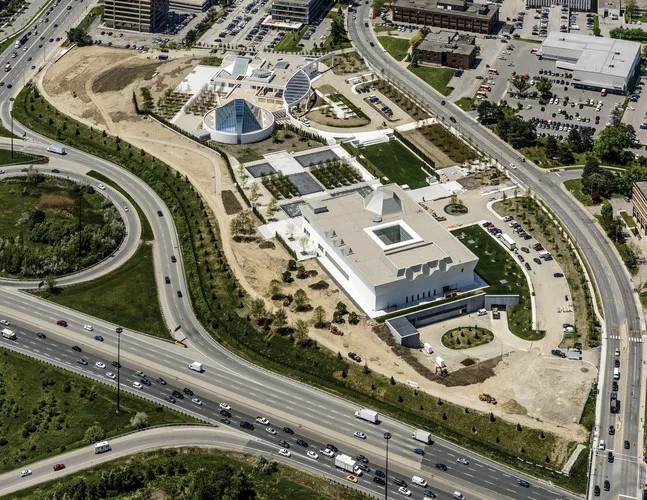
The museum (foreground), shares a plaza with Charles Correa’s Ismaili Centre (shown at top left).
Maki's Aga Khan Museum Makes Its Debut
The museum (foreground), shares a plaza with Charles Correa’s Ismaili Centre (shown at top left).
Photo © Kalloon Photography
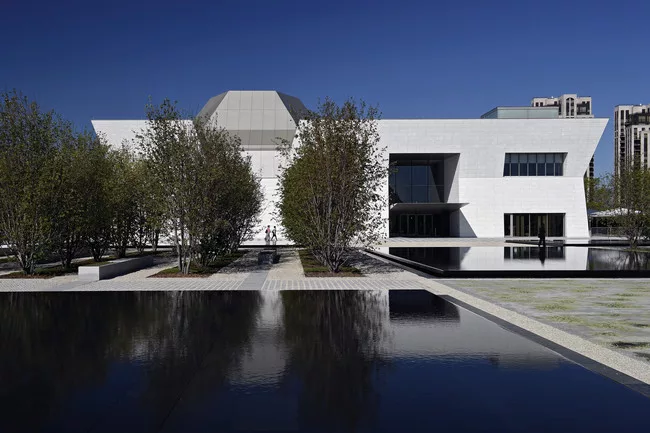
Fumihiko Maki’s Aga Khan Museum is a simple rectangular volume. It shares a 17-acre site in Toronto with the newly opened Ismaili Centre designed by Charles Correa (not shown).
Maki's Aga Khan Museum Makes Its Debut
Fumihiko Maki’s Aga Khan Museum is a simple rectangular volume. It shares a 17-acre site in Toronto with the newly opened Ismaili Centre designed by Charles Correa (not shown).
Photo courtesy The Aga Khan Museum
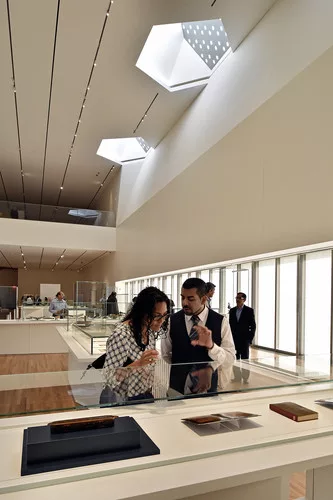
A museum gallery receives daylight filtered through hexagonal skylights.
Maki's Aga Khan Museum Makes Its Debut
A museum gallery receives daylight filtered through hexagonal skylights.
Photo courtesy The Aga Khan Museum
The geometric mashrabiya pattern printed on the glass walls of the interior courtyard cast intricate shadows inside the museum.
Maki's Aga Khan Museum Makes Its Debut
The geometric mashrabiya pattern printed on the glass walls of the interior courtyard cast intricate shadows inside the museum.
Photo courtesy The Aga Khan Museum
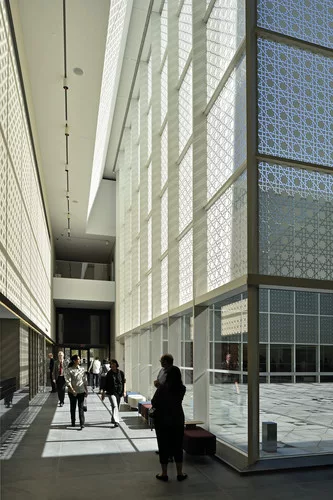
The geometric mashrabiya pattern printed on the glass walls of the interior courtyard cast intricate shadows inside the museum.
Maki's Aga Khan Museum Makes Its Debut
The geometric mashrabiya pattern printed on the glass walls of the interior courtyard cast intricate shadows inside the museum.
Photo courtesy The Aga Khan Museum
Maki's Aga Khan Museum Makes Its Debut
Photo © Tom Alban
Maki's Aga Khan Museum Makes Its Debut
Photo © Tom Alban
Maki's Aga Khan Museum Makes Its Debut
Photo © Tom Alban
The museum (foreground), shares a plaza with Charles Correa’s Ismaili Centre (shown at top left).
Fumihiko Maki’s Aga Khan Museum is a simple rectangular volume. It shares a 17-acre site in Toronto with the newly opened Ismaili Centre designed by Charles Correa (not shown).
A museum gallery receives daylight filtered through hexagonal skylights.
The geometric mashrabiya pattern printed on the glass walls of the interior courtyard cast intricate shadows inside the museum.
Maki's Aga Khan Museum Makes Its Debut
September 19, 2014
Fumihiko Maki’s Aga Khan Museum is a simple rectangular volume. It shares a 17-acre site in Toronto with the newly opened Ismaili Centre designed by Charles Correa (not shown).
 
Toronto’s cultural brand has moved into a new galaxy. After four years of construction, the Aga Khan Museum, designed by Pritzker Prize–winner Fumihiko Maki, opened east of the city’s downtown on Thursday.  
 
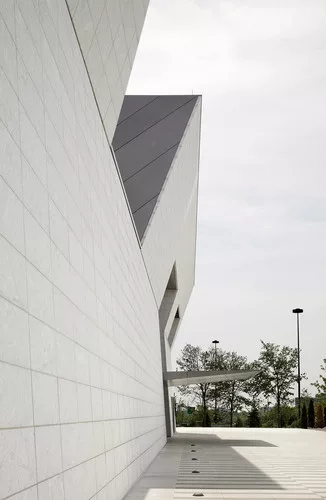
With the new, sublimely detailed 124,000-square-foot building, Tokyo-based Maki and Associates (with Toronto’s Moriyama & Teshima Architects) expand the city’s repertoire of museums and university buildings designed by local and international architects, including Frank Gehry, Norman Foster, Will Alsop, and Daniel Libeskind. The museum—a restrained canted box clad in a super-white Brazilian granite, with an interior courtyard open to the sky and flooded with daylight—is part of a graceful 17-acre compound. It is bookended to the west by the stunning, newly opened Ismaili Centre by legendary Mumbai architect Charles Correa. Standing below the faceted glass dome in his center’s prayer hall, Correa, 84, presented a series of spontaneous meditations on architecture at a press event earlier in the month, celebrating the opening of the museum and the center: “There is God’s sky above and God’s earth below, and when you acknowledge both of them, that moves you.”
 
The press event recognized architectural luminaries and served as an acknowledgment that most North Americans know very little about Muslim contributions to the arts. “Here is a simple but devastating question,” challenged Aga Khan Museum director Henry Kim: “How many Muslim artists from the past can you name?”
 
To help fill in the knowledge gap, Maki’s museum doubles as a cultural center, offering live dance and music performances within the glass-walled interior courtyard and in an intimate teak-lined theater. The packed outreach schedule includes curator talks, poetry readings, and foodie events that promise to shift or, at least, rebalance the public perception of war-torn areas such as Afghanistan and Iran. Educating the public about the depth and humanity of Islamic art was always the fundamental idea behind the museum complex, as conceived more than a decade ago by the Aga Khan, the wealthy philanthropist, urban thinker, and spiritual leader of the Ismaili people around the world. To that end, the Aga Khan gifted his extraordinary art collection. Assembled over many generations by his family, this includes more than 1,000 objects spanning 10 centuries.
 
Hexagonal skylights cast delicately patterned shadows into the permanent gallery on the museum’s ground floor and temporary galleries on the second, where visitors are given plenty of room to inspect treasures such as the 11th-century Canon of Medicine, several pages of the 16th-century Shahnameh—considered to be one of the greatest painted manuscripts of all time—and a perfectly preserved 13th-century silk robe once worn by a Mongol nobleman. Ceramics, metalwork, and books are placed within seamless, high-security glass casework, designed by Studio Adrien Gardère of Paris. There are architectural replicas and cultural lodestones, including a reconstruction of a Mumluk fountain, which once refreshed the historic palaces of Cairo. The Bellerive Room, another reconstruction, offers a fascinating peek at the interior of the Geneva residence owned by the Aga Khan’s aunt and late uncle, the Princess Catherine and Prince Sadruddin Aga Khan. The family’s ceramic collection is also on display.
 
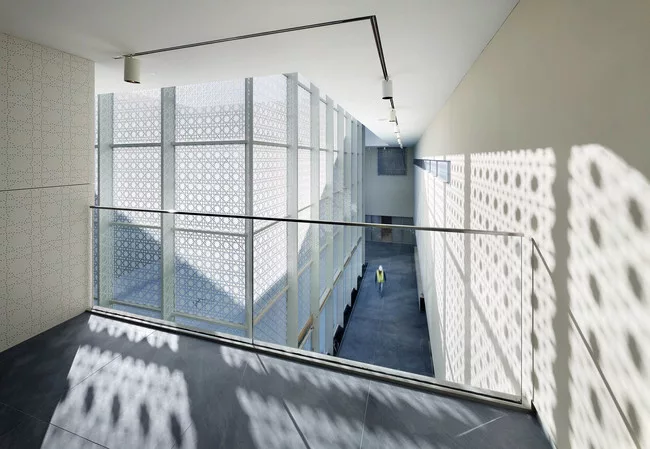
The museum complex exemplifies the big thinking and attention to detail that has long defined the Aga Khan Awards for Architecture and the Aga Khan Trust for Culture, an agency of the Aga Khan Development Network. Using a discreet motif, Maki’s team elaborated on several geometric mashrabiya patterns cut into some of the teak walls in the auditorium. This pattern, inspired by the Islamic Jali screen, is also printed on the courtyard’s 43-foot-tall walls of double-pane-insulated glass, casting beautiful shadows on the interior walls, ceiling, and heated stone floor.
 
The master plan was inspired by the vast urban dimensions of the plaza in Istanbul that links the Blue Mosque to the Hagia Sofia, said Gary Kamemoto, a director at Maki and Associates, during the museum’s opening. To powerful effect, the civic plaza features five minimalist black reflecting pools offset by lush plantings of mature trees. Designed by the Beirut landscape architect Vladimir Djurovic, the plaza provides a serene urban refuge and an effective acoustical buffer from the noisy Don Valley Parkway running along the edge of the sloped site. 
 
Toronto is North America’s fourth-largest city, widely recognized as a place that sits comfortably with cultural diversity. The majority of its population was born outside of Canada, and some 150 languages are spoken within the metropolis. With that in mind, and reportedly as a thank you to Canada for welcoming Ismailis when they faced persecution in Uganda during the 1970s, the wealthy Aga Khan—renowned for founding universities and hospitals in the Muslim world as well as for his patronage of Islamic studies at Harvard University and the Massachusetts Institute of Technology—gave the $300-million museum and civic complex to Toronto. It is the first art museum that the Aga Khan Trust for Culture has built to date.
 
Lisa Rochon is a Toronto-based architecture critic and a Senior Fellow at the Global Cities Institute, University of Toronto.
KEYWORDS: Aga Khan Awards

Share This Story

Looking for a reprint of this article?
From high-res PDFs to custom plaques, order your copy today!
Post a comment to this article

Report Abusive Comment

Subscription Center
  • Create an Account
  • Start a Subscription
  • Manage My Account
  • Sign Up for Newsletters
  • Visit Customer Service
  • Update Preferences

More Videos

Sponsored Content

Sponsored Content is a special paid section where industry companies provide high quality, objective, non-commercial content around topics of interest to the Architectural Record audience. All Sponsored Content is supplied by the advertising company and any opinions expressed in this article are those of the author and not necessarily reflect the views of Architectural Record or its parent company, BNP Media. Interested in participating in our Sponsored Content section? Contact your local rep!

close
  • TAMLYN XtremeTrim Exterior Trim
    Sponsored byTamlyn

    Designing Cleaner Panel Facades: Why Exterior Trim Details Matter

  • Building with Vapor Barriers
    Sponsored byReef Industries, Inc.

    Vapor Barriers Help Control Moisture in Tighter Building Designs

  • Duct Interior with Prodeq System
    Sponsored byHenry, a Carlisle Company

    Designing Resilient Water Containment Systems

DESIGN:ED Podcast
Listen to Architectural Record’s DESIGN:ED Podcast

Events

June 11, 2026

Very Early Warning Fire Detection for Mission-Critical Facilities

Credits: 1 AIA LU/HSW; 1 AIBD P-CE; 0.1 ICC CEU

Examine advanced fire detection strategies that support uptime and enhance safety in data centers and other mission-critical facilities.

June 16, 2026

Focus on the Façade: Exploring Steel, Timber & Fire-Rated Curtain Walls and Channel Glass Systems

Credits: 1 AIA LU/HSW; 1 AIBD P-CE; 0.1 ICC CEU

Explore modern façade and glazing systems that enhance daylighting, fire safety, and thermal performance while expanding architectural design possibilities.

View All Submit An Event

Products

2026 Architect's Square Foot Costbook

2026 Architect's Square Foot Costbook

See More Products

Popular Stories

Practice Matters illustration

What’s in a (Firm’s) Name? Thinking About Succession and Legacy

Coronado Bridge

The Architect’s Guide to San Diego

Practice Matters illustration

By the Numbers: Counting America's Architects

SanDiegoAirport

Top 300 Architecture Firms of 2026

Crane Cove, ONO

Design Vanguard 2026 Winners

Broader Sustainability of CMU - Free Webinar - May 21, 2026

Related Articles

  • Tropical Malaysian Residence

    Tropical Malaysian Residence Makes Its Hollywood Debut in ‘Crazy Rich Asians’

    See More
  • TheGingerbreadCityNYC_11152023©LeandroJusten_001.jpg

    Ain’t That Sweet: ‘The Gingerbread City’ Makes Its New York Debut

    See More
  • Geffen-Hall-1.jpg

    A Friendlier, More Intimate David Geffen Hall Makes its New York Debut

    See More

Related Products

See More Products
  • Architectural Record - May 2026

    Architectural Record May 2026 Issue

See More Products
×

The latest news and information

#1 Source for Architectural Design, News and Products

SUBSCRIBE
  • RESOURCES
    • Advertise
    • Contact Us
    • Submit
    • Store
  • ACCOUNT CENTER
    • Create an Account
    • Start a Subscription
    • Manage My Account
    • Sign Up for Newsletters
    • Visit Customer Service
    • Update Preferences
  • PRIVACY
    • PRIVACY POLICY
    • TERMS & CONDITIONS
    • DO NOT SELL MY PERSONAL INFORMATION
    • PRIVACY REQUEST
    • ACCESSIBILITY
  • SERVICES
    • Marketing Services
    • Reprints
    • Market Research
    • List Rental
    • Survey/Respondent Access
  • STAY CONNECTED
    • Linkedin
    • Facebook
    • Instagram
    • YouTube
    • X (Twitter)

Copyright ©2026. All Rights Reserved BNP Media, Inc. and BNP Media II, LLC.

Design, CMS, Hosting & Web Development :: ePublishing