Architectural Record
search
cart
facebook twitter linkedin youtube
  • Sign In
  • Subscribe
  • Sign Out
  • My Account
Architectural Record
  • NEWS
    • Latest News
    • Awards
    • Interviews
    • Obituaries
    • Podcasts
      • Design:Ed Podcast
      • Sponsored Podcasts
  • OPINION
    • Book Reviews / Excerpts
    • Exhibition Reviews
    • Forum
  • EXCLUSIVES
    • Videos
    • Design Vanguard
    • Top 300 Firms
    • Sponsored Content
    • Sponsored eBooks
    • From the Archives
  • CONTINUING ED
    • Editorial Continuing Ed
    • CE Center
    • CE Academies
  • PROJECTS
    • Buildings By Type
    • Reuse & Renovation
    • Museums & Arts Centers
    • Colleges & Universities
    • Multifamily Housing
    • Interiors
    • Lighting
    • Kitchen & Bath
  • HOUSES
    • Record Houses
    • House of the Month
    • Featured Houses
  • PRODUCTS
    • Products by Category
    • Record Products of the Year
    • Latest Products
  • EVENTS
    • Dates & Events
    • Record on the Road
    • Innovation Conference
    • Sustainability in Practice
    • Women In Architecture
    • Webinars
    • Ad Excellence Awards
    • Submit an Event
  • CONNECT
    • Ask RECORD AI
    • Newsletters
    • Contact
    • Advertise
    • Editorial Calendar
    • Store
    • Customer Service
  • SUBMIT
    • Submission Guidelines
    • RECORD Competitions
  • MAGAZINE
    • Subscribe
    • My Account
    • Digital Edition
    • Current Issue
    • Firm Pass
    • Historic Archive
Architecture News

Exhibition Review: Thinking the Future of Auschwitz
By Fred A. Bernstein
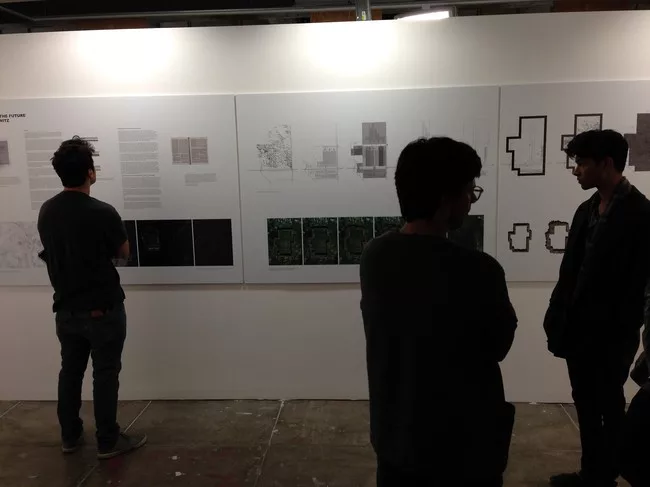
Russell Thomsen and Eric Kahn, partners at IDEA, were drawn to the subject of how the concentration camp in southern Poland will be experienced by future generations.<div id='_mcePaste'>&#65279;&#6527
Exhibition Review: Thinking the Future of Auschwitz
Russell Thomsen and Eric Kahn, partners at IDEA, were drawn to the subject of how the concentration camp in southern Poland will be experienced by future generations.

Photo © Architectural Record
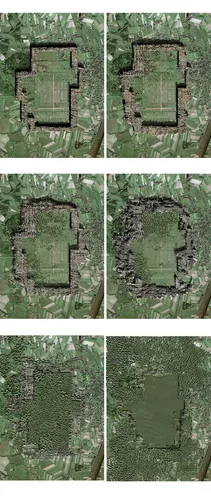
Aerial renderings of Auschwitz-Birkenau, showing it enclosed by a wall of logs that deteriorates over time, as does the camp.<div id='_mcePaste'>&#65279;&#65279;
Exhibition Review: Thinking the Future of Auschwitz
Aerial renderings of Auschwitz-Birkenau, showing it enclosed by a wall of logs that deteriorates over time, as does the camp.

Image courtesy Russell Thomsen
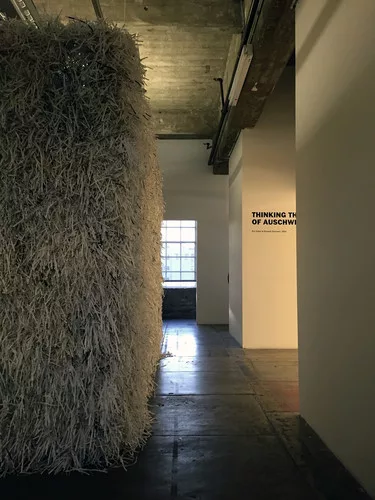
The exhibition includes a structure shaped like the perimeter of Birkenau, enclosing a space that can&#8217;t be seen or entered. The wall is covered with shredded paper, suggesting bits of logs and r
Exhibition Review: Thinking the Future of Auschwitz
The exhibition includes a structure shaped like the perimeter of Birkenau, enclosing a space that can’t be seen or entered. The wall is covered with shredded paper, suggesting bits of logs and recalling the Nazis’ meticulous record-keeping.

Photo courtesy Russell Thomsen
The exhibition includes a structure shaped like the perimeter of  Birkenau, enclosing a space that can&#8217;t be seen or entered. The wall is  covered with shredded paper, suggesting bits of logs and
Exhibition Review: Thinking the Future of Auschwitz
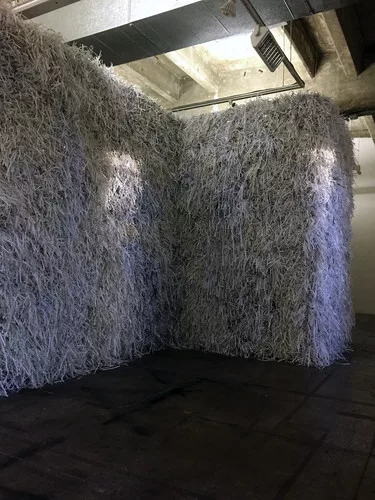
The exhibition includes a structure shaped like the perimeter of Birkenau, enclosing a space that can’t be seen or entered. The wall is covered with shredded paper, suggesting bits of logs and recalling the Nazis’ meticulous record-keeping.

Photo courtesy Russell Thomsen
Russell Thomsen and Eric Kahn, partners at IDEA, were drawn to the subject of how the concentration camp in southern Poland will be experienced by future generations.<div id='_mcePaste'>&#65279;&#6527
Aerial renderings of Auschwitz-Birkenau, showing it enclosed by a wall of logs that deteriorates over time, as does the camp.<div id='_mcePaste'>&#65279;&#65279;
The exhibition includes a structure shaped like the perimeter of Birkenau, enclosing a space that can&#8217;t be seen or entered. The wall is covered with shredded paper, suggesting bits of logs and r
The exhibition includes a structure shaped like the perimeter of  Birkenau, enclosing a space that can&#8217;t be seen or entered. The wall is  covered with shredded paper, suggesting bits of logs and
November 21, 2014

Russell Thomsen and Eric Kahn, partners at IDEA, were drawn to the subject of how the concentration camp in southern Poland will be experienced by future generations.


The future of Auschwitz is a topic that would scare most architects away. But Russell Thomsen and Eric Kahn, partners in the Los Angeles firm IDEA, were drawn to the subject of how the concentration camp in southern Poland will be experienced by future generations. During visits to Auschwitz and nearby Birkenau, a 400-acre “annex” built expressly for extermination, they realized that, if the camp is to be maintained as a historic site, it will someday need to be rebuilt. But how long can the rebuilding process continue? The architects asked themselves if there are ways that Birkenau—effectively the largest Jewish cemetery in the world—can remain relevant without being turned into a museum or a static memorial.

In an exhibition at SCI-Arc’s library gallery titled Thinking the Future of Auschwitz, through November 30, Thomsen and Kahn suggest that it might be best to wall off Birkenau. The barrier they propose would preclude future restoration and at the same time turn the site into a Tel Olam, the Biblical term for a place of unspeakable evil, a place that must be rendered inaccessible (literally “a heap forever”). They developed a plan to gather logs from every country in Europe from which Jews were sent to Birkenau; the logs would then be stacked to form a wall around the site. Of course, over time the new wall would deteriorate, raising the question, once again, of whether to rebuild.

Earlier this month, Eric Owen Moss, the director of SCI-Arc, conversed with Thomsen in the school’s library gallery, which was filled to bursting. “We were thinking maybe no one would show up,” joked Moss, “and we wouldn’t have to do this.” But then he launched into a discussion that touched on art, music, and literature (including a prose poem on the Holocaust by his father, who wrote as Moss Herbert), and eventually focused on practical questions about the Birkenau proposal: How tall would the barrier be? Would visitors climb on it, the way they climb on Peter Eisenman’s Holocaust memorial in Berlin?

Kahn died in June, which left Thomsen not only to answer Moss’s questions, but also to create the exhibition, with the support of the Graham Foundation. Accompanying the moving renderings is an installation that, he said, “isn’t a model of the proposal but is in the spirit of the proposal”—a structure shaped like the perimeter of Birkenau, enclosing a space that can’t be seen or entered. In this case, the wall is covered with shredded paper, suggesting bits of logs and recalling the Nazis’ meticulous record-keeping. If the installation seems inscrutable, that’s okay with its creators. The proposal, Thomsen said, “is not about providing explanation” but rather “is meant to withhold solace and prevent convenient closure.”

Share This Story

Looking for a reprint of this article?
From high-res PDFs to custom plaques, order your copy today!

Fred Bernstein studied architecture at Princeton and law at NYU and writes about both subjects.

Post a comment to this article

Report Abusive Comment

Subscription Center
  • Create an Account
  • Start a Subscription
  • Manage My Account
  • Sign Up for Newsletters
  • Visit Customer Service
  • Update Preferences

More Videos

Sponsored Content

Sponsored Content is a special paid section where industry companies provide high quality, objective, non-commercial content around topics of interest to the Architectural Record audience. All Sponsored Content is supplied by the advertising company and any opinions expressed in this article are those of the author and not necessarily reflect the views of Architectural Record or its parent company, BNP Media. Interested in participating in our Sponsored Content section? Contact your local rep!

close
  • cold storage facility
    Sponsored byCarlisle SynTec Systems

    How Architects Can Design More Continuous Cold Storage Envelopes

  • TAMLYN XtremeTrim Exterior Trim
    Sponsored byTamlyn

    Designing Cleaner Panel Facades: Why Exterior Trim Details Matter

  • Building with Vapor Barriers
    Sponsored byReef Industries, Inc.

    Vapor Barriers Help Control Moisture in Tighter Building Designs

DESIGN:ED Podcast
Listen to Architectural Record’s DESIGN:ED Podcast

Events

June 30, 2026

Generator Selection and Sizing for Outage-Ready Homes

Credits: 1 AIA LU/HSW; 1 AIBD P-CE; 0.1 ICC CEU

Explore how propane-powered systems and whole-home generators can improve energy resilience, reduce electrical loads, and lower long-term residential costs.

July 1, 2026

Hospitality in Higher Education

Credits: 1 AIA LU/HSW; 1 AIBD P-CE; 0.1 ICC CEU

Explore how hospitality-driven campus design can strengthen belonging, wellbeing, and community connection in higher education environments.

View All Submit An Event

Products

2026 Architect's Square Foot Costbook

2026 Architect's Square Foot Costbook

See More Products

Popular Stories

Obama Presidential Center, Chicago

The Obama Presidential Center Opens on Chicago’s South Side

Lorcan O' Herilhy

California Architect Lorcan O’Herlihy Has Died, Age 66

Spoonbill Ranch

Johnsen Schmaling Architects Integrates Spoonbill Ranch into a Pristine Landscape

Image of Bruce Springsteen Center for American Music

The CookFox-designed Bruce Springsteen Center for American Music Opens in New Jersey

Kìwekì Point, Ottawa, Canada

Perched High Above the Ottawa River, Kìwekì Point Showcases Sweeping Views of the Canadian Capital Region

Generator Selection and Sizing for Outage-Ready Homes - Free Webinar - June 30, 2026

Related Articles

  • Greta Ferusic

    Architect Greta Ferušić, Survivor of Auschwitz and the Sarajevo Siege, Dies at 97

    See More
  • Lisa-Sauve.jpg

    The Future of Practice: Interview with Lisa Sauvé of Synecdoche

    See More
  • Innovation Conference Headshots

    Record’s 2017 Innovation Conference in NYC Considers Architecture and the Future of the Public Realm

    See More

Related Products

See More Products
  • 3dthinking.jpg

    3D Thinking in Design and Architecture: From Antiquity to the Future

  • 1118522532.gif

    Future Details of Architecture

  • 1444336282.gif

    The Handbook of Interior Design

See More Products
×

The latest news and information

#1 Source for Architectural Design, News and Products

SUBSCRIBE
  • RESOURCES
    • Advertise
    • Contact Us
    • Submit
    • Store
  • ACCOUNT CENTER
    • Create an Account
    • Start a Subscription
    • Manage My Account
    • Sign Up for Newsletters
    • Visit Customer Service
    • Update Preferences
  • PRIVACY
    • PRIVACY POLICY
    • TERMS & CONDITIONS
    • DO NOT SELL MY PERSONAL INFORMATION
    • PRIVACY REQUEST
    • ACCESSIBILITY
  • SERVICES
    • Marketing Services
    • Reprints
    • Market Research
    • List Rental
    • Survey/Respondent Access
  • STAY CONNECTED
    • Linkedin
    • Facebook
    • Instagram
    • YouTube
    • X (Twitter)

Copyright ©2026. All Rights Reserved BNP Media, Inc. and BNP Media II, LLC.

Design, CMS, Hosting & Web Development :: ePublishing