Architectural Record
search
cart
facebook twitter linkedin youtube
  • Sign In
  • Subscribe
  • Sign Out
  • My Account
Architectural Record
  • NEWS
    • Latest News
    • Awards
    • Interviews
    • Obituaries
    • Podcasts
      • Design:Ed Podcast
      • Sponsored Podcasts
  • OPINION
    • Book Reviews / Excerpts
    • Exhibition Reviews
    • Forum
  • EXCLUSIVES
    • Videos
    • Design Vanguard
    • Top 300 Firms
    • Sponsored Content
    • Sponsored eBooks
    • From the Archives
  • CONTINUING ED
    • Editorial Continuing Ed
    • CE Center
    • CE Academies
  • PROJECTS
    • Buildings By Type
    • Reuse & Renovation
    • Museums & Arts Centers
    • Colleges & Universities
    • Multifamily Housing
    • Interiors
    • Lighting
    • Kitchen & Bath
  • HOUSES
    • Record Houses
    • House of the Month
    • Featured Houses
  • PRODUCTS
    • Products by Category
    • Record Products of the Year
    • Latest Products
  • EVENTS
    • Dates & Events
    • Record on the Road
    • Innovation Conference
    • Sustainability in Practice
    • Women In Architecture
    • Webinars
    • Ad Excellence Awards
    • Submit an Event
  • CONNECT
    • Ask RECORD AI
    • Newsletters
    • Contact
    • Advertise
    • Editorial Calendar
    • Store
    • Customer Service
  • SUBMIT
    • Submission Guidelines
    • RECORD Competitions
  • MAGAZINE
    • Subscribe
    • My Account
    • Digital Edition
    • Current Issue
    • Firm Pass
    • Historic Archive
Architecture NewsInterviews

Newsmaker: Carl Krebs
By Fred A. Bernstein
February 12, 2015
At the National September 11 Memorial & Museum at the World Trade Center site, beneath the fountains conceived by Michael Arad and an entry pavilion by Snøhetta, Manhattan architects Davis Brody Bond created a series of inspiring spaces, set between the slurry wall of the original World Trade Center and equally powerful elements of their own devising. In January, the museum was recognized by the AIA with an award for interior architecture. Carl Krebs, a Davis Brody Bond partner who devoted more than 10 years to the project, said he is proud that his team, in creating the vast underground museum, “found ways to share our own emotional connection to the site.” 
 
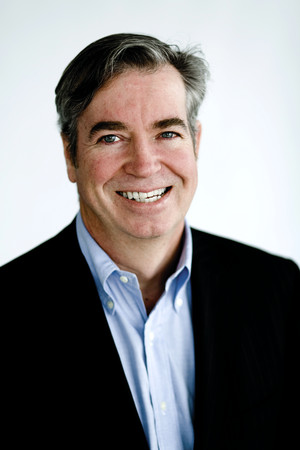
Carl Krebs
Photo courtesy Davis Brody Bond
Carl Krebs
 
Related links First Look: National September 11 Memorial Museum
 
Krebs, 55, is one of five partners at the firm, founded in 1952 by Lew Davis and Sam Brody. In 1990, Davis and Brody were joined by Max Bond, one of the deans of New York’s architecture world (and a rare African-American in a leadership position at a major firm). Bond died in 2009. Now Krebs is making his own mark on the city, following the September 11 museum with two other high-profile projects: a 900,000-square-foot mixed-use building for New York University, with design partner KieranTimberlake, on a superblock north of Houston Street, and a 42,000-square-foot addition to the Frick Collection, which occupies a Carrère and Hastings mansion on Fifth Avenue at 70th Street. Opponents of the NYU plan say Greenwich Village is sacrificing its character to NYU’s growth. Opponents of the Frick project say a midblock garden by Russell Page deserves the same protection as the museum’s neoclassical buildings, and that the museum ought not to expand at all.

Architectural Record: Do you understand the concerns of people who say the city is getting too dense?

Carl Krebs: I think that density is what makes New York exciting and distinctive. I live in Lower Manhattan, near City Hall. When the Frank Gehry tower [at 8 Spruce Street] went up, I lost my view of Brooklyn, but I gained a view of an iconic building. The tower was built on a parking lot, so I was not unrealistic about what might happen.

But the Frick garden isn’t a parking lot.

Yes, but it was created in the 1970s. And it was unknown to Henry Clay Frick or the architects Carrère and Hastings [who designed the original Frick mansion] and John Russell Pope [who altered and enlarged it in the 1930s].

How did that garden come to be?

The Frick Collection bought three townhouses between 1939 and 1970 while planning a sizable addition on 70th Street. But, because of financial pressures, they ended up building a much smaller addition and converting about two-thirds of the site into a garden.

You’re not proposing to build on the garden that faces Fifth Avenue?

I’m constantly being told that the Frick is going to be building on the Fifth Avenue garden; it’s a common misperception. Touching that garden is the last thing they would do.

Will the addition damage the ensemble of buildings?

Right now there is a stucco party wall with double-hung windows overlooking the garden. The new building will be an improvement.

And will it look like the existing buildings?

It’s going to utilize the same Indiana limestone as the Carrère and Hastings building, and it will have a similar compositional order. This may seem odd to some people, but the Frick today has a remarkable sense of cohesion and unity. You can’t take that lightly. It’s not one of the museums that has become a collage of styles.

So you’re doing neoclassical?

What we’re doing will follow the lead of the existing buildings, but on close examination there will be subtle differences in expression. John Russell Pope, in the library at the Frick and in the National Gallery in Washington, D.C., used a powerful, somewhat austere neo-classical language. That’s an important reference point for us.

Regardless of style, I think some New Yorkers are fed up with museum expansions, from the ill-advised Guggenheim addition by Gwathmey Seigel, to the endless attempts by the Whitney to build on and around its Breuer masterpiece, to the latest renovations at MoMA.

I understand that. We’ve worked with the Frick for almost a decade, exploring every option. Without going into the garden, the spaces wouldn’t be big enough, or in the right places, to meet its needs.

But why does the Frick have to expand at all?

As an architect, you get to understand an institution and the enormous effort that goes on behind the scenes, behind the ornate public rooms. It’s much easier for the public to say nothing should change, because they don’t see the burdens on the institution.

Were you stung by the criticism when the plan was first announced?

We made a conscious decision to go public early in the process to give people an opportunity to comment. Of course that opens us up to criticism long before we’re ready to start building. But we thought it was wise to give interested parties an opportunity to comment. And now we’re getting ready to release a design that takes many of the comments into account.

The original scheme does not have Landmarks Preservation Commission approval. What will you do if you don’t get it?

This is an important and beloved building, so we’re expecting a high level of scrutiny. Our past experience with Landmarks has always involved a dialogue, and we’ll have a better sense of their priorities when we present later this year. We’re optimistic that we can respond to their concerns.

NYU is also criticized for expanding willy-nilly. Do you think it should be building as much as it is?

The site isn’t the heart of the Village; it’s the edge of the Village, facing Houston Street, which is a multi-lane thoroughfare. Fortunately the envelope that we inherited [from the approval process] is a potentially interesting and promising one. We’re looking forward to opportunities to carve away at that envelope, which I think can help us articulate a less monolithic mass. And, clearly, the ability to incorporate public space and transparency is going to help us make it a more welcoming and inviting part of the neighborhood.

Is KieranTimberlake the design architect?

We’re going to be collaborating on every phase of the project.

What did you learn from the 10 years you spent working on the September 11 museum?

I think the Trade Center project has been transformative, for myself and the office, in terms of having to design in a public arena. It was an education in how to maintain optimism in the face of criticism, and to keep controversy from compromising the architecture.

When you see the museum, what are you proudest of?

Visitors spend 45 minutes or an hour descending into the museum, before reaching the galleries themselves. People want to think about the events of that day, to recall their personal experiences, and we gave them the time and the space to do that.


Share This Story

Looking for a reprint of this article?
From high-res PDFs to custom plaques, order your copy today!

Fred Bernstein studied architecture at Princeton and law at NYU and writes about both subjects.

Post a comment to this article

Report Abusive Comment

Subscription Center
  • Create an Account
  • Start a Subscription
  • Manage My Account
  • Sign Up for Newsletters
  • Visit Customer Service
  • Update Preferences

More Videos

Sponsored Content

Sponsored Content is a special paid section where industry companies provide high quality, objective, non-commercial content around topics of interest to the Architectural Record audience. All Sponsored Content is supplied by the advertising company and any opinions expressed in this article are those of the author and not necessarily reflect the views of Architectural Record or its parent company, BNP Media. Interested in participating in our Sponsored Content section? Contact your local rep!

close
  • TAMLYN XtremeTrim Exterior Trim
    Sponsored byTamlyn

    Designing Cleaner Panel Facades: Why Exterior Trim Details Matter

  • Building with Vapor Barriers
    Sponsored byReef Industries, Inc.

    Vapor Barriers Help Control Moisture in Tighter Building Designs

  • Duct Interior with Prodeq System
    Sponsored byHenry, a Carlisle Company

    Designing Resilient Water Containment Systems

DESIGN:ED Podcast
Listen to Architectural Record’s DESIGN:ED Podcast

Events

June 16, 2026

Focus on the Façade: Exploring Steel, Timber & Fire-Rated Curtain Walls and Channel Glass Systems

Credits: 1 AIA LU/HSW; 1 AIBD P-CE; 0.1 ICC CEU

Explore modern façade and glazing systems that enhance daylighting, fire safety, and thermal performance while expanding architectural design possibilities.

June 18, 2026

Rebooting the Aging Office Building

Credits: 1 AIA LU/HSW; 1 AIBD P-CE; 0.1 ICC CEU; 1 PDH

Explore façade retrofit strategies and award-winning design concepts that can transform aging office buildings into healthier, higher-performing workplaces for today’s hybrid workforce.

View All Submit An Event

Products

2026 Architect's Square Foot Costbook

2026 Architect's Square Foot Costbook

See More Products

Popular Stories

SanDiegoAirport

Top 300 Architecture Firms of 2026

Coronado Bridge

The Architect’s Guide to San Diego

Dusk House

Design Vanguard 2026: ONO

CCA, Studio Gang

The Winners of the AIA’s 2026 Architecture Award Range from Collegiate Rowing Hubs to Housing for the Homeless

West Village Penthouse

Design Vanguard 2026: Brent Buck Architects

Focus on the Facade - Free Webinar - June 16, 2026

Related Articles

  • The ArchRecord Interview: SOM's Carl Galioto and Paul Seletsky on BIM

    See More
  • Newsmaker: Newsmaker: Hadrian Predock

    See More
  • John Carl Warnecke, Known for Contextualism and Charisma, Dies

    See More
×

The latest news and information

#1 Source for Architectural Design, News and Products

SUBSCRIBE
  • RESOURCES
    • Advertise
    • Contact Us
    • Submit
    • Store
  • ACCOUNT CENTER
    • Create an Account
    • Start a Subscription
    • Manage My Account
    • Sign Up for Newsletters
    • Visit Customer Service
    • Update Preferences
  • PRIVACY
    • PRIVACY POLICY
    • TERMS & CONDITIONS
    • DO NOT SELL MY PERSONAL INFORMATION
    • PRIVACY REQUEST
    • ACCESSIBILITY
  • SERVICES
    • Marketing Services
    • Reprints
    • Market Research
    • List Rental
    • Survey/Respondent Access
  • STAY CONNECTED
    • Linkedin
    • Facebook
    • Instagram
    • YouTube
    • X (Twitter)

Copyright ©2026. All Rights Reserved BNP Media, Inc. and BNP Media II, LLC.

Design, CMS, Hosting & Web Development :: ePublishing