Architectural Record
search
cart
facebook twitter linkedin youtube
  • Sign In
  • Subscribe
  • Sign Out
  • My Account
Architectural Record
  • NEWS
    • Latest News
    • Awards
    • Interviews
    • Obituaries
    • Podcasts
      • Design:Ed Podcast
      • Sponsored Podcasts
  • OPINION
    • Book Reviews / Excerpts
    • Exhibition Reviews
    • Forum
  • EXCLUSIVES
    • Videos
    • Design Vanguard
    • Top 300 Firms
    • Sponsored Content
    • Sponsored eBooks
    • From the Archives
  • CONTINUING ED
    • Editorial Continuing Ed
    • CE Center
    • CE Academies
  • PROJECTS
    • Buildings By Type
    • Reuse & Renovation
    • Museums & Arts Centers
    • Colleges & Universities
    • Multifamily Housing
    • Interiors
    • Lighting
    • Kitchen & Bath
  • HOUSES
    • Record Houses
    • House of the Month
    • Featured Houses
  • PRODUCTS
    • Products by Category
    • Record Products of the Year
    • Latest Products
  • EVENTS
    • Dates & Events
    • Record on the Road
    • Innovation Conference
    • Sustainability in Practice
    • Women In Architecture
    • Webinars
    • Ad Excellence Awards
    • AIA 2026 Videos
    • Submit an Event
  • CONNECT
    • Ask RECORD AI
    • Newsletters
    • Contact
    • Advertise
    • Editorial Calendar
    • Store
    • Customer Service
  • SUBMIT
    • Submission Guidelines
    • RECORD Competitions
  • MAGAZINE
    • Subscribe
    • My Account
    • Digital Edition
    • Current Issue
    • Firm Pass
    • Historic Archive
Architecture News

World War I Memorial Proposals Please Classicists and Anger Preservationists
By Fred A. Bernstein
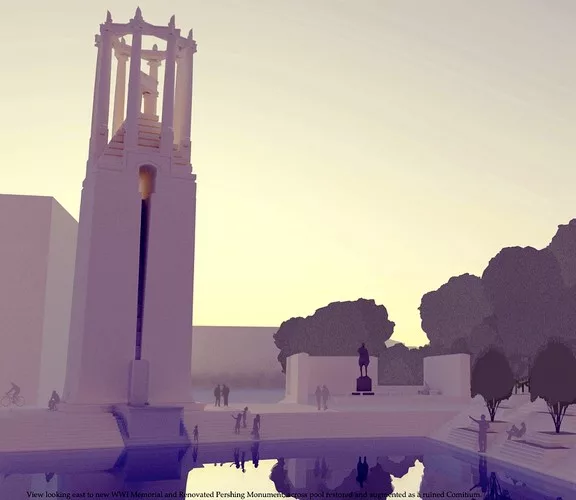
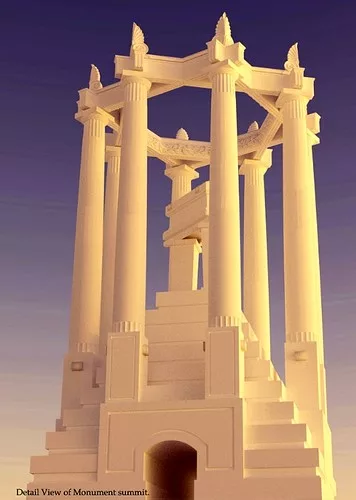
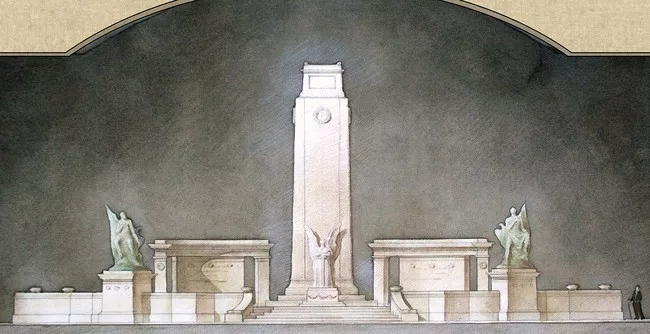
A proposed memorial design titled Remembrance and Honor.
World War I Memorial Proposals Please Classicists and Anger Preservationists
A proposed memorial design titled Remembrance and Honor.
Image via worldwar1centennial.org
A proposed memorial design titled Remembrance and Honor.
World War I Memorial Proposals Please Classicists and Anger Preservationists
A proposed memorial design titled Remembrance and Honor.
Image via worldwar1centennial.org
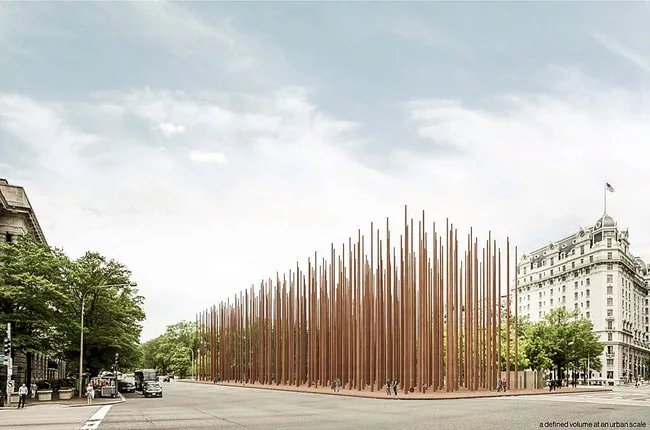
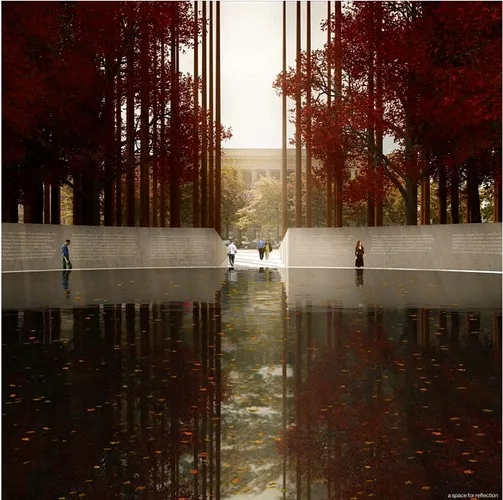
A design proposal called Remembrance and Reflection.
World War I Memorial Proposals Please Classicists and Anger Preservationists
A design proposal called Remembrance and Reflection.
Image via worldwar1centennial.org
A design proposal called Remembrance and Reflection.
World War I Memorial Proposals Please Classicists and Anger Preservationists
A design proposal called Remembrance and Reflection.
Image via worldwar1centennial.org
Detail of a Park of Remembrance proposal, a classical design that would include a Rose Garden and allegorical statues of Grief and Gratitude.
World War I Memorial Proposals Please Classicists and Anger Preservationists
Detail of a Park of Remembrance proposal, a classical design that would include a Rose Garden and allegorical statues of Grief and Gratitude.
Image via worldwar1centennial.org
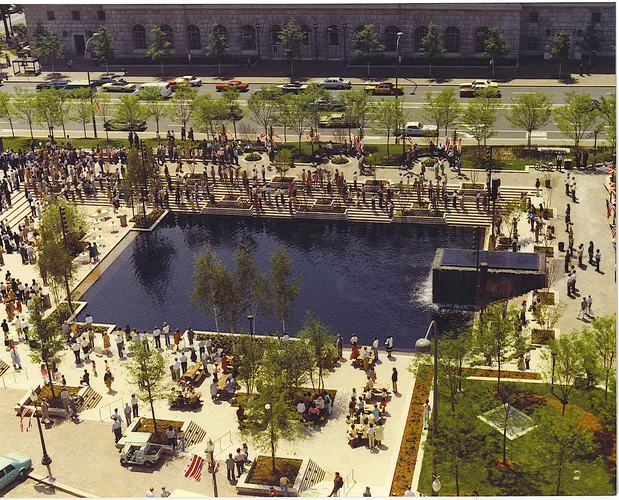
Pershing Park, designed by M. Paul Friedberg and Partners, as it appeared when it opened in 1981. The park will be replaced by a new World War I memorial.
World War I Memorial Proposals Please Classicists and Anger Preservationists
Pershing Park, designed by M. Paul Friedberg and Partners, as it appeared when it opened in 1981. The park will be replaced by a new World War I memorial.
Image © M. Paul Friedberg and Partners
Pershing Park, designed by M. Paul Friedberg and Partners, as it  appeared when it opened in 1981. The park will be replaced by a new  World War I memorial.
World War I Memorial Proposals Please Classicists and Anger Preservationists
Pershing Park, designed by M. Paul Friedberg and Partners, as it appeared when it opened in 1981. The park will be replaced by a new World War I memorial.
Image © M. Paul Friedberg and Partners
Pershing Park, designed by M. Paul Friedberg and Partners, as it  appeared when it opened in 1981. The park will be replaced by a new  World War I memorial.
World War I Memorial Proposals Please Classicists and Anger Preservationists
Pershing Park, designed by M. Paul Friedberg and Partners, as it appeared when it opened in 1981. The park will be replaced by a new World War I memorial.
Image © M. Paul Friedberg and Partners
A proposed memorial design titled Remembrance and Honor.
A design proposal called Remembrance and Reflection.
Detail of a Park of Remembrance proposal, a classical design that would include a Rose Garden and allegorical statues of Grief and Gratitude.
Pershing Park, designed by M. Paul Friedberg and Partners, as it appeared when it opened in 1981. The park will be replaced by a new World War I memorial.
Pershing Park, designed by M. Paul Friedberg and Partners, as it  appeared when it opened in 1981. The park will be replaced by a new  World War I memorial.
August 7, 2015

The rules of an architecture competition can affect which design wins and even how it is received. That’s why opponents of the controversial Dwight D. Eisenhower Memorial fault not just Frank Gehry’s design but the format of the competition that led to its selection. And it may help explain why proponents of a World War I memorial on the Mall have chosen to follow a very different set of rules.

The Eisenhower competition was open only to licensed architects, landscape architects, and engineers, who were invited to submit portfolios. By contrast, the World War I memorial competition, held this summer, was open to anyone over 18, and entrants were required to submit designs. The Eisenhower competition drew 44 entries, while the World War I Memorial competition garnered 350. “Certainly we were aware of what went on with Eisenhower, and we wanted to open the field as wide as possible,” said Edwin Fountain, the vice chairman of the World War I Centennial Commission, which was authorized by Congress last year to build a memorial on a 1.8-acre site on Pennsylvania Avenue near the White House.

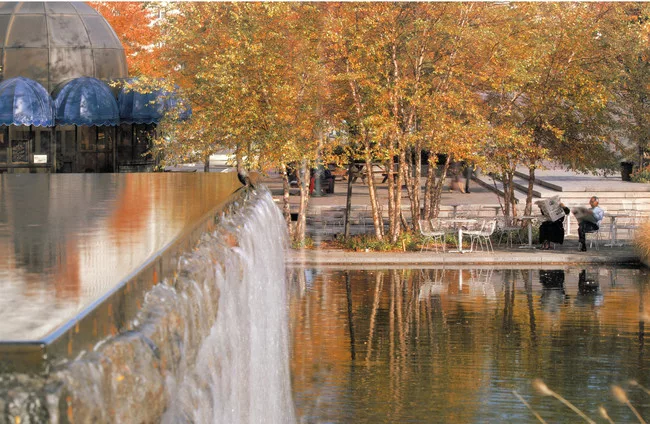
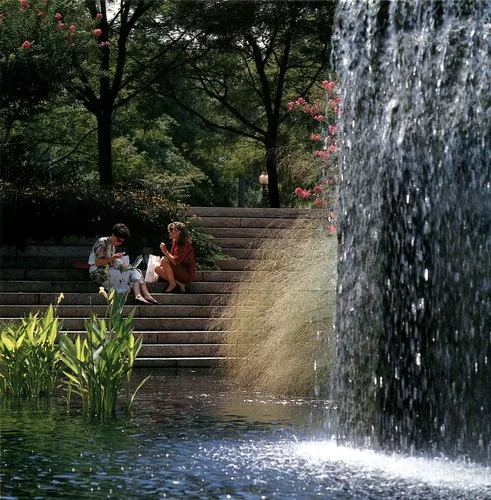
However, the Commission may have stepped into another minefield. The site of the memorial is Pershing Park, which was designed by the modernist landscape architect M. Paul Friedberg (with plantings by the influential firm Oehme, van Sweden & Associates, subjects of an upcoming retrospective at the National Building Museum). Ironically, it is dedicated to John J. Pershing, the Army general who led the American Expeditionary Forces to victory over Germany in World War I.

The park opened in 1981 and has suffered from inadequate maintenance. It stands to be demolished so that the World War I memorial can take its place. Though the competitors were allowed to incorporate the existing park into their designs, a glance at the 350 entries suggests that almost none of them did so. Now preservationists, including Charles Birnbaum of the Cultural Landscape Foundation, are demanding that the National Park Service protect, rather than eliminate, the modernist landscape.

Friedberg, 83, was outraged when he learned that the park might be destroyed, which he termed “a dictatorial move by people who don’t understand the meaning of a public open space.” Calling it “one of my best works,” and a “living room on Pennsylvania Avenue,” he says Pershing Park was emblematic of a time when landscape architects were inventing new urban typologies, and needs to be preserved not only for the public but also for the profession. “You can't teach landscape architecture with just photos and words,” he says.

He adds, “The honorable thing would have been to come to me first.” He says he might have found a way to accommodate a memorial without destroying the existing park. After all, the park already “expresses what we fought for in World War I—which was the ability to use free and open space without fear. That’s what contemporary urban spaces seek to do.”

Fountain, of the World War I Centennial Commission, seemed perplexed when asked if the Friedberg-designed garden should be preserved. “I’m aware that some people hold that view. I don’t happen to share it. My view is that it’s a 35-year-old failed park that has significant drawbacks. We’ll go through all the necessary reviews. But Congress has authorized us to make alterations to the site, so that’s our starting premise.” He adds: “If we are advised to pay deference to the existing park, then we will.”

Fountain announced the memorial competition just last May. Seven jurors (including landscape preservationist Ethan Carr, architecture critic Benjamin Forgey, former architecture school dean Harry G. Robinson, and AECOM principal Allison Williams) have reviewed the entries, and Fountain expects three to five finalists to be announced by the end of next week. Each finalist will be given $25,000 for design development, with a final selection to be made in January. The plan, Fountain says, is for the memorial to be completed by November 11, 2018, the 100th anniversary of the armistice that ended World War I.

The procedures chosen by Fountain could increase likelihood of the World War I memorial taking a classical form, according to several observers. Justin Shubow, president of the Washington-based National Civic Art Society, says that, given what he believes is the public’s preference for traditional architecture, “A democratic competition that casts its net broadly and provides for public comments is more likely to result in a classical memorial” than is a competition limited to established architects.

Shubow’s support for a traditional monument is unsurprising, given his vocal opposition to the Eisenhower Memorial. “Fighting the Ike memorial has been one of my main passions,” says Shubow. He says the Eisenhower competition excluded professionals without significant portfolios, as well as painters and sculptors, who are more likely than architects to work in traditional veins. In addition, he says, the brief seemed to favor modernism, stating, “Eisenhower Square is an opportunity to explore new avenues in memorialization” and, “No language currently exists for a 21st century memorial.”

Fountain, who is the general counsel of the American Battle Monuments Commission, says he doesn’t favor one style of design over another. “If having an open competition makes it more likely that we get a classical design, that’s fine,” he says, “but that’s not why we did it.” Whatever the outcome of the competition, “by providing more visibility and opportunity for public engagement than may have been the case with the Eisenhower, people will at least understand how we got to the chosen design.”

All 350 entries to the World War I memorial competition have been posted online, and Fountain said the decision-making period has been adjusted to give the judges time to receive and consider public comments. Of the entries, about 25 could be considered classical, according to Shubow. Among his favorites, he wrote in Forbes, is Remembrance and Honor, featuring an empty sarcophagus set below a crown raised high on slender, unadorned columns. That design was also a favorite of critic John Massengale, who praised it for being “classical” and yet still “innovative and inventive.”

To lovers of classical design, the demise of a Friedberg park may be a bonus.

KEYWORDS: Eisenhower Memorial Washington D.C.

Share This Story

Looking for a reprint of this article?
From high-res PDFs to custom plaques, order your copy today!

Fred Bernstein studied architecture at Princeton and law at NYU and writes about both subjects.

Post a comment to this article

Report Abusive Comment

Subscription Center
  • Create an Account
  • Start a Subscription
  • Manage My Account
  • Sign Up for Newsletters
  • Visit Customer Service
  • Update Preferences

More Videos

Sponsored Content

Sponsored Content is a special paid section where industry companies provide high quality, objective, non-commercial content around topics of interest to the Architectural Record audience. All Sponsored Content is supplied by the advertising company and any opinions expressed in this article are those of the author and not necessarily reflect the views of Architectural Record or its parent company, BNP Media. Interested in participating in our Sponsored Content section? Contact your local rep!

close
  • 3D configurator
    Sponsored byDoorBird

    How DoorBird’s 3D Configurator Is Redefining Customization Across Residential and Commercial Design

  • interior of modern office
    Sponsored byCurrent

    The Downlight's Second Life: Why Below-Ceiling Serviceability Is the Specification Detail That Matters Most

  • cold storage facility
    Sponsored byCarlisle SynTec Systems

    How Architects Can Design More Continuous Cold Storage Envelopes

DESIGN:ED Podcast
Listen to Architectural Record’s DESIGN:ED Podcast

Events

July 29, 2026

Adaptive Reuse Reimagined: Designing Multifamily Housing from Existing Buildings

Credits: 1 AIA LU/HSW; 1 AIBD P-CE; 0.1 ICC CEU; 1 IIBEC CEH

Examine adaptive reuse envelope strategies that improve energy performance, preserve architectural character, and transform existing buildings into high-performing multifamily housing.

July 30, 2026

Constructing Exterior Walls to Avoid Moisture Issues

Credits: 1 AIA LU/HSW; 1 AIBD P-CE; 0.1 ICC CEU

Examine exterior wall and air barrier system strategies that improve moisture control, energy efficiency, durability, and indoor environmental quality.

View All Submit An Event

Products

Architectural Detailing: Function, Constructibility, Aesthetics, 4th Edition

Architectural Detailing: Function, Constructibility, Aesthetics, 4th Edition

See More Products

Popular Stories

Goldring Woldenberg Park

Continuing Education: Postindustrial Waterfronts

House of the Month - Casa BL

In Chile, Alejandro Beals and Loreto Lyon Revive a 1960s House Designed by a Le Corbusier Disciple

Temple-Emanu-El, San Francisco

AIA California Announces 2026 Design Award Recipients

Herz Rec Center

A Recreation Center by Leddy Maytum Stacy Architects Activates a Rebounding San Francisco Neighborhood

University of Victoria Indigenous Law Wing

Indigenous Law Shapes a Different Kind of Academic Building at the University of Victoria in British Columbia

Adaptive Reuse Reimagined: Designing Multifamily Housing from Existing Buildings - Free Webinar - July 29, 2026

Related Articles

  • Finalists Designs Announced for World War I Memorial

    See More
  • Liberty Memorial and National World War I Museum

    See More
  • Liberty Memorial and National World War I Museum Project Portfolio

    See More
×

The latest news and information

#1 Source for Architectural Design, News and Products

SUBSCRIBE
  • RESOURCES
    • Advertise
    • Contact Us
    • Submit
    • Store
  • ACCOUNT CENTER
    • Create an Account
    • Start a Subscription
    • Manage My Account
    • Sign Up for Newsletters
    • Visit Customer Service
    • Update Preferences
  • PRIVACY
    • PRIVACY POLICY
    • TERMS & CONDITIONS
    • DO NOT SELL MY PERSONAL INFORMATION
    • PRIVACY REQUEST
    • ACCESSIBILITY
  • SERVICES
    • Marketing Services
    • Reprints
    • Market Research
    • List Rental
    • Survey/Respondent Access
  • STAY CONNECTED
    • Linkedin
    • Facebook
    • Instagram
    • YouTube
    • X (Twitter)

Copyright ©2026. All Rights Reserved BNP Media, Inc. and BNP Media II, LLC.

Design, CMS, Hosting & Web Development :: ePublishing