Architectural Record
search
cart
facebook twitter linkedin youtube
  • Sign In
  • Subscribe
  • Sign Out
  • My Account
Architectural Record
  • NEWS
    • Latest News
    • Awards
    • Interviews
    • Obituaries
    • Podcasts
      • Design:Ed Podcast
      • Sponsored Podcasts
  • OPINION
    • Book Reviews / Excerpts
    • Exhibition Reviews
    • Forum
  • EXCLUSIVES
    • Videos
    • Design Vanguard
    • Top 300 Firms
    • Sponsored Content
    • Sponsored eBooks
    • From the Archives
  • CONTINUING ED
    • Editorial Continuing Ed
    • CE Center
    • CE Academies
  • PROJECTS
    • Buildings By Type
    • Reuse & Renovation
    • Museums & Arts Centers
    • Colleges & Universities
    • Multifamily Housing
    • Interiors
    • Lighting
    • Kitchen & Bath
  • HOUSES
    • Record Houses
    • House of the Month
    • Featured Houses
  • PRODUCTS
    • Products by Category
    • Record Products of the Year
    • Latest Products
  • EVENTS
    • Dates & Events
    • Record on the Road
    • Innovation Conference
    • Sustainability in Practice
    • Women In Architecture
    • Webinars
    • Ad Excellence Awards
    • Submit an Event
  • CONNECT
    • Ask RECORD AI
    • Newsletters
    • Contact
    • Advertise
    • Editorial Calendar
    • Store
    • Customer Service
  • SUBMIT
    • Submission Guidelines
    • RECORD Competitions
  • MAGAZINE
    • Subscribe
    • My Account
    • Digital Edition
    • Current Issue
    • Firm Pass
    • Historic Archive
Architecture News

China's Building Boom Sparks Ethical Debate

By Dorian Davis
July 10, 2008

Earlier this year, during an urban development forum at a university in Belfast, Ireland, the New York-based architect Daniel Libeskind ruffled feathers when he admonished fellow architects not to accept commissions from China and other so-called repressive regimes. “I think architects should take a more moral stance,” he proclaimed. The Polish-born architect’s speech incited backlash from colleagues and charges of hypocrisy—some pointed to his Hong Kong project, the now-under-construction Creative Media Centre—but his remarks incited a question that can leave some architects feeling squeamish: Is it ethical to accept commissions from authoritarian governments with poor human rights records?
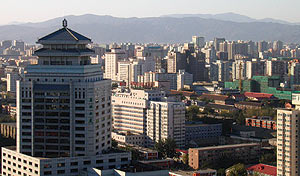
China
Photo ' Robert Ivy
Beijing is booming. In recent years, scores of architects, from Herzog & de Meuron to Rem Koolhaas, have descended upon the ever-sprawling metropolis, which will host the 2008 Summer Olympics.

It is a dilemma that more firms are facing as globalization puts foreign markets in reach, and non-democratic Asian and Eastern European countries direct their attention toward large-scale urban development. Beijing is a prime example. The ancient city is booming (“Beijing at Warp Speed”), thanks to ambitious economic development schemes envisioned decades ago. More recently, scores of architects, from Herzog & de Meuron to Rem Koolhaas, have descended upon the ever-sprawling metropolis, which will host the 2008 Summer Olympics. The cost and scope of projects are astronomical. Consider Norman Foster’s $3.5 billion Terminal 3, which at 14 million square feet broke the record for the largest airport in the world.

Such projects certainly help bring foreign investment to places that traditionally have been closed off from the transformative power of capitalism. High profile, mega-projects “can turn the world toward these countries and turn these countries toward the world,” says Georges Binder, president of Buildings + Data, a firm that compiles construction statistics. Foreign direct investment in China reached $70 billion in 2007—up from $45 billion in 1997, a 55 percent increase. For an oft-criticized government, the public relations boost generated from large-scale projects “can be worth several times the investment,” Binder says.

While the money might be pouring in, it’s unclear if these developments benefit residents. These “grand scale urban adventures” can have huge implications, says University of Miami urban design professor Jean-Francois Lejeune. In Beijing, the government has allegedly displaced more than one million people since 2001 in order to construct new buildings and infrastructure, according to the Geneva-based Center on Housing and Eviction Rights. Additionally, it has razed traditional courtyard housing complexes known as hutongs, regarded by many as historic relics that merit preservation (“The Death and Life of Old Beijing”).

Some designers are taking a second look at their buildings’ political resonance. Ai Weiwei, artistic consultant on Beijing’s bird-nest-shaped, 100,000-seat National Stadium told Reuters last summer that China’s new infrastructure was like a “pretend smile,” plastered on a cold, unfeeling face. Weiwei renounced his participation in the project and slammed the “opportunists” who he claims aided and abetted the “powerful manipulators” in charge.

But obviously, not all architects take the same stance. Refusing a commission can be a heartbreaking proposition, since developing markets can offer good pay and fertile ground for innovative design. In a recent article in The New York Times Magazine, Steven Holl said of his Linked Hybrid project in Beijing, “In America, I could never do work like I do here. We’ve become too backward-looking. In China, they want to make everything look new.” (Several firms with commissions in China were contacted for this story, but nobody was available for comment.)

Holl is not alone. “No one I know has refused to work in China,” says Joan Capelin, a New York-based public relations expert for the building and design industry. “Architects are glad to have these somewhat unfettered opportunities to design to their heart’s content.” Urban planning professor Thomas J. Campanella, whose recently published book Concrete Dragon examines the forces behind the country’s urban revolution, adds that critics of China’s human rights record should acknowledge how far the country has come. “China has lifted more people out of poverty than any other nation in history,” he says. “Obviously, there is something positive happening.”

Share This Story

Looking for a reprint of this article?
From high-res PDFs to custom plaques, order your copy today!

Post a comment to this article

Report Abusive Comment

Subscription Center
  • Create an Account
  • Start a Subscription
  • Manage My Account
  • Sign Up for Newsletters
  • Visit Customer Service
  • Update Preferences

More Videos

Sponsored Content

Sponsored Content is a special paid section where industry companies provide high quality, objective, non-commercial content around topics of interest to the Architectural Record audience. All Sponsored Content is supplied by the advertising company and any opinions expressed in this article are those of the author and not necessarily reflect the views of Architectural Record or its parent company, BNP Media. Interested in participating in our Sponsored Content section? Contact your local rep!

close
  • TAMLYN XtremeTrim Exterior Trim
    Sponsored byTamlyn

    Designing Cleaner Panel Facades: Why Exterior Trim Details Matter

  • Building with Vapor Barriers
    Sponsored byReef Industries, Inc.

    Vapor Barriers Help Control Moisture in Tighter Building Designs

  • Duct Interior with Prodeq System
    Sponsored byHenry, a Carlisle Company

    Designing Resilient Water Containment Systems

DESIGN:ED Podcast
Listen to Architectural Record’s DESIGN:ED Podcast

Events

June 10, 2026

Rethinking Stormwater – The Power of Porous Paving

Credits: 1 AIA LU/HSW; 1 AIBD P-CE; 0.1 ICC CEU

Learn how porous paving systems support stormwater management, reduce heat island effects, and enhance sustainable site design performance.

June 11, 2026

Very Early Warning Fire Detection for Mission-Critical Facilities

Credits: 1 AIA LU/HSW; 1 AIBD P-CE; 0.1 ICC CEU

Examine advanced fire detection strategies that support uptime and enhance safety in data centers and other mission-critical facilities.

View All Submit An Event

Products

2026 Architect's Square Foot Costbook

2026 Architect's Square Foot Costbook

See More Products

Popular Stories

Coronado Bridge

The Architect’s Guide to San Diego

Practice Matters illustration

What’s in a (Firm’s) Name? Thinking About Succession and Legacy

Practice Matters illustration

By the Numbers: Counting America's Architects

Inward House

Inward House by VeeV Design Studio

Riverdale House by Studio Lau

Riverdale House by Studio Lau

Broader Sustainability of CMU - Free Webinar - May 21, 2026

Related Articles

  • An Unexpected Building Boom in L.A.

    See More
  • MIT Construction

    MIT’s Building Boom Brings New Slate of Major Architects to Campus

    See More
  • Cultural Building Boom Left Some Institutions Broke, Says University of Chicago Study

    See More

Related Products

See More Products
  • image7.jpg

    Contemporary Architecture in China Towards A Critical Pragmatism

  • facade.jpg

    Sustainable Facades: Design Methods for High-Performance Building Envelopes

See More Products

Events

View AllSubmit An Event
  • April 26, 2016

    2016 China-UK Ideal Town and Garden City Summit

    The Summit will debate new Garden City ideas and will look at best practice for eco towns, market towns, community engagement, creative quarter and elderly living in the town as well as town center design and management.
View AllSubmit An Event
×

The latest news and information

#1 Source for Architectural Design, News and Products

SUBSCRIBE
  • RESOURCES
    • Advertise
    • Contact Us
    • Submit
    • Store
  • ACCOUNT CENTER
    • Create an Account
    • Start a Subscription
    • Manage My Account
    • Sign Up for Newsletters
    • Visit Customer Service
    • Update Preferences
  • PRIVACY
    • PRIVACY POLICY
    • TERMS & CONDITIONS
    • DO NOT SELL MY PERSONAL INFORMATION
    • PRIVACY REQUEST
    • ACCESSIBILITY
  • SERVICES
    • Marketing Services
    • Reprints
    • Market Research
    • List Rental
    • Survey/Respondent Access
  • STAY CONNECTED
    • Linkedin
    • Facebook
    • Instagram
    • YouTube
    • X (Twitter)

Copyright ©2026. All Rights Reserved BNP Media, Inc. and BNP Media II, LLC.

Design, CMS, Hosting & Web Development :: ePublishing