Architectural Record
search
cart
facebook twitter linkedin youtube
  • Sign In
  • Subscribe
  • Sign Out
  • My Account
Architectural Record
  • NEWS
    • Latest News
    • Awards
    • Interviews
    • Obituaries
    • Podcasts
      • Design:Ed Podcast
      • Sponsored Podcasts
  • OPINION
    • Book Reviews / Excerpts
    • Exhibition Reviews
    • Forum
  • EXCLUSIVES
    • Videos
    • Design Vanguard
    • Top 300 Firms
    • Sponsored Content
    • Sponsored eBooks
    • From the Archives
  • CONTINUING ED
    • Editorial Continuing Ed
    • CE Center
    • CE Academies
  • PROJECTS
    • Buildings By Type
    • Reuse & Renovation
    • Museums & Arts Centers
    • Colleges & Universities
    • Multifamily Housing
    • Interiors
    • Lighting
    • Kitchen & Bath
  • HOUSES
    • Record Houses
    • House of the Month
    • Featured Houses
  • PRODUCTS
    • Products by Category
    • Record Products of the Year
    • Latest Products
  • EVENTS
    • Dates & Events
    • Record on the Road
    • Innovation Conference
    • Sustainability in Practice
    • Women In Architecture
    • Webinars
    • Ad Excellence Awards
    • Submit an Event
  • CONNECT
    • Ask RECORD AI
    • Newsletters
    • Contact
    • Advertise
    • Editorial Calendar
    • Store
    • Customer Service
  • SUBMIT
    • Submission Guidelines
    • RECORD Competitions
  • MAGAZINE
    • Subscribe
    • My Account
    • Digital Edition
    • Current Issue
    • Firm Pass
    • Historic Archive
Architecture News

At Cornell University, Groundbreaking Could Mark the End of 12-Year Saga

By Stephen Zacks
Cornell University Groundbreaking Could Mark End of 12-Year Saga

Cornell University Groundbreaking Could Mark End of 12-Year Saga

For more than a decade, Cornell University has grappled with its plan to construct a new facility for its College of Architecture, Art and Planning (AAP). On June 8, however, a backhoe began digging up dirt at the building’s proposed site—the north edge of the Arts Quad. Scheduled to open in the fall of 2011, the Paul Milstein Hall, designed by the OMA, will contain studios for the architecture program, along with a 275-seat auditorium, space for juried critiques, and a gallery to be shared by all AAP departments.

Image courtesy AAP

Cornell University Groundbreaking Could Mark End of 12-Year Saga

Cornell University Groundbreaking Could Mark End of 12-Year Saga

For more than a decade, Cornell University has grappled with its plan to construct a new facility for its College of Architecture, Art and Planning (AAP). On June 8, however, a backhoe began digging up dirt at the building’s proposed site—the north edge of the Arts Quad. Scheduled to open in the fall of 2011, the Paul Milstein Hall, designed by the OMA, will contain studios for the architecture program, along with a 275-seat auditorium, space for juried critiques, and a gallery to be shared by all AAP departments.

Image courtesy AAP

Cornell University Groundbreaking Could Mark End of 12-Year Saga

Cornell University Groundbreaking Could Mark End of 12-Year Saga

For more than a decade, Cornell University has grappled with its plan to construct a new facility for its College of Architecture, Art and Planning (AAP). On June 8, however, a backhoe began digging up dirt at the building’s proposed site—the north edge of the Arts Quad. Scheduled to open in the fall of 2011, the Paul Milstein Hall, designed by the OMA, will contain studios for the architecture program, along with a 275-seat auditorium, space for juried critiques, and a gallery to be shared by all AAP departments.

Image courtesy AAP

Cornell University Groundbreaking Could Mark End of 12-Year Saga

Cornell University Groundbreaking Could Mark End of 12-Year Saga

For more than a decade, Cornell University has grappled with its plan to construct a new facility for its College of Architecture, Art and Planning (AAP). On June 8, however, a backhoe began digging up dirt at the building’s proposed site—the north edge of the Arts Quad. Scheduled to open in the fall of 2011, the Paul Milstein Hall, designed by the OMA, will contain studios for the architecture program, along with a 275-seat auditorium, space for juried critiques, and a gallery to be shared by all AAP departments.

Image courtesy AAP
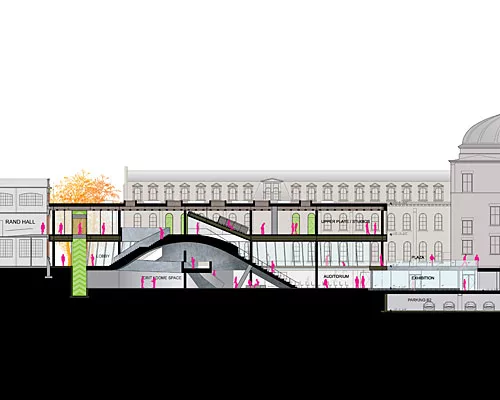
Cornell University Groundbreaking Could Mark End of 12-Year Saga

Cornell University Groundbreaking Could Mark End of 12-Year Saga

For more than a decade, Cornell University has grappled with its plan to construct a new facility for its College of Architecture, Art and Planning (AAP). On June 8, however, a backhoe began digging up dirt at the building’s proposed site—the north edge of the Arts Quad. Scheduled to open in the fall of 2011, the Paul Milstein Hall, designed by the OMA, will contain studios for the architecture program, along with a 275-seat auditorium, space for juried critiques, and a gallery to be shared by all AAP departments.

Image courtesy AAP
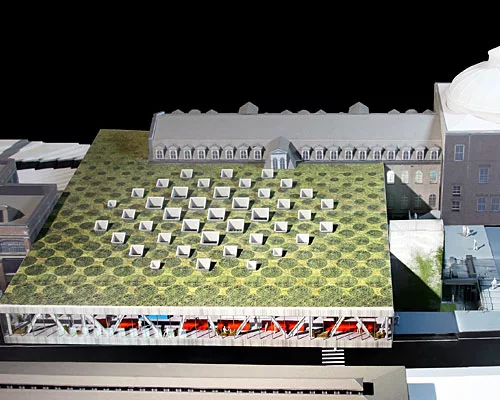
Cornell University Groundbreaking Could Mark End of 12-Year Saga

Cornell University Groundbreaking Could Mark End of 12-Year Saga

For more than a decade, Cornell University has grappled with its plan to construct a new facility for its College of Architecture, Art and Planning (AAP). On June 8, however, a backhoe began digging up dirt at the building’s proposed site—the north edge of the Arts Quad. Scheduled to open in the fall of 2011, the Paul Milstein Hall, designed by the OMA, will contain studios for the architecture program, along with a 275-seat auditorium, space for juried critiques, and a gallery to be shared by all AAP departments.

Image courtesy AAP
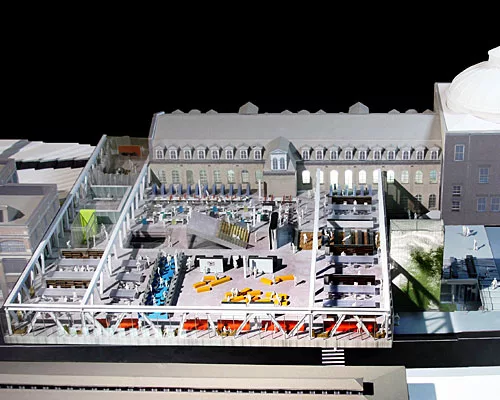
Cornell University Groundbreaking Could Mark End of 12-Year Saga

Cornell University Groundbreaking Could Mark End of 12-Year Saga

For more than a decade, Cornell University has grappled with its plan to construct a new facility for its College of Architecture, Art and Planning (AAP). On June 8, however, a backhoe began digging up dirt at the building’s proposed site—the north edge of the Arts Quad. Scheduled to open in the fall of 2011, the Paul Milstein Hall, designed by the OMA, will contain studios for the architecture program, along with a 275-seat auditorium, space for juried critiques, and a gallery to be shared by all AAP departments.

Image courtesy AAP

Cornell University Groundbreaking Could Mark End of 12-Year Saga

Cornell University Groundbreaking Could Mark End of 12-Year Saga

For more than a decade, Cornell University has grappled with its plan to construct a new facility for its College of Architecture, Art and Planning (AAP). On June 8, however, a backhoe began digging up dirt at the building’s proposed site—the north edge of the Arts Quad. Scheduled to open in the fall of 2011, the Paul Milstein Hall, designed by the OMA, will contain studios for the architecture program, along with a 275-seat auditorium, space for juried critiques, and a gallery to be shared by all AAP departments.

Image courtesy AAP

Cornell University Groundbreaking Could Mark End of 12-Year Saga

Cornell University Groundbreaking Could Mark End of 12-Year Saga

For more than a decade, Cornell University has grappled with its plan to construct a new facility for its College of Architecture, Art and Planning (AAP). On June 8, however, a backhoe began digging up dirt at the building’s proposed site—the north edge of the Arts Quad. Scheduled to open in the fall of 2011, the Paul Milstein Hall, designed by the OMA, will contain studios for the architecture program, along with a 275-seat auditorium, space for juried critiques, and a gallery to be shared by all AAP departments.

Image courtesy AAP

Cornell University Groundbreaking Could Mark End of 12-Year Saga
June 18, 2009
For more than a decade, Cornell University has grappled with its plan to construct a new facility for its College of Architecture, Art and Planning (AAP). On June 8, however, a backhoe began digging up dirt at the building’s proposed site—the north edge of the Arts Quad—perhaps marking the end of an epic drama that has involved a large cast of characters, a global financial crisis, and the looming threat of academic decertification.
 
Scheduled to open in the fall of 2011, the Paul Milstein Hall, designed by the Office for Metropolitan Architecture (OMA), will contain studios for the architecture program, along with a 275-seat auditorium, space for juried critiques, and a gallery to be shared by all AAP departments. The two-story, 47,000 square foot building, whose design has faced a fair amount of opposition, survived the last stretch of the approval process with its Miesian box not only intact but extravagantly cantilevered.
 
The odyssey began in 1997, when the National Architectural Accrediting Board (NAAB) reprimanded the AAP for its insufficient and out-of-date facilities. The college—which offers undergraduate and graduate degrees in architecture, along with art and urban and regional planning—is spread among four buildings (Rand, Sibley, Tjaden, and the Foundry), none of which had been purpose-built for the architecture department.
 
The college promised to rectify the situation and commissioned Boston-based Schwartz/ Silver Architects to design a new arts library to make way for expanded architecture studios. The scheme was never approved. Next came proposals for new buildings by Steven Holl, and later, Barkow Leibinger—both of which hit roadblocks and were never realized.
 
OMA was hired in 2005 to devise a new plan. Rem Koolhaas proposed a rectangular box for an unoccupied area between Rand and Sibley Halls, thus connecting the two buildings. The glass and steel box would float above a domed crit space, and the northern edge of the building would reach across the street toward the historic Foundry, which houses sculpture studios. No architecture can please everybody, says Shohei Shigematsu, director of the OMA New York office, “but our original aim was really to create a place where the college can fulfill its ambition.”
 
The scheme triggered an avalanche of new preservation concerns and objections. In response, OMA scaled back the design, lessening the building’s visibility, and cantilevered the second floor, reducing its impact on the Foundry’s sight lines. More problems ensued. The city planning commission disputed the university’s right to build above the street. Meanwhile, the NAAB returned in 2008 to evaluate the undergraduate program and delivered a loud no-confidence vote on the facility’s lack of progress, granting a reduced accreditation period of three years. It also canceled a 2009 review of the school’s new master’s program. Then, last fall, the university’s endowment was hit by the collapsing banking system, and all capital projects were put on hold.
 
This spring, however, with the threat of another NAAB rebuke on the horizon, and with some financial stability returning, the university trustees at last relented, voting on May 23 to proceed with construction of Paul Milstein Hall (named after the major New York developer and philanthropist, whose children attended Cornell). “It would have been very easy for them to say we just can’t do this, the economy has hit us hard and we just have to wait,” says Kent Kleinman, dean of AAP. “Nobody would have blinked.”
 
But Cornell’s 138-year-old architecture school, whose undergraduate program is consistently rated among the top in the nation, might have lost its accreditation. The NAAB is scheduled to conduct its next on-site review in the spring of 2010, and if construction continues as planned, it should see the shell of a new studio building in place. “The [architecture] program is a gem in Cornell’s crown,” Kleinman says. “It has fabulous teachers and fabulous students. You can overcome bad facilities with that, but you can’t overcome them indefinitely.”


Share This Story

Looking for a reprint of this article?
From high-res PDFs to custom plaques, order your copy today!

Post a comment to this article

Report Abusive Comment

Subscription Center
  • Create an Account
  • Start a Subscription
  • Manage My Account
  • Sign Up for Newsletters
  • Visit Customer Service
  • Update Preferences

More Videos

Sponsored Content

Sponsored Content is a special paid section where industry companies provide high quality, objective, non-commercial content around topics of interest to the Architectural Record audience. All Sponsored Content is supplied by the advertising company and any opinions expressed in this article are those of the author and not necessarily reflect the views of Architectural Record or its parent company, BNP Media. Interested in participating in our Sponsored Content section? Contact your local rep!

close
  • TAMLYN XtremeTrim Exterior Trim
    Sponsored byTamlyn

    Designing Cleaner Panel Facades: Why Exterior Trim Details Matter

  • Building with Vapor Barriers
    Sponsored byReef Industries, Inc.

    Vapor Barriers Help Control Moisture in Tighter Building Designs

  • Duct Interior with Prodeq System
    Sponsored byHenry, a Carlisle Company

    Designing Resilient Water Containment Systems

DESIGN:ED Podcast
Listen to Architectural Record’s DESIGN:ED Podcast

Events

June 10, 2026

Rethinking Stormwater – The Power of Porous Paving

Credits: 1 AIA LU/HSW; 1 AIBD P-CE; 0.1 ICC CEU

Learn how porous paving systems support stormwater management, reduce heat island effects, and enhance sustainable site design performance.

June 11, 2026

Very Early Warning Fire Detection for Mission-Critical Facilities

Credits: 1 AIA LU/HSW; 1 AIBD P-CE; 0.1 ICC CEU

Examine advanced fire detection strategies that support uptime and enhance safety in data centers and other mission-critical facilities.

View All Submit An Event

Products

2026 Architect's Square Foot Costbook

2026 Architect's Square Foot Costbook

See More Products

Popular Stories

Practice Matters illustration

What’s in a (Firm’s) Name? Thinking About Succession and Legacy

Coronado Bridge

The Architect’s Guide to San Diego

Practice Matters illustration

By the Numbers: Counting America's Architects

Riverdale House by Studio Lau

Riverdale House by Studio Lau

KRESA by DLR

In Kalamazoo, DLR Group Completes a Mass-Timber Hub for Career and Technical Education Programs

Broader Sustainability of CMU - Free Webinar - May 21, 2026

Related Articles

  • OMA Building Plays Nice With Its Neighbors at Cornell

    See More
  • Mui Ho Fine Arts Library

    Mui Ho Fine Arts Library at Cornell University by STV and Wolfgang Tschapeller

    See More
  • November ABI graphic

    Business at Architecture Firms Remains Slack as the End of 2025 Nears

    See More

Related Products

See More Products
  • Architectural Record - January 2026

    Architectural Record January 2026 Issue

See More Products
×

The latest news and information

#1 Source for Architectural Design, News and Products

SUBSCRIBE
  • RESOURCES
    • Advertise
    • Contact Us
    • Submit
    • Store
  • ACCOUNT CENTER
    • Create an Account
    • Start a Subscription
    • Manage My Account
    • Sign Up for Newsletters
    • Visit Customer Service
    • Update Preferences
  • PRIVACY
    • PRIVACY POLICY
    • TERMS & CONDITIONS
    • DO NOT SELL MY PERSONAL INFORMATION
    • PRIVACY REQUEST
    • ACCESSIBILITY
  • SERVICES
    • Marketing Services
    • Reprints
    • Market Research
    • List Rental
    • Survey/Respondent Access
  • STAY CONNECTED
    • Linkedin
    • Facebook
    • Instagram
    • YouTube
    • X (Twitter)

Copyright ©2026. All Rights Reserved BNP Media, Inc. and BNP Media II, LLC.

Design, CMS, Hosting & Web Development :: ePublishing