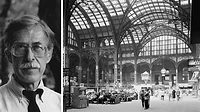
Julius Shulman: Remembering the Illustrious Photographer
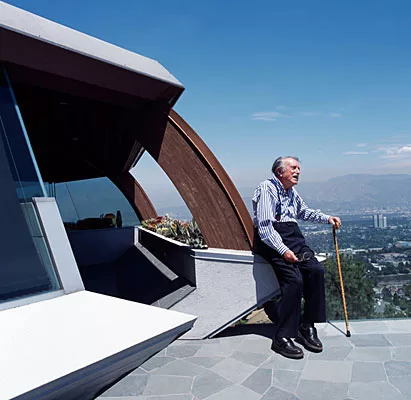
Julius Shulman
Julius Shulman at the Malin House, or Chemosphere, designed by John Lautner.
Photo © Juergen Nogai
Julius Shulman
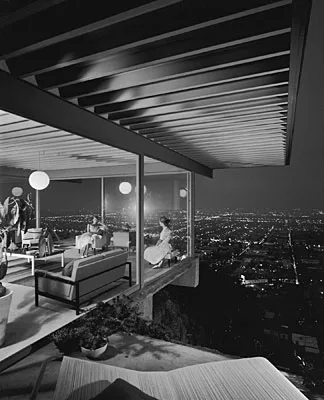
Case Study House No. 22, or Stahl House, Los Angeles, 1960. Architect: Pierre Koenig. House was built in 1959.
Photo © J. Paul Getty Trust/Julius Shulman Photography Archive
Julius Shulman
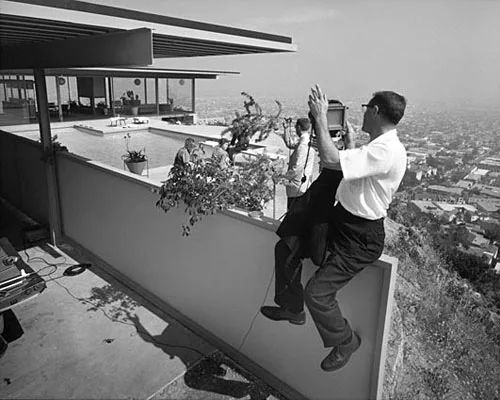
A shot of Julius Shulman outside Case Study House No. 22, 1960.
Photo © J. Paul Getty Trust/Julius Shulman Photography Archive
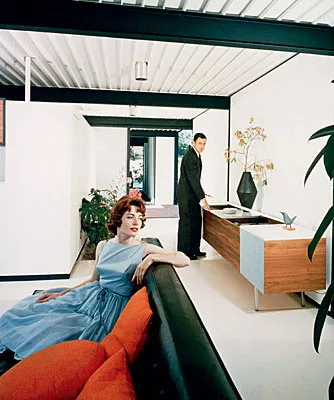
Julius Shulman
Case Study House No. 21, or Bailey House, 1960. Architect: Pierre Koenig. House was built in 1959.
Photo © J. Paul Getty Trust/Julius Shulman Photography Archive
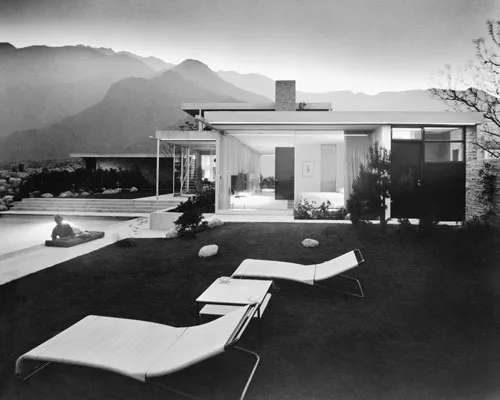
Julius Shulman
Kaufmann House, Palm Springs, 1947. Architect: Richard Neutra. House was built in 1947.
Photo © J. Paul Getty Trust/Julius Shulman Photography Archive
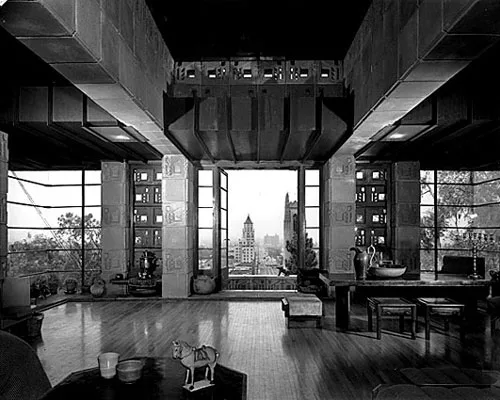
Julius Shulman
Freeman House, Hollywood Hills. Architect: Frank Lloyd Wright. House was built in 1924.
Photo © J. Paul Getty Trust/Julius Shulman Photography Archive
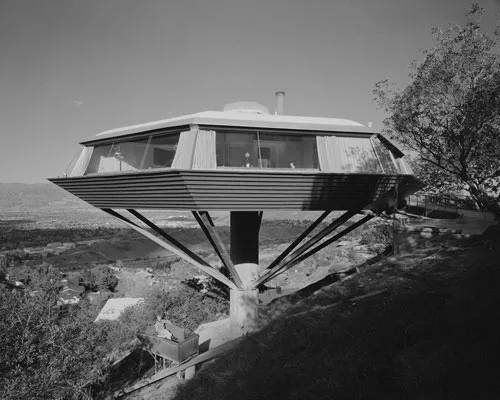
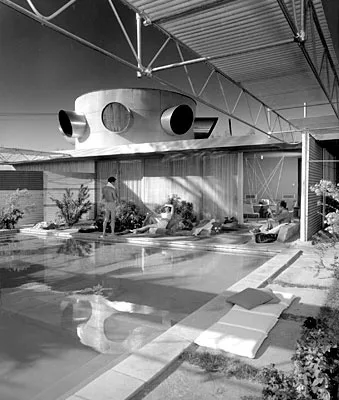
Julius Shulman
Malin House, or Chemosphere, Los Angeles, 1961. Architect: John Lautner. House was built in 1960.
Photo © J. Paul Getty Trust/Julius Shulman Photography Archive
Julius Shulman
Frey House Addition, Palm Springs, 1953. Architect: Clark & Frey. House was built in 1940; addition was constructed in 1953.
Photo © J. Paul Getty Trust/Julius Shulman Photography Archive
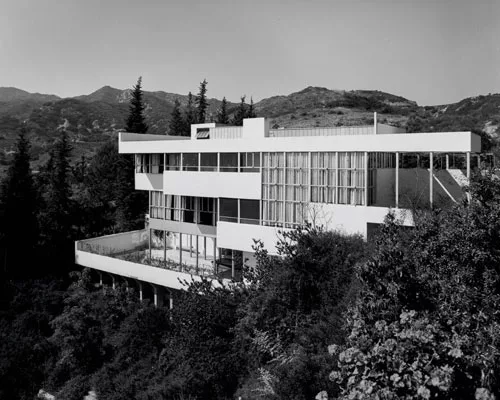
Julius Shulman
Lovell “Health” House, Los Angeles, 1950. Architect: Richard Neutra. House was built in 1929.
Photo © J. Paul Getty Trust/Julius Shulman Photography Archive
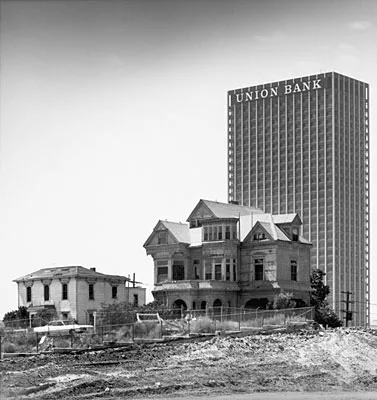
Julius Shulman
The Castle, Los Angeles, 1966 or 1968. In this photograph, the Union Bank towers above a few remaining homes on Bunker Hill.
Photo © J. Paul Getty Trust/Julius Shulman Photography Archive
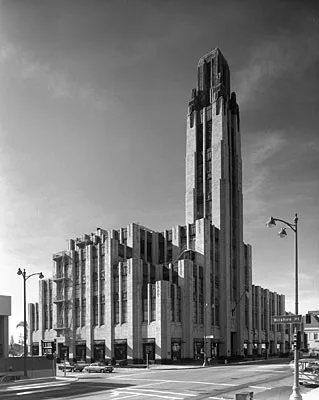
Julius Shulman
Bullock’s Wilshire Department Store, Los Angeles, 1969. Architect: John and Donald Parkinson. Building was completed in 1929.
Photo © J. Paul Getty Trust/Julius Shulman Photography Archive
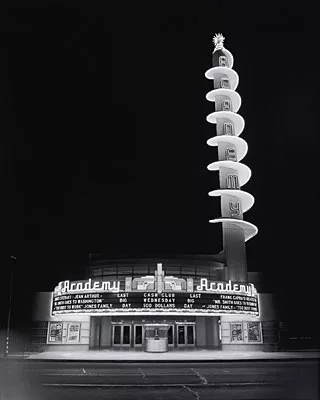
Julius Shulman
Academy Theatre, Inglewood, 1940.
Photo © J. Paul Getty Trust/Julius Shulman Photography Archive
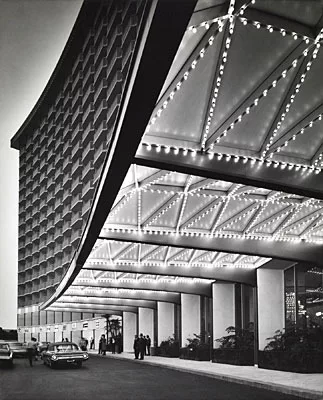
Julius Shulman
Century Plaza Hotel, Los Angeles, 1966. Architect: Minoru Yamasaki. Building was completed in 1966.
Photo © J. Paul Getty Trust/Julius Shulman Photography Archive
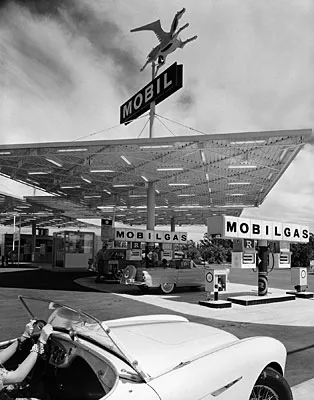
Julius Shulman
Mobil Gas Station, Anaheim, 1956.
Photo © J. Paul Getty Trust/Julius Shulman Photography Archive
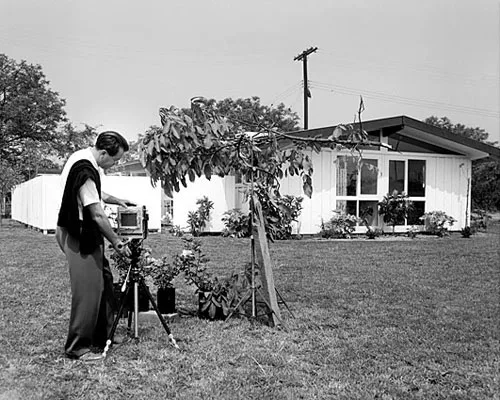
Julius Shulman
A shot of Julius Shulman outside the May House in Los Angeles, 1954.
Photo © J. Paul Getty Trust/Julius Shulman Photography Archive
Calendar Notes
- Visual Acoustics: The Modernism of Julius Shulman, a documentary film by Eric Bricker, is slated for theatrical release in October.
- Julius Shulman & Juergen Nogai, exhibition at Craig Krull Gallery, Bergamot Station, 2525 Michigan Avenue, Building B-3, Santa Monica, CA 90404; July 4-August 22.
After a career spanning seven decades—and a client list running the gamut from Neutra to Rudolf Schindler, Frank Lloyd Wright, Charles and Ray Eames, John Lautner, Eero Saarinen, Mies van der Rohe, and many others, both famous and little known—the legendary architectural photographer died on July 15, a few months shy of his 99th birthday. Though he’d never met an architect until his mid-twenties nor aspired to a career behind a camera, he revolutionized the barely existent field of architectural photography.
Born in Brooklyn, to immigrant Russian Jewish parents, on October 10, 1910, he grew up on a Connecticut farm until his family moved to Los Angeles when he was 10. As a Boy Scout and through much of his life, he hiked the local mountains, cultivating a love of nature and awareness of light, which, he later suggested, deeply influenced his photography. Though he earned an A in the only photographic course he ever took (in high school) and sold occasional snapshots while briefly attending college at UCLA and Berkeley, he fell into a photographic career by chance.
In 1936, an acquaintance, who worked for Neutra, asked Shulman to take a few shots (with his amateur Kodak Vest Pocket camera) of the architect’s nearly completed Kun House in the Hollywood Hills. Neutra liked the images and hired the photographer for subsequent projects, soon introducing him to an entire community of leading and emerging architects. As Shulman told The Los Angeles Times in 1994: “I was lucky to be doing the right thing at the right place at the right time. Anytime anybody wanted a photograph of a modern house, Uncle Julius provided the picture.”
But he didn’t just photograph California Modernist houses. Gas stations, tract housing developments, urban sites, and more, all across the United States (plus a few in Europe and South America), inhabit the Julius Shulman archive of 260,000 negatives, prints, transparencies, and related materials, acquired by the Getty Research Institute (GRI) in 2005. The photographer’s original goal, as he often described it, was to “sell architecture”—often promoting the Case Study ideal of a casual, sunbathed, indoor-out lifestyle—to the editors and readers of the consumer and architectural magazines. “Though he photographed many extraordinary buildings,” says Wim de Wit, GRI’s curator of architectural collections, “he could also take something absolutely ordinary and make it glow.”
While most previous architectural photography was straightforward documentation, Shulman, working mostly in rich, silvery black-and-white, gave his compositions a dynamic and stylish glamour—often animating a scene with people, sometimes notoriously propping in branches for instant landscaping. His passion for architecture was palpable. And he never needed a light meter. “He totally understood light, especially in Southern California,” says de Wit. “He could just walk around a building and say, ‘I’ll be back at 10:43,’ knowing instinctively, or from experience, that the light would be exactly right then.”
His worldview fit the Modernist era. “He was the most optimistic person I’ve ever known,” recalls Craig Krull, whose Santa Monica, California, gallery represents Shulman. “That outlook perfectly suited a ‘translator’ of Modernism’s optimistic spirit—with its belief in the promise of the future and the capacity of technology to improve civilization.” The photographer’s own 1949 home in the Hollywood Hills, a commission he entrusted to architect Raphael Soriano, epitomizes the period.
Though Shulman “retired” more than once (the first time, he suggested, in protest against Postmodernism), he kept bouncing back. His last comeback, in 1999, launched a decade-long collaboration with Nogai. Twice widowered, the late photographer is survived by his only child, Judy McKee, and a grandson.
Over the years, Shulman spoke out for environmental, architectural, and urban causes, opposing, in particular, developer-driven sprawl. Since he was often hired to revisit earlier subjects (such as the Kaufmann House), his legacy includes an invaluable record of the evolution of key buildings and their surroundings.
As Shulman, whose excitement about his work never diminished, summed it up a year ago: “In the right place at the right time and—wham!—70 years ago I became a photographer!” He flashed his trademark smile, and added, “It’s breathtaking.”
Looking for a reprint of this article?
From high-res PDFs to custom plaques, order your copy today!