Architectural Record
search
cart
facebook twitter linkedin youtube
  • Sign In
  • Subscribe
  • Sign Out
  • My Account
Architectural Record
  • NEWS
    • Latest News
    • Awards
    • Interviews
    • Obituaries
    • Podcasts
      • Design:Ed Podcast
      • Sponsored Podcasts
  • OPINION
    • Book Reviews / Excerpts
    • Exhibition Reviews
    • Forum
  • EXCLUSIVES
    • Videos
    • Design Vanguard
    • Top 300 Firms
    • Sponsored Content
    • Sponsored eBooks
    • From the Archives
  • CONTINUING ED
    • Editorial Continuing Ed
    • CE Center
    • CE Academies
  • PROJECTS
    • Buildings By Type
    • Reuse & Renovation
    • Museums & Arts Centers
    • Colleges & Universities
    • Multifamily Housing
    • Interiors
    • Lighting
    • Kitchen & Bath
  • HOUSES
    • Record Houses
    • House of the Month
    • Featured Houses
  • PRODUCTS
    • Products by Category
    • Record Products of the Year
    • Latest Products
  • EVENTS
    • Dates & Events
    • Record on the Road
    • Innovation Conference
    • Sustainability in Practice
    • Women In Architecture
    • Webinars
    • Ad Excellence Awards
    • Submit an Event
  • CONNECT
    • Ask RECORD AI
    • Newsletters
    • Contact
    • Advertise
    • Editorial Calendar
    • Store
    • Customer Service
  • SUBMIT
    • Submission Guidelines
    • RECORD Competitions
  • MAGAZINE
    • Subscribe
    • My Account
    • Digital Edition
    • Current Issue
    • Firm Pass
    • Historic Archive
Architecture News

From Green Extreme to Mainstream: Passive House Program Gains Momentum in U.S.
By Michael Cockram
November 16, 2010

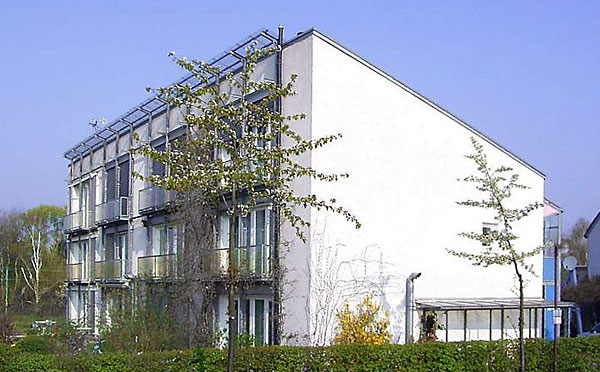
The Original Passivhaus, in Darmstadt, Germany.
Photo courtesy Wikipedia

The Original Passivhaus, in Darmstadt, Germany.

practitioners from across the U.S. attended the North American Passive House Conference, held November 4 to 7.
Photo courtesy North American Passive House Conference
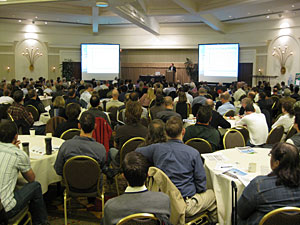
About 350 practitioners from across the U.S. attended the North American Passive House Conference, held November 4 to 7.

Just a few years ago, the first North American Passive House Conference was attended by a handful of passionate adherents trading tips around folding tables in Urbana, Illinois. But this year, with a keynote speech by green energy prophet Amory Lovins, and attended by roughly 350 practitioners from across the country, the 2010 conference, held from November 4 to 7 in Portland, Oregon, helped establish Passive House as a viable force in the green building movement.  

“We’ve gone from 15 certified consultants in 2008 to 200 this year,” says U.S. Passive House Institute’s program director Mike Kernagis. “This is the first conference where we’ve really reaped the benefits of having the consultants come back and show their first projects.”

Passive House — known as Passivhaus in Europe — originated 20 years ago in Darmstadt, Germany, under the stewardship of Wolfgang Feist (another keynote speaker at this month’s U.S. conference). In large part, Fiest synthesized the experiments with passive solar and super-insulated buildings in the 1970s and ‘80s into an organized set of principles for making exceptionally efficient buildings. What distinguishes Passive House certification from programs like LEED is that it’s strictly a performance-based system, with stringent benchmarks in only three areas: air infiltration, Btu consumption, and energy use (in kilowatt hours). 

To meet the rigorous Passive House criteria, buildings must be insulated with painstaking care to limit or eliminate areas of thermal bridging. They must also be essentially air tight with an infiltration rate close to 10 times lower than typical energy code allowances. This brings up another catchphrase heard at the conference: heat recovery ventilator (HRV). These heat exchangers are the lungs of a building, as they supply fresh air and lessen the threat of sick building syndrome that plagued early super-insulated projects. 

As with other technology-based systems, many Passive House projects initially appeared boxy and engineered rather than designed for aesthetics. But recently, the challenge has been taken up by architects who “think outside the boxy,” as Kernagis puts it. Several architects, such as Parson School of Design’s Laura Briggs, presented projects that are pushing the envelope in both green design and in contemporary design theory. 

It’s also significant that the affordable housing organization Habitat for Humanity is building Passive House projects in various locations across the country. Habitat representatives from Vermont, Kentucky, and Washington, D.C., all presented Passive House projects at the conference. Although first costs can be 8 percent to 15 percent higher than standard construction, Habitat’s presence shows the potential of Passive House to meet Habitat’s goal of making housing affordable to operate, as well as to purchase.

When the additional cost is rolled into a 30-year mortgage and balanced against significant energy cost savings, the owners can come out ahead, according to J.B. Clancy, AIA, of Albert, Righter & Tittmann Architects, project manager for a Habitat project in Charlotte, Vermont. “It’s heartbreaking to look back 30 years and see that the U.S. was once the leader in super-insulated buildings,” Clancy says. “But, while we have some catching up to do, the exponential growth of the Passive House movement here is very encouraging.”

With the number of Passive House buildings in Europe exceeding the 17,000 mark, catching up may take some time. But given the growing urgency to address climate change and responsible energy management, this may be an idea whose time has come.

Share This Story

Looking for a reprint of this article?
From high-res PDFs to custom plaques, order your copy today!
Michael Cockram is a freelance writer and director of Bowerbird Design in Fayetteville, Arkansas.

Post a comment to this article

Report Abusive Comment

Subscription Center
  • Create an Account
  • Start a Subscription
  • Manage My Account
  • Sign Up for Newsletters
  • Visit Customer Service
  • Update Preferences

More Videos

Sponsored Content

Sponsored Content is a special paid section where industry companies provide high quality, objective, non-commercial content around topics of interest to the Architectural Record audience. All Sponsored Content is supplied by the advertising company and any opinions expressed in this article are those of the author and not necessarily reflect the views of Architectural Record or its parent company, BNP Media. Interested in participating in our Sponsored Content section? Contact your local rep!

close
  • TAMLYN XtremeTrim Exterior Trim
    Sponsored byTamlyn

    Designing Cleaner Panel Facades: Why Exterior Trim Details Matter

  • Building with Vapor Barriers
    Sponsored byReef Industries, Inc.

    Vapor Barriers Help Control Moisture in Tighter Building Designs

  • Duct Interior with Prodeq System
    Sponsored byHenry, a Carlisle Company

    Designing Resilient Water Containment Systems

DESIGN:ED Podcast
Listen to Architectural Record’s DESIGN:ED Podcast

Events

June 10, 2026

Rethinking Stormwater – The Power of Porous Paving

Credits: 1 AIA LU/HSW; 1 AIBD P-CE; 0.1 ICC CEU

Learn how porous paving systems support stormwater management, reduce heat island effects, and enhance sustainable site design performance.

June 11, 2026

Very Early Warning Fire Detection for Mission-Critical Facilities

Credits: 1 AIA LU/HSW; 1 AIBD P-CE; 0.1 ICC CEU

Examine advanced fire detection strategies that support uptime and enhance safety in data centers and other mission-critical facilities.

View All Submit An Event

Products

2026 Architect's Square Foot Costbook

2026 Architect's Square Foot Costbook

See More Products

Popular Stories

Practice Matters illustration

What’s in a (Firm’s) Name? Thinking About Succession and Legacy

Practice Matters illustration

By the Numbers: Counting America's Architects

House on a Hill

Design Vanguard 2026: Forma

Crane Cove, ONO

Design Vanguard 2026 Winners

House A on a Hill

Design Vanguard 2026: Santiago Valdivieso

Broader Sustainability of CMU - Free Webinar - May 21, 2026

Related Articles

  • Passive House U.S. Introduces PHIUS+ Certification

    See More
  • New Program Places Young International Architects in U.S. Firms

    See More
  • Passive House Institute Embraces Renewable Energy

    See More

Related Products

See More Products
  • 3dthinking.jpg

    3D Thinking in Design and Architecture: From Antiquity to the Future

  • drawingfrommodel.jpg

    Drawing from the Model: Fundamentals of Digital Drawing, 3D Modeling, and Visual Programming in Architectural Design

  • GlobalData_logo_blue_header.png

    Construction in the US - Key Trends and Opportunities to 2023

See More Products
×

The latest news and information

#1 Source for Architectural Design, News and Products

SUBSCRIBE
  • RESOURCES
    • Advertise
    • Contact Us
    • Submit
    • Store
  • ACCOUNT CENTER
    • Create an Account
    • Start a Subscription
    • Manage My Account
    • Sign Up for Newsletters
    • Visit Customer Service
    • Update Preferences
  • PRIVACY
    • PRIVACY POLICY
    • TERMS & CONDITIONS
    • DO NOT SELL MY PERSONAL INFORMATION
    • PRIVACY REQUEST
    • ACCESSIBILITY
  • SERVICES
    • Marketing Services
    • Reprints
    • Market Research
    • List Rental
    • Survey/Respondent Access
  • STAY CONNECTED
    • Linkedin
    • Facebook
    • Instagram
    • YouTube
    • X (Twitter)

Copyright ©2026. All Rights Reserved BNP Media, Inc. and BNP Media II, LLC.

Design, CMS, Hosting & Web Development :: ePublishing