Newsmakers: Benjamin Godsill and Jiang Jun

July 2008 issue of Urban China
Image courtesy of the New Museum
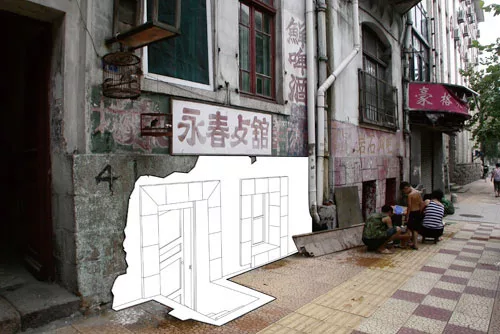
From Urban China magazine
Image courtesy of the New Museum
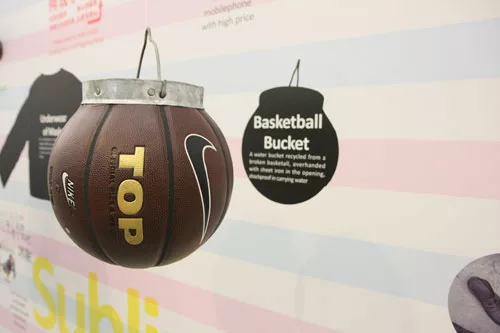
Installation view of Urban China: Informal Cities
Image courtesy of the New Museum
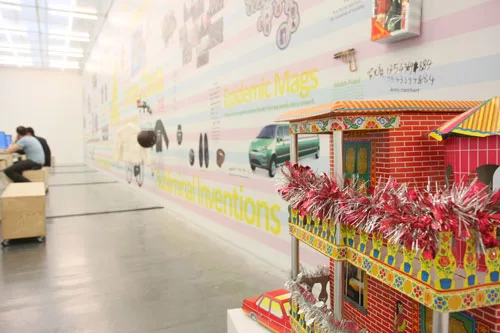
Installation view of Urban China: Informal Cities
Image courtesy of the New Museum
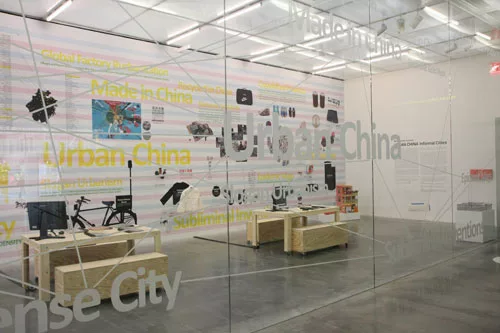
Installation view of Urban China: Informal Cities
Image courtesy of the New Museum
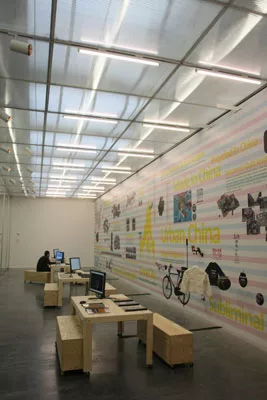
Installation view of Urban China: Informal Cities
Image courtesy of the New Museum
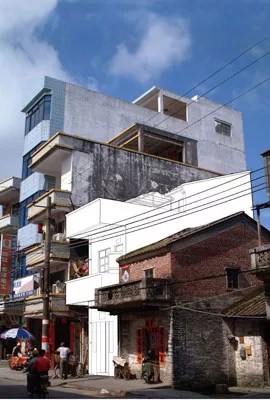
From Urban China magazine
Image courtesy of the New Museum
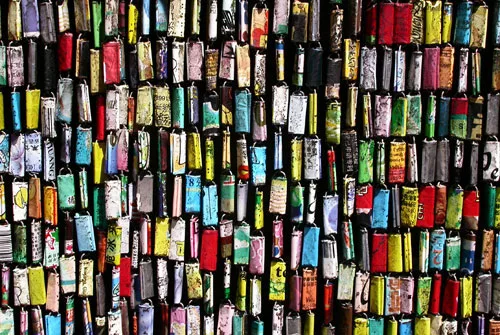
From Urban China magazine
Image courtesy of the New Museum
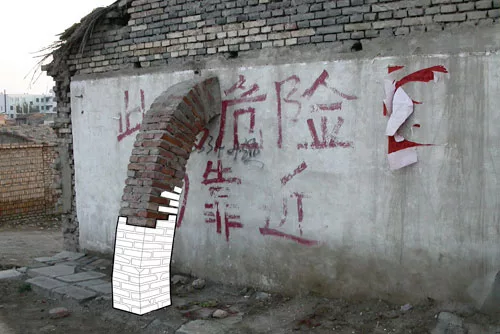
From Urban China magazine
Image courtesy of the New Museum
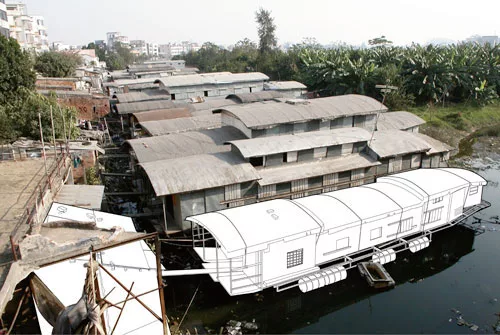
From Urban China magazine
Image courtesy of the New Museum
|  Image courtesy of the New Museum New Museum curator, Benjamin Godsill |

Cities are four-dimensional universes. Places and spaces at once, they’re always too big to fully grasp, and they’re always changing. If the contemporary apex of this incomprehensibility is anywhere, it’s in China, where cities are blurs of government control and ground-level commotion. They’re huge and sprawling, overpopulated, misunderstood, and growing fast. And a new show at the New Museum in New York packs all that into one room.
Jiang Jun edits the Shanghai-based magazine Urban China, and his publication is the material for an exhibition of the same name. Up through March 22nd, before traveling to Los Angeles and Chicago, Urban China: Informal Cities is a case study in problem solving.
How do you cover hundreds of Chinese cities in one magazine? And how do you fit four years and twenty-seven issues of that magazine into one room? For the exhibition, Jiang and New Museum curator Benjamin Godsill took the more-is-more approach.
The magazine is based on a huge database of information, images, and writing compiled by its editors, who then organize the information in different ways for each issue. (“Chinatown,” “Migrating China,” and “Urban Images and Text” are a few previous themes.)

Filling the glass-walled fish-tank gallery at the back of the museum’s lobby, the show recreates the editorial process. Computers let visitors search the magazine’s full database, and excerpts from it line the walls. One surface is plastered with a collage of information—maps, blurbs, photos, even some physical objects—while text on the glass wall separating the gallery from the lobby offers some key organizing terms in an interconnected web.
Stand outside, and the glass overlay gives a semblance of order to the jumble of information, but step into the gallery, and abandon all clarity, ye who enter here. That’s the point though, Godsill and Jiang agree, as they walk me through the space.
William Bostwick: How do you make an exhibition out of a magazine?
Benjamin Godsill: Right, without it just being a library? Because it’s not just about the magazine—it’s about the very strange, somewhat rigorous, almost obtuse research methods that go into it. The things they study are weird things, they’re not traditional academic urban subjects. So to physicalize it, to make people feel as if they were walking into the pages, it would have to be disorienting—it’s legible in many different ways but never fully legible.
WB: That mimics a city too, right?
BG: In a sense I think of it [the exhibition] like a city: there are different neighborhoods in here. So it allows people to have a relationship with the space as you would with a city. It stretches out into the lobby a little bit, and the way the [museum] building works, the street leaks back in here. And I’m hoping the show will leak out into the city.
WB: Jun, how did the magazine start? What goals did you have at the beginning, and how does the exhibition match what the magazine is trying to do?
Jiang Jun: My first intention was to do a book. This was 2004, and we got a sponsor who wanted to do a magazine. His idea was for an academic magazine, but we wanted a magazine that would be on newsstands, not just in institutions.
Our goal was to make the magazine as similar to the city as possible. So it’s based on a database of information that goes in two directions: top-down and bottom-up. If we were going to be an academic magazine, it’d be totally top-down. We have a lot of magazines like that—in every province, every city, there’s a planning institute, and their magazines are packed with information and proposals, but they’re far away from the people.
We want to show real life. So one side of the database is totally official, and the other is totally informal. In the exhibition, on one side, you can only see a collage. On the other, it’s totally organized.
WB: What sort of informality are we talking about in the show’s subtitle?
JJ: There’s “Dirtitecture,” for example—architecture that’s changed by its environment—and then there are social products, products you can’t find a designer for, like the basketball bucket.
BG: The bucket [on view in the show] comes from a city where all they do is make sports balls. This was a castoff, and they repurposed it with some rivets and metal. Now it’s a water-carrying jug. The objects come out of a need and an availability, without anyone—like a designer—mediating.
WB: Does this compare to New York at all?
BG: Yeah, you see informalism in the United States. At the sadder end, when you see people taking detritus and making homes out of them to stay warm. But it can even be very small things: the way stores construct pipes to take air conditioning water out. It’s not always drastic, but people are always changing the cities they live in.
WB: What lessons should architects take away?
BG: Architecture can impose a grid but people never conform to that. They’re always breaking the rules. Whatever you think the program is, it’s probably not. You can never understand what will happen before it’s been built.
Looking for a reprint of this article?
From high-res PDFs to custom plaques, order your copy today!