Architectural Record
search
cart
facebook twitter linkedin youtube
  • Sign In
  • Subscribe
  • Sign Out
  • My Account
Architectural Record
  • NEWS
    • Latest News
    • Awards
    • Interviews
    • Obituaries
    • Podcasts
      • Design:Ed Podcast
      • Sponsored Podcasts
  • OPINION
    • Book Reviews / Excerpts
    • Exhibition Reviews
    • Forum
  • EXCLUSIVES
    • Videos
    • Design Vanguard
    • Top 300 Firms
    • Sponsored Content
    • Sponsored eBooks
    • From the Archives
  • CONTINUING ED
    • Editorial Continuing Ed
    • CE Center
    • CE Academies
  • PROJECTS
    • Buildings By Type
    • Reuse & Renovation
    • Museums & Arts Centers
    • Colleges & Universities
    • Multifamily Housing
    • Interiors
    • Lighting
    • Kitchen & Bath
  • HOUSES
    • Record Houses
    • House of the Month
    • Featured Houses
  • PRODUCTS
    • Products by Category
    • Record Products of the Year
    • Latest Products
  • EVENTS
    • Dates & Events
    • Record on the Road
    • Innovation Conference
    • Sustainability in Practice
    • Women In Architecture
    • Webinars
    • Ad Excellence Awards
    • Submit an Event
  • CONNECT
    • Ask RECORD AI
    • Newsletters
    • Contact
    • Advertise
    • Editorial Calendar
    • Store
    • Customer Service
  • SUBMIT
    • Submission Guidelines
    • RECORD Competitions
  • MAGAZINE
    • Subscribe
    • My Account
    • Digital Edition
    • Current Issue
    • Firm Pass
    • Historic Archive

A New Era for the City of Culture
By William Hanley
In a move to expand its audience and capacity to show more — and bigger — artworks, MoMA increased its exhibition space by nearly 50 percent to 125,000 square feet (oriented around a 110-f
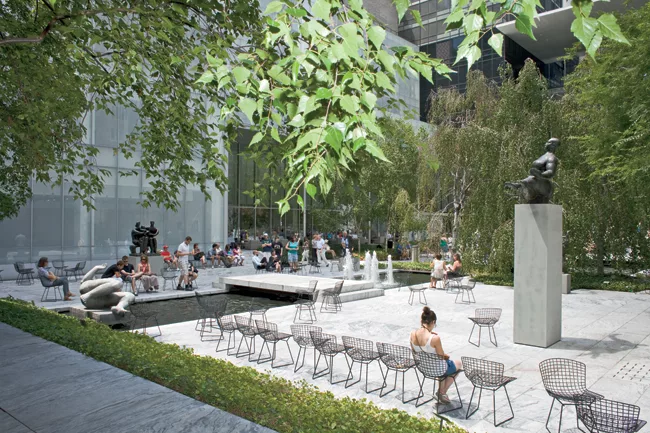
The Museum of Modern Art
Taniguchi Architects with Kohn Pedersen Fox Associates
Opened: November 2004
Total cost: $425 million
($65 million from New York City)
Annual visitors: 2.75 million
In a move to expand its audience and capacity to show more — and bigger — artworks, MoMA increased its exhibition space by nearly 50 percent to 125,000 square feet (oriented around a 110-foot-tall atrium) and enhanced its education and research facilities. It also added circulation, restaurants, and shops. Last year’s attendance was up from just under 1 million in 2002 (the year the museum closed to build). Its vast presence on the Midtown Manhattan block that it has occupied since 1932 will only grow when a proposed Jean Nouvel'designed mixed-use tower is built.
Photo by Jeff Mermelstein
The Museum of Modern Art
Taniguchi Architects with Kohn Pedersen Fox Associates
Opened: November 2004
Total cost: $425 million
($65 million from New York City)
Annual visitors: 2.75 million
In a move to expand its audience and capacity to show more — and bigger — artworks, MoMA increased its exhibition space by nearly 50 percent to 125,000 square feet (oriented around a 110-foot-tall atrium) and enhanced its education and research facilities. It also added circulation, restaurants, and shops. Last year’s attendance was up from just under 1 million in 2002 (the year the museum closed to build). Its vast presence on the Midtown Manhattan block that it has occupied since 1932 will only grow when a proposed Jean Nouvel'designed mixed-use tower is built.
Photo by Jeff Mermelstein
The biggest tourist attraction in New York City, the venerable Met can no longer expand its footprint into Central Park; instead the museum has created new space by building within its vast complex. O
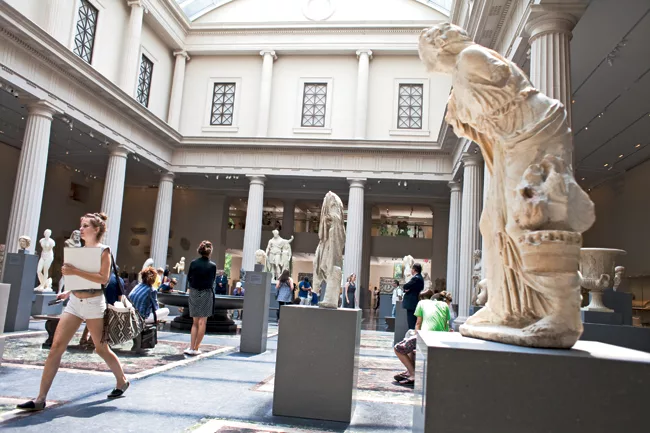
The Metropolitan Museum of Art
Greek and Roman Galleries
Kevin Roche John Dinkeloo and Associates
Opened: April 2007
Total cost: $225 million ($10.8 million from New York City)
Annual visitors (entire museum): 5.68 million
The biggest tourist attraction in New York City, the venerable Met can no longer expand its footprint into Central Park; instead the museum has created new space by building within its vast complex. One of its most successful rehabs, the 30,000-square-foot Greek and Roman galleries, with a splendid, skylit sculpture court at its center, greatly increased space for the museum’s renowned collection of Classical art, placing work that had long been confined to storage on display. The opening of the new galleries marked the culmination of a 15-year project to overhaul the museum’s southeast corner, clarifying visitor circulation among several of its collections.
Photo by Jeff Mermelstein
Even as years of gentrification brought caf's and boutiques to the tenement-lined streets of the Lower East Side, the Bowery remained a gritty, exhaust-choked stretch of restaurant-supply stores and s
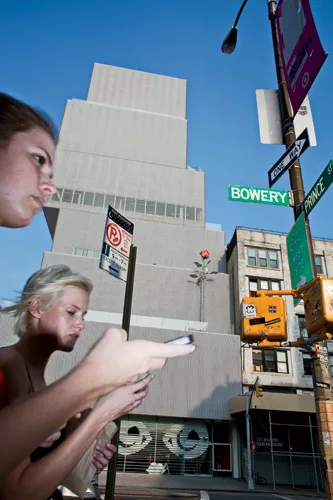
New Museum of Contemporary Art
SANAA Kazuyo Sejima+ and Ryue Nishizawa with Gensler
Opened: October 2007
Total cost: $55 million ($5.9 million from New York City)
Annual visitors: 300,000
Even as years of gentrification brought caf's and boutiques to the tenement-lined streets of the Lower East Side, the Bowery remained a gritty, exhaust-choked stretch of restaurant-supply stores and single-room-occupancy hotels until SANAA’s museum, which looks like a set of irregularly stacked boxes, arrived. With open gallery spaces as well as a caf', bookstore, and auditorium, the 58,700-square-foot building provides the 34-year-old contemporary art museum with its first tailor-made home. Its opening kicked off a migration of art galleries to the surrounding blocks, along with a wave of hip restaurants, bars, and retail. Though much of the area’s scrappy character remains, the New Museum has demonstrated how a high-profile cultural project can jump-start an entire neighborhood.
Photo by Jeff Mermelstein
A cultural landmark since the early 1970s for its day-of-show discounted theater tickets, the Theatre Development Fund’s TKTS booth witnessed the long transformation of once-seamy Times Square a
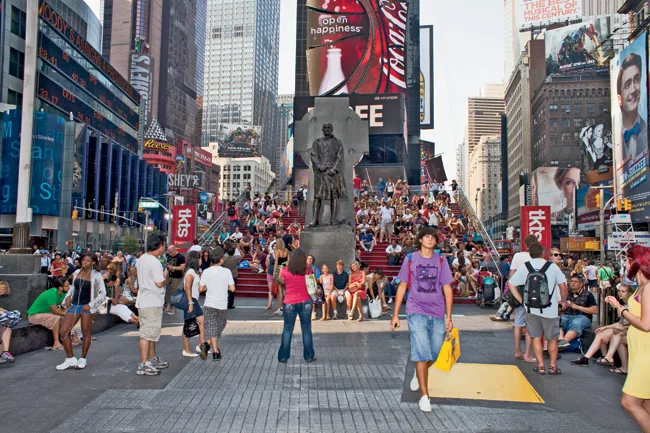
TKTS Discount Booth
Father Duffy Square
Perkins Eastman and PKSB
Opened: October 2008
Total cost: $19 million
($$11.5 million from New York City)
Annual tickets sold: 1.3 million
(Times Square location)
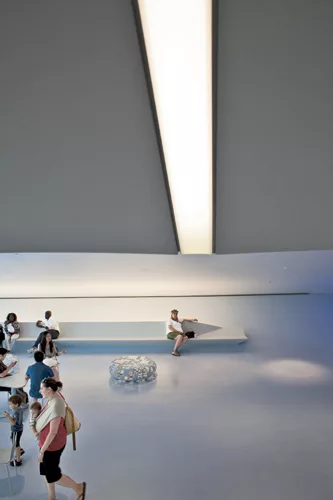
A cultural landmark since the early 1970s for its day-of-show discounted theater tickets, the Theatre Development Fund’s TKTS booth witnessed the long transformation of once-seamy Times Square and the theater district into a frenetic, family-friendly entertainment center. Three years ago, the “booth” underwent its own metamorphosis from a humble temporary trailer into a wedge-shaped, glass-walled pavilion as one part of the larger redevelopment of Father Duffy Square. The booth’s tiered roof (based on a competition-winning concept by Australian firm Choi Ropiha Fighera) creates an elevated public space, where visitors climb above the swell of pedestrians to sit among the video screens and neon and gawk at the noisy show that is Times Square’s street life.
Photo by Jeff Mermelstein
By 1920, when Paramount Pictures built a new studio in Astoria, Queens, most of the American film industry had migrated to Hollywood. In 1988, when the Museum of the Moving Image opened in one of its
Museum of the Moving Image
Leeser Architecture
Opened: January 2011
Total cost: $67 million
($54.7 million from New York City)
Projected annual visitors: 156,000
By 1920, when Paramount Pictures built a new studio in Astoria, Queens, most of the American film industry had migrated to Hollywood. In 1988, when the Museum of the Moving Image opened in one of its buildings, the project was part of a decade-old effort to bring filmmaking back. Now, television shows from Sesame Street to Law & Order shoot at the facility, and the museum — dedicated to film, TV, and video — recently unveiled an addition that includes a 267-seat theater and 68-seat screening room. Beyond its programming, the museum is an emblem of New York’s reemergence as a center of film production.
Photo by Jeff Mermelstein
Built in a then-rough area of the city, Lincoln Center was a travertine fortress raised on a plinth when it opened in the 1960s. Patrons accessed performance halls via parking garages tucked safely be
Lincoln Center for the Performing Arts
Diller Scofidio + +Renfro with FXFOWLE Architects
Scheduled completion: Spring 2012
Projected total cost: $1.2 billion
(Up to $$240 million from New York City)
Annual visitors: 5 million
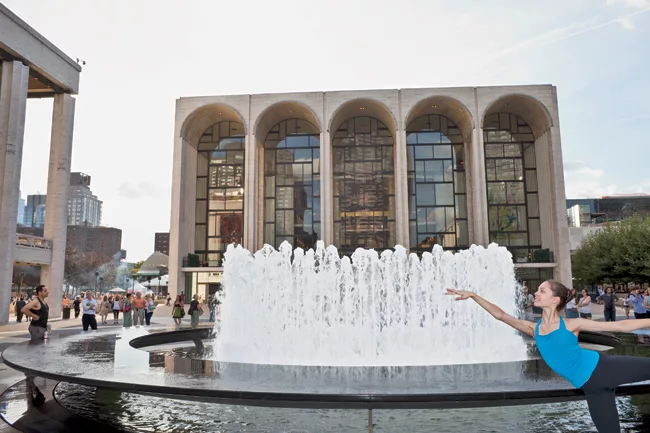
Built in a then-rough area of the city, Lincoln Center was a travertine fortress raised on a plinth when it opened in the 1960s. Patrons accessed performance halls via parking garages tucked safely below its plazas. Now that the Upper West Side is a desirable area, the 16-acre campus is undergoing a six-year-long face-lift to undo its inward-looking planning. Renovating performance spaces, adding a new restaurant, and revamping plazas, it aims to open the campus to the neighborhood, welcoming patrons and the public alike.
Photo by Jeff Mermelstein
In a move to expand its audience and capacity to show more — and bigger — artworks, MoMA increased its exhibition space by nearly 50 percent to 125,000 square feet (oriented around a 110-f
The biggest tourist attraction in New York City, the venerable Met can no longer expand its footprint into Central Park; instead the museum has created new space by building within its vast complex. O
Even as years of gentrification brought caf's and boutiques to the tenement-lined streets of the Lower East Side, the Bowery remained a gritty, exhaust-choked stretch of restaurant-supply stores and s
A cultural landmark since the early 1970s for its day-of-show discounted theater tickets, the Theatre Development Fund’s TKTS booth witnessed the long transformation of once-seamy Times Square a
By 1920, when Paramount Pictures built a new studio in Astoria, Queens, most of the American film industry had migrated to Hollywood. In 1988, when the Museum of the Moving Image opened in one of its
Built in a then-rough area of the city, Lincoln Center was a travertine fortress raised on a plinth when it opened in the 1960s. Patrons accessed performance halls via parking garages tucked safely be
September 16, 2011
New York City

Spurred by city funds, arts organizations have built and expanded all over town

Photo by Jeff Mermelstein

Click the image above to view a slide show of New York's new arts spaces.

In the last decade, the New York building boom spread to museums and performing arts organizations, with the construction or renovation of facilities all over the city. Thanks to years of a strong economy, there were generous private donors. But there was also a new patron for capital funds: the city itself. In 1998, then-Mayor Rudolph Giuliani announced the city would pay 10 percent of the projected construction costs for the expansion of the Museum of Modern Art, designed by Yoshio Taniguchi. That $65 million was the first major bricks-and-mortar contribution from New York City’s Department of Cultural Affairs (DCA) to a non-city-owned project. Since 2002, the DCA has helped fund some 600 cultural construction projects, dispensing a total of $1.8 billion. “Funding culture has a huge economic impact in terms of both tourism and quality of life,” says DCA commissioner Kate Levin.

Here are the numbers: 21.4 million tourists visited New York’s arts institutions last year and left a $21 billion contribution to the city’s economy behind. New cultural buildings have helped transform neighborhoods, too — just look at how the New Museum, which opened a building by the Tokyo firm, SANAA, in 2007, has glamorized a once-gritty stretch of the Bowery. And despite the economic downturn, the DCA still has $600 to $700 million to spend on capital projects before the Bloomberg administration exits the stage in 2013.

What follows here is a glimpse of the impact of all that new architecture for the arts — as well as a look at the visitors and New Yorkers who flock to it to see the city’s exhibitions, screenings, and performances, or, often, just to hang out.

Share This Story

Looking for a reprint of this article?
From high-res PDFs to custom plaques, order your copy today!
Post a comment to this article

Report Abusive Comment

Subscription Center
  • Create an Account
  • Start a Subscription
  • Manage My Account
  • Sign Up for Newsletters
  • Visit Customer Service
  • Update Preferences

More Videos

Sponsored Content

Sponsored Content is a special paid section where industry companies provide high quality, objective, non-commercial content around topics of interest to the Architectural Record audience. All Sponsored Content is supplied by the advertising company and any opinions expressed in this article are those of the author and not necessarily reflect the views of Architectural Record or its parent company, BNP Media. Interested in participating in our Sponsored Content section? Contact your local rep!

close
  • TAMLYN XtremeTrim Exterior Trim
    Sponsored byTamlyn

    Designing Cleaner Panel Facades: Why Exterior Trim Details Matter

  • Building with Vapor Barriers
    Sponsored byReef Industries, Inc.

    Vapor Barriers Help Control Moisture in Tighter Building Designs

  • Duct Interior with Prodeq System
    Sponsored byHenry, a Carlisle Company

    Designing Resilient Water Containment Systems

DESIGN:ED Podcast
Listen to Architectural Record’s DESIGN:ED Podcast

Events

June 10, 2026

Rethinking Stormwater – The Power of Porous Paving

Credits: 1 AIA LU/HSW; 1 AIBD P-CE; 0.1 ICC CEU

Learn how porous paving systems support stormwater management, reduce heat island effects, and enhance sustainable site design performance.

June 11, 2026

Very Early Warning Fire Detection for Mission-Critical Facilities

Credits: 1 AIA LU/HSW; 1 AIBD P-CE; 0.1 ICC CEU

Examine advanced fire detection strategies that support uptime and enhance safety in data centers and other mission-critical facilities.

View All Submit An Event

Products

2026 Architect's Square Foot Costbook

2026 Architect's Square Foot Costbook

See More Products

Popular Stories

Practice Matters illustration

What’s in a (Firm’s) Name? Thinking About Succession and Legacy

Practice Matters illustration

By the Numbers: Counting America's Architects

Riverdale House by Studio Lau

Riverdale House by Studio Lau

House on a Hill

Design Vanguard 2026: Forma

Crane Cove, ONO

Design Vanguard 2026 Winners

Broader Sustainability of CMU - Free Webinar - May 21, 2026

Related Articles

  • Hunter's Point Park Heralds New Era for Queens Waterfront

    See More
  • City of Culture of Galicia Archive and Library

    See More
  • Old Debates for a New Era at Postmodernism Conference

    See More

Related Products

See More Products
  • WC_-SCA.png

    Building Great Schools for a Great City

See More Products
×

The latest news and information

#1 Source for Architectural Design, News and Products

SUBSCRIBE
  • RESOURCES
    • Advertise
    • Contact Us
    • Submit
    • Store
  • ACCOUNT CENTER
    • Create an Account
    • Start a Subscription
    • Manage My Account
    • Sign Up for Newsletters
    • Visit Customer Service
    • Update Preferences
  • PRIVACY
    • PRIVACY POLICY
    • TERMS & CONDITIONS
    • DO NOT SELL MY PERSONAL INFORMATION
    • PRIVACY REQUEST
    • ACCESSIBILITY
  • SERVICES
    • Marketing Services
    • Reprints
    • Market Research
    • List Rental
    • Survey/Respondent Access
  • STAY CONNECTED
    • Linkedin
    • Facebook
    • Instagram
    • YouTube
    • X (Twitter)

Copyright ©2026. All Rights Reserved BNP Media, Inc. and BNP Media II, LLC.

Design, CMS, Hosting & Web Development :: ePublishing