Architectural Record
search
cart
facebook twitter linkedin youtube
  • Sign In
  • Subscribe
  • Sign Out
  • My Account
Architectural Record
  • NEWS
    • Latest News
    • Awards
    • Interviews
    • Obituaries
    • Podcasts
      • Design:Ed Podcast
      • Sponsored Podcasts
  • OPINION
    • Book Reviews / Excerpts
    • Exhibition Reviews
    • Forum
  • EXCLUSIVES
    • Videos
    • Design Vanguard
    • Top 300 Firms
    • Sponsored Content
    • Sponsored eBooks
    • From the Archives
  • CONTINUING ED
    • Editorial Continuing Ed
    • CE Center
    • CE Academies
  • PROJECTS
    • Buildings By Type
    • Reuse & Renovation
    • Museums & Arts Centers
    • Colleges & Universities
    • Multifamily Housing
    • Interiors
    • Lighting
    • Kitchen & Bath
  • HOUSES
    • Record Houses
    • House of the Month
    • Featured Houses
  • PRODUCTS
    • Products by Category
    • Record Products of the Year
    • Latest Products
  • EVENTS
    • Dates & Events
    • Record on the Road
    • Innovation Conference
    • Sustainability in Practice
    • Women In Architecture
    • Webinars
    • Ad Excellence Awards
    • Submit an Event
  • CONNECT
    • Ask RECORD AI
    • Newsletters
    • Contact
    • Advertise
    • Editorial Calendar
    • Store
    • Customer Service
  • SUBMIT
    • Submission Guidelines
    • RECORD Competitions
  • MAGAZINE
    • Subscribe
    • My Account
    • Digital Edition
    • Current Issue
    • Firm Pass
    • Historic Archive
Commentary & Criticism

Fame: A Fickle Mistress

By Martin Filler
December 16, 2009

For architects on the edge, early success can be a sword that cuts both ways.

Every aspiring architect dreams of a breakthrough project that will establish his or her name soon enough to buy time and offset the geological pace of a creative process often calculated in decades rather than years.
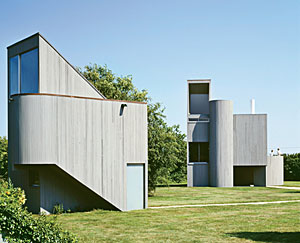
This house and studio on Long Island for his parents set Charles Gwathmey on the path to success
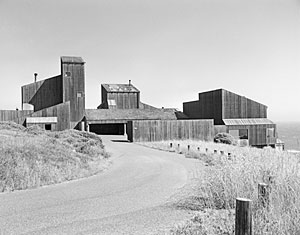
Condominium 1 at Sea Ranch was a highlight in Charles Moore’s career
Photo © Norman Mcgrath/Esto (top); Wayne Andrews/Esto (above)
This house and studio on Long Island for his parents set Charles Gwathmey on the path to success (top). Condominium 1 at Sea Ranch was a highlight in Charles Moore’s career (above).

But as the career tangents of even the most admired architects demonstrate, initial acclaim doesn’t come with a lifetime guarantee. When Charles Gwathmey died this summer at 71 — scandalously soon for anyone these days, architect or not — more than one observer noted that nothing he did surpassed his brilliant debut: the widely praised Long Island house and artist’s studio he designed for his parents more than four decades ago.

Completed in 1966, when Gwathmey was just 28, this superb ensemble — a lively composition of geometric forms that suggested a new vocabulary for the East Coast beach house — won instant raves. It gave Gwathmey’s reputation the kick start that in turn increased the influence of the New York Five, of which he was the youngest member, and secured him a thriving practice before he turned 40. But I wouldn’t hazard a guess as to why that marked the high point of his career.

Not long ago, I ran into an architect I highly respect but hadn’t seen for ages: Donlyn Lyndon, still best known as a principal in the quintessentially 1960s office of Moore, Lyndon, Turnbull and Whitaker (MLTW) in California. They designed the epoch-making Sea Ranch Condominium 1 (1963—65) in Sonoma County, California, a watershed in the emergence of architecture based on vernacular traditions to better connect with the local environment (aided immeasurably by the site planning of landscape architect Lawrence Halprin, who died in October at 93).

I told Lyndon, who is two years older than Gwathmey, that the similarly premature deaths of his former colleagues Charles Moore and William Turnbull have made Lyndon and the fourth member of their quartet, Richard Whitaker, seem like the two surviving Beatles — such was MLTW’s rock-star status when I started writing about architecture 35 years ago.

But rather than lapsing into nostalgia, Lyndon was clear-eyed about their place in history. As he told me, “Nothing any of us later did separately ever came close to the condominium.” At the time of its completion, he was 29 and Moore was 40. When MLTW disbanded, Lyndon explained, a crucial factor vanished with it: the partners’ forthright critiques of each others’ contributions, which brought out the best in each of them at Sea Ranch.

The ensuing absence of that collegial give-and-take affected Moore’s subsequent work most visibly. This extravagantly gifted designer, author, educator, and historian was also compulsively peripatetic and incapable of settling down in one location, an odd trait for someone who wrote so evocatively about the spirit of place.

As the dawning Jet Age made travel easier and the nascent celebrity culture spawned the architectural star system, Moore shuttled between separate professional practices (more complicated than corporate branch offices) and moved from one architecture-school deanship to the next, rarely touching down long enough to maximize his talents anywhere. The best designs of Moore and Gwathmey, as well as the early work of Edward Larrabee Barnes and Arthur Erickson, all responded quite specifically to natural settings and intimate scale that got lost in the shuffle once those men took to long-distance practice.

Above all, none of Moore’s ever-younger collaborators challenged him as frankly and constructively as his MLTW partners had. Architects at the start of their careers are often unconstrained by conventions that inhibit their elders. Though Moore liked to recruit his brightest students for his various firms, and those admiring neophytes learned much from him, their intergenerational dynamic was unbalanced, in contrast to MLTW’s interplay of equals.

The iffy economics of a practice based on small-scale, high-style projects also had much to do with Moore’s multiple affiliations and constant peregrinations. But the far-flung road show, now a professional commonplace, took a terrible toll on him physically and psychically.

Share This Story

Looking for a reprint of this article?
From high-res PDFs to custom plaques, order your copy today!


Post a comment to this article

Report Abusive Comment

Subscription Center
  • Create an Account
  • Start a Subscription
  • Manage My Account
  • Sign Up for Newsletters
  • Visit Customer Service
  • Update Preferences

More Videos

Sponsored Content

Sponsored Content is a special paid section where industry companies provide high quality, objective, non-commercial content around topics of interest to the Architectural Record audience. All Sponsored Content is supplied by the advertising company and any opinions expressed in this article are those of the author and not necessarily reflect the views of Architectural Record or its parent company, BNP Media. Interested in participating in our Sponsored Content section? Contact your local rep!

close
  • TAMLYN XtremeTrim Exterior Trim
    Sponsored byTamlyn

    Designing Cleaner Panel Facades: Why Exterior Trim Details Matter

  • Building with Vapor Barriers
    Sponsored byReef Industries, Inc.

    Vapor Barriers Help Control Moisture in Tighter Building Designs

  • Duct Interior with Prodeq System
    Sponsored byHenry, a Carlisle Company

    Designing Resilient Water Containment Systems

DESIGN:ED Podcast
Listen to Architectural Record’s DESIGN:ED Podcast

Events

June 10, 2026

Rethinking Stormwater – The Power of Porous Paving

Credits: 1 AIA LU/HSW; 1 AIBD P-CE; 0.1 ICC CEU

Learn how porous paving systems support stormwater management, reduce heat island effects, and enhance sustainable site design performance.

June 11, 2026

Very Early Warning Fire Detection for Mission-Critical Facilities

Credits: 1 AIA LU/HSW; 1 AIBD P-CE; 0.1 ICC CEU

Examine advanced fire detection strategies that support uptime and enhance safety in data centers and other mission-critical facilities.

View All Submit An Event

Products

2026 Architect's Square Foot Costbook

2026 Architect's Square Foot Costbook

See More Products

Popular Stories

Coronado Bridge

The Architect’s Guide to San Diego

Practice Matters illustration

What’s in a (Firm’s) Name? Thinking About Succession and Legacy

Practice Matters illustration

By the Numbers: Counting America's Architects

Inward House

Inward House by VeeV Design Studio

Riverdale House by Studio Lau

Riverdale House by Studio Lau

Broader Sustainability of CMU - Free Webinar - May 21, 2026

Related Articles

  • Fame: A Fickle Mistress

    See More
  • Critique & Commentary 2009

    See More
  • First Look: Trey Trahan's Louisiana State Museum and Sports Hall of Fame

    See More

Related Products

See More Products
  • book3.jpg

    If Architecture is a Language, Then a Building is a Story

  • 0470126736.gif

    Modern Sustainable Residential Design: A Guide for Design Professionals

  • image7.jpg

    Contemporary Architecture in China Towards A Critical Pragmatism

See More Products
×

The latest news and information

#1 Source for Architectural Design, News and Products

SUBSCRIBE
  • RESOURCES
    • Advertise
    • Contact Us
    • Submit
    • Store
  • ACCOUNT CENTER
    • Create an Account
    • Start a Subscription
    • Manage My Account
    • Sign Up for Newsletters
    • Visit Customer Service
    • Update Preferences
  • PRIVACY
    • PRIVACY POLICY
    • TERMS & CONDITIONS
    • DO NOT SELL MY PERSONAL INFORMATION
    • PRIVACY REQUEST
    • ACCESSIBILITY
  • SERVICES
    • Marketing Services
    • Reprints
    • Market Research
    • List Rental
    • Survey/Respondent Access
  • STAY CONNECTED
    • Linkedin
    • Facebook
    • Instagram
    • YouTube
    • X (Twitter)

Copyright ©2026. All Rights Reserved BNP Media, Inc. and BNP Media II, LLC.

Design, CMS, Hosting & Web Development :: ePublishing