Architectural Record
search
cart
facebook twitter linkedin youtube
  • Sign In
  • Subscribe
  • Sign Out
  • My Account
Architectural Record
  • NEWS
    • Latest News
    • Awards
    • Interviews
    • Obituaries
    • Podcasts
      • Design:Ed Podcast
      • Sponsored Podcasts
  • OPINION
    • Book Reviews / Excerpts
    • Exhibition Reviews
    • Forum
  • EXCLUSIVES
    • Videos
    • Design Vanguard
    • Top 300 Firms
    • Sponsored Content
    • Sponsored eBooks
    • From the Archives
  • CONTINUING ED
    • Editorial Continuing Ed
    • CE Center
    • CE Academies
  • PROJECTS
    • Buildings By Type
    • Reuse & Renovation
    • Museums & Arts Centers
    • Colleges & Universities
    • Multifamily Housing
    • Interiors
    • Lighting
    • Kitchen & Bath
  • HOUSES
    • Record Houses
    • House of the Month
    • Featured Houses
  • PRODUCTS
    • Products by Category
    • Record Products of the Year
    • Latest Products
  • EVENTS
    • Dates & Events
    • Record on the Road
    • Innovation Conference
    • Sustainability in Practice
    • Women In Architecture
    • Webinars
    • Ad Excellence Awards
    • Submit an Event
  • CONNECT
    • Ask RECORD AI
    • Newsletters
    • Contact
    • Advertise
    • Editorial Calendar
    • Store
    • Customer Service
  • SUBMIT
    • Submission Guidelines
    • RECORD Competitions
  • MAGAZINE
    • Subscribe
    • My Account
    • Digital Edition
    • Current Issue
    • Firm Pass
    • Historic Archive
Commentary & CriticismOpinion

Urban Design Roundup
By Ernie Hutton
Architectural Association Publications, 2011, 272 pages, $47.
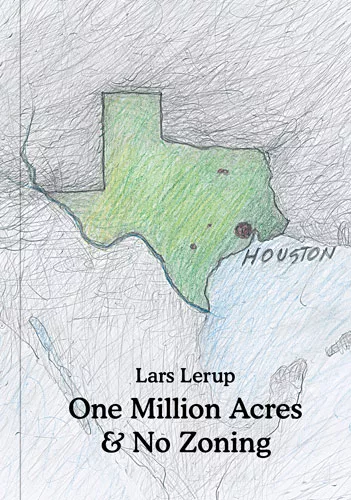
One Million Acres and No Zoning
By Lars Lerup
Architectural Association Publications, 2011, 272 pages, $47.
Stray Dog Caf', 2011, 448 pages, $40.
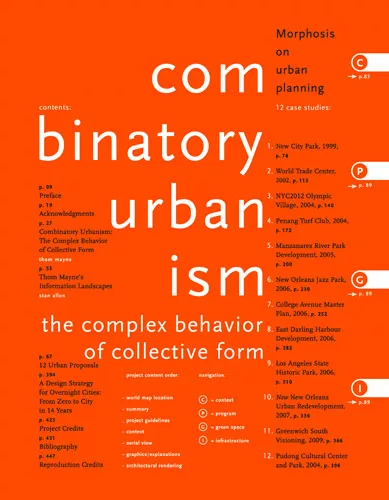
Combinatory Urbanism: The Complex Behavior of Collective Form
By Thom Mayne/ Morphosis
Stray Dog Caf', 2011, 448 pages, $40.
Hatje Cantz with the Southern California School of Architecture, 2011, 240 pages, $50.
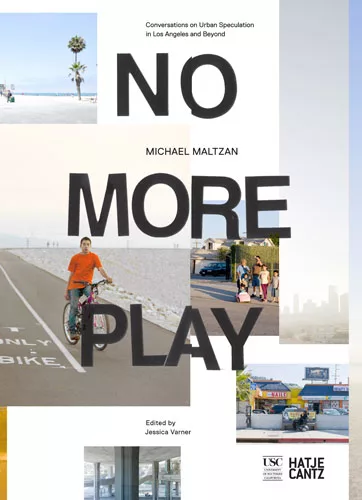
No More Play, Conversations on Open Space and Urban Speculation in Los Angeles and Beyond
By Michael Maltzan
Hatje Cantz with the Southern California School of Architecture, 2011, 240 pages, $50.
Architectural Association Publications, 2011, 272 pages, $47.
Stray Dog Caf', 2011, 448 pages, $40.
Hatje Cantz with the Southern California School of Architecture, 2011, 240 pages, $50.
December 16, 2011

Three new books by thoughtful architect-urbanists, usefully read together, explore the current state of urban design. Each author investigates historic and current trends in the evolution of specific American locations, and posits approaches for responding to local character and shaping future growth.

Click the image above for details about each book mentioned in this review.

Lars Lerup left his native Sweden to come to America in 1966, and has lived in Houston for over 20 years, serving as dean at the Rice School of Architecture from 1993 to 2009.  In One Million Acres and No Zoning, he notes the implications of Houston's unique lack of land-use regulation—how its development has responded to "an immense, flat playing field." He diagnoses the resulting "middle ground" of suburbia, a social norm of subdivisions whose supply and demand are dominated not by space (which is ubiquitous in its uniformity) but by time (commuting patterns and transportation costs). And in this charmingly illustrated book, he creatively suggests how, in the absence of zoning controls, a dual emphasis on public-sector infrastructure and ecological preservation can act as a framework for private-sector development and individual locational choice—a new paradigm for regional growth that can serve as a welcome model for other U.S. localities as well.

Architect Michael Maltzan analyzes a similar place, his adopted city of Los Angeles. A native of Levittown, New York, he has a keen appreciation for the "underlying order and connective threads" of both of these seemingly repetitious landscapes, and the "subtle characteristics of place" that give personality to such environments. Rather than focus only on his own reactions, he structures his book around a series of interviews with myriad other transplanted LA observers—discussions that circle in on the city and region as a multi-layered social and physical artifact. Throughout the book, edited by Jessica Varner, Maltzan describes the need for buildings and plans that specifically represent the city and its culture, rather than importing other urban models. He emphasizes this place-based approach in his architecture as well as in planning prescriptions for the city’s future—a strategy applicable not only to Los Angeles but to other sprawling conurbations.

Finally, Thom Mayne (who was born in Waterbury, Connecticut) and his Morphosis associates (with a useful associated essay by Stan Allen) describe their analysis of the "complex behavior of collective form"—building on questions posed over the last 50 years by urban and systems theorists such as Jane Jacobs, Fumihiko Maki, and James Gleick. They propose a new operating paradigm—"combinatory urbanism"—characterized by finding a balance among the often contradictory forces at work in urban growth. The emphasis is on values and tactics rather than predetermined form, resulting in "deeply contextual, highly associative, and radically elastic solutions." This description can be applied to Morphosis' architecture of the last two decades, and its planning application is illustrated in the book by proposals for large-scale projects varying in size from the World Trade Center site to the reconstruction of New Orleans. At the district or city scale, the firm's diagrammatic and physical resolution of identified urban forces often results in megastructural form that requires an equally megastructural implementing client—polar opposites to Lerup’s regional public framework for individual private action or to Maltzan’s contextural and culturally driven design approach.

Reading these three books together provides a fascinating conversation among three deep thinkers about the evolving growth of American metropolitan areas.  While the prescriptions diverge in their approach to strategic implementation, their common thread is an emphasis on place making based on function and context.

Ernie Hutton, president of the New York-based planning firm, Hutton Associates, Inc./Planning Interaction, grew up in small town Virginia and now lives in brownstone Brooklyn.

Share This Story

Looking for a reprint of this article?
From high-res PDFs to custom plaques, order your copy today!
Post a comment to this article

Report Abusive Comment

Subscription Center
  • Create an Account
  • Start a Subscription
  • Manage My Account
  • Sign Up for Newsletters
  • Visit Customer Service
  • Update Preferences

More Videos

Sponsored Content

Sponsored Content is a special paid section where industry companies provide high quality, objective, non-commercial content around topics of interest to the Architectural Record audience. All Sponsored Content is supplied by the advertising company and any opinions expressed in this article are those of the author and not necessarily reflect the views of Architectural Record or its parent company, BNP Media. Interested in participating in our Sponsored Content section? Contact your local rep!

close
  • cold storage facility
    Sponsored byCarlisle SynTec Systems

    How Architects Can Design More Continuous Cold Storage Envelopes

  • TAMLYN XtremeTrim Exterior Trim
    Sponsored byTamlyn

    Designing Cleaner Panel Facades: Why Exterior Trim Details Matter

  • Building with Vapor Barriers
    Sponsored byReef Industries, Inc.

    Vapor Barriers Help Control Moisture in Tighter Building Designs

DESIGN:ED Podcast
Listen to Architectural Record’s DESIGN:ED Podcast

Events

June 18, 2026

Rebooting the Aging Office Building

Credits: 1 AIA LU/HSW; 1 AIBD P-CE; 0.1 ICC CEU; 1 PDH

Explore façade retrofit strategies and award-winning design concepts that can transform aging office buildings into healthier, higher-performing workplaces for today’s hybrid workforce.

June 23, 2026

Enhancing Fire Resistance with Advanced PVC Solutions

Credits: 1 AIA LU/HSW; 1 AIBD P-CE; 0.1 ICC CEU; 1 IIBEC CEH

Evaluate advanced PVC solutions that improve fire resistance, support WUI compliance, and enhance resilience in residential and commercial building design.

View All Submit An Event

Products

2026 Architect's Square Foot Costbook

2026 Architect's Square Foot Costbook

See More Products

Popular Stories

SanDiegoAirport

Top 300 Architecture Firms of 2026

Coronado Bridge

The Architect’s Guide to San Diego

Lorcan O' Herilhy

California Architect Lorcan O’Herlihy Has Died, Age 66

CCA, Studio Gang

The Winners of the AIA’s 2026 Architecture Award Range from Collegiate Rowing Hubs to Housing for the Homeless

Dusk House

Design Vanguard 2026: ONO

Rebooting the Aging Office Building - Free Webinar - June 18, 2026

Related Articles

  • Milan Design Week Roundup

    See More
  • AIA Announces 2009 Honor Awards for Regional and Urban Design

    See More
  • Emergent Tokyo

    Jorge Almazán and Studiolab's New Book Spotlights Spontaneous Urban Design in Tokyo

    See More

Related Products

See More Products
  • 047177751X.gif

    Sustainable Urbanism: Urban Design With Nature

See More Products
×

The latest news and information

#1 Source for Architectural Design, News and Products

SUBSCRIBE
  • RESOURCES
    • Advertise
    • Contact Us
    • Submit
    • Store
  • ACCOUNT CENTER
    • Create an Account
    • Start a Subscription
    • Manage My Account
    • Sign Up for Newsletters
    • Visit Customer Service
    • Update Preferences
  • PRIVACY
    • PRIVACY POLICY
    • TERMS & CONDITIONS
    • DO NOT SELL MY PERSONAL INFORMATION
    • PRIVACY REQUEST
    • ACCESSIBILITY
  • SERVICES
    • Marketing Services
    • Reprints
    • Market Research
    • List Rental
    • Survey/Respondent Access
  • STAY CONNECTED
    • Linkedin
    • Facebook
    • Instagram
    • YouTube
    • X (Twitter)

Copyright ©2026. All Rights Reserved BNP Media, Inc. and BNP Media II, LLC.

Design, CMS, Hosting & Web Development :: ePublishing