Architectural Record
search
cart
facebook twitter linkedin youtube
  • Sign In
  • Subscribe
  • Sign Out
  • My Account
Architectural Record
  • NEWS
    • Latest News
    • Awards
    • Interviews
    • Obituaries
    • Podcasts
      • Design:Ed Podcast
      • Sponsored Podcasts
  • OPINION
    • Book Reviews / Excerpts
    • Exhibition Reviews
    • Forum
  • EXCLUSIVES
    • Videos
    • Design Vanguard
    • Top 300 Firms
    • Sponsored Content
    • Sponsored eBooks
    • From the Archives
  • CONTINUING ED
    • Editorial Continuing Ed
    • CE Center
    • CE Academies
  • PROJECTS
    • Buildings By Type
    • Reuse & Renovation
    • Museums & Arts Centers
    • Colleges & Universities
    • Multifamily Housing
    • Interiors
    • Lighting
    • Kitchen & Bath
  • HOUSES
    • Record Houses
    • House of the Month
    • Featured Houses
  • PRODUCTS
    • Products by Category
    • Record Products of the Year
    • Latest Products
  • EVENTS
    • Dates & Events
    • Record on the Road
    • Innovation Conference
    • Sustainability in Practice
    • Women In Architecture
    • Webinars
    • Ad Excellence Awards
    • Submit an Event
  • CONNECT
    • Ask RECORD AI
    • Newsletters
    • Contact
    • Advertise
    • Editorial Calendar
    • Store
    • Customer Service
  • SUBMIT
    • Submission Guidelines
    • RECORD Competitions
  • MAGAZINE
    • Subscribe
    • My Account
    • Digital Edition
    • Current Issue
    • Firm Pass
    • Historic Archive
Commentary & CriticismOpinion

High Life: Condo Living in the Suburban Century

By Jayne Merkel
March 16, 2013
By Matthew Gordon Lasner. Yale University Press, 2012, 336 pages, $40.

This superb study of co-owned housing in America-from the first cooperative apartment buildings in 19th-century New York City to condominiums around the country today-is not only an architectural history but also a social, political, urban, economic, and political one. With only 125 black-and-white images, the author manages to provide enough information for the reader to picture those apartment buildings and townhouses, while he explains the socioeconomic circumstances under which they were created.
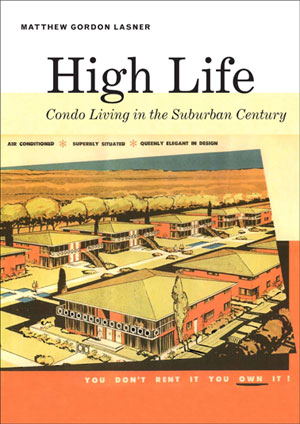
AR Book Reviews, High Life: Condo Living in the Suburban Century

High Life: Condo Living in the Suburban Century, by Matthew Gordon Lasner. Yale University Press, 2012, 336 pages, $40.

He notes that the first co-ops appealed particularly to single women (most single men lived in hotels or with their parents) and small families (large ones preferred houses). He describes early multistory luxury co-ops in Manhattan, lower-density ones for the middle class in Queens, and early-20th-century commercially built co-op apartment complexes in mostly East Coast cities and suburbs. He also discusses the first not-for-profit, moderate-income co-op complexes around New York, which were influenced by housing reformers like Clarence Stein and built by progressive groups or unions in the 1920s and after World War II. The idea was to pool resources to create communities of like-minded (mostly left-wing) people, who weren’t allowed to rent out or resell their units at a profit.

In the postwar period, “it was the elderly, primarily in Florida, who made co-ownership a truly mainstream dwelling practice in the US,” Lasner explains. “Before World War II older people lived with their grown children, in institutional homes for the aged or infirm, or in residential hotels… Increasing longevity coupled with trade union pensions and Social Security (introduced in 1935) made the postwar era the first in which ordinary Americans could enjoy a comfortable retirement.” Unlike earlier co-ops, which resembled rental apartment buildings architecturally, those built largely for the retired assumed new forms—assertively modern, high-rise and low-rise, with balconies to enjoy fresh air, and amenities such as swimming pools and golf courses.

Condominiums became popular in California when land grew scarce around San Francisco and Los Angeles, the latter of which, says the author, had been the first big city composed mainly of spread-out single-family houses. But by the 1960s, “a majority of new homes…under construction in Southern California’s fourteen counties were multifamily…in the city of L.A., three-quarters” were. Most were townhouses or in low-rise buildings with private outdoor space and nearby parking. Like the freestanding subdivision houses before them, they appeared in many styles and colorful palettes, and many had “Spanish” touches.

High Life ends up in New York where it began, and where the housing-reform movement had made possible the first large, moderate-income complexes. In the postwar period, another progressive accomplishment, rent control, discouraged the building of new market-rate rental housing. Most new apartment buildings for the middle and upper classes were therefore condominiums, and many existing apartment buildings were converted to co-ops or condos. In either case, co-ownership became the norm where it began, and demographic trends toward smaller households, later marriage, and greater urbanization suggest that it will become increasingly so throughout the United States.

Already, one-eighth of Amer­ican homeowners live in co-ops or condos, with higher percentages in cities. Without co-ownership, rates of homeownership would not have grown during the last 50 years. As Lasner reports, “The share of households in owner-occupied, single-family houses in 2007 was precisely the same as it had been in 1960 (49 percent) despite the fact that rates of home­own­er­ship had risen from 62 to 68 percent.”

For all these reasons, this is an indispensable book for anyone involved with housing—or simply interested in social trends.

Share This Story

Looking for a reprint of this article?
From high-res PDFs to custom plaques, order your copy today!

Post a comment to this article

Report Abusive Comment

Subscription Center
  • Create an Account
  • Start a Subscription
  • Manage My Account
  • Sign Up for Newsletters
  • Visit Customer Service
  • Update Preferences

More Videos

Sponsored Content

Sponsored Content is a special paid section where industry companies provide high quality, objective, non-commercial content around topics of interest to the Architectural Record audience. All Sponsored Content is supplied by the advertising company and any opinions expressed in this article are those of the author and not necessarily reflect the views of Architectural Record or its parent company, BNP Media. Interested in participating in our Sponsored Content section? Contact your local rep!

close
  • TAMLYN XtremeTrim Exterior Trim
    Sponsored byTamlyn

    Designing Cleaner Panel Facades: Why Exterior Trim Details Matter

  • Building with Vapor Barriers
    Sponsored byReef Industries, Inc.

    Vapor Barriers Help Control Moisture in Tighter Building Designs

  • Duct Interior with Prodeq System
    Sponsored byHenry, a Carlisle Company

    Designing Resilient Water Containment Systems

DESIGN:ED Podcast
Listen to Architectural Record’s DESIGN:ED Podcast

Events

June 10, 2026

Rethinking Stormwater – The Power of Porous Paving

Credits: 1 AIA LU/HSW; 1 AIBD P-CE; 0.1 ICC CEU

Learn how porous paving systems support stormwater management, reduce heat island effects, and enhance sustainable site design performance.

June 11, 2026

Very Early Warning Fire Detection for Mission-Critical Facilities

Credits: 1 AIA LU/HSW; 1 AIBD P-CE; 0.1 ICC CEU

Examine advanced fire detection strategies that support uptime and enhance safety in data centers and other mission-critical facilities.

View All Submit An Event

Products

2026 Architect's Square Foot Costbook

2026 Architect's Square Foot Costbook

See More Products

Popular Stories

Coronado Bridge

The Architect’s Guide to San Diego

Practice Matters illustration

What’s in a (Firm’s) Name? Thinking About Succession and Legacy

Practice Matters illustration

By the Numbers: Counting America's Architects

Inward House

Inward House by VeeV Design Studio

Riverdale House by Studio Lau

Riverdale House by Studio Lau

Broader Sustainability of CMU - Free Webinar - May 21, 2026

Related Articles

  • Saving America’s Cities

    Review of 'Saving America’s Cities: Ed Logue and the Struggle to Renew Urban America in the Suburban Age'

    See More
  • Living the High Life in the Low-Country Residence Residential Quarterly

    See More
  • Living the High Life in the Low-Country Residence

    See More

Related Products

See More Products
  • GlobalData_logo_blue_header.png

    Construction in the US - Key Trends and Opportunities to 2023

See More Products
×

The latest news and information

#1 Source for Architectural Design, News and Products

SUBSCRIBE
  • RESOURCES
    • Advertise
    • Contact Us
    • Submit
    • Store
  • ACCOUNT CENTER
    • Create an Account
    • Start a Subscription
    • Manage My Account
    • Sign Up for Newsletters
    • Visit Customer Service
    • Update Preferences
  • PRIVACY
    • PRIVACY POLICY
    • TERMS & CONDITIONS
    • DO NOT SELL MY PERSONAL INFORMATION
    • PRIVACY REQUEST
    • ACCESSIBILITY
  • SERVICES
    • Marketing Services
    • Reprints
    • Market Research
    • List Rental
    • Survey/Respondent Access
  • STAY CONNECTED
    • Linkedin
    • Facebook
    • Instagram
    • YouTube
    • X (Twitter)

Copyright ©2026. All Rights Reserved BNP Media, Inc. and BNP Media II, LLC.

Design, CMS, Hosting & Web Development :: ePublishing