Architectural Record
search
cart
facebook twitter linkedin youtube
  • Sign In
  • Subscribe
  • Sign Out
  • My Account
Architectural Record
  • NEWS
    • Latest News
    • Awards
    • Interviews
    • Obituaries
    • Podcasts
      • Design:Ed Podcast
      • Sponsored Podcasts
  • OPINION
    • Book Reviews / Excerpts
    • Exhibition Reviews
    • Forum
  • EXCLUSIVES
    • Videos
    • Design Vanguard
    • Top 300 Firms
    • Sponsored Content
    • Sponsored eBooks
    • From the Archives
  • CONTINUING ED
    • Editorial Continuing Ed
    • CE Center
    • CE Academies
  • PROJECTS
    • Buildings By Type
    • Reuse & Renovation
    • Museums & Arts Centers
    • Colleges & Universities
    • Multifamily Housing
    • Interiors
    • Lighting
    • Kitchen & Bath
  • HOUSES
    • Record Houses
    • House of the Month
    • Featured Houses
  • PRODUCTS
    • Products by Category
    • Record Products of the Year
    • Latest Products
  • EVENTS
    • Dates & Events
    • Record on the Road
    • Innovation Conference
    • Sustainability in Practice
    • Women In Architecture
    • Webinars
    • Ad Excellence Awards
    • Submit an Event
  • CONNECT
    • Ask RECORD AI
    • Newsletters
    • Contact
    • Advertise
    • Editorial Calendar
    • Store
    • Customer Service
  • SUBMIT
    • Submission Guidelines
    • RECORD Competitions
  • MAGAZINE
    • Subscribe
    • My Account
    • Digital Edition
    • Current Issue
    • Firm Pass
    • Historic Archive
Commentary & CriticismOpinion

Building Seagram

By Anthony Paletta
June 16, 2013
By Phyllis Lambert. Yale University Press, 2013, 320 pages, $65.

Aiming High

The era in which it seemed possible to regard the work of Mies van der Rohe as a product of pure geometry untouched by mortal concerns on its journey from his brain to physical reality has happily passed. Never, though, has a single work been examined in such intricate and fascinating human detail as is his iconic New York tower in Phyllis Lambert's Building Seagram, a comprehensive account of the building's inspiration, design, construction, and preservation.

Building Seagram, AR Book Reivew
Photo courtesy Yale University Press
Phyllis Lambert oversaw the work of Philip Johnson (left in photo) and Mies van der Rohe on the Seagram Building.

“Few imagine that a skyscraper of uncommon poise could have a complex, and even troubled, biography,” Lambert notes. No one is better equipped to know the Seagram Building's tale than Lambert. The daughter of Samuel Bronfman, Seagram's founder, she objected in forceful terms to his original choice of Charles Luckman as the building's architect, saying in a June 1953 letter to her father: “NO NO NO NO NO.” Soon she had essentially taken charge of the search for a replacement, working with Philip Johnson to briskly evaluate the premier architects of the day—dismissing Louis Kahn as “essentially suburban” and assembling a list that included Mies, Le Corbusier, Marcel Breuer, Pietro Belluschi, Walter Gropius, Paul Rudolph, I.M. Pei, Eero Saarinen, and Minoru Yamasaki. They picked Mies, and Lambert became the director of planning for the project, guiding everything from the contents of cabinets in the Seagram's executive suite to relations with the company's cost-cutting building committee. She battled and vanquished multiple parties in pursuit of her “mandate to make sure that Mies would build the building as he saw it.” Obstacles included Bronfman himself, who at one point suggested replacing the plaza with a bank. Bronfman's requests, though, were few; he wanted bronze on the exterior, and he didn't want a building on stilts (too similar to the nearby Lever House, completed in 1952). Mies provided a slim tower framed by a plaza of unprecedented size for New York, offering both a new marvel and a perfect spot from which to view it.

The width of the tower was determined by an unusual 4-foot-7-inch module, which required all sorts of custom construction, as did countless choices of building materials, from glass (the only commercially available heat-absorbing glass was tinted green, which Mies rejected as clashing with the bronze frame) to special granite. Some of the book's most intriguing parts are devoted to the heavily artisanal roots of what has come to seem an exemplar of International Style mass production.

After examining the building's construction and design, Lambert devotes a chapter to mapping its inspirations. She then covers the valiant work of securing landmark status for both the building and the Four Seasons restaurant interior.

Lambert's tour of the genesis and life of the building is an engrossing one, offering a superb account of both the unglamorous planning issues and the specific design choices involved in the project. Given her own obvious proximity to the subject, the book seems remarkably fair, a generous tribute to Mies and Johnson. Barry Bergdoll, who has Johnson's old job as chief curator of architecture and design at New York's Museum of Modern Art, notes, “Lambert reminds us that at the Seagram building, as with true masterworks, the work of understanding, interpreting, and extending is never finished.” Yes, but this book gets us closer.

Anthony Paletta writes the "Spaces" column for The Wall Street Journal. He also contributes to The Daily Beast, Metropolis, The Awl, and other publications.

Share This Story

Looking for a reprint of this article?
From high-res PDFs to custom plaques, order your copy today!


Anthony Paletta is a architectural writer based in Brooklyn.

Post a comment to this article

Report Abusive Comment

Subscription Center
  • Create an Account
  • Start a Subscription
  • Manage My Account
  • Sign Up for Newsletters
  • Visit Customer Service
  • Update Preferences

More Videos

Sponsored Content

Sponsored Content is a special paid section where industry companies provide high quality, objective, non-commercial content around topics of interest to the Architectural Record audience. All Sponsored Content is supplied by the advertising company and any opinions expressed in this article are those of the author and not necessarily reflect the views of Architectural Record or its parent company, BNP Media. Interested in participating in our Sponsored Content section? Contact your local rep!

close
  • cold storage facility
    Sponsored byCarlisle SynTec Systems

    How Architects Can Design More Continuous Cold Storage Envelopes

  • TAMLYN XtremeTrim Exterior Trim
    Sponsored byTamlyn

    Designing Cleaner Panel Facades: Why Exterior Trim Details Matter

  • Building with Vapor Barriers
    Sponsored byReef Industries, Inc.

    Vapor Barriers Help Control Moisture in Tighter Building Designs

DESIGN:ED Podcast
Listen to Architectural Record’s DESIGN:ED Podcast

Events

June 30, 2026

Generator Selection and Sizing for Outage-Ready Homes

Credits: 1 AIA LU/HSW; 1 AIBD P-CE; 0.1 ICC CEU

Explore how propane-powered systems and whole-home generators can improve energy resilience, reduce electrical loads, and lower long-term residential costs.

July 1, 2026

Hospitality in Higher Education

Credits: 1 AIA LU/HSW; 1 AIBD P-CE; 0.1 ICC CEU

Explore how hospitality-driven campus design can strengthen belonging, wellbeing, and community connection in higher education environments.

View All Submit An Event

Products

2026 Architect's Square Foot Costbook

2026 Architect's Square Foot Costbook

See More Products

Popular Stories

Obama Presidential Center, Chicago

The Obama Presidential Center Opens on Chicago’s South Side

Kìwekì Point, Ottawa, Canada

Perched High Above the Ottawa River, Kìwekì Point Showcases Sweeping Views of the Canadian Capital Region

Baileywick Park

An Elegant Pavilion by In Situ Studio Adds Sheltered Courts and a Gateway to a Public Park in Raleigh

Ayn Rand Center rendering

John Ronan Architects Designs Cultural and Education Hub for the Ayn Rand Institute in Austin

Coronation Park Sports and Recreation Centre

A Combined Velodrome and Community Recreation Hub Reinforces the Character of an Existing Park in Edmonton

Generator Selection and Sizing for Outage-Ready Homes - Free Webinar - June 30, 2026

Related Articles

  • Goodbye to All That

    Goodbye to All That: The Four Seasons Restaurant Leaves the Seagram Building

    See More
  • Unless The Seagram Building Construction Ecology

    Review of 'Unless: The Seagram Building Construction Ecology'

    See More
  • Four Season Restaurant

    More Elegance at the House of Seagram: The Four Seasons Restaurant

    See More

Related Products

See More Products
  • facade.jpg

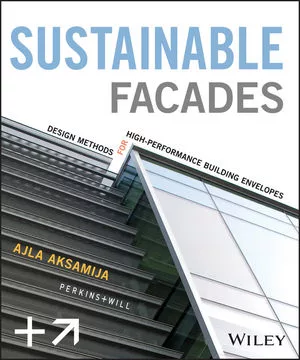
    Sustainable Facades: Design Methods for High-Performance Building Envelopes

See More Products
×

The latest news and information

#1 Source for Architectural Design, News and Products

SUBSCRIBE
  • RESOURCES
    • Advertise
    • Contact Us
    • Submit
    • Store
  • ACCOUNT CENTER
    • Create an Account
    • Start a Subscription
    • Manage My Account
    • Sign Up for Newsletters
    • Visit Customer Service
    • Update Preferences
  • PRIVACY
    • PRIVACY POLICY
    • TERMS & CONDITIONS
    • DO NOT SELL MY PERSONAL INFORMATION
    • PRIVACY REQUEST
    • ACCESSIBILITY
  • SERVICES
    • Marketing Services
    • Reprints
    • Market Research
    • List Rental
    • Survey/Respondent Access
  • STAY CONNECTED
    • Linkedin
    • Facebook
    • Instagram
    • YouTube
    • X (Twitter)

Copyright ©2026. All Rights Reserved BNP Media, Inc. and BNP Media II, LLC.

Design, CMS, Hosting & Web Development :: ePublishing