Architectural Record
search
cart
facebook twitter linkedin youtube
  • Sign In
  • Subscribe
  • Sign Out
  • My Account
Architectural Record
  • NEWS
    • Latest News
    • Awards
    • Interviews
    • Obituaries
    • Podcasts
      • Design:Ed Podcast
      • Sponsored Podcasts
  • OPINION
    • Book Reviews / Excerpts
    • Exhibition Reviews
    • Forum
  • EXCLUSIVES
    • Videos
    • Design Vanguard
    • Top 300 Firms
    • Sponsored Content
    • Sponsored eBooks
    • From the Archives
  • CONTINUING ED
    • Editorial Continuing Ed
    • CE Center
    • CE Academies
  • PROJECTS
    • Buildings By Type
    • Reuse & Renovation
    • Museums & Arts Centers
    • Colleges & Universities
    • Multifamily Housing
    • Interiors
    • Lighting
    • Kitchen & Bath
  • HOUSES
    • Record Houses
    • House of the Month
    • Featured Houses
  • PRODUCTS
    • Products by Category
    • Record Products of the Year
    • Latest Products
  • EVENTS
    • Dates & Events
    • Record on the Road
    • Innovation Conference
    • Sustainability in Practice
    • Women In Architecture
    • Webinars
    • Ad Excellence Awards
    • Submit an Event
  • CONNECT
    • Ask RECORD AI
    • Newsletters
    • Contact
    • Advertise
    • Editorial Calendar
    • Store
    • Customer Service
  • SUBMIT
    • Submission Guidelines
    • RECORD Competitions
  • MAGAZINE
    • Subscribe
    • My Account
    • Digital Edition
    • Current Issue
    • Firm Pass
    • Historic Archive
Opinion

Le Corbusier: Ideas and Forms

By Reviewed by
June 16, 2015
By William J.R. Curtis (revised and updated). Phaidon, April 2015, 512 pages, $150.

In the preface to his classic Le Corbusier: Ideas and Forms, published in 1986 and for the quarter century since the most thoughtful and complete analysis of the architect, William J.R. Curtis compared his subject's impact to that of Freud, Joyce, and Picasso. But why stop there? If the pronouncement-making passion of the early Corbusier makes him another Freud (explaining away the darkness, an answer for everything), then the later Corbusier—the architect of post-rational dreamscapes like La Tourette and Ronchamp —is another Karl Jung. There simply is no viable extra-architectural comparison. If Le Corbusier is Joyce for the rigorous novelty of the Villa Savoye, then his earlier villas show him to be a sumptuously intelligent Nabokov. And, of course, Picasso, looked at a certain way, was only a Corbusier who failed to build.
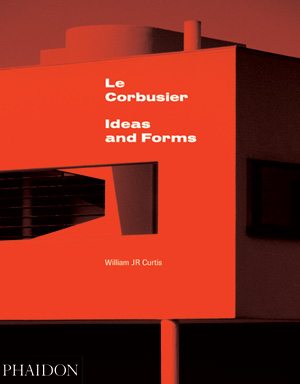
Le Corbusier: Ideas and Forms
William J.R. Curtis relaxes at the Villa Savoye in 2011. In addition to his book on Le Corbusier, he has written about Balkrishna Doshi, Denys Lasdun, and modern architecture in general
Photo © Jean-Brice Viaud
William J.R. Curtis relaxes at the Villa Savoye in 2011. In addition to his book on Le Corbusier, he has written about Balkrishna Doshi, Denys Lasdun, and modern architecture in general.

Curtis may get closest when he compares the architect's influence to Palladio's. Our modernism—or our manner of practicing architecture now—remains Corbusian through and through. In character, privileging the rational and irrational in equal parts; in method, attempting to achieve a personal synthesis while whipsawing between inspirations; and in form itself, we are all his descendants. Architecture today is never nearly so Wrightian, so Gropian, or so Kahnian. And, if it may at times appear glassily, griddily Miesian, we need only remember that Le Corbusier also got there first.

So go back and read about the man Charles Edouard Jeanneret became and the things he thought and did. There is, still, no better single source than William Curtis. In preparing this thoroughly updated and lavishly published second edition of Ideas and Forms, he has sifted again through Le Corbusier's minutely archived life and work—what Curtis acknowledges is an obsession—assimilating new research by others and correcting some points he found were made less certain by the passage of years. It is an historian's task but undertaken with a critic's zeal. Trying at all points to balance his narrative between Corbusier's life, the political and cultural forces acting on that life, the architect's work in many different media, and the particular context for its creation, Curtis needs that strong critical center as a guide for his curiosity.

There is no manifesto here. You won't find the “hidden ideological commitments” that the author, in one of four essay-like chapters in a new final section of the book, suggests play a role in too many contemporary Corbusier studies. As there are no new forms to examine, this edition necessarily focuses anew on the man's ideas. It examines “not just theories and lyrical expressions in texts,” Curtis writes, but also those that are implicit in images and constructions. As a result, it shows many more drawings, including sketches, the intimacy of which forms a pleasant contrast to the panopticon sweep of the text.

Curtis writes that “Le Corbusier had a rare capacity to imagine spaces during the design process and to materialize architectural ideas and intuitions.” This edition of Ideas and Forms, though striving for and achieving something like a total understanding of the forces affecting Corbusier's life and work, is at root concerned with exploring one thing: that “rare capacity”—which is to say, the ability to turn life into buildings. And that's why, architects, yes: you'll need to buy this new version of a book that you probably already own and have already read.

Philip Nobel is the editorial director of SHoP Architects and the author of Sixteen Acres: Architecture and the Outrageous Struggle for the Future of Ground Zero.

Share This Story

Looking for a reprint of this article?
From high-res PDFs to custom plaques, order your copy today!

Post a comment to this article

Report Abusive Comment

Subscription Center
  • Create an Account
  • Start a Subscription
  • Manage My Account
  • Sign Up for Newsletters
  • Visit Customer Service
  • Update Preferences

More Videos

Sponsored Content

Sponsored Content is a special paid section where industry companies provide high quality, objective, non-commercial content around topics of interest to the Architectural Record audience. All Sponsored Content is supplied by the advertising company and any opinions expressed in this article are those of the author and not necessarily reflect the views of Architectural Record or its parent company, BNP Media. Interested in participating in our Sponsored Content section? Contact your local rep!

close
  • cold storage facility
    Sponsored byCarlisle SynTec Systems

    How Architects Can Design More Continuous Cold Storage Envelopes

  • TAMLYN XtremeTrim Exterior Trim
    Sponsored byTamlyn

    Designing Cleaner Panel Facades: Why Exterior Trim Details Matter

  • Building with Vapor Barriers
    Sponsored byReef Industries, Inc.

    Vapor Barriers Help Control Moisture in Tighter Building Designs

DESIGN:ED Podcast
Listen to Architectural Record’s DESIGN:ED Podcast

Events

June 30, 2026

Generator Selection and Sizing for Outage-Ready Homes

Credits: 1 AIA LU/HSW; 1 AIBD P-CE; 0.1 ICC CEU

Explore how propane-powered systems and whole-home generators can improve energy resilience, reduce electrical loads, and lower long-term residential costs.

July 1, 2026

Hospitality in Higher Education

Credits: 1 AIA LU/HSW; 1 AIBD P-CE; 0.1 ICC CEU

Explore how hospitality-driven campus design can strengthen belonging, wellbeing, and community connection in higher education environments.

View All Submit An Event

Products

2026 Architect's Square Foot Costbook

2026 Architect's Square Foot Costbook

See More Products

Popular Stories

Obama Presidential Center, Chicago

The Obama Presidential Center Opens on Chicago’s South Side

Spoonbill Ranch

Johnsen Schmaling Architects Integrates Spoonbill Ranch into a Pristine Landscape

Kìwekì Point, Ottawa, Canada

Perched High Above the Ottawa River, Kìwekì Point Showcases Sweeping Views of the Canadian Capital Region

Baileywick Park

An Elegant Pavilion by In Situ Studio Adds Sheltered Courts and a Gateway to a Public Park in Raleigh

Ayn Rand Center rendering

John Ronan Architects Designs Cultural and Education Hub for the Ayn Rand Institute in Austin

Generator Selection and Sizing for Outage-Ready Homes - Free Webinar - June 30, 2026

Related Articles

  • Chandigarh’s Le Corbusier

    Le Corbusier Reconsidered

    See More
  • Le Corbusier Takes the Stage in NYC

    See More
  • Le Corbusier and New York City: A Love-Hate Relationship

    See More

Related Products

See More Products
  • Architectural Record - September 2025

    Architectural Record September 2025 Issue

  • iconic house.jpg

    The Iconic House

See More Products
×

The latest news and information

#1 Source for Architectural Design, News and Products

SUBSCRIBE
  • RESOURCES
    • Advertise
    • Contact Us
    • Submit
    • Store
  • ACCOUNT CENTER
    • Create an Account
    • Start a Subscription
    • Manage My Account
    • Sign Up for Newsletters
    • Visit Customer Service
    • Update Preferences
  • PRIVACY
    • PRIVACY POLICY
    • TERMS & CONDITIONS
    • DO NOT SELL MY PERSONAL INFORMATION
    • PRIVACY REQUEST
    • ACCESSIBILITY
  • SERVICES
    • Marketing Services
    • Reprints
    • Market Research
    • List Rental
    • Survey/Respondent Access
  • STAY CONNECTED
    • Linkedin
    • Facebook
    • Instagram
    • YouTube
    • X (Twitter)

Copyright ©2026. All Rights Reserved BNP Media, Inc. and BNP Media II, LLC.

Design, CMS, Hosting & Web Development :: ePublishing