Architectural Record
search
cart
facebook twitter linkedin youtube
  • Sign In
  • Subscribe
  • Sign Out
  • My Account
Architectural Record
  • NEWS
    • Latest News
    • Awards
    • Interviews
    • Obituaries
    • Podcasts
      • Design:Ed Podcast
      • Sponsored Podcasts
  • OPINION
    • Book Reviews / Excerpts
    • Exhibition Reviews
    • Forum
  • EXCLUSIVES
    • Videos
    • Design Vanguard
    • Top 300 Firms
    • Sponsored Content
    • Sponsored eBooks
    • From the Archives
  • CONTINUING ED
    • Editorial Continuing Ed
    • CE Center
    • CE Academies
  • PROJECTS
    • Buildings By Type
    • Reuse & Renovation
    • Museums & Arts Centers
    • Colleges & Universities
    • Multifamily Housing
    • Interiors
    • Lighting
    • Kitchen & Bath
  • HOUSES
    • Record Houses
    • House of the Month
    • Featured Houses
  • PRODUCTS
    • Products by Category
    • Record Products of the Year
    • Latest Products
  • EVENTS
    • Dates & Events
    • Record on the Road
    • Innovation Conference
    • Sustainability in Practice
    • Women In Architecture
    • Webinars
    • Ad Excellence Awards
    • Submit an Event
  • CONNECT
    • Ask RECORD AI
    • Newsletters
    • Contact
    • Advertise
    • Editorial Calendar
    • Store
    • Customer Service
  • SUBMIT
    • Submission Guidelines
    • RECORD Competitions
  • MAGAZINE
    • Subscribe
    • My Account
    • Digital Edition
    • Current Issue
    • Firm Pass
    • Historic Archive
Design Vanguard

JOHO Architecture

Returning to his native country after years in Europe, an architect finds ways of spanning borders and making traditional elements feel modern.
By Clare Jacobson
Korean garages typically look like rows of ramps or try to disguise themselves as concrete commercial buildings. Both models, says Lee, are eyesores. Lee wrapped the Herma garage, in Yongin, in polyca
JOHO Architecture
Seoul, South Korea
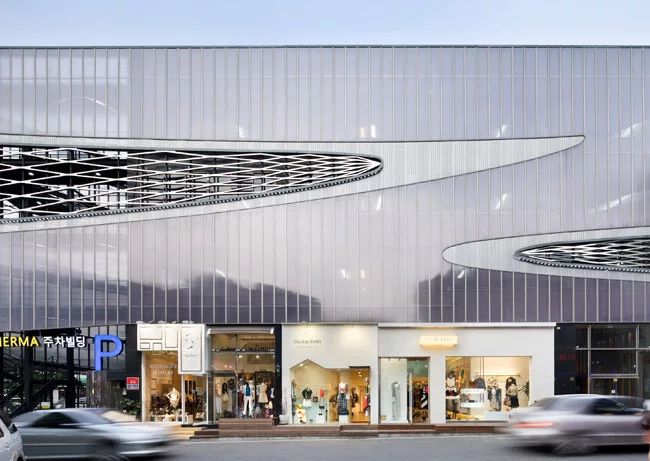
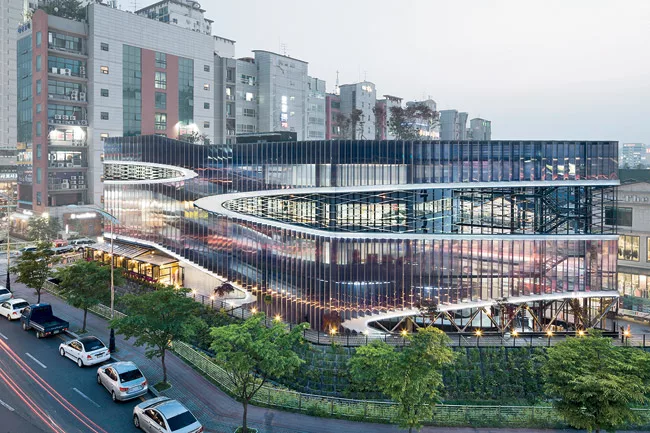
Korean garages typically look like rows of ramps or try to disguise themselves as concrete commercial buildings. Both models, says Lee, are eyesores. Lee wrapped the Herma garage, in Yongin, in polycarbonate and stainless-steel panels and accented its facade with ventilation holes inspired by car grilles. The acute-angled building fills a difficult site to create a dynamic street-front presence, which has increased the value of its commercial spaces.
Photo courtesy JOHO Architecture
Korean garages typically look like rows of ramps or try to disguise themselves as concrete commercial buildings. Both models, says Lee, are eyesores. Lee wrapped the Herma garage, in Yongin, in polyca
JOHO Architecture
Herma Parking Building, Yongin
Seoul, South Korea
Korean garages typically look like rows of ramps or try to disguise themselves as concrete commercial buildings. Both models, says Lee, are eyesores. Lee wrapped the Herma garage, in Yongin, in polycarbonate and stainless-steel panels and accented its facade with ventilation holes inspired by car grilles. The acute-angled building fills a difficult site to create a dynamic street-front presence, which has increased the value of its commercial spaces.
Photo © Sun Namgoong
Korean garages typically look like rows of ramps or try to disguise themselves as concrete commercial buildings. Both models, says Lee, are eyesores. Lee wrapped the Herma garage, in Yongin, in polyca
JOHO Architecture
Herma Parking Building, Yongin
Seoul, South Korea
Korean garages typically look like rows of ramps or try to disguise themselves as concrete commercial buildings. Both models, says Lee, are eyesores. Lee wrapped the Herma garage, in Yongin, in polycarbonate and stainless-steel panels and accented its facade with ventilation holes inspired by car grilles. The acute-angled building fills a difficult site to create a dynamic street-front presence, which has increased the value of its commercial spaces.
Photo © Sun Namgoong
The owner of a Seoul design company owned an ugly brick house in the mountains in Namhae county, where he liked to escape. He decided to make it more welcoming, so he hired JOHO to remake the building
JOHO Architecture
Namhae Cheo-ma House, Namhae County
Seoul, South Korea
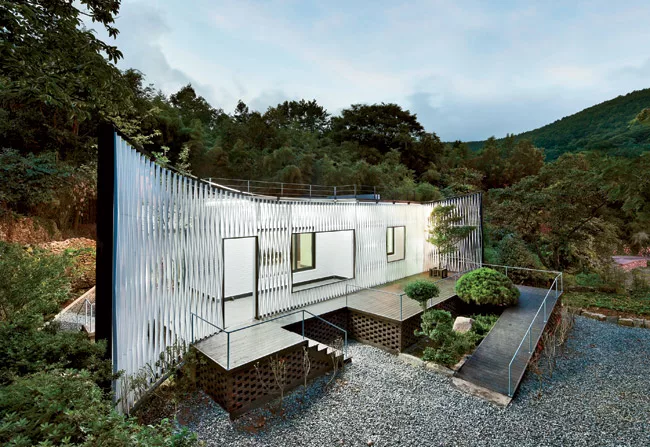
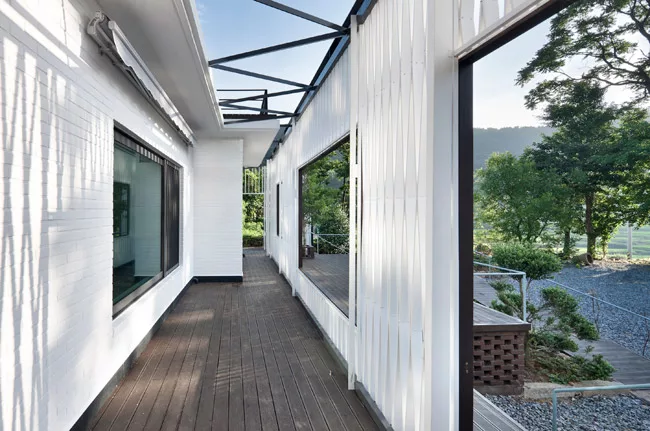
The owner of a Seoul design company owned an ugly brick house in the mountains in Namhae county, where he liked to escape. He decided to make it more welcoming, so he hired JOHO to remake the building. Lee gave the residence a new aluminum facade, with curved lines that reference cheo-ma, which are the eaves of a traditional Korean tiled roof. A new entryway with a ramp, stairs, and garden bring depth to the facade and make it look bigger, a trick borrowed from Imhaejun Palace in Gyeongju.
Photo © Sun Namgoong
The owner of a Seoul design company owned an ugly brick house in the mountains in Namhae county (left), where he liked to escape. He decided to make it more welcoming, so he hired JOHO to remake the b
JOHO Architecture
Namhae Cheo-ma House, Namhae County
Seoul, South Korea
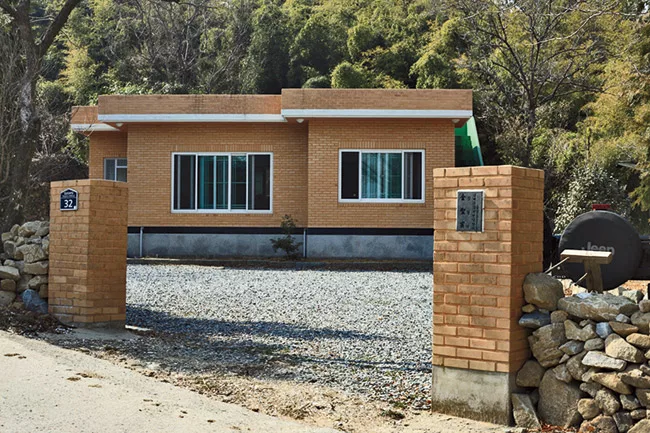
The owner of a Seoul design company owned an ugly brick house in the mountains in Namhae county (left), where he liked to escape. He decided to make it more welcoming, so he hired JOHO to remake the building. Lee gave the residence a new aluminum facade, with curved lines that reference cheo-ma, which are the eaves of a traditional Korean tiled roof. A new entryway with a ramp, stairs, and garden bring depth to the facade and make it look bigger, a trick borrowed from Imhaejun Palace in Gyeongju.
Photo © Jeonghoon Lee
The owner of a Seoul design company owned an ugly brick house in the mountains in Namhae county, where he liked to escape. He decided to make it more welcoming, so he hired JOHO to remake the building
JOHO Architecture
Namhae Cheo-ma House, Namhae County
Seoul, South Korea
The owner of a Seoul design company owned an ugly brick house in the mountains in Namhae county, where he liked to escape. He decided to make it more welcoming, so he hired JOHO to remake the building. Lee gave the residence a new aluminum facade, with curved lines that reference cheo-ma, which are the eaves of a traditional Korean tiled roof. A new entryway with a ramp, stairs, and garden bring depth to the facade and make it look bigger, a trick borrowed from Imhaejun Palace in Gyeongju.
Photo © Sun Namgoong
The curve of this 1513-square-foot house has an unexpected origin'car parking. Its tight site made maneuvering vehicles difficult, so JOHO added a curve and raised the building on <em>pilotis</em>. Th
JOHO Architecture
The Curving House, Yongin
Seoul, South Korea
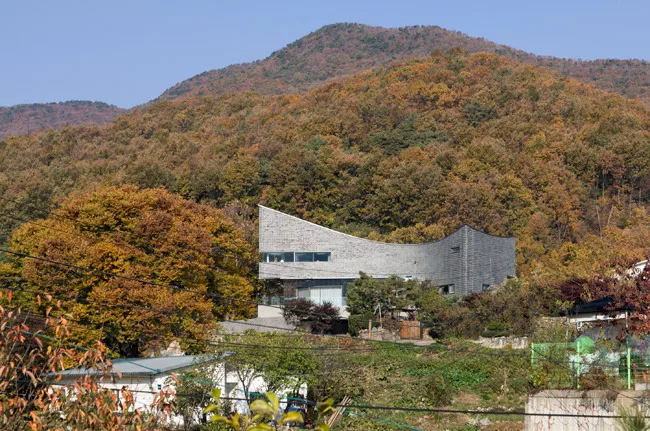
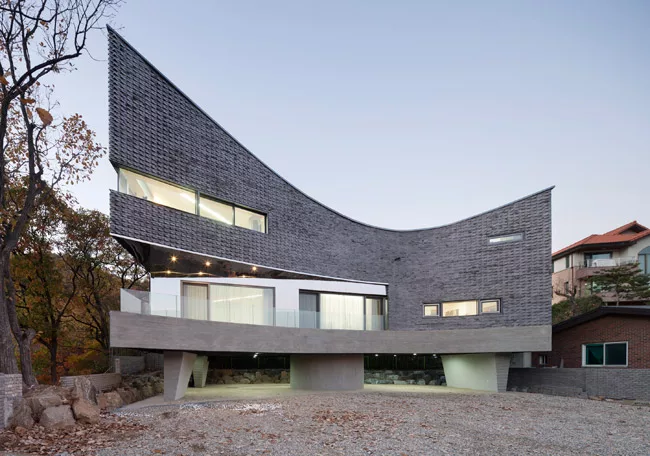
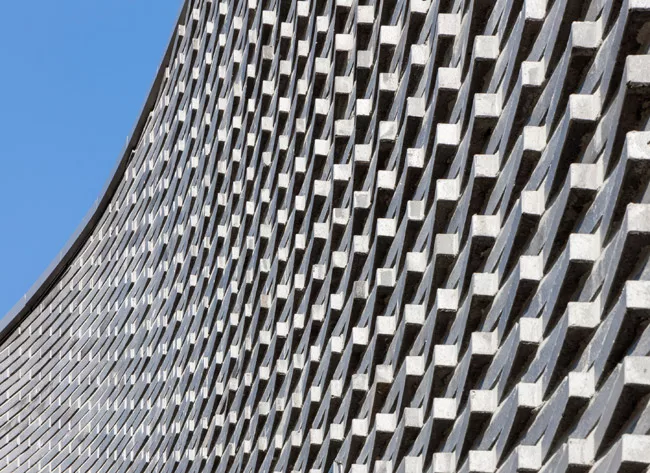
The curve of this 1513-square-foot house has an unexpected origin'car parking. Its tight site made maneuvering vehicles difficult, so JOHO added a curve and raised the building on pilotis. The ground-level entrance is a unique take on a daecheong-maru, the front hall of a Korean home. JOHO made the most of the curve with a complex facade of alternating rows of straight and angled bricks. The curve faces Mt. Gwanggyo to the west, and stainless-steel panels on one section reflect the imposing view. Inside, sliding doors act like byeongpung (folding screens) to close off or join together adjacent rooms.
Photo © Sun Namgoong
The curve of this 1513-square-foot house has an unexpected origin'car parking. Its tight site made maneuvering vehicles difficult, so JOHO added a curve and raised the building on <em>pilotis</em>. Th
JOHO Architecture
The Curving House, Yongin
Seoul, South Korea
The curve of this 1513-square-foot house has an unexpected origin'car parking. Its tight site made maneuvering vehicles difficult, so JOHO added a curve and raised the building on pilotis. The ground-level entrance is a unique take on a daecheong-maru, the front hall of a Korean home. JOHO made the most of the curve with a complex facade of alternating rows of straight and angled bricks. The curve faces Mt. Gwanggyo to the west, and stainless-steel panels on one section reflect the imposing view. Inside, sliding doors act like byeongpung (folding screens) to close off or join together adjacent rooms.
Photo © Sun Namgoong
The curve of this 1513-square-foot house has an unexpected origin'car parking. Its tight site made maneuvering vehicles difficult, so JOHO added a curve and raised the building on <em>pilotis</em>. Th
JOHO Architecture
The Curving House, Yongin
Seoul, South Korea
The curve of this 1513-square-foot house has an unexpected origin'car parking. Its tight site made maneuvering vehicles difficult, so JOHO added a curve and raised the building on pilotis. The ground-level entrance is a unique take on a daecheong-maru, the front hall of a Korean home. JOHO made the most of the curve with a complex facade of alternating rows of straight and angled bricks. The curve faces Mt. Gwanggyo to the west, and stainless-steel panels on one section reflect the imposing view. Inside, sliding doors act like byeongpung (folding screens) to close off or join together adjacent rooms.
Photo © Sun Namgoong
This residential project with street-front commercial spaces takes advantage of a grandfather clause that exempts existing buildings from having to provide parking. JOHO convinced the client to renova
JOHO Architecture
Egg 333, Seoul
Seoul, South Korea
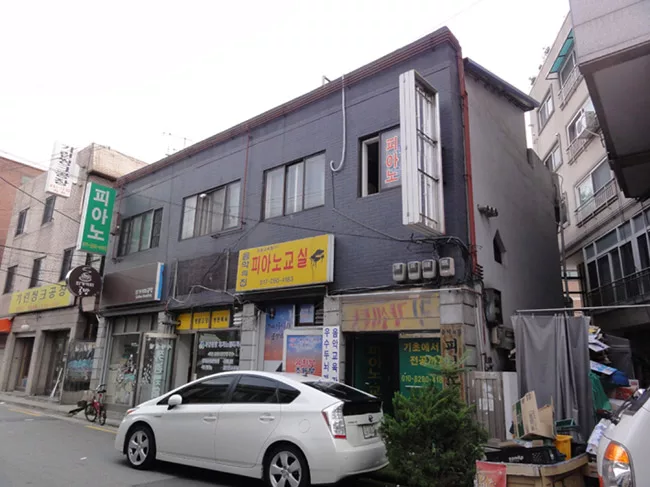
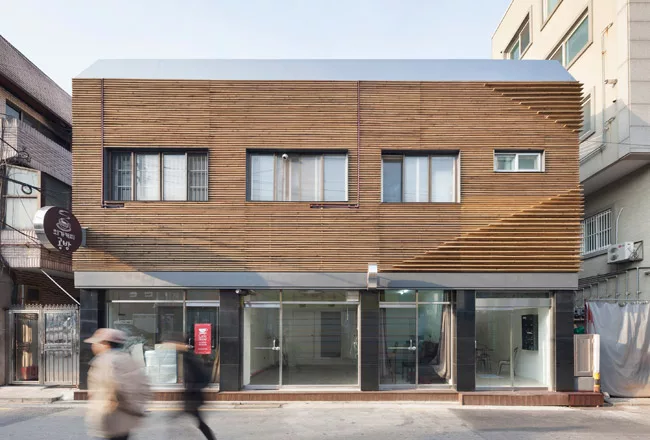
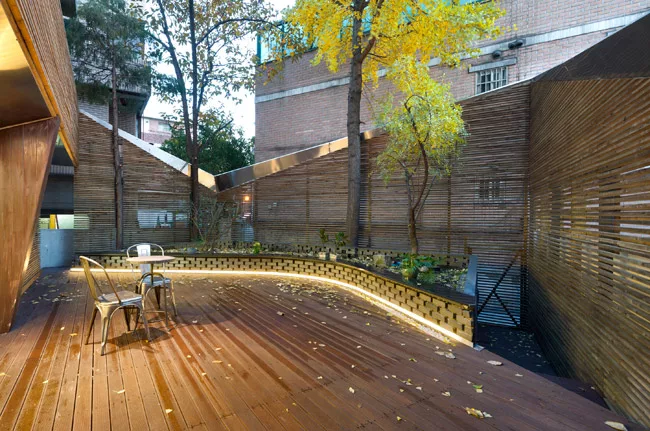
This residential project with street-front commercial spaces takes advantage of a grandfather clause that exempts existing buildings from having to provide parking. JOHO convinced the client to renovate a two-story residence rather than build a new one so that it could keep its rear garden and old ginkgo trees. The project’s name reflects Lee’s conceptual bent, which he honed earning degrees in philosophy and theory. “Egg” references a bi-level oval shape formed by roof and rear gardens, which can only be seen from the sky. “333” notes the birth year of the client’s mother (1933) and the property’s address (33.3); the number is also suggested in the pattern of the façade.
Photo © Jeonghoon Lee
This residential project with street-front commercial spaces takes advantage of a grandfather clause that exempts existing buildings from having to provide parking. JOHO convinced the client to renova
JOHO Architecture
Egg 333, Seoul
Seoul, South Korea
This residential project with street-front commercial spaces takes advantage of a grandfather clause that exempts existing buildings from having to provide parking. JOHO convinced the client to renovate a two-story residence rather than build a new one so that it could keep its rear garden and old ginkgo trees. The project’s name reflects Lee’s conceptual bent, which he honed earning degrees in philosophy and theory. “Egg” references a bi-level oval shape formed by roof and rear gardens, which can only be seen from the sky. “333” notes the birth year of the client’s mother (1933) and the property’s address (33.3); the number is also suggested in the pattern of the façade.
Photo © Sun Namgoong
This residential project with street-front commercial spaces takes advantage of a grandfather clause that exempts existing buildings from having to provide parking. JOHO convinced the client to renova
JOHO Architecture
Egg 333, Seoul
Seoul, South Korea
This residential project with street-front commercial spaces takes advantage of a grandfather clause that exempts existing buildings from having to provide parking. JOHO convinced the client to renovate a two-story residence rather than build a new one so that it could keep its rear garden and old ginkgo trees. The project’s name reflects Lee’s conceptual bent, which he honed earning degrees in philosophy and theory. “Egg” references a bi-level oval shape formed by roof and rear gardens, which can only be seen from the sky. “333” notes the birth year of the client’s mother (1933) and the property’s address (33.3); the number is also suggested in the pattern of the façade.
Photo © Sun Namgoong
Korean garages typically look like rows of ramps or try to disguise themselves as concrete commercial buildings. Both models, says Lee, are eyesores. Lee wrapped the Herma garage, in Yongin, in polyca
The owner of a Seoul design company owned an ugly brick house in the mountains in Namhae county, where he liked to escape. He decided to make it more welcoming, so he hired JOHO to remake the building
The owner of a Seoul design company owned an ugly brick house in the mountains in Namhae county (left), where he liked to escape. He decided to make it more welcoming, so he hired JOHO to remake the b
The owner of a Seoul design company owned an ugly brick house in the mountains in Namhae county, where he liked to escape. He decided to make it more welcoming, so he hired JOHO to remake the building
The curve of this 1513-square-foot house has an unexpected origin'car parking. Its tight site made maneuvering vehicles difficult, so JOHO added a curve and raised the building on <em>pilotis</em>. Th
This residential project with street-front commercial spaces takes advantage of a grandfather clause that exempts existing buildings from having to provide parking. JOHO convinced the client to renova
December 16, 2013

Seoul, South Korea

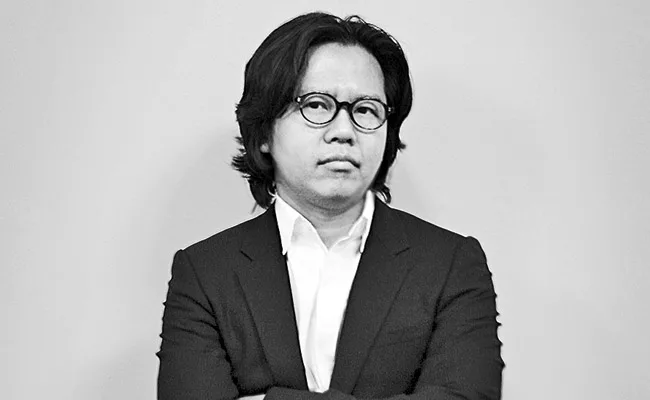
How did a phone call to Paris launch an architecture firm in Seoul? “It was kind of destiny,” says JOHO Architecture principal Jeonghoon Lee. He had been studying and practicing architecture in Europe for seven years when a relative from his native Korea contacted him. The man was working on a project, but had fired the architect. He needed someone he could trust. Lee agreed to take on the job—the Herma Parking Building in Yongin, a city 25 miles outside of Seoul. He soon found that managing it from Paris was too difficult, so he moved to Seoul and set up JOHO Architecture in 2009. That first commission led to more, and now JOHO has five completed projects and seven designers on staff.

The name JOHO has two sources. It's a nickname Lee used in France, since it was easier than Jeonghoon for his classmates to pronounce. And in Korean, “jo” means “constructing” and “ho,” “liking.” “Enjoy Construction” is a good fit for a firm that focuses on material explorations. Lee uses wood, brick, and metal in their raw forms. “I want to explore the essence of the material,” he says. But by employing common elements in uncommon ways, he produces unexpected results. For the Namhae Cheo-ma House, for example, he connected 500 pieces of 11.5-foot aluminum louvers—standard pieces made for fences—into a curving facade. For Egg 333 he took off-the-shelf wood louvers, split them in two, and fitted them over the existing brick facade of a residential building. These and JOHO's other projects repeat materials in layers to create sculptural surfaces.

Lee's design focus comes in part from his graduate degree in architectural materials from the School of Architecture of Nancy (EAN). He recalls the impact that class trips to glass factories and lumber mills had on him. Another influence was working for Shigeru Ban on the Centre Pompidou'Metz, known for its innovative glue-laminated timber roof and fiberglass facade. Lee shares Ban's interest in inexpensive materials—a necessity, he says, for young architects working with small budgets.

In its contemporary designs, JOHO offers playful takes on traditional Korean motifs: the curved cheoma (eaves) of a tiled roof, the open daecheong-maru (front hall) of a traditional house, the byeongpung (folding screens) used as room dividers. Lee borrows these elements and abstracts them in his work. While it has been easy for him to take on Korean cultural references, it has been more difficult to adjust to the local way of building. “I didn't know the Korean construction reality because I studied in France and practiced in European offices,” he says. He has had to learn a lot by working on-site, a task that has been difficult but rewarding. Enjoying construction, after all, is Lee's destiny.


JOHO Architecture

FOUNDED: 2009

DESIGN STAFF: 7

PRINCIPALS: Jeonghoon Lee

EDUCATION: Lavillette School of Architecture, M.A., 2007; School of Architecture of Nancy, M.A., 2004; SungKyunKwan University, B.A., 2000

WORK HISTORY: Zaha Hadid Architects, 2008'9; Agence Moatti et Rivière, 2007'8; Shigeru Ban Architects Europe Office, 2004'5

KEY COMPLETED PROJECTS: Curving House, Yongin, 2012; Egg 333, Seoul, 2012; Namhae Cheo-ma House, Namhae-gun, 2011; Herma Parking Building, Yongin, 2010

KEY CURRENT PROJECTS: Yin Yang House, Seongnam, 2013; Gangnam Nonhyeon Cultural Center, Seoul, 2014; Baemi Wedding Hall, Pyeongtaek, 2014

WEB SITE: www.Johoarchitecture.com


Share This Story

Looking for a reprint of this article?
From high-res PDFs to custom plaques, order your copy today!

Clare Jacobson is a San Francisco-based contributor to Architectural Record.

Post a comment to this article

Report Abusive Comment

Subscription Center
  • Create an Account
  • Start a Subscription
  • Manage My Account
  • Sign Up for Newsletters
  • Visit Customer Service
  • Update Preferences

More Videos

Sponsored Content

Sponsored Content is a special paid section where industry companies provide high quality, objective, non-commercial content around topics of interest to the Architectural Record audience. All Sponsored Content is supplied by the advertising company and any opinions expressed in this article are those of the author and not necessarily reflect the views of Architectural Record or its parent company, BNP Media. Interested in participating in our Sponsored Content section? Contact your local rep!

close
  • cold storage facility
    Sponsored byCarlisle SynTec Systems

    How Architects Can Design More Continuous Cold Storage Envelopes

  • TAMLYN XtremeTrim Exterior Trim
    Sponsored byTamlyn

    Designing Cleaner Panel Facades: Why Exterior Trim Details Matter

  • Building with Vapor Barriers
    Sponsored byReef Industries, Inc.

    Vapor Barriers Help Control Moisture in Tighter Building Designs

DESIGN:ED Podcast
Listen to Architectural Record’s DESIGN:ED Podcast

Events

June 18, 2026

Rebooting the Aging Office Building

Credits: 1 AIA LU/HSW; 1 AIBD P-CE; 0.1 ICC CEU; 1 PDH

Explore façade retrofit strategies and award-winning design concepts that can transform aging office buildings into healthier, higher-performing workplaces for today’s hybrid workforce.

June 23, 2026

Enhancing Fire Resistance with Advanced PVC Solutions

Credits: 1 AIA LU/HSW; 1 AIBD P-CE; 0.1 ICC CEU; 1 IIBEC CEH

Evaluate advanced PVC solutions that improve fire resistance, support WUI compliance, and enhance resilience in residential and commercial building design.

View All Submit An Event

Products

2026 Architect's Square Foot Costbook

2026 Architect's Square Foot Costbook

See More Products

Popular Stories

SanDiegoAirport

Top 300 Architecture Firms of 2026

Lorcan O' Herilhy

California Architect Lorcan O’Herlihy Has Died, Age 66

Coronado Bridge

The Architect’s Guide to San Diego

CCA, Studio Gang

The Winners of the AIA’s 2026 Architecture Award Range from Collegiate Rowing Hubs to Housing for the Homeless

Dusk House

Design Vanguard 2026: ONO

Rebooting the Aging Office Building - Free Webinar - June 18, 2026

Related Articles

  • Trace Architecture Office

    See More
  • In Beijing, Work Begins on Nature-Inspired School by OPEN architecture

    See More
  • Exhibition Review: Spectacle: 12 Presentations of Contemporary Museum Architecture in China

    See More

Related Products

See More Products
  • ribbonarch.jpg

    Ribbon Architecture: Light, Shadow, and Reflection in Architecture

  • freeing arch.jpg

    Freeing Architecture

See More Products
×

The latest news and information

#1 Source for Architectural Design, News and Products

SUBSCRIBE
  • RESOURCES
    • Advertise
    • Contact Us
    • Submit
    • Store
  • ACCOUNT CENTER
    • Create an Account
    • Start a Subscription
    • Manage My Account
    • Sign Up for Newsletters
    • Visit Customer Service
    • Update Preferences
  • PRIVACY
    • PRIVACY POLICY
    • TERMS & CONDITIONS
    • DO NOT SELL MY PERSONAL INFORMATION
    • PRIVACY REQUEST
    • ACCESSIBILITY
  • SERVICES
    • Marketing Services
    • Reprints
    • Market Research
    • List Rental
    • Survey/Respondent Access
  • STAY CONNECTED
    • Linkedin
    • Facebook
    • Instagram
    • YouTube
    • X (Twitter)

Copyright ©2026. All Rights Reserved BNP Media, Inc. and BNP Media II, LLC.

Design, CMS, Hosting & Web Development :: ePublishing