Architectural Record
search
cart
facebook twitter linkedin youtube
  • Sign In
  • Subscribe
  • Sign Out
  • My Account
Architectural Record
  • NEWS
    • Latest News
    • Awards
    • Interviews
    • Obituaries
    • Podcasts
      • Design:Ed Podcast
      • Sponsored Podcasts
  • OPINION
    • Book Reviews / Excerpts
    • Exhibition Reviews
    • Forum
  • EXCLUSIVES
    • Videos
    • Design Vanguard
    • Top 300 Firms
    • Sponsored Content
    • Sponsored eBooks
    • From the Archives
  • CONTINUING ED
    • Editorial Continuing Ed
    • CE Center
    • CE Academies
  • PROJECTS
    • Buildings By Type
    • Reuse & Renovation
    • Museums & Arts Centers
    • Colleges & Universities
    • Multifamily Housing
    • Interiors
    • Lighting
    • Kitchen & Bath
  • HOUSES
    • Record Houses
    • House of the Month
    • Featured Houses
  • PRODUCTS
    • Products by Category
    • Record Products of the Year
    • Latest Products
  • EVENTS
    • Dates & Events
    • Record on the Road
    • Innovation Conference
    • Sustainability in Practice
    • Women In Architecture
    • Webinars
    • Ad Excellence Awards
    • Submit an Event
  • CONNECT
    • Ask RECORD AI
    • Newsletters
    • Contact
    • Advertise
    • Editorial Calendar
    • Store
    • Customer Service
  • SUBMIT
    • Submission Guidelines
    • RECORD Competitions
  • MAGAZINE
    • Subscribe
    • My Account
    • Digital Edition
    • Current Issue
    • Firm Pass
    • Historic Archive
Design Vanguard

Oyler Wu Collaborative

After learning the ropes with a series of installations, a husband-and-wife team is building up to larger and more permanent projects.
By Deborah Snoonian Glenn
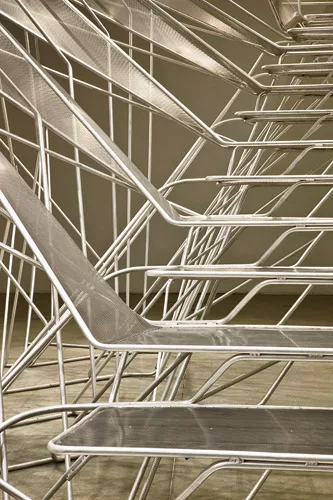
Call it the unstaircase—a not-to-code structure that lets people ascend from the ground level of SCI-Arc’s gallery in L.A. to a catwalk above. The skeletal form, designed with Buro Happold
Oyler Wu Collaborative
Los Angeles
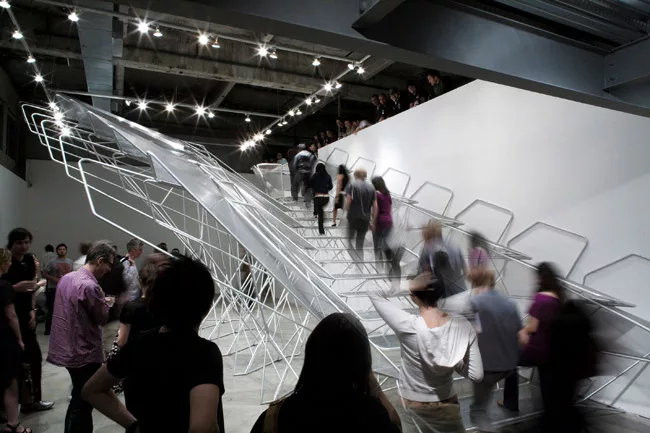
Call it the unstaircase—a not-to-code structure that lets people ascend from the ground level of SCI-Arc’s gallery in L.A. to a catwalk above. The skeletal form, designed with Buro Happold, is aluminum tubing and mesh.
Call it the unstaircase—a not-to-code structure that lets people ascend from the ground level of SCI-Arc’s gallery in L.A. to a catwalk above. The skeletal form, designed with Buro Happold
Oyler Wu Collaborative
Live Wire, Los Angeles
Los Angeles
Call it the unstaircase—a not-to-code structure that lets people ascend from the ground level of SCI-Arc’s gallery in L.A. to a catwalk above. The skeletal form, designed with Buro Happold, is aluminum tubing and mesh.
Call it the unstaircase—a not-to-code structure that lets people ascend from the ground level of SCI-Arc’s gallery in L.A. to a catwalk above. The skeletal form, designed with Buro Happold
Oyler Wu Collaborative
Live Wire, Los Angeles
Los Angeles
Call it the unstaircase—a not-to-code structure that lets people ascend from the ground level of SCI-Arc’s gallery in L.A. to a catwalk above. The skeletal form, designed with Buro Happold, is aluminum tubing and mesh.
A year after finishing a pavilion called Netscape for SCI-Arc’s graduation in 2011, Oyler and Wu were asked to design a second work that would play off the first and reimagine the ceremony&rsquo
Oyler Wu Collaborative
Centerstage, Los Angeles
Los Angeles
A year after finishing a pavilion called Netscape for SCI-Arc’s graduation in 2011, Oyler and Wu were asked to design a second work that would play off the first and reimagine the ceremony’s format. They changed the flow of the event so the audience would face the school instead of downtown L.A., and built a painted-steel structure that’s part stage, part bleacher-like seating, and part cantilevered shade structure.
This 21-foot-long installation in Los Angeles, made of rope strung across steel framing, forms an optical illusion. Look at it straight on and you see a repeating, legible pattern. But move around it
Oyler Wu Collaborative
Screenplay, Los Angeles
Los Angeles
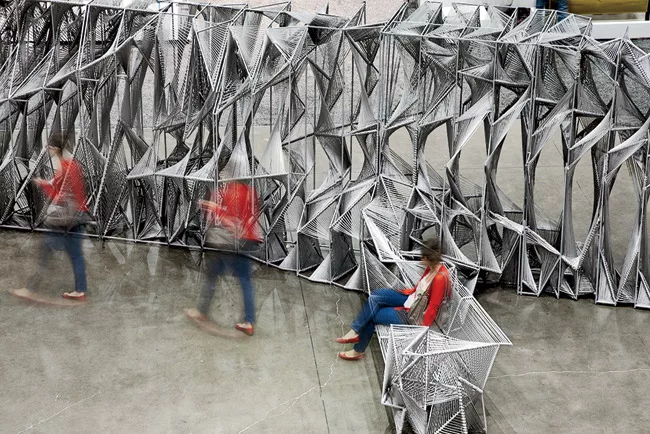
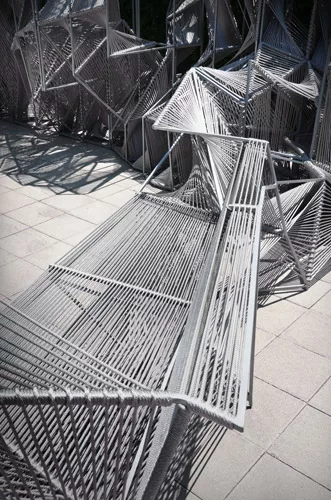
This 21-foot-long installation in Los Angeles, made of rope strung across steel framing, forms an optical illusion. Look at it straight on and you see a repeating, legible pattern. But move around it and you discover that the ropes aren’t installed uniformly, which creates a dynamism that invites viewers to explore the piece from every vantage point.
This 21-foot-long installation in Los Angeles, made of rope strung across steel framing, forms an optical illusion. Look at it straight on and you see a repeating, legible pattern. But move around it
Oyler Wu Collaborative
Screenplay, Los Angeles
Los Angeles
This 21-foot-long installation in Los Angeles, made of rope strung across steel framing, forms an optical illusion. Look at it straight on and you see a repeating, legible pattern. But move around it and you discover that the ropes aren’t installed uniformly, which creates a dynamism that invites viewers to explore the piece from every vantage point.
The third in a series of pavilions for Sci-ARC, this one was built to commemorate the school’s 40th anniversary. Oyler and Wu could have torn down their 2011 “Netscape” installation
Oyler Wu Collaborative
Stormcloud
Los Angeles
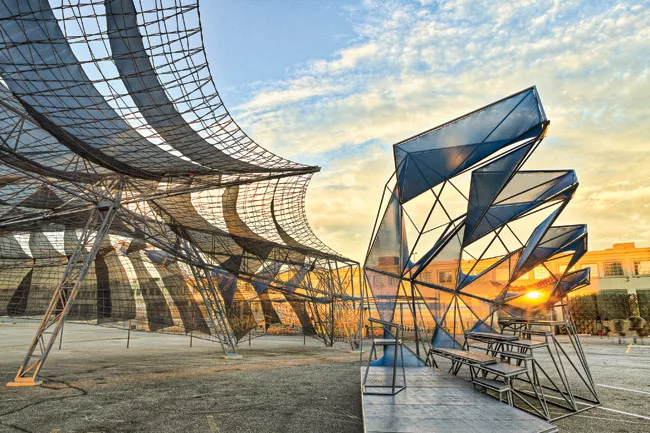
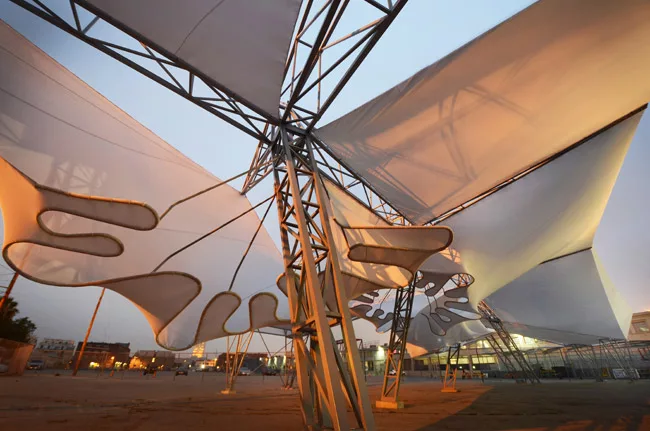
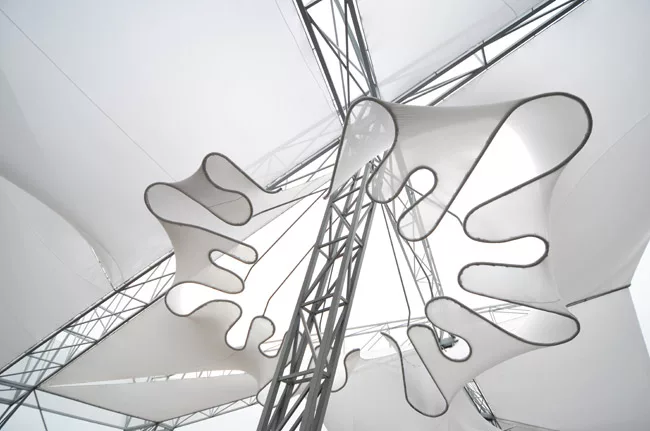
The third in a series of pavilions for Sci-ARC, this one was built to commemorate the school’s 40th anniversary. Oyler and Wu could have torn down their 2011 “Netscape” installation to start afresh, but instead they removed its 10 miles’ worth of rope, added some cable supports and a few more steel framing elements, and stretched spandex fabric between the elements to create an entirely new look and feel for the space. The whimsical curves of the new framing were no mere accident or flight of fancy' they were designed to simplify the cutting and installation of the fabric canopy, which ripples and billows in the wind, sheltering the crowd below.
The third in a series of pavilions for Sci-ARC, this one was built to commemorate the school’s 40th anniversary. Oyler and Wu could have torn down their 2011 “Netscape” installation
Oyler Wu Collaborative
Stormcloud
Los Angeles
The third in a series of pavilions for Sci-ARC, this one was built to commemorate the school’s 40th anniversary. Oyler and Wu could have torn down their 2011 “Netscape” installation to start afresh, but instead they removed its 10 miles’ worth of rope, added some cable supports and a few more steel framing elements, and stretched spandex fabric between the elements to create an entirely new look and feel for the space. The whimsical curves of the new framing were no mere accident or flight of fancy' they were designed to simplify the cutting and installation of the fabric canopy, which ripples and billows in the wind, sheltering the crowd below.
Oyler and Wu cleverly used the so-called “fifth wall” as display space for their winning entry in a competition to build a “liner” at the Los Angeles Forum for Architecture and
Oyler Wu Collaborative
Pendulum Plane, Los Angeles
Los Angeles
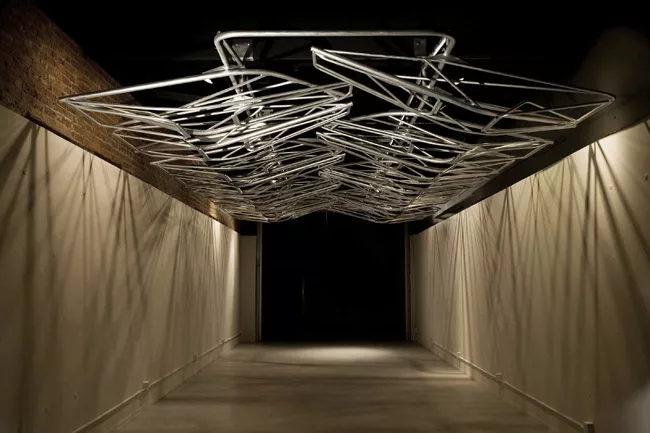
Oyler and Wu cleverly used the so-called “fifth wall” as display space for their winning entry in a competition to build a “liner” at the Los Angeles Forum for Architecture and Urban Design. Because the group shares space with Woodbury University, they stipulated that the liner be removable. The couple countered that a work like this should be an integral part of the space—and that installing it on the ceiling would allow people to enjoy it while giving their co-tenant free reign to use the walls for pinup space. Like several of their installations, it's made from aluminum tubing.
Given the opportunity to design the facade of a 30-unit, 16-story residential building, Oyler and Wu finessed four earlier versions before settling on the fifth one, which features angular offset balc
Oyler Wu Collaborative
Taipei Tower, Los Angeles
Los Angeles
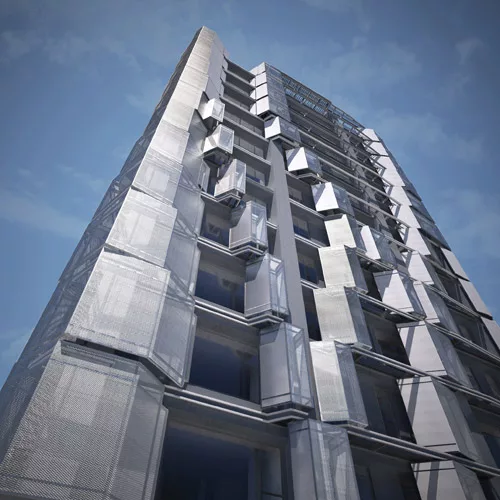
Given the opportunity to design the facade of a 30-unit, 16-story residential building, Oyler and Wu finessed four earlier versions before settling on the fifth one, which features angular offset balconies.
Call it the unstaircase—a not-to-code structure that lets people ascend from the ground level of SCI-Arc’s gallery in L.A. to a catwalk above. The skeletal form, designed with Buro Happold
A year after finishing a pavilion called Netscape for SCI-Arc’s graduation in 2011, Oyler and Wu were asked to design a second work that would play off the first and reimagine the ceremony&rsquo
This 21-foot-long installation in Los Angeles, made of rope strung across steel framing, forms an optical illusion. Look at it straight on and you see a repeating, legible pattern. But move around it
The third in a series of pavilions for Sci-ARC, this one was built to commemorate the school’s 40th anniversary. Oyler and Wu could have torn down their 2011 “Netscape” installation
Oyler and Wu cleverly used the so-called “fifth wall” as display space for their winning entry in a competition to build a “liner” at the Los Angeles Forum for Architecture and
Given the opportunity to design the facade of a 30-unit, 16-story residential building, Oyler and Wu finessed four earlier versions before settling on the fifth one, which features angular offset balc
December 16, 2013

Los Angeles

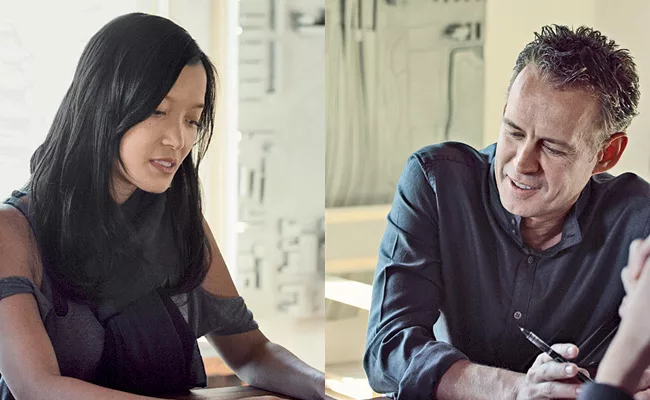
Many architects make names for themselves by experimenting with building materials. But Dwayne Oyler and Jenny Wu, the married couple who ditched budding careers in New York to form Oyler Wu Collaborative in Los Angeles nearly 10 years ago, are the rare ones who've exploited the design potential of polypropylene rope—hundreds of thousands of feet of it. “We're both a bit obsessed with lines, and using rope has let us explore this idea in our installations,” says Wu.

These experimental projects, which include a soaring canopy, a sculpture wall that appears kinetic, and most recently The Cube, a steel-and-rope affair for the 2013 Beijing Biennale, have become the firm's calling card, much the way that cutting-edge houses launched the careers of Los Angeles'based predecessors such as Thom Mayne and Eric Owen Moss. Not that the couple planned it that way. “We started doing installations to keep ourselves working when we didn't have clients,” says Oyler. They've also reaped the benefits of being on the faculty at Southern California Institute of Architecture (SCI-Arc), an institution that both encourages their why-not-try-it? spirit and has given them a regular venue to showcase the results. Oyler and Wu have built a project side by side with their students on the campus nearly every year since 2008.

Though the formal complexity and repeating motifs in their work might appear to be digitally derived, the couple uses software as just one tool to develop projects, moving fluidly from sketches to digital models to physical models to large-scale mock-ups and back again. “Often, it's a sketch that kicks off a project,” says Wu; indeed, Oyler's precise pen-and-ink studies will convince any skeptic that some young, tech-savvy architects can still draw.

Today, the firm is finally getting clients who are building at many different scales and who, like them, are young and willing to experiment. Case in point: JUT, the developer who hired them to design the exterior of a 16-story residential tower in Taipei. Wu, a Los Angeles native whose family comes from Taiwan and who's unafraid to knock on doors, first persuaded JUT's leadership to let the couple design an installation that the developer could build. That kickoff effort, an interactive work called Anemone that featured thousands of tentacle-like plastic rods, gave the company confidence that Oyler and Wu could apply their innovative thinking to a full-scale building.

Now that a temporary sales center for the tower has been built according to their design and the tower itself is about to start construction, the couple is eager to keep tackling the challenges of scaling up their work, both in Taipei and beyond. “At first, with the tower, we were applying ideas from our smaller, line-based projects directly, and they didn't always work,” says Oyler. “Sometimes the scale was off, or the proportions, or the neighborhood fit, so we reworked the design several times. In the long run, we would welcome projects that allow us to go more deeply into solving problems of entire buildings from the ground up. If someone asked us to design an arts center in the middle of Los Angeles, that'd be our sweet spot.” Are you listening, City of Angels?


Oyler Wu Collaborative

FOUNDED: 2004

DESIGN STAFF: 4

PRINCIPALS: Jenny Wu, Dwayne Oyler

EDUCATION: Wu: Harvard GSD, M.Arch., 2001; Columbia, B.A., 1997. Oyler: Harvard GSD, M.Arch., 2001; Kansas State, B.Arch., 1996.

WORK HISTORY: Wu: ARO, 2002; Gluckman Mayner, 2003'4. Oyler: Lebbeus Woods, 1997'9; Toshiko Mori, 2001'4.

KEY COMPLETED PROJECTS: The Cube, Beijing Biennale, 2013; Stormcloud, Los Angeles, 2013; Taipei Sales Center, Taipei, 2013; Centerstage, Los Angeles, 2012; Screenplay, Los Angeles, 2012; Netscape, Los Angeles, 2011

KEY CURRENT PROJECTS: Meditation-space prototype, Los Angeles, 2014; Taipei Tower, 2015

WEB SITE: www.oylerwu.com


Share This Story

Looking for a reprint of this article?
From high-res PDFs to custom plaques, order your copy today!
Deborah Snoonian Glenn, a former senior editor of RECORD and This Old House, lives in Los Angeles, where she writes about architecture.

Post a comment to this article

Report Abusive Comment

Subscription Center
  • Create an Account
  • Start a Subscription
  • Manage My Account
  • Sign Up for Newsletters
  • Visit Customer Service
  • Update Preferences

More Videos

Sponsored Content

Sponsored Content is a special paid section where industry companies provide high quality, objective, non-commercial content around topics of interest to the Architectural Record audience. All Sponsored Content is supplied by the advertising company and any opinions expressed in this article are those of the author and not necessarily reflect the views of Architectural Record or its parent company, BNP Media. Interested in participating in our Sponsored Content section? Contact your local rep!

close
  • TAMLYN XtremeTrim Exterior Trim
    Sponsored byTamlyn

    Designing Cleaner Panel Facades: Why Exterior Trim Details Matter

  • Building with Vapor Barriers
    Sponsored byReef Industries, Inc.

    Vapor Barriers Help Control Moisture in Tighter Building Designs

  • Duct Interior with Prodeq System
    Sponsored byHenry, a Carlisle Company

    Designing Resilient Water Containment Systems

DESIGN:ED Podcast
Listen to Architectural Record’s DESIGN:ED Podcast

Events

June 16, 2026

Focus on the Façade: Exploring Steel, Timber & Fire-Rated Curtain Walls and Channel Glass Systems

Credits: 1 AIA LU/HSW; 1 AIBD P-CE; 0.1 ICC CEU

Explore modern façade and glazing systems that enhance daylighting, fire safety, and thermal performance while expanding architectural design possibilities.

June 18, 2026

Rebooting the Aging Office Building

Credits: 1 AIA LU/HSW; 1 AIBD P-CE; 0.1 ICC CEU; 1 PDH

Explore façade retrofit strategies and award-winning design concepts that can transform aging office buildings into healthier, higher-performing workplaces for today’s hybrid workforce.

View All Submit An Event

Products

2026 Architect's Square Foot Costbook

2026 Architect's Square Foot Costbook

See More Products

Popular Stories

SanDiegoAirport

Top 300 Architecture Firms of 2026

Coronado Bridge

The Architect’s Guide to San Diego

Dusk House

Design Vanguard 2026: ONO

West Village Penthouse

Design Vanguard 2026: Brent Buck Architects

Hikma Community Complex

Design Vanguard 2026: Mariam Issoufou Architects

Focus on the Facade - Free Webinar - June 16, 2026

Related Articles

  • Wu Jiao Plaza

    See More

Related Products

See More Products
  • 1118978811.gif

    Architectural Design with SketchUp: 3D Modeling, Extensions, BIM, Rendering, Making, and Scripting, 2nd Edition

See More Products

Events

View AllSubmit An Event
  • March 25, 2026

    Rewards and Challenges of Design-Assist: Lessons for Students in Collaborative Project Delivery

    NOW ON DEMANDCredits: 1 AIA LU/HSW; 1 AIBD P-CE;  0.1 ICC CEU; 0.1 IACET CEULearn how design-assist collaboration among architects, engineers, and contractors improves efficiency and constructability through real-world case studies and expert insights.
View AllSubmit An Event
×

The latest news and information

#1 Source for Architectural Design, News and Products

SUBSCRIBE
  • RESOURCES
    • Advertise
    • Contact Us
    • Submit
    • Store
  • ACCOUNT CENTER
    • Create an Account
    • Start a Subscription
    • Manage My Account
    • Sign Up for Newsletters
    • Visit Customer Service
    • Update Preferences
  • PRIVACY
    • PRIVACY POLICY
    • TERMS & CONDITIONS
    • DO NOT SELL MY PERSONAL INFORMATION
    • PRIVACY REQUEST
    • ACCESSIBILITY
  • SERVICES
    • Marketing Services
    • Reprints
    • Market Research
    • List Rental
    • Survey/Respondent Access
  • STAY CONNECTED
    • Linkedin
    • Facebook
    • Instagram
    • YouTube
    • X (Twitter)

Copyright ©2026. All Rights Reserved BNP Media, Inc. and BNP Media II, LLC.

Design, CMS, Hosting & Web Development :: ePublishing