Architectural Record
search
cart
facebook twitter linkedin youtube
  • Sign In
  • Subscribe
  • Sign Out
  • My Account
Architectural Record
  • NEWS
    • Latest News
    • Awards
    • Interviews
    • Obituaries
    • Podcasts
      • Design:Ed Podcast
      • Sponsored Podcasts
  • OPINION
    • Book Reviews / Excerpts
    • Exhibition Reviews
    • Forum
  • EXCLUSIVES
    • Videos
    • Design Vanguard
    • Top 300 Firms
    • Sponsored Content
    • Sponsored eBooks
    • From the Archives
  • CONTINUING ED
    • Editorial Continuing Ed
    • CE Center
    • CE Academies
  • PROJECTS
    • Buildings By Type
    • Reuse & Renovation
    • Museums & Arts Centers
    • Colleges & Universities
    • Multifamily Housing
    • Interiors
    • Lighting
    • Kitchen & Bath
  • HOUSES
    • Record Houses
    • House of the Month
    • Featured Houses
  • PRODUCTS
    • Products by Category
    • Record Products of the Year
    • Latest Products
  • EVENTS
    • Dates & Events
    • Record on the Road
    • Innovation Conference
    • Sustainability in Practice
    • Women In Architecture
    • Webinars
    • Ad Excellence Awards
    • Submit an Event
  • CONNECT
    • Ask RECORD AI
    • Newsletters
    • Contact
    • Advertise
    • Editorial Calendar
    • Store
    • Customer Service
  • SUBMIT
    • Submission Guidelines
    • RECORD Competitions
  • MAGAZINE
    • Subscribe
    • My Account
    • Digital Edition
    • Current Issue
    • Firm Pass
    • Historic Archive
Architectural Technology

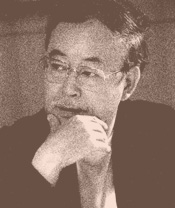
Mutsuro Sasaki

Interviewed in his Tokyo office, the Japanese structural engineer reflects on the dramatic turn his work has taken since Toyo Ito's Sendai Mediatheque, nearly eight years ago.
By Russell Fortmeyer
March 19, 2008
 
  Mutsuro Sasaki
Mutsuro Sasaki
   

In his collaboration with the architect Arata Isozaki on the 2002 design competition for a new train station for Florence, Italy, the Japanese structural engineer Mutsuro Sasaki reversed his traditional role. He started with what he calls the “target values” for stress and deformation loads, and then worked back to the final structure. Instead of taking a given form and optimizing its structural conditions based on calculated stress loads, Sasaki generated an otherwise unknowable form by applying those “target values” on individual components of the structure. Each application rippled through the structure until a definitive form emerged.

“I like to take a different position for each project,” Sasaki says, which rather simplistically summarizes a working process that largely depends on theoretical research he conducts as a professor in the department of architecture at Tokyo’s Hosei University. During the interview, Sasaki quietly speaks through the voice of his translator, Hiraiwa Yoshiyuki, one of a few architects in his employ. Meetings like this occur at the small conference table in the surprisingly diminutive offices of his Tokyo firm, Sasaki Structural Consultants, surrounded by books and other publications featuring his work. Fewer than a dozen employees—engineers, architects, and assistants, many of them his former students—sit at workstations and ponder designs for some of the most exciting contemporary buildings in architecture today. Nothing about the fluorescent-lit surroundings suggests this as an office where a structure like that of the Florence station could emerge. “I don’t think so much about the future, about some clear idea of what I’m going to do next,” he says.

What Sasaki is doing next is surely a question more architects must be asking, as the engineer’s hand has been involved in some of the most complex—and extraordinary—new buildings of the past decade. record has featured several of them: In Japan, Sendai Mediatheque [May 2001, page 190] and Tama Art University Library [January 2008, page 88]—both with Toyo Ito—as well as the Louis Vuitton Omotesando store [February 2004, page 145], with Jun Aoki; and the 21st Century Museum of Contemporary Art [February 2005, page 88], and, in Ohio, the Toledo Museum of Art Glass Pavilion [January 2007, page 78], both with SANAA and, in Toledo, Guy Nordenson.
Mutsuro Sasaki
Mutsuro Sasaki
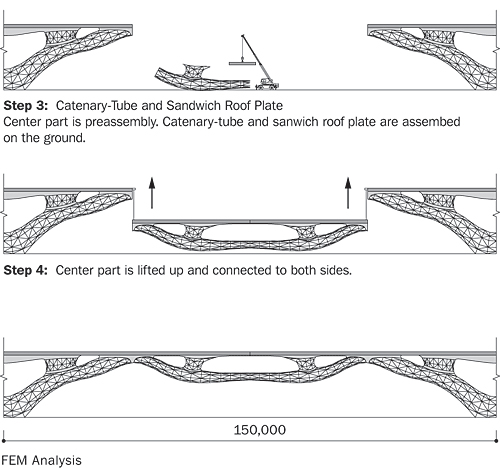
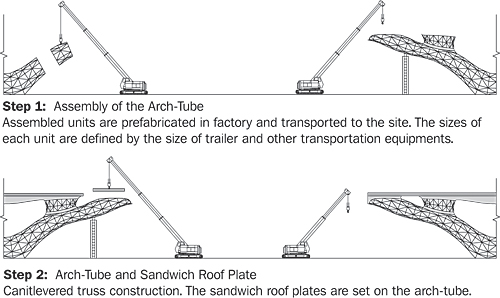
Sasaki devised an erection scheme that proposed building out the sides before fabricating the central structure on grade to then lift it into place.

Similar methodologies thread through many of Sasaki’s projects, but the turning point in his recent career came with the 2001 completion of the Sendai Mediatheque. In a way, his collaborations with Ito and other leading Japanese architects stem from competing ideas introduced at Sendai. Sasaki divides architecture into two categories: abstract and spatial. For him, an abstract structure is straightforward, like Le Corbusier’s Maison Dom-ino—flat Miesian slabs supported by simple columns, repeated as necessary. Yet, a spatial structure, to put it as broadly as possible in terms of Sasaki’s work, is anything but straightforward. Sendai represents both of these strains, since the organization of the building consists of stacked flat slabs made of thin steel plates with steel ribs sandwiched between, although the vertical structure is a set of connected tubes forming webbed columns that sinuously flow through the building.
Mutsuro Sasaki
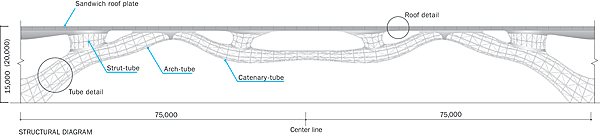
The webbed “columns” branch across the station depending on how the structure could be optimized to address stress and deformation loads for the flat roof in an almost sideways version of what he had designed for Sendai Mediatheque.
 

The story of the Sendai Mediatheque has the ring of legend, as Sasaki colors it in the way of so much fast-paced, globally connected design. “Ito had faxed me a sketch from Narita (Tokyo’s airport), and I responded in a few days with the structural concept,” Sasaki says, referring to Ito’s drawing, theoretically inspired by the way seaweed sways underwater. “Before that, I had never considered a structure like that.” One month later, the two designers had submitted a proposal for the project competition that reflected what was ultimately built: At the corners of the building, Ito and Sasaki arranged four large columns, ranging between 20 and 30 feet in diameter and consisting of tubes that vary from 5 to 10 inches in diameter, to resist the seismic forces of the building. The other remaining columns, which are as small as 7 feet in diameter, simply carry vertical loads. All columns connect to each steel-plate sandwich slab at ring beams, which allows some movement during seismic events.


Share This Story

Looking for a reprint of this article?
From high-res PDFs to custom plaques, order your copy today!

Russell fortmeyer
Russell Fortmeyer, a contributing editor to RECORD, is a Los Angeles-based sustainability principal at Arup and adjunct professor at the University of Southern California School of Architecture.

Post a comment to this article

Report Abusive Comment

Subscription Center
  • Create an Account
  • Start a Subscription
  • Manage My Account
  • Sign Up for Newsletters
  • Visit Customer Service
  • Update Preferences

More Videos

Sponsored Content

Sponsored Content is a special paid section where industry companies provide high quality, objective, non-commercial content around topics of interest to the Architectural Record audience. All Sponsored Content is supplied by the advertising company and any opinions expressed in this article are those of the author and not necessarily reflect the views of Architectural Record or its parent company, BNP Media. Interested in participating in our Sponsored Content section? Contact your local rep!

close
  • TAMLYN XtremeTrim Exterior Trim
    Sponsored byTamlyn

    Designing Cleaner Panel Facades: Why Exterior Trim Details Matter

  • Building with Vapor Barriers
    Sponsored byReef Industries, Inc.

    Vapor Barriers Help Control Moisture in Tighter Building Designs

  • Duct Interior with Prodeq System
    Sponsored byHenry, a Carlisle Company

    Designing Resilient Water Containment Systems

DESIGN:ED Podcast
Listen to Architectural Record’s DESIGN:ED Podcast

Events

June 10, 2026

Rethinking Stormwater – The Power of Porous Paving

Credits: 1 AIA LU/HSW; 1 AIBD P-CE; 0.1 ICC CEU

Learn how porous paving systems support stormwater management, reduce heat island effects, and enhance sustainable site design performance.

June 11, 2026

Very Early Warning Fire Detection for Mission-Critical Facilities

Credits: 1 AIA LU/HSW; 1 AIBD P-CE; 0.1 ICC CEU

Examine advanced fire detection strategies that support uptime and enhance safety in data centers and other mission-critical facilities.

View All Submit An Event

Products

2026 Architect's Square Foot Costbook

2026 Architect's Square Foot Costbook

See More Products

Popular Stories

Practice Matters illustration

What’s in a (Firm’s) Name? Thinking About Succession and Legacy

Coronado Bridge

The Architect’s Guide to San Diego

Practice Matters illustration

By the Numbers: Counting America's Architects

House on a Hill

Design Vanguard 2026: Forma

Crane Cove, ONO

Design Vanguard 2026 Winners

Broader Sustainability of CMU - Free Webinar - May 21, 2026

Related Articles

  • Mutsuro Sasaki

    See More
  • Gruss Center for Art and Design.

    Gruss Center for Art and Design at The Lawrenceville School by Sasaki

    See More
  • Osram Headquarters

    Lighting: Osram Americas Headquarters by Sasaki

    See More

Related Products

See More Products
  • book5.jpg

    Contemporary Market Architecture Planning and Design

  • image7.jpg

    Contemporary Architecture in China Towards A Critical Pragmatism

  • 1118522532.gif

    Future Details of Architecture

See More Products
×

The latest news and information

#1 Source for Architectural Design, News and Products

SUBSCRIBE
  • RESOURCES
    • Advertise
    • Contact Us
    • Submit
    • Store
  • ACCOUNT CENTER
    • Create an Account
    • Start a Subscription
    • Manage My Account
    • Sign Up for Newsletters
    • Visit Customer Service
    • Update Preferences
  • PRIVACY
    • PRIVACY POLICY
    • TERMS & CONDITIONS
    • DO NOT SELL MY PERSONAL INFORMATION
    • PRIVACY REQUEST
    • ACCESSIBILITY
  • SERVICES
    • Marketing Services
    • Reprints
    • Market Research
    • List Rental
    • Survey/Respondent Access
  • STAY CONNECTED
    • Linkedin
    • Facebook
    • Instagram
    • YouTube
    • X (Twitter)

Copyright ©2026. All Rights Reserved BNP Media, Inc. and BNP Media II, LLC.

Design, CMS, Hosting & Web Development :: ePublishing