Architectural Record
search
cart
facebook twitter linkedin youtube
  • Sign In
  • Subscribe
  • Sign Out
  • My Account
Architectural Record
  • NEWS
    • Latest News
    • Awards
    • Interviews
    • Obituaries
    • Podcasts
      • Design:Ed Podcast
      • Sponsored Podcasts
  • OPINION
    • Book Reviews / Excerpts
    • Exhibition Reviews
    • Forum
  • EXCLUSIVES
    • Videos
    • Design Vanguard
    • Top 300 Firms
    • Sponsored Content
    • Sponsored eBooks
    • From the Archives
  • CONTINUING ED
    • Editorial Continuing Ed
    • CE Center
    • CE Academies
  • PROJECTS
    • Buildings By Type
    • Reuse & Renovation
    • Museums & Arts Centers
    • Colleges & Universities
    • Multifamily Housing
    • Interiors
    • Lighting
    • Kitchen & Bath
  • HOUSES
    • Record Houses
    • House of the Month
    • Featured Houses
  • PRODUCTS
    • Products by Category
    • Record Products of the Year
    • Latest Products
  • EVENTS
    • Dates & Events
    • Record on the Road
    • Innovation Conference
    • Sustainability in Practice
    • Women In Architecture
    • Webinars
    • Ad Excellence Awards
    • Submit an Event
  • CONNECT
    • Ask RECORD AI
    • Newsletters
    • Contact
    • Advertise
    • Editorial Calendar
    • Store
    • Customer Service
  • SUBMIT
    • Submission Guidelines
    • RECORD Competitions
  • MAGAZINE
    • Subscribe
    • My Account
    • Digital Edition
    • Current Issue
    • Firm Pass
    • Historic Archive
Architectural Technology

The Fine Print

Three design teams employ three different methods to arrive at 3-D printed structures.
By Anna Fixsen
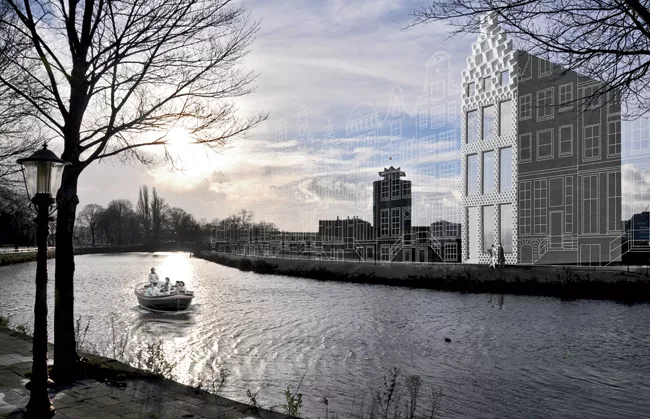
When complete, DUS Architects’ canal house will resemble a traditional Dutch home.
The Fine Print
When complete, DUS Architects’ canal house will resemble a traditional Dutch home.
Image courtesy DUS Architects
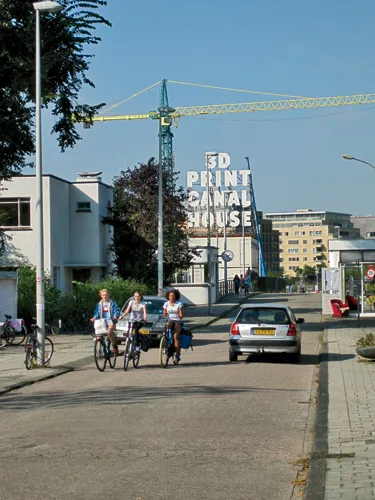
The firm has encouraged the public's involvement, inviting visitors to see the printer in action.
The Fine Print
The firm has encouraged the public's involvement, inviting visitors to see the printer in action.
Image courtesy Architectural Record
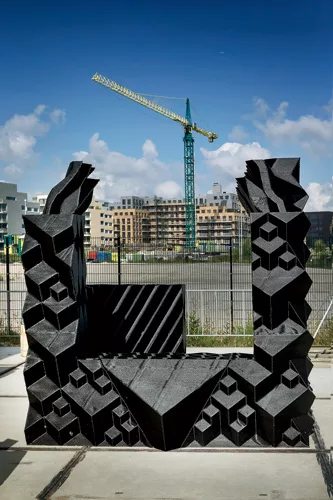
The house is printed piece by piece. A chunk of one room features an intricate tessellation-like pattern.
The Fine Print
The house is printed piece by piece. A chunk of one room features an intricate tessellation-like pattern.
Photo © Olivier Middendorp
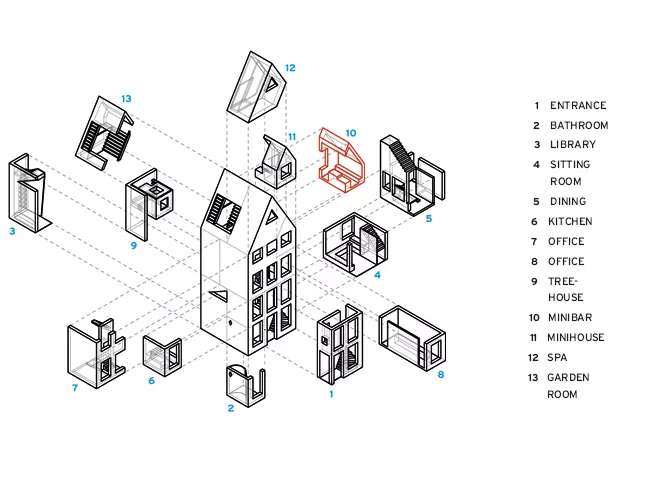
The house is printed piece by piece. A chunk of one room features an intricate tessellation-like pattern.
The Fine Print
The house is printed piece by piece. A chunk of one room features an intricate tessellation-like pattern.
Image courtesy DUS Architects
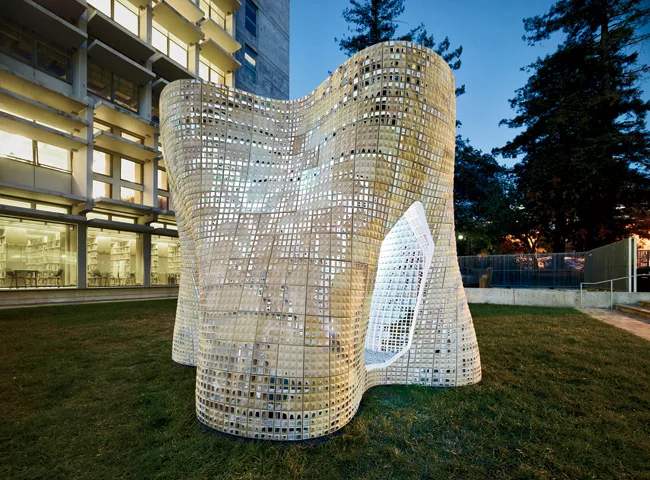
A team at UC Berkeley unveiled the world's first freestanding powder-printed cement 3-D structure.
The Fine Print
A team at UC Berkeley unveiled the world's first freestanding powder-printed cement 3-D structure.
Photo © Matthew Millman
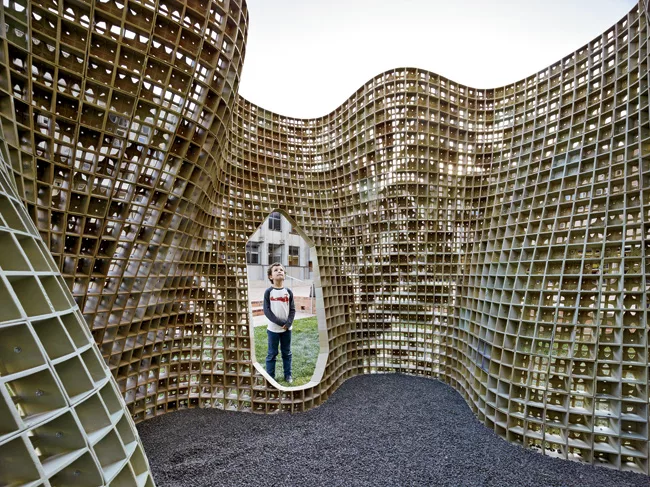
The pavilion, called Bloom, is made up of 840 individual bricks, which form a lacy floral pattern when joined together.
The Fine Print
The pavilion, called Bloom, is made up of 840 individual bricks, which form a lacy floral pattern when joined together.
Photo © Matthew Millman
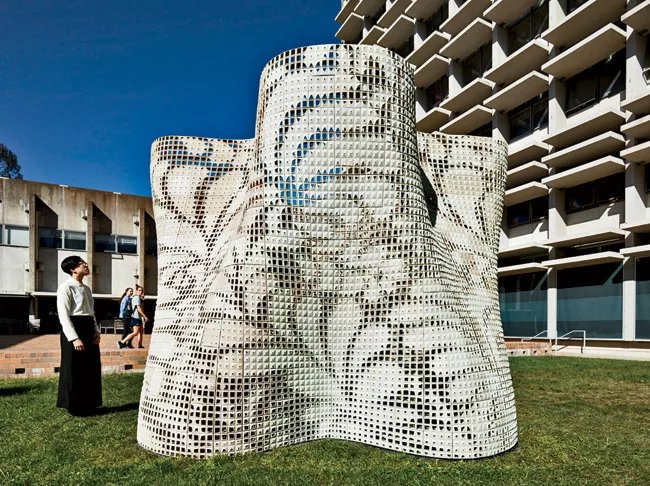
The pavilion is 9 feet tall and has a footprint of 144 square feet.
The Fine Print
The pavilion is 9 feet tall and has a footprint of 144 square feet.
Photo © Matthew Millman
When complete, DUS Architects’ canal house will resemble a traditional Dutch home.
The firm has encouraged the public's involvement, inviting visitors to see the printer in action.
The house is printed piece by piece. A chunk of one room features an intricate tessellation-like pattern.
A team at UC Berkeley unveiled the world's first freestanding powder-printed cement 3-D structure.
The pavilion, called Bloom, is made up of 840 individual bricks, which form a lacy floral pattern when joined together.
The pavilion is 9 feet tall and has a footprint of 144 square feet.
April 16, 2015
Video
 
The firm has encouraged the public’s involvement, inviting visitors to see the printer in action. The house is printed piece by piece. A chunk of one room features an intricate tessellation-like pattern.
 
In the summer of 1908, Thomas Edison filed a patent for a contraption that could construct a house—bathtubs and all—with a single pour of concrete. Although such aspirations may seem amusing today, Edison's goals aren't far off those of contemporary research involving the 3-D printer. Three ongoing architecture projects on three continents demonstrate different approaches to this technology. If successful, they will have far-reaching implications for the design and construction industry.
 
Perhaps the most prominent example is the 3D Print Canal House, a project started by Amsterdam-based firm DUS Architects in January 2014 and funded, in part, by the city. Using a beefed-up version of an Ultimaker desktop 3-D printer (the Kamermaker, as it's called, is approximately 20 feet tall), the firm is printing large architectural components of the house with a bio-based “ink” made primarily of linseed oil. When completed, these components—which have openings for wire and cables—will be filled with a lightweight concrete to connect them. To date, they have printed one room, and, this month, DUS plans to unveil a second machine that will print even larger pieces and enable the team to print 24 hours a day.
 
“As a firm, our dream is that people can go online, download their ideal house, and customize it on demand with no hassle, so that the luxury of made-to-measure architecture becomes available to the masses,” says DUS partner Hedwig Heinsman.
 
Since DUS began the project in earnest barely a year ago, the architects say they have increased the printer speed by 400 percent. Currently, the team is experimenting with the molecular makeup of the ink and incorporating additives such as wood chips, which creates a product similar to particleboard. They are also printing molds and testing the tensile properties of the house's components.
 
Meanwhile, 5,500 miles away in Shanghai, WinSun Decoration Design Engineering is taking DUS's utopian ideal to an extreme. Last summer, Computer World reported that the company can print 10 squat one-room houses in 24 hours from a mix that includes construction debris. This printer is a whopping 20 feet tall, 33 feet wide and 132 feet long. In January, with an even larger printer, they fabricated a five-story apartment building and a neoclassical mansion. WinSun could not be reached for comment.
 
Unlike the Chinese and Dutch projects, a research team at the University of California, Berkeley, is developing small 3-D printed tile-like “bricks” to build rooms and other small structures. In March, the team unveiled Bloom, a lacy 9-foot-tall pavilion made from a specially developed polymer of Portland cement, vegetable oil, and sawdust. Composed of 840 individual bricks, each assigned a number and bound together with stainless-steel fasteners, the pavilion can easily be dismantled and reassembled. After the pavilion's stint at Berkeley, it will be displayed in Thailand at the headquarters of Siam Cement Group (SCG), the company that sponsored the project.
 
The team is working to push their product to market. With the studio's 11 printers, they can make approximately 30 bricks daily, but, unlike the Chinese firm's, this team's objective is not necessarily speed or increasingly large printed components—instead they see value in the resolution and craftsmanship that smaller pieces afford.
 
“Other companies are making architectural-sized machines with the assumption that architectural-sized machines will produce architecture,” says Ronald Rael, the associate professor who led the Berkeley project. “There's a lot of craft in this. It's not simply that the robot is doing all the work.”
Video courtesy DUS Architects
The Kamermaker in action printing a portion of DUS Architects' 3D Print Canal House.

Share This Story

Looking for a reprint of this article?
From high-res PDFs to custom plaques, order your copy today!
Anna Fixsen was a staff writer and editor for Architectural Record from 2013 to 2017, during which time she covered topics ranging from new projects to human rights, and edited Firms to Watch—a special section devoted to emerging architecture firms.

Post a comment to this article

Report Abusive Comment

Subscription Center
  • Create an Account
  • Start a Subscription
  • Manage My Account
  • Sign Up for Newsletters
  • Visit Customer Service
  • Update Preferences

More Videos

Sponsored Content

Sponsored Content is a special paid section where industry companies provide high quality, objective, non-commercial content around topics of interest to the Architectural Record audience. All Sponsored Content is supplied by the advertising company and any opinions expressed in this article are those of the author and not necessarily reflect the views of Architectural Record or its parent company, BNP Media. Interested in participating in our Sponsored Content section? Contact your local rep!

close
  • TAMLYN XtremeTrim Exterior Trim
    Sponsored byTamlyn

    Designing Cleaner Panel Facades: Why Exterior Trim Details Matter

  • Building with Vapor Barriers
    Sponsored byReef Industries, Inc.

    Vapor Barriers Help Control Moisture in Tighter Building Designs

  • Duct Interior with Prodeq System
    Sponsored byHenry, a Carlisle Company

    Designing Resilient Water Containment Systems

DESIGN:ED Podcast
Listen to Architectural Record’s DESIGN:ED Podcast

Events

June 10, 2026

Rethinking Stormwater – The Power of Porous Paving

Credits: 1 AIA LU/HSW; 1 AIBD P-CE; 0.1 ICC CEU

Learn how porous paving systems support stormwater management, reduce heat island effects, and enhance sustainable site design performance.

June 11, 2026

Very Early Warning Fire Detection for Mission-Critical Facilities

Credits: 1 AIA LU/HSW; 1 AIBD P-CE; 0.1 ICC CEU

Examine advanced fire detection strategies that support uptime and enhance safety in data centers and other mission-critical facilities.

View All Submit An Event

Products

2026 Architect's Square Foot Costbook

2026 Architect's Square Foot Costbook

See More Products

Popular Stories

Practice Matters illustration

What’s in a (Firm’s) Name? Thinking About Succession and Legacy

Practice Matters illustration

By the Numbers: Counting America's Architects

House on a Hill

Design Vanguard 2026: Forma

Crane Cove, ONO

Design Vanguard 2026 Winners

KRESA by DLR

In Kalamazoo, DLR Group Completes a Mass-Timber Hub for Career and Technical Education Programs

Broader Sustainability of CMU - Free Webinar - May 21, 2026

Related Articles

  • Voting on the LEED Certified Wood Credit: The Fine Print

    See More
  • The Nancy and Rich Kinder Building at the Museum of Fine Arts, Houston, from above.

    Steven Holl’s Luminous Kinder Building at the Museum of Fine Arts, Houston

    See More
  • Macal2_Arts_pc_2085.jpg

    Janet Wallace Fine Arts Center

    See More

Related Products

See More Products
  • bni book

    BNi Building News Remodeling Costbook 2026 (Print Edition)

  • bni book

    BNi General Construction Costbook 2026 (Print Edition)

  • 2025-BNi_HOME BUILDERS-CV.jpg

    BNi Building News Home Builders Costbook 2025 (Print Edition)

See More Products
×

The latest news and information

#1 Source for Architectural Design, News and Products

SUBSCRIBE
  • RESOURCES
    • Advertise
    • Contact Us
    • Submit
    • Store
  • ACCOUNT CENTER
    • Create an Account
    • Start a Subscription
    • Manage My Account
    • Sign Up for Newsletters
    • Visit Customer Service
    • Update Preferences
  • PRIVACY
    • PRIVACY POLICY
    • TERMS & CONDITIONS
    • DO NOT SELL MY PERSONAL INFORMATION
    • PRIVACY REQUEST
    • ACCESSIBILITY
  • SERVICES
    • Marketing Services
    • Reprints
    • Market Research
    • List Rental
    • Survey/Respondent Access
  • STAY CONNECTED
    • Linkedin
    • Facebook
    • Instagram
    • YouTube
    • X (Twitter)

Copyright ©2026. All Rights Reserved BNP Media, Inc. and BNP Media II, LLC.

Design, CMS, Hosting & Web Development :: ePublishing