Architectural Record
search
cart
facebook twitter linkedin youtube
  • Sign In
  • Subscribe
  • Sign Out
  • My Account
Architectural Record
  • NEWS
    • Latest News
    • Awards
    • Interviews
    • Obituaries
    • Podcasts
      • Design:Ed Podcast
      • Sponsored Podcasts
  • OPINION
    • Book Reviews / Excerpts
    • Exhibition Reviews
    • Forum
  • EXCLUSIVES
    • Videos
    • Design Vanguard
    • Top 300 Firms
    • Sponsored Content
    • Sponsored eBooks
    • From the Archives
  • CONTINUING ED
    • Editorial Continuing Ed
    • CE Center
    • CE Academies
  • PROJECTS
    • Buildings By Type
    • Reuse & Renovation
    • Museums & Arts Centers
    • Colleges & Universities
    • Multifamily Housing
    • Interiors
    • Lighting
    • Kitchen & Bath
  • HOUSES
    • Record Houses
    • House of the Month
    • Featured Houses
  • PRODUCTS
    • Products by Category
    • Record Products of the Year
    • Latest Products
  • EVENTS
    • Dates & Events
    • Record on the Road
    • Innovation Conference
    • Sustainability in Practice
    • Women In Architecture
    • Webinars
    • Ad Excellence Awards
    • Submit an Event
  • CONNECT
    • Ask RECORD AI
    • Newsletters
    • Contact
    • Advertise
    • Editorial Calendar
    • Store
    • Customer Service
  • SUBMIT
    • Submission Guidelines
    • RECORD Competitions
  • MAGAZINE
    • Subscribe
    • My Account
    • Digital Edition
    • Current Issue
    • Firm Pass
    • Historic Archive
ProjectsBuildings by TypeAdaptive Reuse and Renovation

Lincoln Center Theater LCT3 by H3 Hardy Collaboration Architecture

New York City
By Suzanne Stephens
Lincoln Center Theater

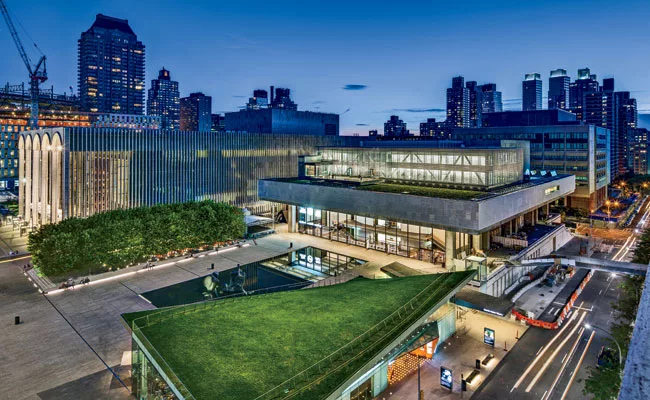
H3’s two-story theater (left) sits on top of the existing Beaumont building in the northwest corner of Lincoln Center. From the upper lobby and terrace, visitors can see the sloping grass-roofed Lincoln restaurant designed by Diller Scofidio + Renfro (2010).
 

Lincoln Center Theater

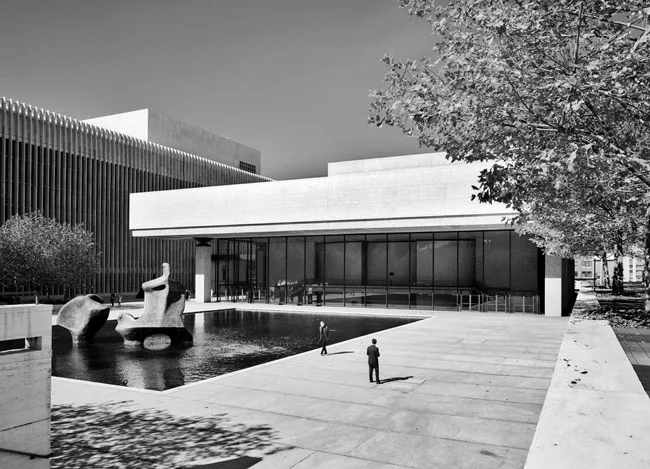
H3’s two-story theater sits on top of the existing Beaumont building (left) in the northwest corner of Lincoln Center. From the upper lobby and terrace, visitors can see the sloping grass-roofed Lincoln restaurant designed by Diller Scofidio + Renfro (2010).

Photo © Ezra Stoller/Esto
Lincoln Center Theater

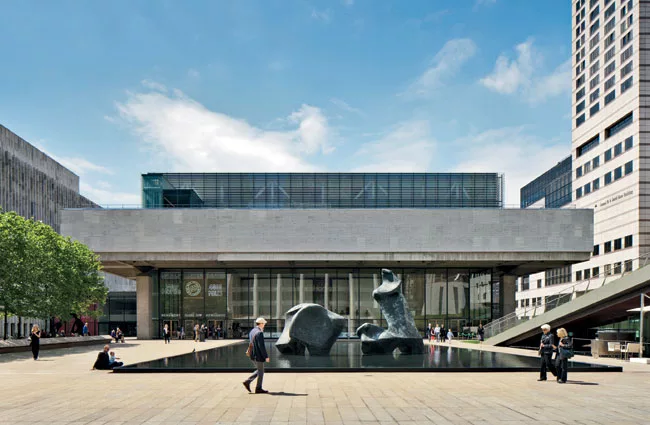
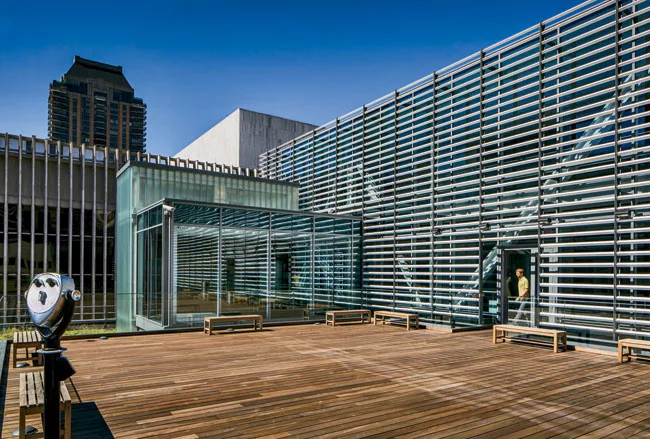
An aluminum sunscreen of square tubes rotated at 45 degrees shields the café and public spaces of the elevated theater from the sun. The channel-glass elevator shaft behind the glazed lobby was inserted in the Beaumont by removing coffers from the existing concrete deck of the ceiling structure in the building’s south side. The terrace adjoining the café has an ipe-wood floor.
Lincoln Center Theater

An aluminum sunscreen of square tubes rotated at 45 degrees shields the café and public spaces of the elevated theater from the sun. The channel-glass elevator shaft behind the glazed lobby was inserted in the Beaumont by removing coffers from the existing concrete deck of the ceiling structure in the building’s south side. The terrace adjoining the café has an ipe-wood floor.
Lincoln Center Theater

An aluminum sunscreen of square tubes rotated at 45 degrees shields the café and public spaces of the elevated theater from the sun. The channel-glass elevator shaft behind the glazed lobby was inserted in the Beaumont by removing coffers from the existing concrete deck of the ceiling structure in the building’s south side (left). The terrace adjoining the café has an ipe-wood floor.
Lincoln Center Theater

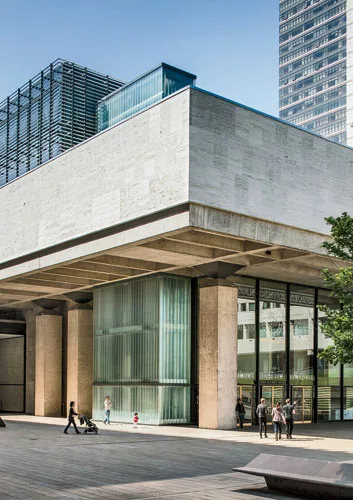
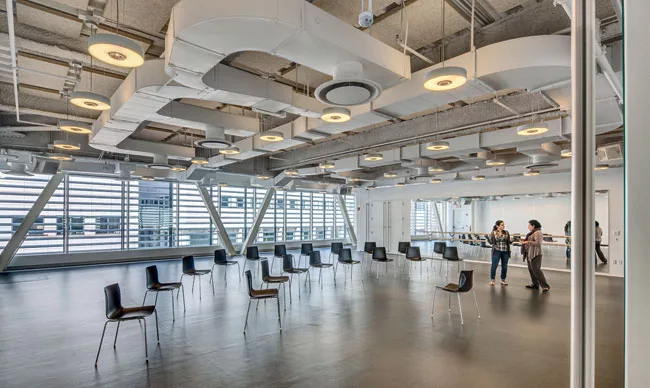
Next to the black-box Claire Tow Theater is a 1,950- square-foot rehearsal space (left), which receives ample daylight from the north window wall. A café extends from the ticket office across the front of the building.
Lincoln Center Theater

Next to the black-box Claire Tow Theater (left) is a 1,950- square-foot rehearsal space, which receives ample daylight from the north window wall. A café extends from the ticket office across the front of the building.
Lincoln Center Theater

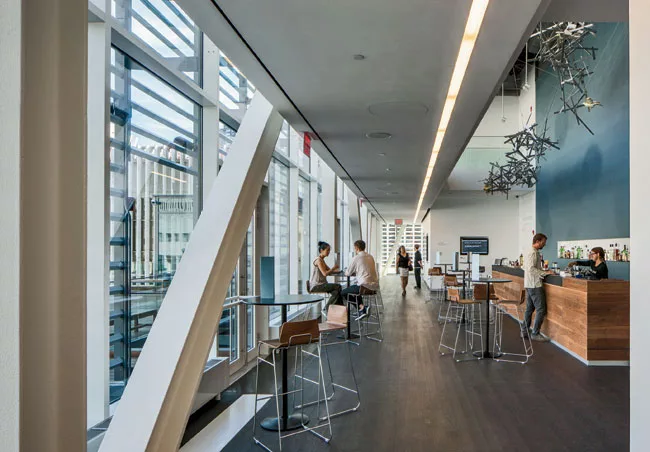
A café extends from the ticket office across the front of the building. The café’s cutaway soffit allows daylight to filter down through the space, where a mobile by Kiki Smith hangs.
Lincoln Center Theater

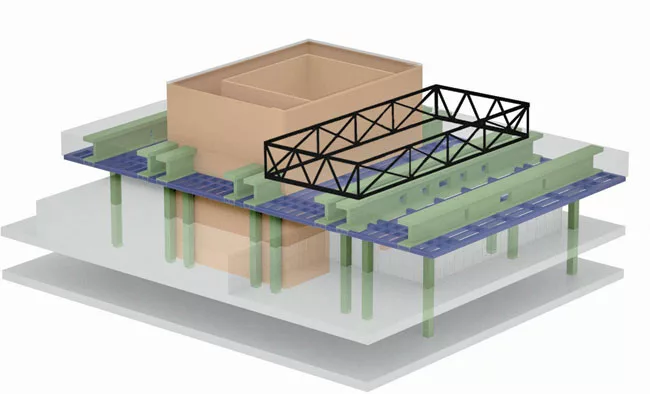
The structural engineer, Severud Associates, called for two 30-foot-deep, wide-flange longitudinal steel trusses spanning 175 feet for the two-story, rectilinear LCT3 theater. The bridge-like structure, fabricated off-site, matches the span of the existing 18-foot-high, concrete I-shaped girders running across the original Beaumont theater. On the short ends, the trusses are 75 feet long to resist lateral forces, aided by a third long truss. As Severud’s Alvaro Castaño notes, the engineers also reinforced the older girders’ web walls above the existing columns to handle loads from the new structure.

Image courtesy H3 Hardy Collaboration Architecture
Lincoln Center Theater

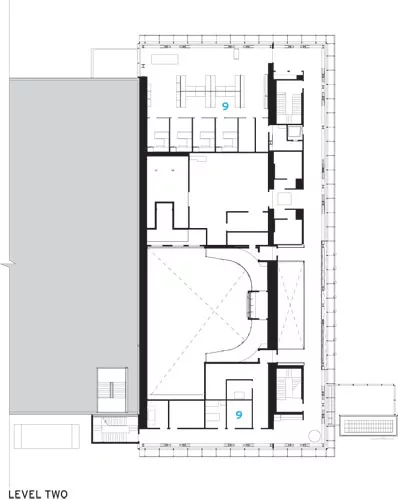
1. Elevator lobby
2. Box office
3. Café
4. Terrace
5. Theater seating
6. Rehearsal
7. Green roof
8. Stage
9. Office
10. Backstage

Image courtesy H3 Hardy Collaboration Architecture
Lincoln Center Theater

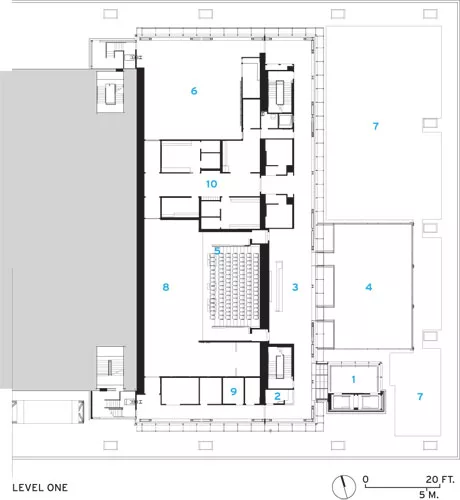
1. Elevator lobby
2. Box office
3. Café
4. Terrace
5. Theater seating
6. Rehearsal
7. Green roof
8. Stage
9. Office
10. Backstage

Image courtesy H3 Hardy Collaboration Architecture

Lincoln Center Theater
February 15, 2013

Architects & Firms

H3 Hardy Collaboration Architecture


Judging by Diller Scofidio + Renfro's splashy renovations of and additions to New York's Lincoln Center in recent years, it's surprising that Hugh Hardy and his firm, H3 Hardy Collaboration Architecture, would have added something so discreet to the arts complex. Furthermore, Hardy's sleekly tailored two-story LCT3, which sits atop the existing Vivian Beaumont and Mitzi Newhouse theaters, counters the image of the architect who indelibly forged his career in the 1960s with skewed geometries and brightly colored exposed mechanical ducts. Sure, it's been a while since he founded his own firm in 1962—which became Hardy Holzman Pfeiffer in 1967 and then H3 in 2004. Yet the pop pizzazz that Hardy brought from the start to school, museum, and theater commissions (such as the Playhouse in the Park in Cincinnati, 1968, and the Mt. Healthy School in Columbus, Indiana, 1972) figured prominently in the generational shift away from monotonous corporate Modernism.

When asked about his new sedate structure of steel trusses, H-profile columns, and aluminum sunscreens atop the 1965 building that Eero Saarinen designed to house the Beaumont and Newhouse theaters, Hardy replies, “There is no need to show off.” His deference to Saarinen dates to Hardy's days before he started his own office. Hardy, who got his B.Arch. (1954) and M.F.A. (1956) at Princeton, had initially been drawn to creating stage sets and worked for the legendary theater designer Jo Mielziner from 1958 to 1962. His timing proved propitious, since Mielziner was collaborating then with Saarinen on the Beaumont. Meeting Saarinen turned Hardy to architecture for good. As Hardy puts it in his forthcoming book Theater of Architecture (Princeton Architectural Press), the exposure to the rational but unconventional Finn convinced him that “architecture, not theater, would be my future.” Actually, his future would include the architecture of theaters, if not set design. In 2009, when André Bishop, LCT's artistic director, and Bernard Gersten, the executive producer, decided they needed a small, simple black-box performance space to bring younger audiences to see experimental low-budget productions in this established venue, they turned to Hardy. After looking into several options, H3 proposed adding on top of Saarinen's building.

Saarinen's original parti for the 1,060-seat Beaumont theater and the 299-seat Newhouse space tucked into the basement had been complicated by its interlocking relationship with the adjoining New York Public Library and Museum of Performing Arts, designed in 1965 by Gordon Bunshaft of Skidmore, Owings & Merrill. While the library has its own entrance pavilion on the south between the Metropolitan Opera House and the theater, the Beaumont's travertine-clad attic conceals the library's book stacks and reading rooms, placed in a square doughnut wrapping around the stage house. Bunshaft's insistence that the Beaumont's concrete columns at the base be few but stalwart disgruntled Saarinen, yet generated a commanding bridgelike structural solution. Massive concrete girders, 18 feet high with an I-beam profile, stretch across the Beaumont for a 175-foot span. Decades later, Hardy and structural engineer Severud Associates would place another long-span steel-truss structure on top to contain a 23,000-square-foot, 112-seat theater. In so doing, H3 pulled the new rectilinear addition 58 feet back from the Beaumont's roof edge both to create an outdoor terrace off the LCT3 lobby and to mitigate the perceived mass of the new 32-foot-high structure when seen from Lincoln Center's north plaza in front of the Beaumont building. “We wanted the steel trusses of the box to have their own identity, yet complement Saarinen's travertine-marble-clad attic sitting on a glass void,” H3 partner Ariel Fausto explains. “That structural conversation is important.”

To lessen the glare on the addition's glazed walls, the architects designed an aluminum screen of square tubes turned at a 45-degree angle. During the day the screen filters light, and at night it becomes a diaphanous veil. The large existing concrete columns allowed H3 to insert two elevator cabs housed in a shaft of channel glass on the south side of the building. All the firm needed to do was to remove three coffers from the concrete deck in the Beaumont's ceiling structure.

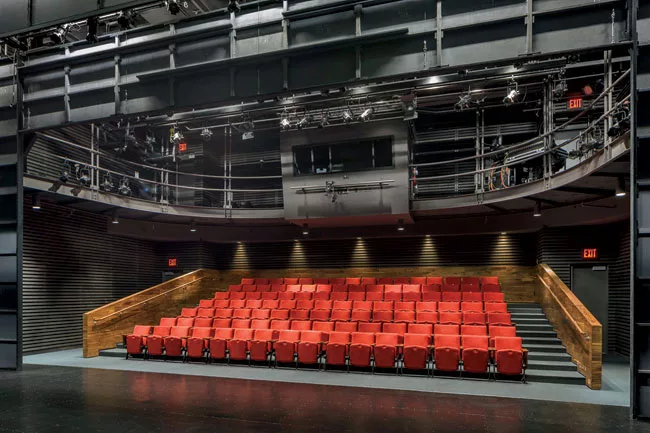
Upon arriving at the new upper lobby for the black-box performance space (called the Claire Tow Theater), visitors find a café, which opens onto the terrace. Inside, the theater's fixed seats are upholstered in red, giving the space, with its exposed ceiling, a dramatic punch. The glazed-bar building also contains both a rehearsal room and, above it, administrative offices on the north end.

Preservationists feared that Hardy's addition would mar the quiet monumentality of the Saarinen theater. They needn't have worried. As it turns out, Saarinen's late work is served well by this subtle expansion. It may seem ironic that Hardy would return to a purer Miesian Modernism for this theater, since he had been intent at one time on scrappily playing with the style. But this project proved a wise regeneration for the Beaumont building and for Saarinen's contribution. As Hardy says, “The logic of what we did comes from what he did.”

People

Architect:
H3 Hardy Collaboration Architecture—Hugh Hardy, founding partner; Ariel Fausto, partner; Mercedes Armillas, associate

Engineers:
Severud Associates (structural); Arup (m/e/p/fp)

Consultants:
Fisher Marantz Stone (lighting); JaffeHolden (acoustical); Fisher Dachs Associates (theater)

Client:
Lincoln Center Theater

General Contractor:
Yorke Construction

Size:
23,000 square feet

Cost:
$42 million

Completion date:
June 2012


Products

Metal/glass curtain wall:
Sch'co

Built-up roofing:
Johns Manville

Channel Glass:
Bendheim Wall Systems

Paints and stains:
Benjamin Moore

Fixed Theater Seating:
Theater Solutions

 
KEYWORDS: Lincoln Center New York City

Share This Story

Looking for a reprint of this article?
From high-res PDFs to custom plaques, order your copy today!

Stephens

Suzanne Stephens, a former deputy editor of Architectural Record, has been a writer, editor, and critic in the field of architecture for several decades. She has a Ph.D. in architectural history from Cornell University, and teaches a seminar in the history of architectural criticism in the architecture program of Barnard and Columbia colleges.

Post a comment to this article

Report Abusive Comment

Subscription Center
  • Create an Account
  • Start a Subscription
  • Manage My Account
  • Sign Up for Newsletters
  • Visit Customer Service
  • Update Preferences

More Videos

Sponsored Content

Sponsored Content is a special paid section where industry companies provide high quality, objective, non-commercial content around topics of interest to the Architectural Record audience. All Sponsored Content is supplied by the advertising company and any opinions expressed in this article are those of the author and not necessarily reflect the views of Architectural Record or its parent company, BNP Media. Interested in participating in our Sponsored Content section? Contact your local rep!

close
  • TAMLYN XtremeTrim Exterior Trim
    Sponsored byTamlyn

    Designing Cleaner Panel Facades: Why Exterior Trim Details Matter

  • Building with Vapor Barriers
    Sponsored byReef Industries, Inc.

    Vapor Barriers Help Control Moisture in Tighter Building Designs

  • Duct Interior with Prodeq System
    Sponsored byHenry, a Carlisle Company

    Designing Resilient Water Containment Systems

DESIGN:ED Podcast
Listen to Architectural Record’s DESIGN:ED Podcast

Events

June 18, 2026

Rebooting the Aging Office Building

Credits: 1 AIA LU/HSW; 1 AIBD P-CE; 0.1 ICC CEU; 1 PDH

Explore façade retrofit strategies and award-winning design concepts that can transform aging office buildings into healthier, higher-performing workplaces for today’s hybrid workforce.

June 23, 2026

Enhancing Fire Resistance with Advanced PVC Solutions

Credits: 1 AIA LU/HSW; 1 AIBD P-CE; 0.1 ICC CEU; 1 IIBEC CEH

Evaluate advanced PVC solutions that improve fire resistance, support WUI compliance, and enhance resilience in residential and commercial building design.

View All Submit An Event

Products

2026 Architect's Square Foot Costbook

2026 Architect's Square Foot Costbook

See More Products

Popular Stories

SanDiegoAirport

Top 300 Architecture Firms of 2026

Coronado Bridge

The Architect’s Guide to San Diego

Lorcan O' Herilhy

California Architect Lorcan O’Herlihy Has Died, Age 66

CCA, Studio Gang

The Winners of the AIA’s 2026 Architecture Award Range from Collegiate Rowing Hubs to Housing for the Homeless

Dusk House

Design Vanguard 2026: ONO

Rebooting the Aging Office Building - Free Webinar - June 18, 2026

Related Articles

  • Polonsky Shakespeare Center by H3 Hardy Collaboration Architecture

    See More
  • DiMenna Classical Music Center by H3 Hardy Opens in NYC

    See More
  • Alice Tully Hall at Lincoln Center by Diller Scofidio + Renfro and FXFOWLE

    See More

Related Products

See More Products
  • reuse.jpg

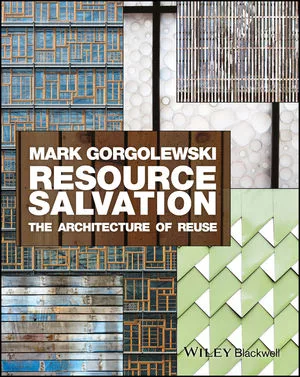
    Resource Salvation: The Architecture of Reuse

  • ribbonarch.jpg

    Ribbon Architecture: Light, Shadow, and Reflection in Architecture

  • 3dthinking.jpg

    3D Thinking in Design and Architecture: From Antiquity to the Future

See More Products
×

The latest news and information

#1 Source for Architectural Design, News and Products

SUBSCRIBE
  • RESOURCES
    • Advertise
    • Contact Us
    • Submit
    • Store
  • ACCOUNT CENTER
    • Create an Account
    • Start a Subscription
    • Manage My Account
    • Sign Up for Newsletters
    • Visit Customer Service
    • Update Preferences
  • PRIVACY
    • PRIVACY POLICY
    • TERMS & CONDITIONS
    • DO NOT SELL MY PERSONAL INFORMATION
    • PRIVACY REQUEST
    • ACCESSIBILITY
  • SERVICES
    • Marketing Services
    • Reprints
    • Market Research
    • List Rental
    • Survey/Respondent Access
  • STAY CONNECTED
    • Linkedin
    • Facebook
    • Instagram
    • YouTube
    • X (Twitter)

Copyright ©2026. All Rights Reserved BNP Media, Inc. and BNP Media II, LLC.

Design, CMS, Hosting & Web Development :: ePublishing