Architectural Record
search
cart
facebook twitter linkedin youtube
  • Sign In
  • Subscribe
  • Sign Out
  • My Account
Architectural Record
  • NEWS
    • Latest News
    • Awards
    • Interviews
    • Obituaries
    • Podcasts
      • Design:Ed Podcast
      • Sponsored Podcasts
  • OPINION
    • Book Reviews / Excerpts
    • Exhibition Reviews
    • Forum
  • EXCLUSIVES
    • Videos
    • Design Vanguard
    • Top 300 Firms
    • Sponsored Content
    • Sponsored eBooks
    • From the Archives
  • CONTINUING ED
    • Editorial Continuing Ed
    • CE Center
    • CE Academies
  • PROJECTS
    • Buildings By Type
    • Reuse & Renovation
    • Museums & Arts Centers
    • Colleges & Universities
    • Multifamily Housing
    • Interiors
    • Lighting
    • Kitchen & Bath
  • HOUSES
    • Record Houses
    • House of the Month
    • Featured Houses
  • PRODUCTS
    • Products by Category
    • Record Products of the Year
    • Latest Products
  • EVENTS
    • Dates & Events
    • Record on the Road
    • Innovation Conference
    • Sustainability in Practice
    • Women In Architecture
    • Webinars
    • Ad Excellence Awards
    • Submit an Event
  • CONNECT
    • Ask RECORD AI
    • Newsletters
    • Contact
    • Advertise
    • Editorial Calendar
    • Store
    • Customer Service
  • SUBMIT
    • Submission Guidelines
    • RECORD Competitions
  • MAGAZINE
    • Subscribe
    • My Account
    • Digital Edition
    • Current Issue
    • Firm Pass
    • Historic Archive
ProjectsK-12 School Design

Chipakata Children's Academy by 14+ Foundation

Chipakata, Zambia

By Josephine Minutillo
Chipakata Children's Academy
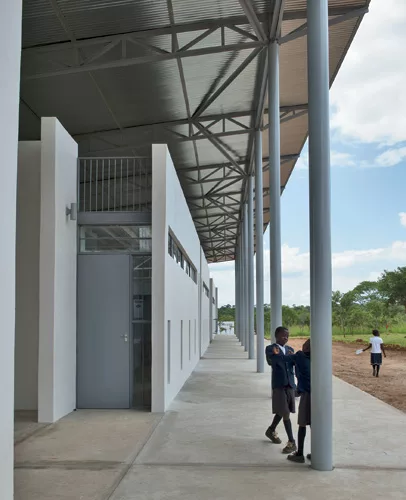
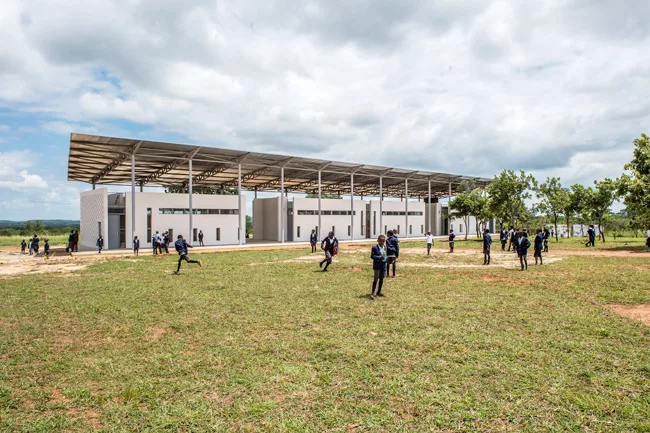
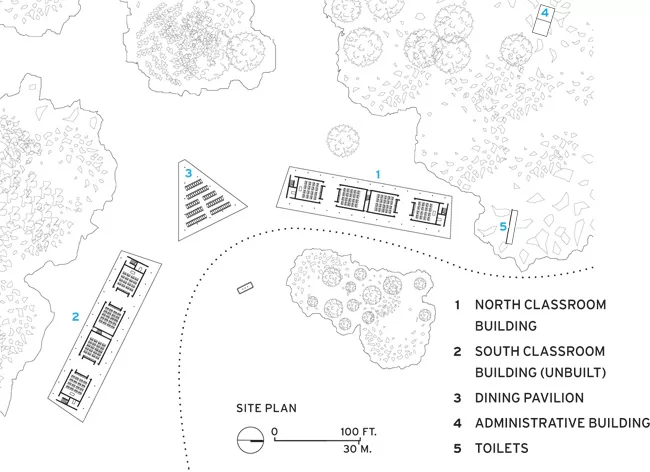
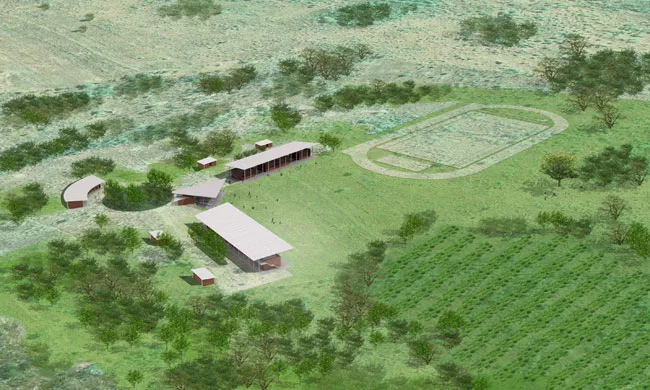
Before Chipakata Children’s Academy was built, some of its students were traveling almost 5 miles on foot to school. The new facility features a classroom building, an open-air pavilion, and teachers’ housing units alongside fields for soccer and volleyball.
 
Photo © Rob Duker
Chipakata Children's Academy
Steel columns and trusses, along with the metal doors and windows, were purchased in the capital city of Lusaka and transported to the site over new roads built by the 14+ Foundation. The concrete was mixed on-site using local labor.
 
Photo © Rob Duker
Chipakata Children's Academy
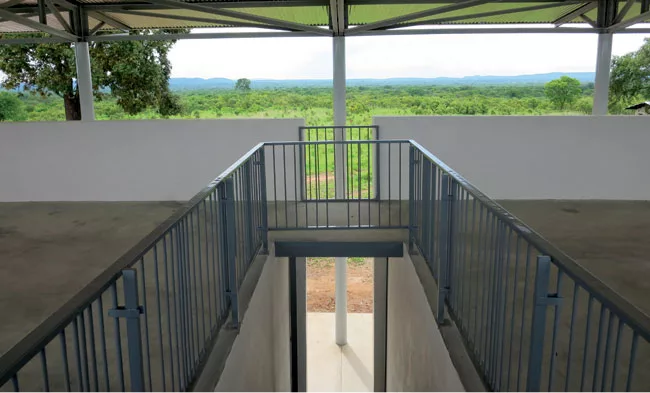
The arts-based curriculum is taught in daylit classrooms on two floors: at ground level and an upper one with a roof for shade and no walls.
 
Photo © Rob Duker
Chipakata Children's Academy
The arts-based curriculum is taught in daylit classrooms on two floors: at ground level and an upper one with a roof for shade and no walls.
 
Photo © Rob Duker
Chipakata Children's Academy
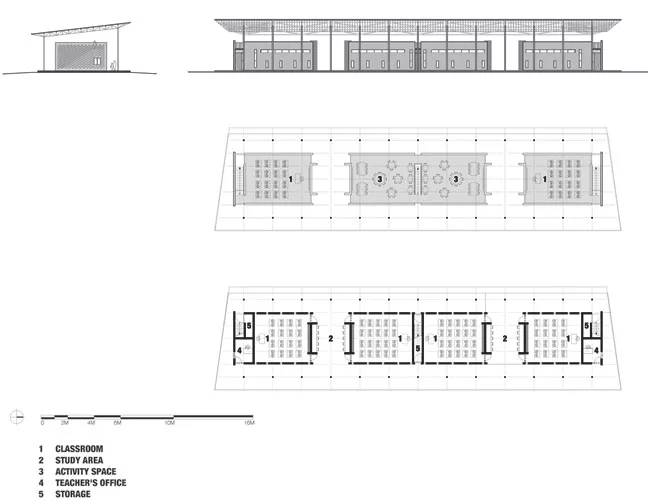
Classroom Elevation and Plans
 
Photo © Rob Duker
Chipakata Children's Academy
Classroom Elevation and Plans
 
Photo © Rob Duker
Chipakata Children's Academy
Classroom Elevation and Plans
 
Photo © Rob Duker
Chipakata Children's Academy
Classroom Elevation and Plans
 
Photo © Rob Duker
Chipakata Children's Academy
Classroom Elevation and Plans
 
Photo © Rob Duker
Chipakata Children's Academy
Classroom Elevation and Plans
 
Photo © Rob Duker
Chipakata Children's Academy
Classroom Elevation and Plans
 
Photo © Rob Duker
Chipakata Children's Academy
Classroom Elevation and Plans
 
Photo © Rob Duker
Classroom Elevation and Plans
 
Photo © Joe Mizzi
Chipakata Children's Academy
Classroom Elevation and Plans
 
Image © Joe Mizzi
Chipakata Children's Academy
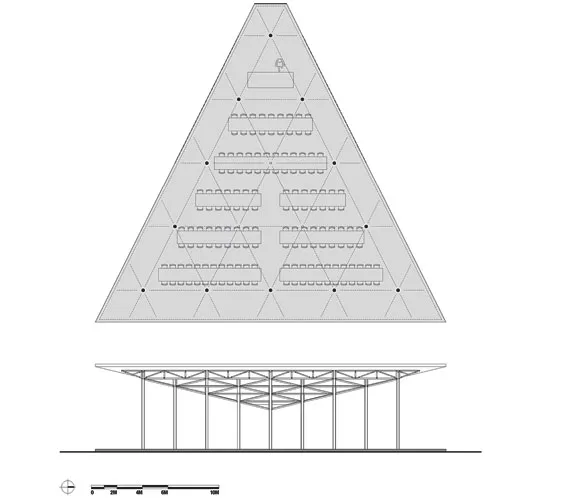
Community Dining Pavilion, plan and elevation
 
Image © Joe Mizzi
Chipakata Children's Academy
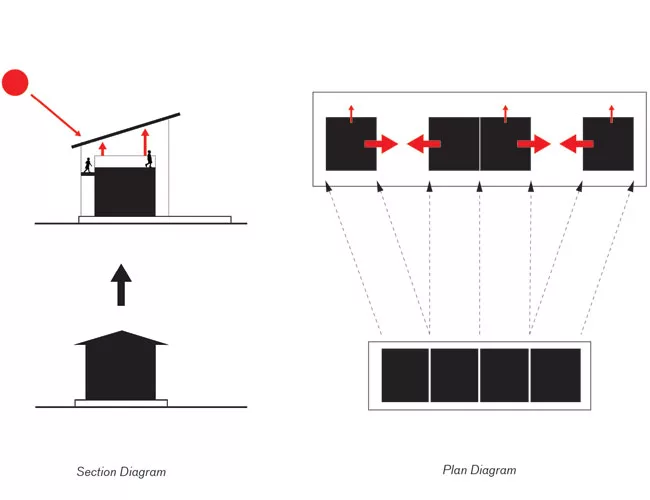
Concept section and plan diagrams
 
Image © Joe Mizzi
Chipakata Children's Academy
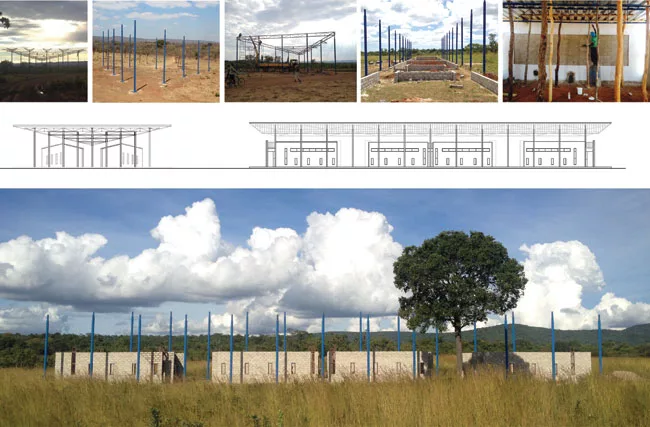
Construction, drawings
 
Image © Joe Mizzi
Chipakata Children's Academy
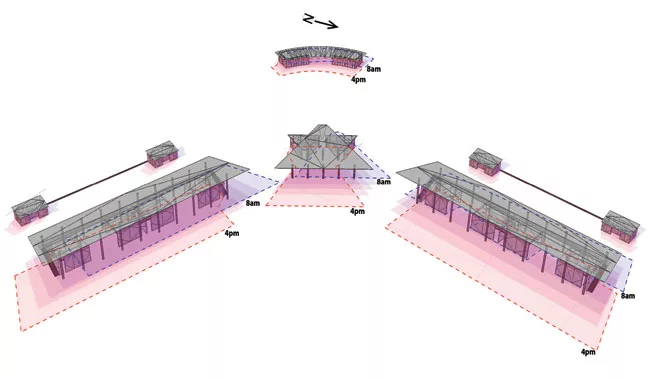
Solar study
 
Photo © Joe Mizzi
Chipakata Children's Academy
Solar study
 
Image © Joe Mizzi
Chipakata Children's Academy
Classroom Elevation and Plans
Chipakata Children's Academy
June 16, 2015

Architects & Firms

14+ Foundation

In 2011, Joseph Mizzi found himself in Zambia, the landlocked nation in southern Africa. As a volunteer for World Bicycle Relief, he was part of a mission to provide schoolchildren with wheels to alleviate their sometimes hours-long commute on foot. But the builder in Mizzi—he is president of New York-based Sciame Construction—had other ideas. “I thought, rather than give them bikes to travel the long distances to school,” he recalls, “why not build more schools?”

Additional Content:
Jump to credits & specifications

Upon his return to the States, a chance meeting with Zambian-born Nchimunya Wulf, and a later introduction to her family's village, strengthened Mizzi's resolve and helped solidify plans for locating the first school. Together, he and Wulf cofounded the 14+ Foundation to build schools in rural African communities and to improve the education of children over 14—the age when local kids often drop out. The not-for-profit's Chipakata Children's Academy, with its atypical white walls and floating roof, opened in Zambia in January.
 
The three years between founding 14+ and completing Chipakata were spent assessing the community's needs (14+ donated a large grinding mill for the corn harvest, for instance) and providing the infrastructure required to make a high-quality building possible, including constructing 5 miles of roads and a small bridge. Mizzi himself made more than 10 trips to Zambia during this time. Back in New York, he and a team of volunteers organized multiple fundraising events, including auctions with the support of such friends and clients as artists Julian Schnabel and Rashid Johnson and musician Solange Knowles.
 
Mizzi also enlisted colleagues on The Architectural League of New York's board of directors—including architects Susan Rodriguez and Frank Lupo and engineer Nat Oppenheimer—to help with the school's design pro bono. Regular meetings at Sciame's Wall Street headquarters turned into weekly charrettes in which the group researched local materials and construction, selected a site (a level area on the land granted to them, otherwise mostly rolling hills), and developed a master plan and design for two school buildings (the second to be built during the next phase of construction), a pavilion, and five teachers' housing units.
 
The new primary school, which serves seven villages, mimics the local language of bar-shaped buildings (typically earth-colored), but pulls the bar apart and raises the roof to create indoor/outdoor spaces and a second story with covered open-air classrooms. “These were two simple things to accomplish to get so much more from the building,” explains Rodriguez, a principal at Ennead, which also provided design support through Ennead Lab. “These are people who live at ground level—most had never been on a stair before.”
 
Independent architect Fabian Bedolla moved to Zambia to manage the construction process, in which villagers were employed to build the mostly masonry structure. For the steel columns and roof trusses, Oppenheimer tweaked the structural design to base it on steel components available in Lusaka, the capital city 60 miles to the west.
 
While the initial intent was to forgo electric lighting completely, with daylight for the classrooms coming from clerestory and slit windows or the open sides, the design team quickly realized that the building would become a community hub, used by adults for meetings and classes in the evening. A rooftop photovoltaic array provides power for supplemental lighting, computers, and for charging cellphones.
 
With over 180 students enrolled and the first semester complete, the school has already begun transforming the lives of local residents, who were at first “polite, shy, and a tad suspicious,” says Mizzi, who also provided the schoolchildren's uniforms and recently attended the academy's first student awards ceremony. “When we started 14+, we established our model as a nonprofit not just to design and build schools, but to operate them,” he says. “I welcome that responsibility.”

Credits

Formal name of building:

Chipakata Children's Academy


Location:

Chipakata, Zambia


Completion date:

January 2015


Gross square footage:

20,000 sf


Total project cost:

$1 million (including infrastructure)


Client:

14+ Foundation


Architect:

Various architects


Personnel in architect's firm who should receive special credit:

Design principals: Susan Rodriguez (Ennead Architects), Frank Lupo;

Design team: Randy Antonia Lott (MDEAS Architects), Fabian Bedolla (on-site project architect), Hiroko Nakatani (Ennead Lab), Mehonaz Kazi


Engineers:

Structural Engineer: Pro-Bono Design Principal - Nat Oppenheimer, Robert Silman Associates


General contractor:

Construction Manager: 14+ Foundation, Inc. - Fabian Bedolla


Photographer:

Rob Duker


Engineer:

Nat Oppenheimer (Robert Silman Associates)


Size:

20,000 square feet


Cost:

$1 million (including infrastructure)


Completion date:

January 2015

Specifications

Structural system

Structural Steel: Blue Steel & Timber


Windows

Metal frame: Steel Doors and Windows: Amalgamated Steel Engineering Co.


Interior finishes

Paints and stains: Plascon


Furnishings

Classroom Furniture: Shonga Steel Limited

 
KEYWORDS: Africa humanitarian design

Share This Story

Looking for a reprint of this article?
From high-res PDFs to custom plaques, order your copy today!


Josephine minutillo

Josephine Minutillo is editor in chief of Architectural Record. Trained as an architect, she began writing for RECORD in 2001 while practicing architecture, and has held several positions at the magazine over the past two decades. Her articles have appeared in many international publications. She has been an invited critic at Washington University in St. Louis, The Cooper Union, Columbia GSAPP, Pratt Institute, The City College of New York, and Yale University.
Instagram: @josephineminutillo_

Post a comment to this article

Report Abusive Comment

Subscription Center
  • Create an Account
  • Start a Subscription
  • Manage My Account
  • Sign Up for Newsletters
  • Visit Customer Service
  • Update Preferences

More Videos

Sponsored Content

Sponsored Content is a special paid section where industry companies provide high quality, objective, non-commercial content around topics of interest to the Architectural Record audience. All Sponsored Content is supplied by the advertising company and any opinions expressed in this article are those of the author and not necessarily reflect the views of Architectural Record or its parent company, BNP Media. Interested in participating in our Sponsored Content section? Contact your local rep!

close
  • TAMLYN XtremeTrim Exterior Trim
    Sponsored byTamlyn

    Designing Cleaner Panel Facades: Why Exterior Trim Details Matter

  • Building with Vapor Barriers
    Sponsored byReef Industries, Inc.

    Vapor Barriers Help Control Moisture in Tighter Building Designs

  • Duct Interior with Prodeq System
    Sponsored byHenry, a Carlisle Company

    Designing Resilient Water Containment Systems

DESIGN:ED Podcast
Listen to Architectural Record’s DESIGN:ED Podcast

Events

June 10, 2026

Rethinking Stormwater – The Power of Porous Paving

Credits: 1 AIA LU/HSW; 1 AIBD P-CE; 0.1 ICC CEU

Learn how porous paving systems support stormwater management, reduce heat island effects, and enhance sustainable site design performance.

June 11, 2026

Very Early Warning Fire Detection for Mission-Critical Facilities

Credits: 1 AIA LU/HSW; 1 AIBD P-CE; 0.1 ICC CEU

Examine advanced fire detection strategies that support uptime and enhance safety in data centers and other mission-critical facilities.

View All Submit An Event

Products

2026 Architect's Square Foot Costbook

2026 Architect's Square Foot Costbook

See More Products

Popular Stories

Practice Matters illustration

What’s in a (Firm’s) Name? Thinking About Succession and Legacy

Coronado Bridge

The Architect’s Guide to San Diego

Practice Matters illustration

By the Numbers: Counting America's Architects

House on a Hill

Design Vanguard 2026: Forma

Crane Cove, ONO

Design Vanguard 2026 Winners

Broader Sustainability of CMU - Free Webinar - May 21, 2026

Related Articles

  • A Door to the Future

    Neeson Cripps Academy by COOKFOX Architects

    See More
  • Charter Oak International Academy

    Charter Oak International Academy by Perkins Eastman

    See More
  • Mind-De Academy

    Ming-De Academy by O-office Architects

    See More

Related Products

See More Products
  • Architectural Record - November 2025

    Architectural Record November 2025 Issue

See More Products
×

The latest news and information

#1 Source for Architectural Design, News and Products

SUBSCRIBE
  • RESOURCES
    • Advertise
    • Contact Us
    • Submit
    • Store
  • ACCOUNT CENTER
    • Create an Account
    • Start a Subscription
    • Manage My Account
    • Sign Up for Newsletters
    • Visit Customer Service
    • Update Preferences
  • PRIVACY
    • PRIVACY POLICY
    • TERMS & CONDITIONS
    • DO NOT SELL MY PERSONAL INFORMATION
    • PRIVACY REQUEST
    • ACCESSIBILITY
  • SERVICES
    • Marketing Services
    • Reprints
    • Market Research
    • List Rental
    • Survey/Respondent Access
  • STAY CONNECTED
    • Linkedin
    • Facebook
    • Instagram
    • YouTube
    • X (Twitter)

Copyright ©2026. All Rights Reserved BNP Media, Inc. and BNP Media II, LLC.

Design, CMS, Hosting & Web Development :: ePublishing