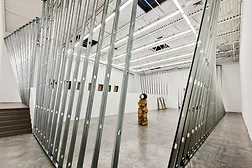
Allyson Vieira builds monuments—but she uses unexpectedly humble material. Take her 2013–14 exhibition The Plural Present. There, the New York–based artist filled a gallery with Classical ruins: The City Wall, 2013, delimited the space with a colonnade that framed Beauty, Mirth, and Abundance, 2013, three figures striking acontrapposto that echoes the famed Greek statue of the three graces at the Metropolitan Museum of Art.
Andreas Angelidakis is not sure why millions of people are obsessed with cat videos. “It’s a curious thing, what captures people’s attention,” he says. “Architecture is a lot slower than that kind of exchange of images.”
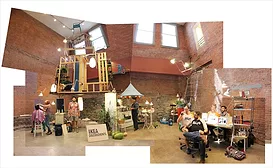
For Andrés Jaque’s Office for Political Innovation, architecture is the social as well as physical infrastructure of society. Founded in 2003 by Jaque, the Madrid-based practice has employed a mix of architects, engineers, sociologists, interactive multimedia designers, and even anthropologists and marketing consultants in its various projects.
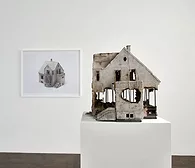
Katrín Sigurdardóttir was born in Reykjavik and moved to the United States in 1988 to attend the San Francisco Art Institute. The artist now splits her time between studios in Long Island City, New York, and Iceland. As it is in her life, a kind of diasporic mobility is a key theme in Sigurdardóttir’s work.
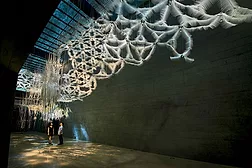
Philip Beesley takes the same core idea as the point of departure both for his architecture and his otherworldly installations: the shared experience of public space. “How architecture makes a place fundamentally,” says Beesley, “and the collective experience of dwelling, encounter, and sharing stands at the core of both practices.”
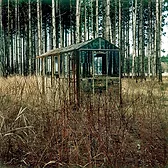
Rob Fischer, whose background is in sculpture, has been building domestic structures since college and often moves them from one remote rural landscape to another, exploring the seemingly opposing ideas of protection and adventure.
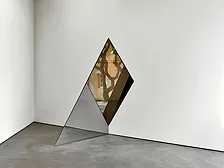
Sarah Oppenheimer studied painting at Yale, where she received her M.F.A. in 1999, but, over the last decade, architecture has been her canvas and medium. Oppenheimer manipulates existing architectural spaces, distorting our perception of an interior’s geometry and programmatic logic.
Snarkitecture, the name that artist Daniel Arsham and designer Alex Mustonen have given their nearly 10-year-old design collaboration, cuts two ways. On the one hand, it references the fictional creature in Lewis Carroll’s nonsense poem “The Hunting of the Snark”; on the other, it invokes the arch tone of Internet writing.
For decades, Dan Graham has created pavilions that play with viewers’ perceptions of space. His Hedge Two-Way Mirror Walkabout, 2014, a collaboration with the Swiss landscape architect Günther Vogt, is installed on the roof of New York’s Metropolitan Museum of Art through November 2.
 RSS
RSS