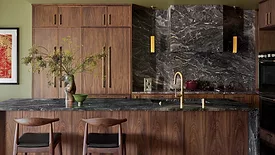
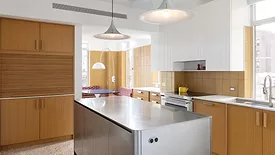
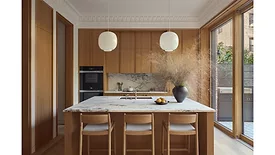
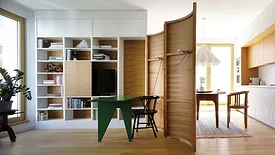
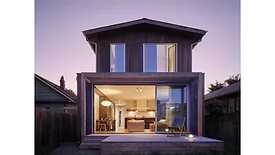
The redesign of the Noe Valley apartment emphasizes functionality with a material palette that draws on inspiration from Northern California's forests.
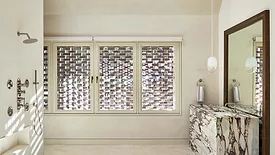
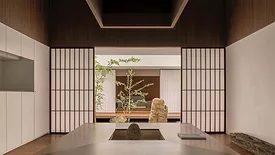
This year’s Kitchen & Bath Section profiles four cleverly transformed domestic spaces in locales ranging from Aspen and San Francisco to brownstone Brooklyn and the Upper West Side of Manhattan.
An Aspen dwelling's discrete guest quarters embrace a 'speakeasy' aesthetic, complete with a lounge whose secret-door bookcase leads to the kitchen pantry.
Inspired by critic Henry Urbach's concept of the ‘ante-closet,’ the organizing element of the renovated dwelling is a series of cabinets and closets with folding, swinging, and rotating enclosures.
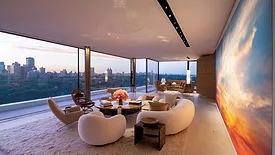
Creating expansive Central Park views and displaying the client's collection of postwar and contemporary art were the driving factors of this dramatic transformation.
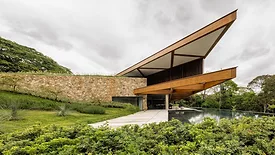
The design of this dramatic family home, embedded into a gentle slope on the edge of a lake in southeast Brazil, is organized around a triangular form, which unfolds into a glulam roof.
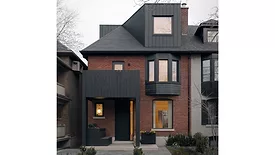
This renovation of a semi-detached Toronto house eschews traditional enclosed rooms for a more fluid arrangement of spaces while transforming an unfinished basement into a spa and lounge.
 RSS
RSS