Architectural Record
search
cart
facebook twitter linkedin youtube
  • Sign In
  • Subscribe
  • Sign Out
  • My Account
Architectural Record
  • NEWS
    • Latest News
    • Awards
    • Interviews
    • Obituaries
    • Podcasts
      • Design:Ed Podcast
      • Sponsored Podcasts
  • OPINION
    • Book Reviews / Excerpts
    • Exhibition Reviews
    • Forum
  • EXCLUSIVES
    • Videos
    • Design Vanguard
    • Top 300 Firms
    • Sponsored Content
    • Sponsored eBooks
    • From the Archives
  • CONTINUING ED
    • Editorial Continuing Ed
    • CE Center
    • CE Academies
  • PROJECTS
    • Buildings By Type
    • Reuse & Renovation
    • Museums & Arts Centers
    • Colleges & Universities
    • Multifamily Housing
    • Interiors
    • Lighting
    • Kitchen & Bath
  • HOUSES
    • Record Houses
    • House of the Month
    • Featured Houses
  • PRODUCTS
    • Products by Category
    • Record Products of the Year
    • Latest Products
  • EVENTS
    • Dates & Events
    • Record on the Road
    • Innovation Conference
    • Sustainability in Practice
    • Women In Architecture
    • Webinars
    • Ad Excellence Awards
    • Submit an Event
  • CONNECT
    • Ask RECORD AI
    • Newsletters
    • Contact
    • Advertise
    • Editorial Calendar
    • Store
    • Customer Service
  • SUBMIT
    • Submission Guidelines
    • RECORD Competitions
  • MAGAZINE
    • Subscribe
    • My Account
    • Digital Edition
    • Current Issue
    • Firm Pass
    • Historic Archive
Commentary & Criticism

How Medellín Got Its Groove Back
By Jimena Martignoni
How Medellín Got Its Groove Back

How Medellín Got Its Groove Back

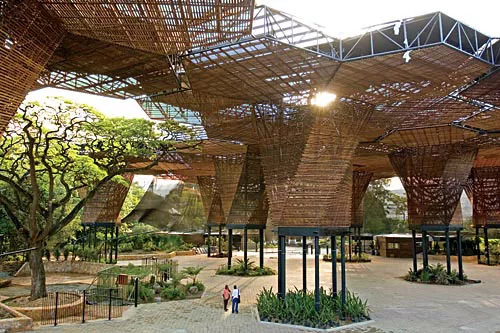
The Orquideorama shelters the Botanic Garden’s orchid collection and hosts open-air events.

Photo © Sergio Gomez
How Medellín Got Its Groove Back

How Medellín Got Its Groove Back

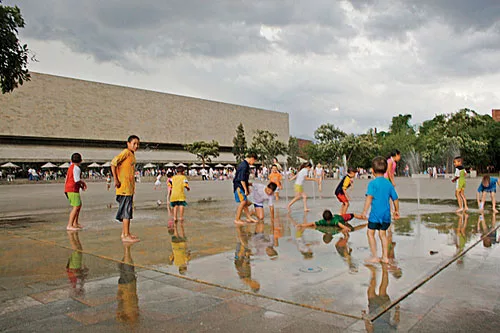
Children play at Felipe Uribe’s Parque de los Pies Descalzos (Barefoot Park).

Photo © Sergio Gomez
How Medellín Got Its Groove Back

How Medellín Got Its Groove Back

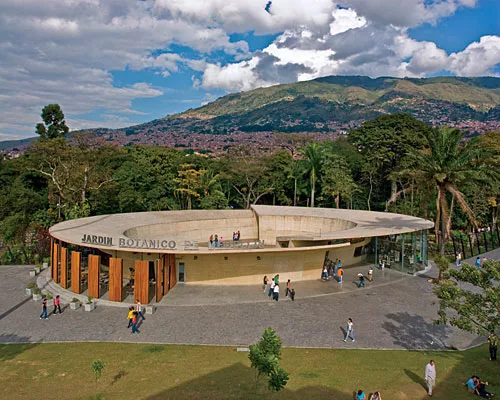
Lorenzo Castro’s entry to the Botanic Garden.

Photo © Sergio Gomez
How Medellín Got Its Groove Back

How Medellín Got Its Groove Back

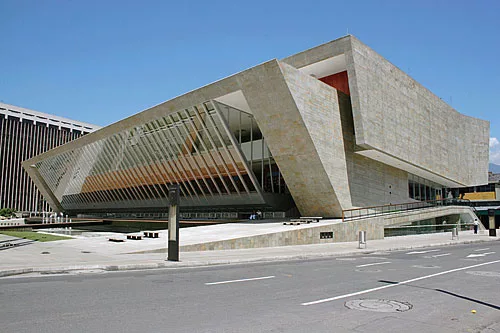
Uribe’s EPM Library.

Photo © Sergio Gomez
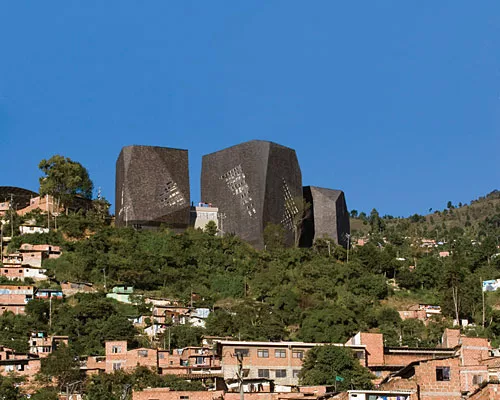
How Medellín Got Its Groove Back

How Medellín Got Its Groove Back

Giancarlo Mazzanti’s Biblioteca España.

Photo © Sergio Gomez
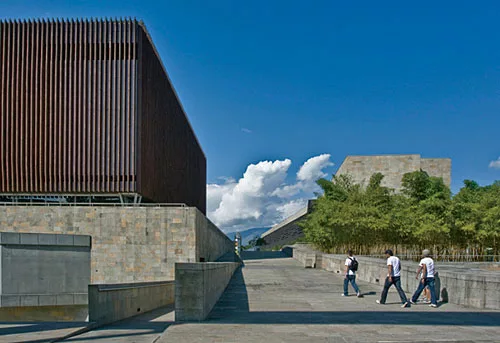
How Medellín Got Its Groove Back

How Medellín Got Its Groove Back

Mazzanti and Daniel Bonilla’s International Convention Center.

Photo © Sergio Gomez

How Medellín Got Its Groove Back
March 16, 2009
Medellín, the second-largest city in Colombia, has been known and labeled for decades as a place of violence and anarchy related to the drug-trafficking conflict. During the late 1990s, and especially since the turn of the millennium, it has been reinventing itself through controversial urban plans and experimental architecture. Proposed primarily by the local government and supported by a group of forward-thinking architects (many of them Colombians with young practices), these plans and projects have resulted in a profound process of change that serves as a relevant model for other cities.
 
Enacted in 1997, Law 388 compelled all Colombian city councils to draft a public-space renovation plan, called Plan de Ordenamiento Territorial (POT), and put it into action within a three-year term. The POT marked a turning point for decision makers, urban planners, and architects of every important Colombian city. Bogotá, the country’s capital — which also had a tarnished image and had undergone decades of unplanned growth — set an example with its successful urban renovation plan and consequent social transformation. In this city, which has a population of more than 7 million and an area of 612 square miles, change has been affected greatly through infrastructure and reconnection with the surrounding natural environment. In Medellín, which has less than half that population and an area of just 147 square miles, change was envisioned as stemming from meaningful architectural projects that hopefully would trigger other work, eventually resulting in a resuscitated urban social dynamic. (This initiative marked the city’s second notable planning effort of the century. During the 1950s, the Medellín Master Plan, spearheaded by architects Paul Lester Wiener and José Luis Sert, was largely abandoned due to the repercussions of political and financial instability.)
 
But the differences between Bogotá and Medellín go beyond scale and population. Historically, Bogotá has been developed under traditional canons of architecture and construction techniques, while Medellín, known as the country’s industrial capital, has been characterized by innovation and change. In fact, Medellín is the only Colombian city served by a modern urban rail system. The Metro, which was instituted in 1995, connects with an elevated gondola system, or Metrocable, which was added in 2004 to provide access to one of the city’s most impoverished and previously inaccessible hillside communities. In the nine years between the construction of the Metro and the Metrocable, Medellín began to implement a series of architectural and urban projects that have helped to establish and solidify its new, positive image.
 
Mayor Sergio Fajardo, who was elected in 2003 and reelected in 2005, has been credited with assembling professionals and academics who, together, have defined the general basis for the transformation of not only this city but the entire region of the Aburrá Valley. In 2006, following the completion of a number of successful architectural and urban projects in Medellín, the leading regional administrative entity, Area Metropolitana, sanctioned the Metropolitan Directives of Territorial Planning, which seeks to qualify and redefine guidelines for the preservation and/or construction of natural features and public and private structures and help blur, through democratized spaces, the strict lines that traditionally have been drawn between the classes. With these objectives in mind, the consortium has helped initiate policies and projects that range from new waterfronts and plazas to social programs, such as public libraries and schools, strategically placed in degraded neighborhoods.

Share This Story

Looking for a reprint of this article?
From high-res PDFs to custom plaques, order your copy today!
Post a comment to this article

Report Abusive Comment

Subscription Center
  • Create an Account
  • Start a Subscription
  • Manage My Account
  • Sign Up for Newsletters
  • Visit Customer Service
  • Update Preferences

More Videos

Sponsored Content

Sponsored Content is a special paid section where industry companies provide high quality, objective, non-commercial content around topics of interest to the Architectural Record audience. All Sponsored Content is supplied by the advertising company and any opinions expressed in this article are those of the author and not necessarily reflect the views of Architectural Record or its parent company, BNP Media. Interested in participating in our Sponsored Content section? Contact your local rep!

close
  • TAMLYN XtremeTrim Exterior Trim
    Sponsored byTamlyn

    Designing Cleaner Panel Facades: Why Exterior Trim Details Matter

  • Building with Vapor Barriers
    Sponsored byReef Industries, Inc.

    Vapor Barriers Help Control Moisture in Tighter Building Designs

  • Duct Interior with Prodeq System
    Sponsored byHenry, a Carlisle Company

    Designing Resilient Water Containment Systems

DESIGN:ED Podcast
Listen to Architectural Record’s DESIGN:ED Podcast

Events

June 10, 2026

Rethinking Stormwater – The Power of Porous Paving

Credits: 1 AIA LU/HSW; 1 AIBD P-CE; 0.1 ICC CEU

Learn how porous paving systems support stormwater management, reduce heat island effects, and enhance sustainable site design performance.

June 11, 2026

Very Early Warning Fire Detection for Mission-Critical Facilities

Credits: 1 AIA LU/HSW; 1 AIBD P-CE; 0.1 ICC CEU

Examine advanced fire detection strategies that support uptime and enhance safety in data centers and other mission-critical facilities.

View All Submit An Event

Products

2026 Architect's Square Foot Costbook

2026 Architect's Square Foot Costbook

See More Products

Popular Stories

Coronado Bridge

The Architect’s Guide to San Diego

Practice Matters illustration

What’s in a (Firm’s) Name? Thinking About Succession and Legacy

Practice Matters illustration

By the Numbers: Counting America's Architects

Inward House

Inward House by VeeV Design Studio

Riverdale House by Studio Lau

Riverdale House by Studio Lau

Broader Sustainability of CMU - Free Webinar - May 21, 2026

Related Articles

  • How Medell'n Got Its Groove Back

    See More
  • Planning How Your Firm Tackles Its Next Job Is the Key to Staying Profitable and Competitive

    See More
  • Vanishing New York: How a Great City Lost Its Soul

    Vanishing New York: How a Great City Lost Its Soul

    See More

Related Products

See More Products
  • Architectural Record - June 2025

    Architectural Record June 2025 Issue

See More Products
×

The latest news and information

#1 Source for Architectural Design, News and Products

SUBSCRIBE
  • RESOURCES
    • Advertise
    • Contact Us
    • Submit
    • Store
  • ACCOUNT CENTER
    • Create an Account
    • Start a Subscription
    • Manage My Account
    • Sign Up for Newsletters
    • Visit Customer Service
    • Update Preferences
  • PRIVACY
    • PRIVACY POLICY
    • TERMS & CONDITIONS
    • DO NOT SELL MY PERSONAL INFORMATION
    • PRIVACY REQUEST
    • ACCESSIBILITY
  • SERVICES
    • Marketing Services
    • Reprints
    • Market Research
    • List Rental
    • Survey/Respondent Access
  • STAY CONNECTED
    • Linkedin
    • Facebook
    • Instagram
    • YouTube
    • X (Twitter)

Copyright ©2026. All Rights Reserved BNP Media, Inc. and BNP Media II, LLC.

Design, CMS, Hosting & Web Development :: ePublishing