Connect the dots: Dubai, labor, urbanism, sustainability, and the education of architects
Earlier this year, I was in the Emirates to give a lecture and was invited to visit the school of architecture where one of my hosts taught. Segregated by gender, the place was a Foucault fantasy made concrete. On one side of the building lay the studios and classrooms for women students and on the other — in mirror image — the rooms for the men. Between them were faculty offices, all of which had two doors, one to each side. The dean — natty in Armani — explained to me (as if the whole thing made sense) that the office doors were locked on the women’s side on Mondays and those on the men’s opened so male students could enter for meetings. On Tuesdays, the configuration was reversed. When my colleague proposed an academic exchange, I demurred, unwilling to contemplate the discriminatory logistics.
In June — the 40th anniversary of my college graduation — I thought back to those halcyon days and remembered that one of the reasons I chose the college I did was for its “co-education.” As a progressive-minded teen, I thought it was absurd that places like Yale and Princeton were simply for boys: I couldn’t imagine living in such a weird environment for four years, marinating in a pool of upper-crust testosterone. This recollection arrested my bien pensant liberal bile at the Gulf school’s setup, reminding me that it wasn’t long ago that our most prestigious universities were predicated on an even more extreme form of gender separation. A little of my self-righteousness ebbed, not at the thing itself but at the idea that such an arrangement was cast in stone and intractable. Indeed, we use such notions to demonize the Muslim other, as unsusceptible to change, forever fixed in its ways.
The bubble has burst
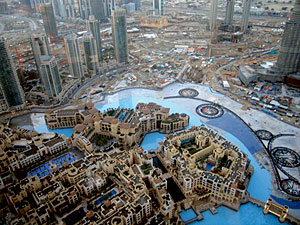
The Gulf states offer profligate lessons in uneven rates of modernization and change and serve as a museum of the weird cultural forms that come from their extreme hybridity: The Guggenheim and the mosque; the megamall and the burka. You know the drill. Dubai is, of course, the locus classicus of this over-the-top style, and my recent visit was both jaw-dropping and depressing. The bubble has burst in a big way and craning towers — including a fairly fabulous-looking rendition of the world’s tallest — stand incomplete and empty, blowing zillions of BTUs to keep the square miles of carpet cool to off-gas undisturbed. And yet, down the road in Abu Dhabi, Masdar city rises, as lavish an experiment in urban sustainability as any on earth.
While the planetary implications of the region’s potlatch of (mostly) antisustainable practices are clear, the fallout from the crash has far sadder implications. The economies of the Gulf are enabled by imported labor, and most of these states have populations that are at least 80 percent foreign. And when jobs disappear, so must their holders. We’ve all read the tales about the laid-off ex-pats abandoning their leveraged Mercedes in the airport parking lot as they split for home. The story making the rounds during my visit was about the Bangladeshis and other South Asians who form the backbone of the construction industry and who work in conditions of near servitude. Made redundant in massive numbers, many are too humiliated and desperate to let their home villages — dependent on their regular remittances to survive — know that they are unemployed and are too fearful to reappear empty-handed. While it may be an urban legend, the tale being told was about workers standing by the highway, waiting for the approach of a fast and expensive car, and throwing themselves under the wheels in the hope that some of the insurance might find its way back to their families.
Intimate links
I repeat this story not to belabor the cruelties of the Gulf’s capito-feudal system but to evoke its ragingly complex dynamism, the intimate links so visible between culture, environment, development, and human success. The segregated architecture school in the midst of the most fabulous display on the planet of what currently passes for architectural “invention,” and the downside miseries this volatility engenders, suggest more fundamental issues for the condition of architecture, how we conceive of it, and how we convey its values. This is not a random collection of observations raised to clarity by the designated weirdness of this particular place, but a summary of the expanded site of architecture’s production: education, finance, construction, culture, place, sustainability, history, politics.
We have not moved swiftly enough to embody such consciousness and knowledge in architectural education, and Dubai stands as a particularly clear object lesson in our own confusion: This is an environment designed by the world’s best and brightest, and for many, a paradigm of global inevitableness. The fetish for form that has characterized the profession and the schools for the past few decades has slighted much more urgent matters, and it will come as no surprise to regular readers of this column that issues of the environment and social justice (linked inextricably) are those I feel must foreground both the ideology and the pedagogy of contemporary architecture. Just as gender-segregated education must be interrogated, so the received organizational formats of architectural education need to be questioned and revised. Having taught in dozens of schools and visited hundreds, I remain struck by the antique model of the design disciplines that still informs education: variations on the trivium of architecture, planning, and landscape. These ossified rigidities seem increasingly incapable of coming to grips with the real state of the planet.
Looking for a reprint of this article?
From high-res PDFs to custom plaques, order your copy today!