Architectural Record
search
cart
facebook twitter linkedin youtube
  • Sign In
  • Subscribe
  • Sign Out
  • My Account
Architectural Record
  • NEWS
    • Latest News
    • Awards
    • Interviews
    • Obituaries
    • Podcasts
      • Design:Ed Podcast
      • Sponsored Podcasts
  • OPINION
    • Book Reviews / Excerpts
    • Exhibition Reviews
    • Forum
  • EXCLUSIVES
    • Videos
    • Design Vanguard
    • Top 300 Firms
    • Sponsored Content
    • Sponsored eBooks
    • From the Archives
  • CONTINUING ED
    • Editorial Continuing Ed
    • CE Center
    • CE Academies
  • PROJECTS
    • Buildings By Type
    • Reuse & Renovation
    • Museums & Arts Centers
    • Colleges & Universities
    • Multifamily Housing
    • Interiors
    • Lighting
    • Kitchen & Bath
  • HOUSES
    • Record Houses
    • House of the Month
    • Featured Houses
  • PRODUCTS
    • Products by Category
    • Record Products of the Year
    • Latest Products
  • EVENTS
    • Dates & Events
    • Record on the Road
    • Innovation Conference
    • Sustainability in Practice
    • Women In Architecture
    • Webinars
    • Ad Excellence Awards
    • Submit an Event
  • CONNECT
    • Ask RECORD AI
    • Newsletters
    • Contact
    • Advertise
    • Editorial Calendar
    • Store
    • Customer Service
  • SUBMIT
    • Submission Guidelines
    • RECORD Competitions
  • MAGAZINE
    • Subscribe
    • My Account
    • Digital Edition
    • Current Issue
    • Firm Pass
    • Historic Archive
Residential ArchitectureRecord Houses

Tower House

A Stairway to the Treetops: A chameleonlike house'which changes with the seasons and throughout the day'provides a perch for total immersion in the surrounding woods.

By Joann Gonchar, FAIA
The Tower House  resembles the offspring of a Modernist skyscraper and a tree house.
Tower House
Gluck+
Ulster County, New York
The Tower House resembles the offspring of a Modernist skyscraper and a tree house.
Photo © Paul Warchol
The entirely glass-clad structure comprises a four-story tower containing a stair, bedrooms, bathrooms, and a kitchen, and a primary living space cantilevered 30 feet off the ground.
Tower House
Gluck+
Ulster County, New York
The entirely glass-clad structure comprises a four-story tower containing a stair, bedrooms, bathrooms, and a kitchen, and a primary living space cantilevered 30 feet off the ground.
Photo © Paul Warchol
Although the kitchen is only about 175 square feet, it is open at each of its corners to the main living area or the stair, with its yellow risers and treads. Since the kitchen is part of the thermal
Tower House
Gluck+
Ulster County, New York
Although the kitchen is only about 175 square feet, it is open at each of its corners to the main living area or the stair, with its yellow risers and treads. Since the kitchen is part of the thermal core ' the only portion of the building heated during cold periods when the house is unoccupied ' it includes insulated pocket doors that the owners close before leaving at the end of winter weekends.
Photo © Paul Warchol
The south-facing stair plays an important role in keeping the house comfortable during the summer. The sun heats the air within its glass enclosure, creating a pressure differential that draws outdoor
Tower House
Gluck+
Ulster County, New York
The south-facing stair plays an important role in keeping the house comfortable during the summer. The sun heats the air within its glass enclosure, creating a pressure differential that draws outdoor air into the house through gill-like casement and awning windows. The air is vented through a hatch at the top of the stair.
Photo © Paul Warchol
Through its ribbonlike windows, which include both fixed and operable insulated units, the main living space offers views of the Tower House's immediate environs and of the Catskill Mountains.
Tower House
Gluck+
Ulster County, New York
Through its ribbonlike windows, which include both fixed and operable insulated units, the main living space offers views of the Tower House's immediate environs and of the Catskill Mountains.
Photo © Paul Warchol
In order to enhance the sensation that the main living area is a volume lifted into the trees, the wood floor and gypsum-board walls have been painted white, except for the floor in the part of the sp
Tower House
Gluck+
Ulster County, New York
In order to enhance the sensation that the main living area is a volume lifted into the trees, the wood floor and gypsum-board walls have been painted white, except for the floor in the part of the space directly below the roof deck, which is light gray.
Photo © Paul Warchol
Tower House
Tower House
Gluck+
Ulster County, New York
Image courtesy Gluck+
Tower House
Tower House
Gluck+
Ulster County, New York
Image courtesy Gluck+
Tower House
Tower House
Gluck+
Ulster County, New York
Image courtesy Gluck+
Tower House
Tower House
Gluck+
Ulster County, New York
Image courtesy Gluck+
Tower House
Tower House
Gluck+
Ulster County, New York
Image courtesy Gluck+
The Tower House  resembles the offspring of a Modernist skyscraper and a tree house.
The entirely glass-clad structure comprises a four-story tower containing a stair, bedrooms, bathrooms, and a kitchen, and a primary living space cantilevered 30 feet off the ground.
Although the kitchen is only about 175 square feet, it is open at each of its corners to the main living area or the stair, with its yellow risers and treads. Since the kitchen is part of the thermal
The south-facing stair plays an important role in keeping the house comfortable during the summer. The sun heats the air within its glass enclosure, creating a pressure differential that draws outdoor
Through its ribbonlike windows, which include both fixed and operable insulated units, the main living space offers views of the Tower House's immediate environs and of the Catskill Mountains.
In order to enhance the sensation that the main living area is a volume lifted into the trees, the wood floor and gypsum-board walls have been painted white, except for the floor in the part of the sp
Tower House
Tower House
Tower House
Tower House
Tower House
April 16, 2013

Architects & Firms

Gluck+

Ulster County, New York

Architecture need not always be serious. And nowhere is lightheartedness more fitting than in a vacation house. One such playful example is the Tower House'a 2,500-square-foot structure on a sloping, wooded site in Ulster County, New York, about 100 miles north of Manhattan. Designed by New York City'based Gluck+ as the mountain retreat for one of the firm's principals, Thomas Gluck; his wife, Anne Langston; and their two children, the house resembles a cross between a Modernist skyscraper and a tree house. It is completely glass-clad and has three bedrooms and adjoining baths stacked one on top of the other to support a living and dining room cantilevered 30 feet from the ground. A switchback stair, with bright-yellow treads and risers, connects all four levels and leads to a rooftop deck. The goal, says Gluck, was to create an aerie within the trees and take advantage of views of nearby Catskill Park, a vast state forest preserve.

Completed last summer, the house is the most recent structure built on the 19-acre parcel purchased more than 40 years ago by Peter Gluck, Thomas's father and firm founder and principal (the practice was known until recently as Peter Gluck and Partners). The site contains an almost 200-year-old farmhouse and two other buildings the office designed'a guesthouse completed in 1995 (RECORD, April 1996) and a study space built in 2003 for the senior Gluck's wife, Carol, a Japan scholar.

The Tower House sits on a small plateau above the rest of the property and relies on a combination of wood platform construction and steel. Covering the armature is a skin that includes olive-green fritted glass, as part of a rainscreen cladding system, and insulated vision glass. This slick envelope simultaneously emphasizes the structure as a man-made object and acts as camouflage, reflecting the house's environs and altering its appearance over the course of a day, with the passage of seasons, and in changing atmospheric conditions. 'We were trying to make a building about the experience of being in the woods without having the materials be natural,' explains Thomas Gluck.

The philosophy extends to the interior, where the selection of colors and finishes amplifies the feeling of a Platonic, rather than rustic, nest among the branches, especially in the 20-foot-wide by 40-foot-long main living area, with its ribbons of north- and south-facing windows. Here the wood floors are painted white, as are the gypsum-board walls and ceilings. These planar surfaces enclose what Gluck describes as 'a pure volume of space lifted in the air.'

A tower in the woods might seem highly impractical, but the family is accustomed to hiking up many flights of stairs several times each day at their city home'a five-story walkup apartment in Manhattan's Harlem neighborhood. Nevertheless, they have planned for a time when climbing the Tower House steps will be too arduous: concealed behind the drywall at each stair landing is a framed opening that should make it easier to add an elevator. Gluck envisions it as a freestanding tower connected to the house with bridges.

Despite the effort involved in transporting groceries from the car to the kitchen, the house's configuration offers operational benefits, particularly in regard to energy conservation. According to its designers, the building uses only about a third of the energy consumed by a typical house of the same size in a similar climate. It has no air-conditioning but remains comfortable throughout the summer except in extreme heat, says Gluck. Tolerable conditions are maintained by exploiting the stack effect: the sun heats the air in the south-facing stair enclosure, creating a pressure differential that draws outdoor air into the house through gill-like casement and awning windows and then vents it through a roof hatch. At night, when there is no sun to induce this phenomenon, a fan at the top of the stairs assists ventilation.

The most significant savings, however, are realized by making it unnecessary to heat the entire house during the winter periods when the building is unoccupied. To prevent water pipes from freezing, a highly insulated 14-foot-by-13-foot core encloses the baths and the kitchen and includes substantial pocket doors. Before leaving at the end of a winter weekend, the owners slide the doors closed, set the temperature for the core to 50 degrees, and turn off the heat everywhere else.

This kind of careful consideration of energy use demonstrates that the Tower House is more than a mere folly'plenty of substance lies behind its whimsical exterior.

CLOSE-UP: GLAZED RAINSCREEN FACADE

Photo courtesy Gluck+

The Tower House has an all-glass envelope that reflects the trees and the sky. It includes spandrel panels with an olive-green frit intended to match the hue of lichen growing on nearby branches. The panels, part of a rainscreen cladding system, are structurally glazed with silicone to aluminum Ts and angles. These extrusions are barely visible, as are the frames of operable windows inserted within the skin. The goal, according to the designers, was to enhance the building’s geometry and maintain the continuity of reflections between panels.

Completion Date: June 2012

Size: 2,545 square feet

Total construction cost: withheld

Architect:
Gluck+ (formerly Peter Gluck and Partners)
423 West 127th Street, 6th Floor
New York, NY 10027
Tel 212 690-4950
Fax 212 690-4961

People

Owner: Thomas Gluck and Anne Langston

Architect
Gluck+ (formerly Peter Gluck and Partners)
423 West 127th Street, 6th Floor
New York, NY 10027
Tel 212 690-4950
Fax 212 690-4961

Personnel in architect's firm who should receive special credit:
A.B. Moburg-Davis, Peter L. Gluck, Thomas Gluck, David Hecht, Marisa Kolodny, project team (in alphabetical order)

Architect of record: Peter L. Gluck (registered architect)

Interior designer:
Insight Environmental Design
1780 Green Bay Road, Suite 205
Highland Park, IL 60035
Tel 847 432-4606

Engineer(s):
Structural:
Robert Silman Associates P.C.
88 University Pl
New York, NY 10003
212 620-7970

MEP:
IBC Engineering Services Inc.
N8 W22195 Johnson Dr, Suite 180
Waukesha, WI 53186
(262) 549-1190

Environmental:
IBC Engineering Services Inc.
N8 W22195 Johnson Dr, Suite 180
Waukesha, WI 53186
262 549-1190

Consultant(s):
Landscape:
Hoerr Schaudt Landscape Architects
850 W Jackson Blvd
Chicago, IL 60607
312 492-6501

Lighting:
Lux Populi
Plaza San Jacinto 8 int F
San Angel, CP 01000, Mexico D.F.
1 718 521-4956

Other:
Façade Consultant:
Forst Consulting Co., Inc.
211 E 43rd St, Suite 1701, New York, NY 10017
212 286-0900

General contractor:
Gluck+ Construction
423 West 127th Street, 6th Floor
New York, NY 10027
Tel 212 690-4950
Fax 212 690-4961

Photographer(s):
Paul Warchol
Paul Warchol Photography Inc.
224 Center Street, 5th Floor
New York, NY 10013
Tel 212 431-3461
Fax 212 274-1953

CAD system, project management, or other software used: AutoCAD, Sketchup, Rhino, Microsoft Project


Products

Structural system
Composite (structural steel/wood with conventional platform wood framing)

Exterior cladding
Curtain wall: custom steel curtain wall 4-way structurally glazed

Cladding: Custom aluminum rainscreen 4-way structurally glazed with 1/4” spandrel glass, with custom color.

Glass: by Oldcastle BuildingEnvelope.

Moisture barrier: Vaporshield

Roofing
Built-up roofing: EPDM Roofing

Windows
Metal frame: Operable windows in curtain wall - Arcadia zero sightline windows

Hardware
Locksets: Omnia Door Hardware

Interior finishes
Cabinetwork and custom woodwork: 
Custom millwork by Ben Mack (custom clear lacquer over apple ply)

Paints and stains: Benjamin Moore Paints

Furnishings
Tables: Custom dining table by Larry Hayden

Add any additional building components or special equipment that made a significant contribution to this project:
Builder: Paul Bennett Building Systems

 
KEYWORDS: New York

Share This Story

Looking for a reprint of this article?
From high-res PDFs to custom plaques, order your copy today!

Joann gonchar

Joann Gonchar, FAIA, LEED AP, is deputy editor at Architectural Record. She joined RECORD in 2006, after working for eight years at its sister publication, Engineering News-Record. Before starting her career as a journalist, Joann worked for several architecture firms and spent three years in Kobe, Japan, with the firm Team Zoo, Atelier Iruka. She earned a Master of Architecture degree from the University of Pennsylvania and a Bachelor of Arts from Brown University. She is licensed to practice architecture in New York State.

Post a comment to this article

Report Abusive Comment

Subscription Center
  • Create an Account
  • Start a Subscription
  • Manage My Account
  • Sign Up for Newsletters
  • Visit Customer Service
  • Update Preferences

More Videos

Sponsored Content

Sponsored Content is a special paid section where industry companies provide high quality, objective, non-commercial content around topics of interest to the Architectural Record audience. All Sponsored Content is supplied by the advertising company and any opinions expressed in this article are those of the author and not necessarily reflect the views of Architectural Record or its parent company, BNP Media. Interested in participating in our Sponsored Content section? Contact your local rep!

close
  • TAMLYN XtremeTrim Exterior Trim
    Sponsored byTamlyn

    Designing Cleaner Panel Facades: Why Exterior Trim Details Matter

  • Building with Vapor Barriers
    Sponsored byReef Industries, Inc.

    Vapor Barriers Help Control Moisture in Tighter Building Designs

  • Duct Interior with Prodeq System
    Sponsored byHenry, a Carlisle Company

    Designing Resilient Water Containment Systems

DESIGN:ED Podcast
Listen to Architectural Record’s DESIGN:ED Podcast

Events

June 16, 2026

Focus on the Façade: Exploring Steel, Timber & Fire-Rated Curtain Walls and Channel Glass Systems

Credits: 1 AIA LU/HSW; 1 AIBD P-CE; 0.1 ICC CEU

Explore modern façade and glazing systems that enhance daylighting, fire safety, and thermal performance while expanding architectural design possibilities.

June 18, 2026

Rebooting the Aging Office Building

Credits: 1 AIA LU/HSW; 1 AIBD P-CE; 0.1 ICC CEU; 1 PDH

Explore façade retrofit strategies and award-winning design concepts that can transform aging office buildings into healthier, higher-performing workplaces for today’s hybrid workforce.

View All Submit An Event

Products

2026 Architect's Square Foot Costbook

2026 Architect's Square Foot Costbook

See More Products

Popular Stories

Coronado Bridge

The Architect’s Guide to San Diego

SanDiegoAirport

Top 300 Architecture Firms of 2026

Practice Matters illustration

By the Numbers: Counting America's Architects

Crane Cove, ONO

Design Vanguard 2026 Winners

House on a Hill

Design Vanguard 2026: Forma

Focus on the Facade - Free Webinar - June 16, 2026

Related Articles

  • Bay-Window-Tower-House-06.jpg

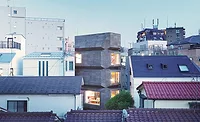
    Bay Window Tower House by Takaaki Fuji + Yuko Fuji Architecture

    See More
  • Tower House

    See More
  • 419 Tower Drive - House of the Month -

    See More

Related Products

See More Products
  • biogenic.jpg

    Manual of Biogenic House Sections

  • iconic house.jpg

    The Iconic House

See More Products
×

The latest news and information

#1 Source for Architectural Design, News and Products

SUBSCRIBE
  • RESOURCES
    • Advertise
    • Contact Us
    • Submit
    • Store
  • ACCOUNT CENTER
    • Create an Account
    • Start a Subscription
    • Manage My Account
    • Sign Up for Newsletters
    • Visit Customer Service
    • Update Preferences
  • PRIVACY
    • PRIVACY POLICY
    • TERMS & CONDITIONS
    • DO NOT SELL MY PERSONAL INFORMATION
    • PRIVACY REQUEST
    • ACCESSIBILITY
  • SERVICES
    • Marketing Services
    • Reprints
    • Market Research
    • List Rental
    • Survey/Respondent Access
  • STAY CONNECTED
    • Linkedin
    • Facebook
    • Instagram
    • YouTube
    • X (Twitter)

Copyright ©2026. All Rights Reserved BNP Media, Inc. and BNP Media II, LLC.

Design, CMS, Hosting & Web Development :: ePublishing