Etsy Headquarters by Gensler
Brooklyn, New York
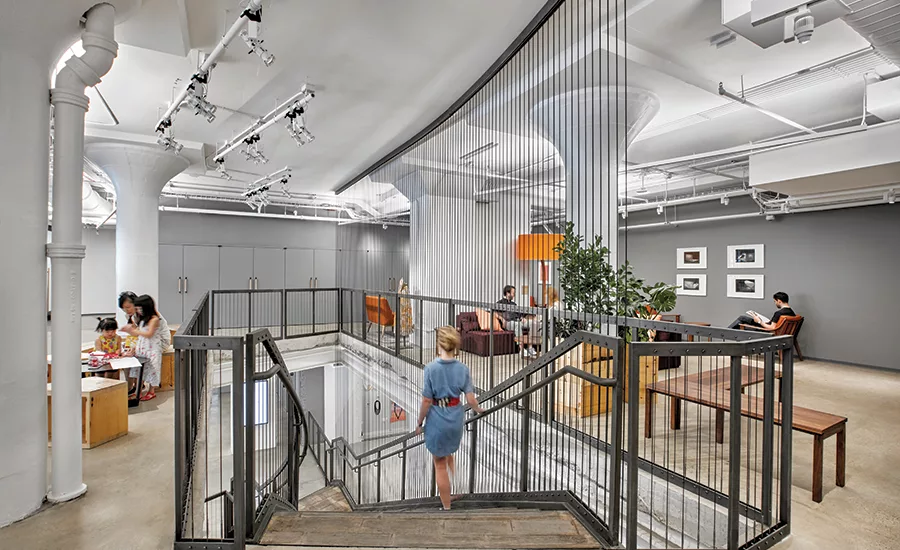
A dramatic steel stair connects Etsy’s entrance lobby with a second-floor reception and lounge space.
Photo © Garrett Rowland
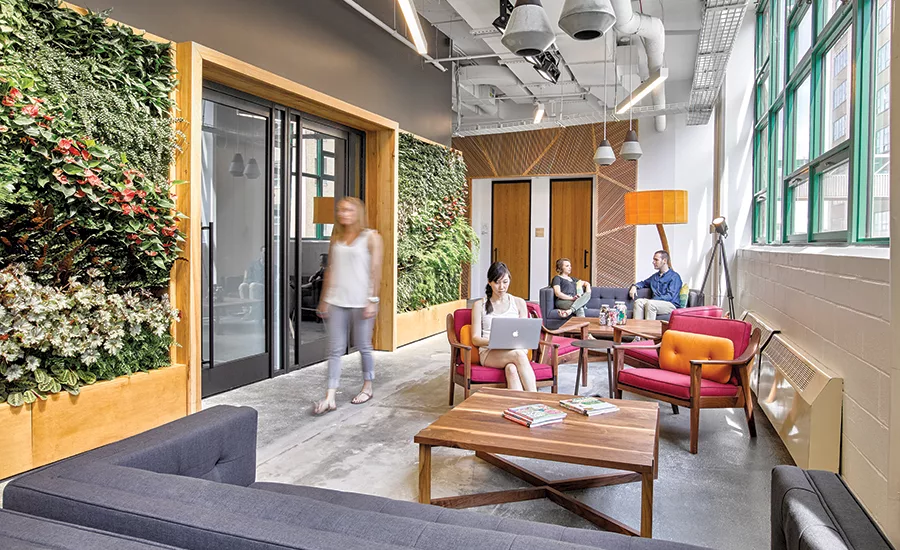
The headquarters includes numerous custom pieces by local makers, such as cast-concrete and walnut lighting pendants by IN.SEK and Lukas Lighting.
Photo © Garrett Rowland
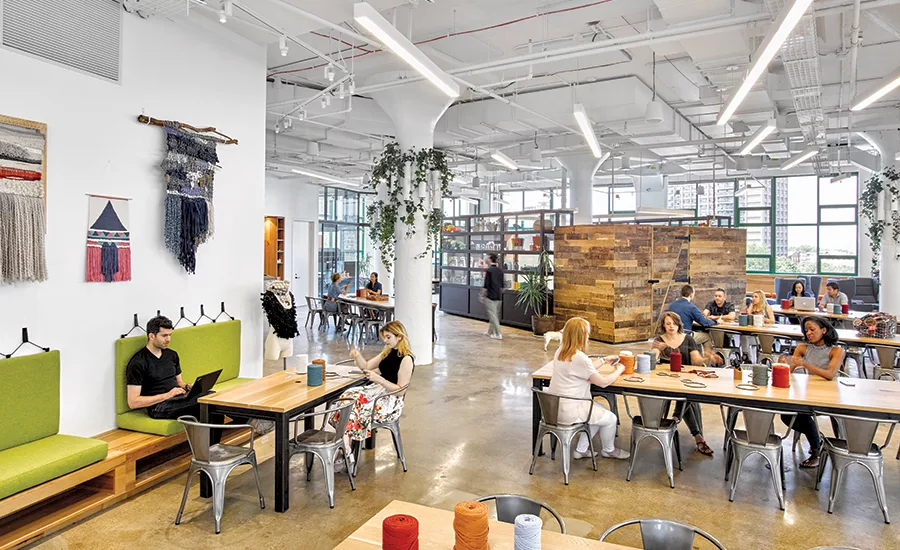
Etsy hosts craft nights and workshops in its “lab”, which features tables sized for large, collaborative projects.
Photo © Garrett Rowland
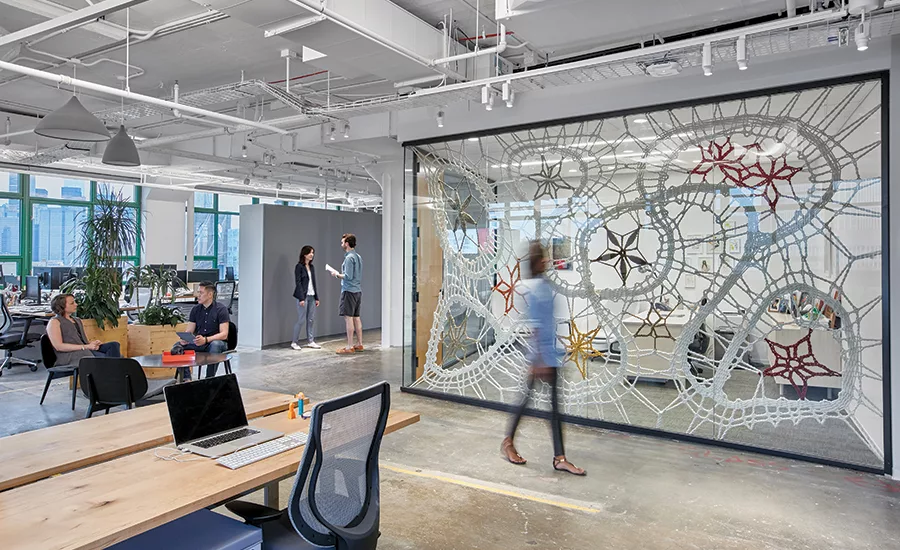
Brooklyn designer and fabricator First Third created the office’s workstations.
Photo © Garrett Rowland
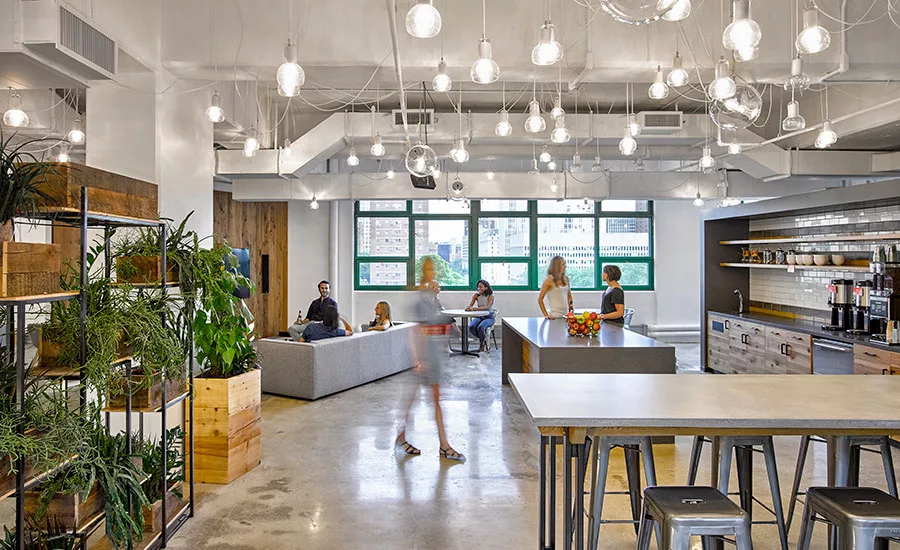
Every floor has a kitchen, where employees are encouraged to recycle and compost.
Photo © Garrett Rowland
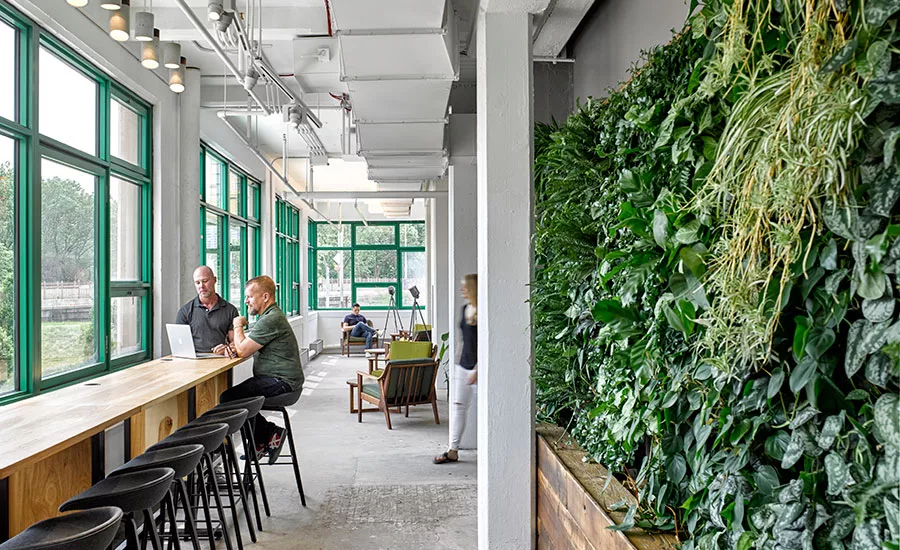
A variety of environments, including tall tables with stools situated near the old manufacturing building’s generously sized windows, allow employees to work where and how they please.
Photo © Garrett Rowland
Architects & Firms
Since its founding in 2005, Etsy has become the go-to online marketplace for handmade goods, with 1.6 million active sellers and 35 million items for sale, from food to furniture. When the company outgrew its headquarters in Brooklyn’s DUMBO neighborhood—having gone from 50 employees to 500—it wanted to design its own space. But there was no question about staying nearby. “We’ve always been a Brooklyn-based company,” says Etsy’s capital projects manager, Justine Chibuk. “Staying here is part of our brand identity.”
In May, Etsy moved into its new nine-floor, 200,000-square-foot headquarters around the corner from its old home. A handsome curved steel stair greets visitors and employees, leading them to the second-floor lobby. The weathered Alaskan Yellow Cedar stair treads come from decades-old water towers that used to sit atop the roof of the building—part of a complex of reinforced-concrete factories built in the 1920s by Squibb Pharmaceuticals. In addition to creating the welcoming entry, Etsy’s architect, Gensler, placed a large dining room on the second floor, clustered programmers on floors three through five, and devoted the top floors to educational and employee-wellness programs.
When the architects first toured the warehouse-like building, “We were amazed by some of the fabulous things around the site,” says Gensler principal Amanda Carroll. In addition to the water towers, they encountered artifacts such as heavy, sliding steel doors that once closed off bridges connecting the complex. The landlord had planned to discard these leftovers, but Carroll recalls saying, “No, no, no! Please give us that. Your trash is our treasure.” (Gensler ultimately repurposed the doors for a conference room and as art objects throughout the space.)
Salvaging these materials made perfect sense for Etsy because of its dedication to sustainability and its employees’ hackerlike predilection for reuse and reclamation. So, although it wasn’t originally part of the project, the architects suggested pursuing the Living Building Challenge (LBC). They recognized that the stringent certification system—which bans the use of harmful materials, requires management of construction waste, and net-positive energy and water, among other directives—aligned well with the client’s culture, says David Briefel, Gensler’s director of sustainable design. Etsy is going after partial certification, aiming for LBC’s Materials, Site, and Beauty and Inspiration “petals,” or categories. It is one of the largest projects seeking petal certification.
In order to satisfy LBC’s tough requirements for materials, the team scrutinized more than 1,500 products, everything from intumescent paint to insulation, millwork, and furniture. They needed to make sure that the items didn’t contain ingredients on the Red List—a group of chemicals commonly found in building products but considered harmful to animals, humans, and the environment.
In order to convince manufacturers and makers to reveal their ingredients and adapt their products, Gensler and Etsy developed a two-pronged approach. For makers, they hosted workshops that explained LBC and why it was important, and they suggested alternative materials. The result was 30 maker-made products used throughout the headquarters that are free of Red Listed substances. For commercial manufacturers, the project team hunted for the right stakeholders within each company—a time-consuming endeavor. But once the appropriate contacts were identified, many manufacturers were open to modifying their products. One such manufacturer was Lukas Lighting. It swapped out the PVC in its fixtures for polypropylene. Maharam Kvadrat reengineered its wool wall coverings to eliminate a stain-resistant finish that contained Red List chemicals.
Gensler also partnered with longtime Etsy neighbors. Brooklyn-based First Third designed and built all the workstations, while IN.SEK created reclaimed-wood planters and walnut-and-concrete pendants. Because LBC dictated that all the wood in the project needed to be salvaged or Forest Stewardship Council–certified, Etsy helped some of its makers, including IN.SEK and First Third, to obtain group certification, reducing the cost and work necessary to achieve the designation.
Looking for quick answers on architecture and design topics?
Try Ask RECORD, our new smart AI search tool.
Ask RECORD →
Gensler aimed to make each floor a “fully balanced ecosystem,” says Carroll, with places for nourishment, stress relief, and, yes, work. Every floor has a kitchen, where employees are encouraged to recycle and compost. Quiet, plant-filled nooks with upholstered furniture can be found around many corners, and a variety of other environments—from standing tables to focus and meeting rooms—encourage people to work where and how they please.
On the roof deck, a solar array satisfies about 1 percent of the headquarters’ energy demand. It’s a gesture, says Briefel, but it is emblematic of Etsy’s long-term goal of creating a carbon-neutral marketplace. Etsy plans to achieve this with Etsy Solar, an initiative to help sellers install solar panels on their roofs to offset the company’s carbon emissions, which are mostly accrued by shipping goods to buyers.
Not only is the headquarters a benchmark project for Gensler, proving that it can go after LBC certification on a grand scale, but it is also a teaching tool. “A lot of these moves are great ways to point out how sustainability functions,” says Carroll. “There’s a ripple effect. It encourages better choices.”
Looking for a reprint of this article?
From high-res PDFs to custom plaques, order your copy today!