Architectural Record
search
cart
facebook twitter linkedin youtube
  • Sign In
  • Subscribe
  • Sign Out
  • My Account
Architectural Record
  • NEWS
    • Latest News
    • Awards
    • Interviews
    • Obituaries
    • Podcasts
      • Design:Ed Podcast
      • Sponsored Podcasts
  • OPINION
    • Book Reviews / Excerpts
    • Exhibition Reviews
    • Forum
  • EXCLUSIVES
    • Videos
    • Design Vanguard
    • Top 300 Firms
    • Sponsored Content
    • Sponsored eBooks
    • From the Archives
  • CONTINUING ED
    • Editorial Continuing Ed
    • CE Center
    • CE Academies
  • PROJECTS
    • Buildings By Type
    • Reuse & Renovation
    • Museums & Arts Centers
    • Colleges & Universities
    • Multifamily Housing
    • Interiors
    • Lighting
    • Kitchen & Bath
  • HOUSES
    • Record Houses
    • House of the Month
    • Featured Houses
  • PRODUCTS
    • Products by Category
    • Record Products of the Year
    • Latest Products
  • EVENTS
    • Dates & Events
    • Record on the Road
    • Innovation Conference
    • Sustainability in Practice
    • Women In Architecture
    • Webinars
    • Ad Excellence Awards
    • Submit an Event
  • CONNECT
    • Ask RECORD AI
    • Newsletters
    • Contact
    • Advertise
    • Editorial Calendar
    • Store
    • Customer Service
  • SUBMIT
    • Submission Guidelines
    • RECORD Competitions
  • MAGAZINE
    • Subscribe
    • My Account
    • Digital Edition
    • Current Issue
    • Firm Pass
    • Historic Archive
Editorial

A Delicate Balance

By Cathleen McGuigan
February 15, 2015


How to honor the layers of history and express the culture of today.

This spring marks the 50th anniversary of the law that created New York City's Landmarks Preservation Commission. It is not the oldest such law in the country'cities like Charleston, Baltimore, and New Orleans had protections against the destruction of historic property much earlier'but New York's is considered a national model because it is so comprehensive, according to Andrew Dolkart, professor of preservation at Columbia University's Graduate School of Architecture, Planning and Preservation. The statute is broad'it can be applied to single buildings, interiors, or entire neighborhoods. And its definition of places that are architecturally, historically, and culturally significant, says Dolkart, is 'deliberately vague. The built-in flexibility has made the law successful.'

When New York finally passed its landmarks law in 1965, it was not in direct response to the demolition of McKim, Mead, and White's Penn Station that had begun two years earlier, as is widely believed. The real catalyst was the sneaky razing of the Brokaw houses on the corner of Fifth Avenue and 79th Street'an extravagant mansion in the French Renaissance style, designed by Rose & Stone and built in 1888 by Isaac Vail Brokaw, along with three adjoining townhouses he built for his children. As protests mounted over plans to demolish the houses'while a landmarks law languished in the city council'the real-estate developer who'd bought the properties tore them down over a weekend in February 1965. The landmarks law passed that April, too late to save them. Later the law stood up to review by the U.S. Supreme Court in the successful but highly contentious fight to save Grand Central Station.

In New York, a building can be considered for landmark status after just 30 years (the federal standard is 50), and it's fascinating to note how ideas of architectural significance keep shifting. The early commissioners didn't think to landmark Art Deco structures like Rockefeller Center (1930'33) or the Empire State Building (1931), says Dolkart, and they would have been stunned to look into the future and see that the Seagram Building (1958) and Lever House (1952) would be landmarked by later commissioners as soon as they were eligible.

In this issue of RECORD, we look at contemporary interventions in historic structures around the world, from the careful restoration of an early seaside tearoom by 'lvaro Siza and the witty conversion of an indoor swimming pool in Tokyo into an event/retail space to the adaptation of an early 20th-century Catholic-school complex in Singapore into the National Design Center.

What is clear in these projects is that history never stands still. Even Siza's own faithful restoration of his tearoom cannot re-create the casual beach culture of the 1960s that his charming structure once served'it is now a high-end restaurant with a big-name chef'while the other adaptations respect and reveal their origins as they incorporate major contemporary design elements.

Adaptive reuse of structures that are historically important'or just plain old'is a major force in today's construction market (and a key means of building sustainably). For architects working on such projects, it is often a delicate balancing act. Just as vibrant cities evolve by reflecting the textured layers of history while continuing to build anew, so do many great structures stand the test of time by adapting to changed uses that honor the past but honestly express contemporary culture. 'The past lives only as part of the present,' wrote the late critic Ada Louise Huxtable, discussing how preservation should be pursued. 'The results will never be perfect, but they will be real.'

Share This Story

Looking for a reprint of this article?
From high-res PDFs to custom plaques, order your copy today!

Mcguigan

Cathleen McGuigan served as editor in chief of Architectural Record from 2011 to 2022.

Post a comment to this article

Report Abusive Comment

Subscription Center
  • Create an Account
  • Start a Subscription
  • Manage My Account
  • Sign Up for Newsletters
  • Visit Customer Service
  • Update Preferences

More Videos

Sponsored Content

Sponsored Content is a special paid section where industry companies provide high quality, objective, non-commercial content around topics of interest to the Architectural Record audience. All Sponsored Content is supplied by the advertising company and any opinions expressed in this article are those of the author and not necessarily reflect the views of Architectural Record or its parent company, BNP Media. Interested in participating in our Sponsored Content section? Contact your local rep!

close
  • TAMLYN XtremeTrim Exterior Trim
    Sponsored byTamlyn

    Designing Cleaner Panel Facades: Why Exterior Trim Details Matter

  • Building with Vapor Barriers
    Sponsored byReef Industries, Inc.

    Vapor Barriers Help Control Moisture in Tighter Building Designs

  • Duct Interior with Prodeq System
    Sponsored byHenry, a Carlisle Company

    Designing Resilient Water Containment Systems

DESIGN:ED Podcast
Listen to Architectural Record’s DESIGN:ED Podcast

Events

June 16, 2026

Focus on the Façade: Exploring Steel, Timber & Fire-Rated Curtain Walls and Channel Glass Systems

Credits: 1 AIA LU/HSW; 1 AIBD P-CE; 0.1 ICC CEU

Explore modern façade and glazing systems that enhance daylighting, fire safety, and thermal performance while expanding architectural design possibilities.

June 18, 2026

Rebooting the Aging Office Building

Credits: 1 AIA LU/HSW; 1 AIBD P-CE; 0.1 ICC CEU; 1 PDH

Explore façade retrofit strategies and award-winning design concepts that can transform aging office buildings into healthier, higher-performing workplaces for today’s hybrid workforce.

View All Submit An Event

Products

2026 Architect's Square Foot Costbook

2026 Architect's Square Foot Costbook

See More Products

Popular Stories

Coronado Bridge

The Architect’s Guide to San Diego

SanDiegoAirport

Top 300 Architecture Firms of 2026

Crane Cove, ONO

Design Vanguard 2026 Winners

House on a Hill

Design Vanguard 2026: Forma

House A on a Hill

Design Vanguard 2026: Santiago Valdivieso

Focus on the Facade - Free Webinar - June 16, 2026

Related Articles

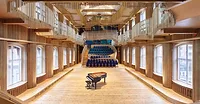
  • Queen Silvia Concert Hall

    A Stockholm Concert Hall Combines Top Acoustics with Delicate Details

    See More
  • Libeskind Museum Strikes a Balance Between Old and New

    See More
  • Design in the Present Tense

    See More

Related Products

See More Products
  • book3.jpg

    If Architecture is a Language, Then a Building is a Story

  • 0470126736.gif

    Modern Sustainable Residential Design: A Guide for Design Professionals

  • image7.jpg

    Contemporary Architecture in China Towards A Critical Pragmatism

See More Products
×

The latest news and information

#1 Source for Architectural Design, News and Products

SUBSCRIBE
  • RESOURCES
    • Advertise
    • Contact Us
    • Submit
    • Store
  • ACCOUNT CENTER
    • Create an Account
    • Start a Subscription
    • Manage My Account
    • Sign Up for Newsletters
    • Visit Customer Service
    • Update Preferences
  • PRIVACY
    • PRIVACY POLICY
    • TERMS & CONDITIONS
    • DO NOT SELL MY PERSONAL INFORMATION
    • PRIVACY REQUEST
    • ACCESSIBILITY
  • SERVICES
    • Marketing Services
    • Reprints
    • Market Research
    • List Rental
    • Survey/Respondent Access
  • STAY CONNECTED
    • Linkedin
    • Facebook
    • Instagram
    • YouTube
    • X (Twitter)

Copyright ©2026. All Rights Reserved BNP Media, Inc. and BNP Media II, LLC.

Design, CMS, Hosting & Web Development :: ePublishing