Alejandro Aravena Wins 2016 Pritzker Architecture Prize
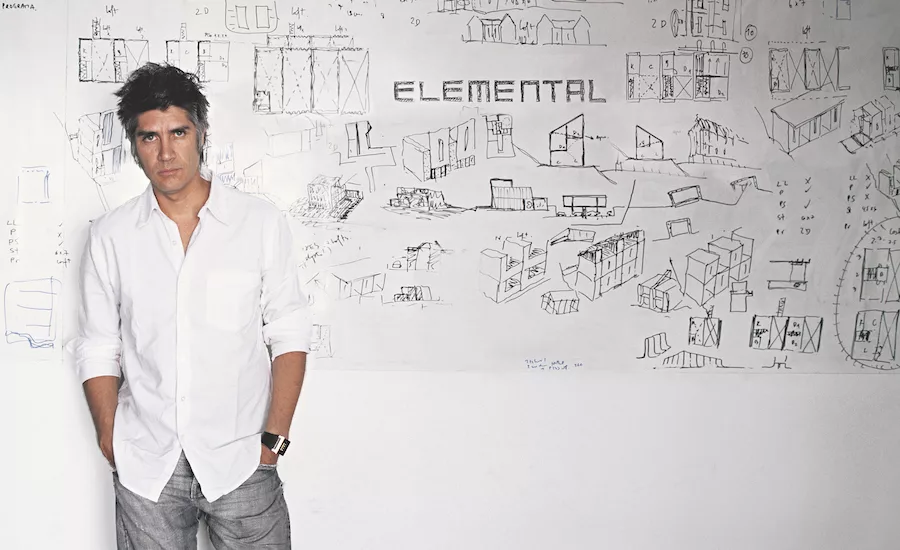
Alejandro Aravena, 2016 Pritzker Prize winner and 2021 jury chair.
Photo by Cristobal Palma, © ELEMENTAL
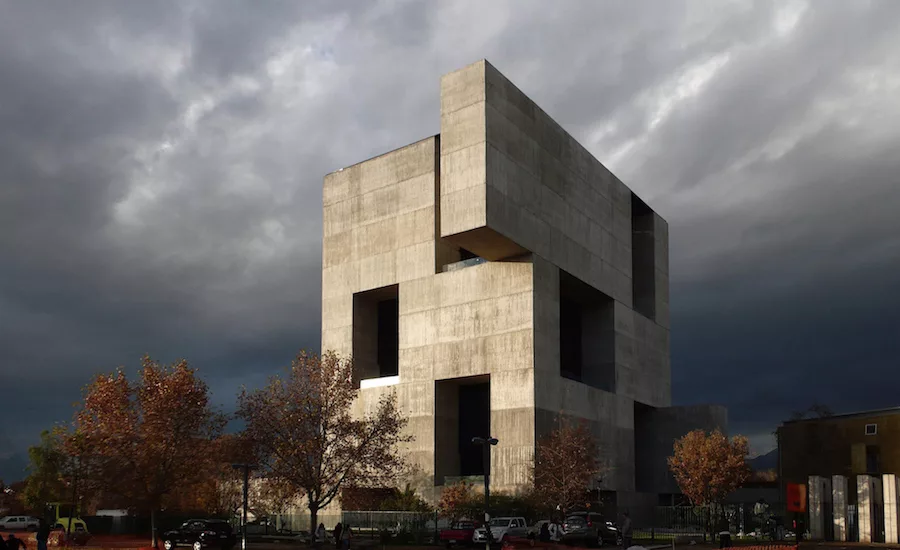
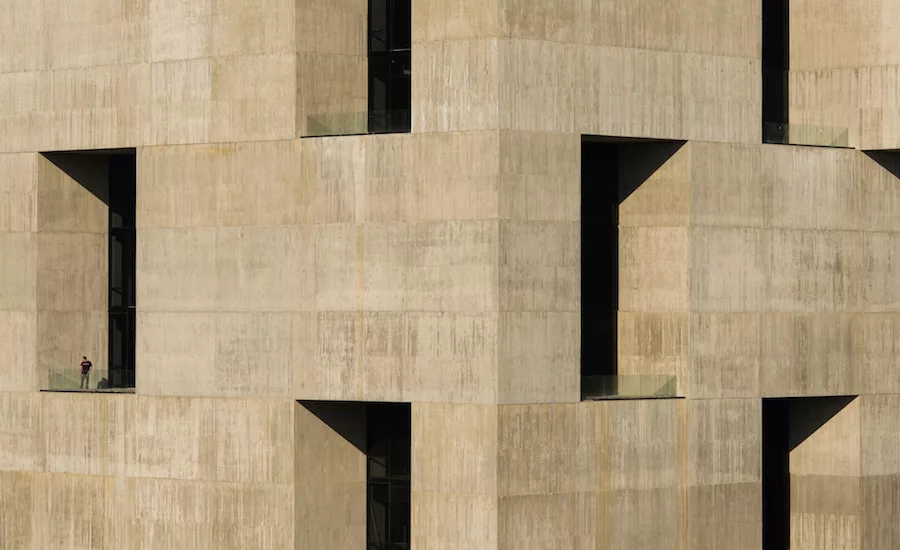
San Joaquín Campus, Universidad Católica de Chile | Santiago, Chile
Innovation and knowledge creation require increasing encounters among people, so openness is a desired attribute for its architecture; on the other hand, developments and inventions have to be protected, so security and ability to close and segregate are appreciated architectural conditions as well.
Photo by Nina Vidic, © ELEMENTAL
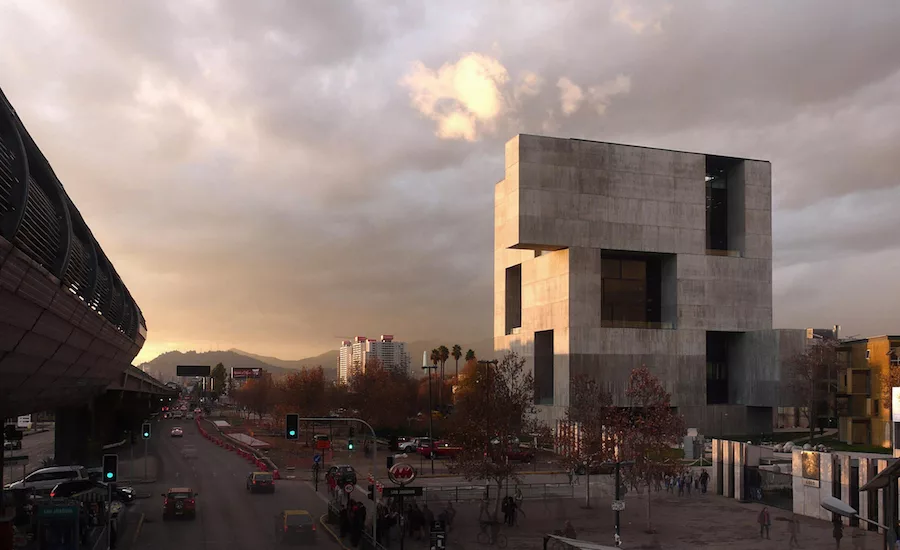
San Joaquín Campus, Universidad Católica de Chile | Santiago, Chile
We proposed a rather opaque construction towards the outside, which is efficient for the Santiago weather, with very permeable architecture inside.
Photo by Nina Vidic, © ELEMENTAL
San Joaquín Campus, Universidad Católica de Chile | Santiago, Chile
Having the structure and the shafts on the perimeter of the building reverts the typical curtain wall building layout and concentrates openings in a very specific points in the form of elevated squares.
Photo by Nina Vidic, © ELEMENTAL
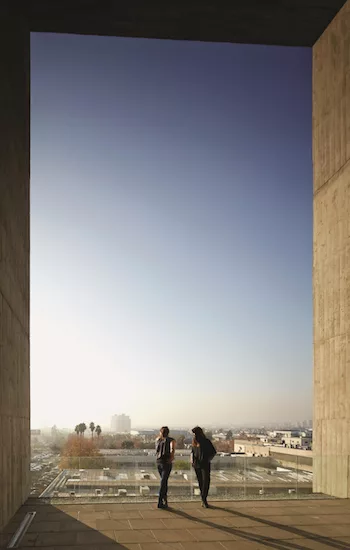
Photo by Nina Vidic, © ELEMENTAL
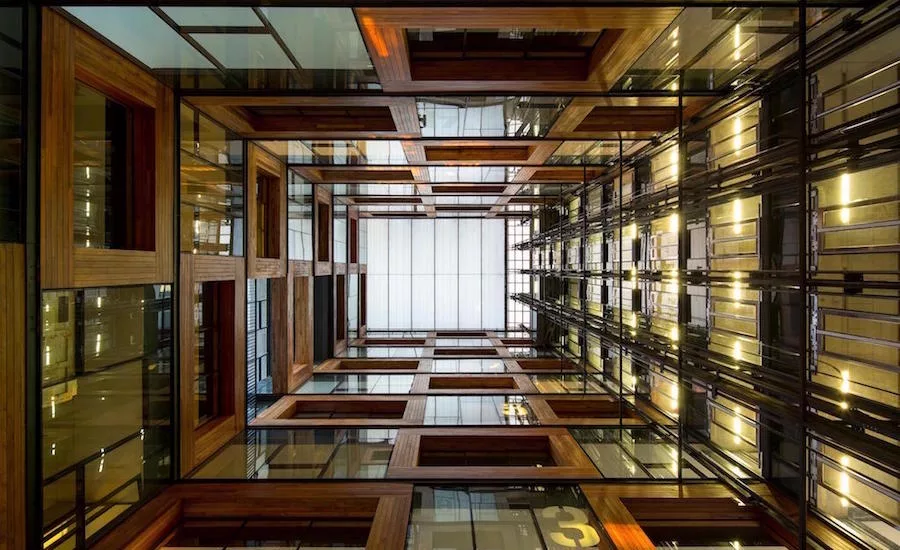
Photo by Nina Vidic, © ELEMENTAL
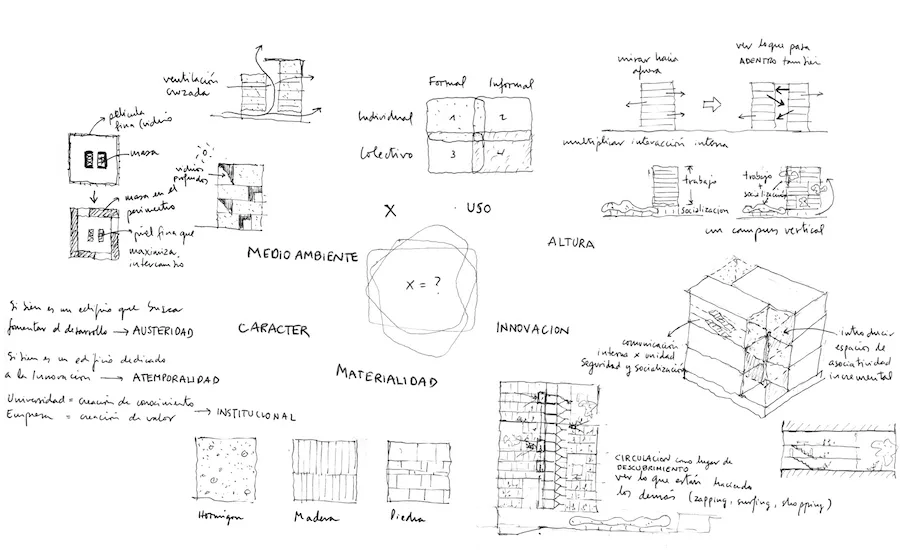
Photo by Nina Vidic, © ELEMENTAL
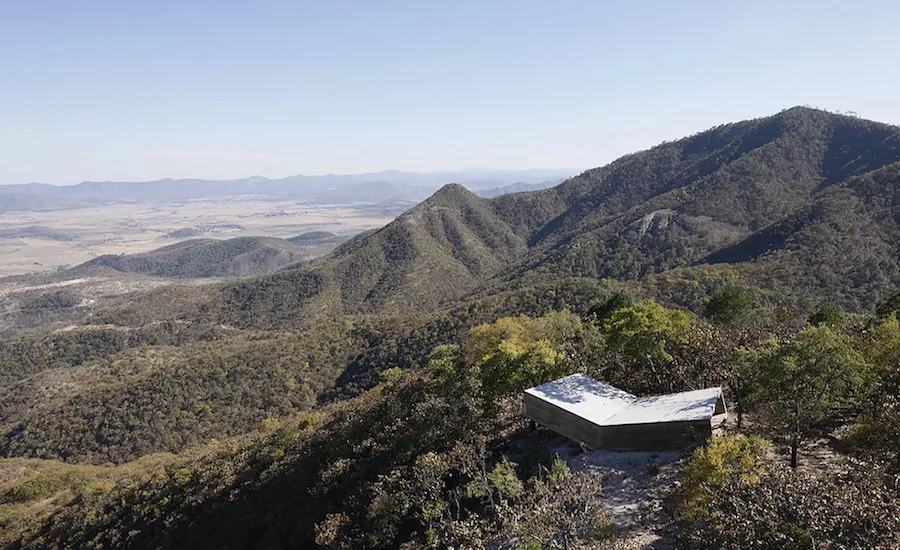
Jalisco, Mexico
Re-imagined rest stop along a Mexican pilgrimage route. Building in such a remote place should generate an architecture able to age as if it were a natural element. So, we thought of a kind of hollowed stone, bent to rest calmly on the hill side, and whose only purpose is to offer pilgrims a resting place with dark shadows, cross-ventilation and two vantage points: over the path they just walked for a hundred kilometers, and the landscape ahead.
Photo by Iwan Baan, © ELEMENTAL
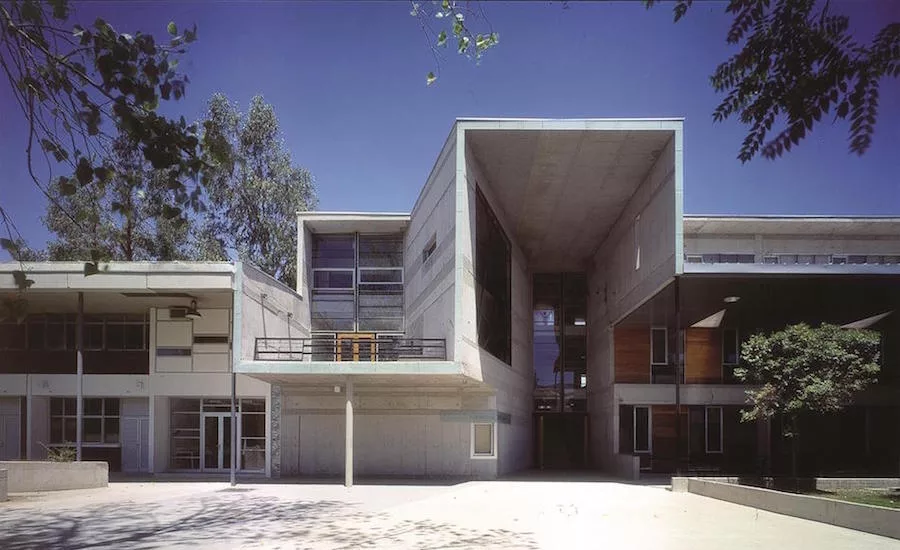
Universidad Católica de Chile | Santiago, Chile
“A mathematician is a machine of transforming coffee into equations.” We thought that joke, expressed one of the dimensions by which knowledge is produced: the casual encounter of people. Besides the coffee room, we identified the corridor as a design opportunity, as the moment where you see other people before they disappear into the isolated retreat of the individual working unit.
Photo by Tadeuz Jalocha, © ELEMENTAL
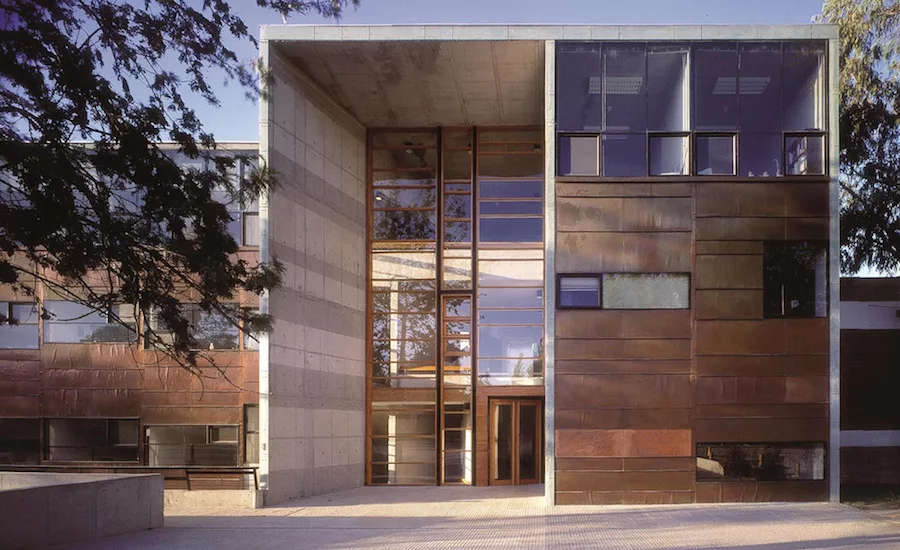
Universidad Católica de Chile | Santiago, Chile
We decided to add the new building to two existing ones, so that after the operation we had fewer elements than at the beginning.
Photo by Tadeuz Jalocha, © ELEMENTAL
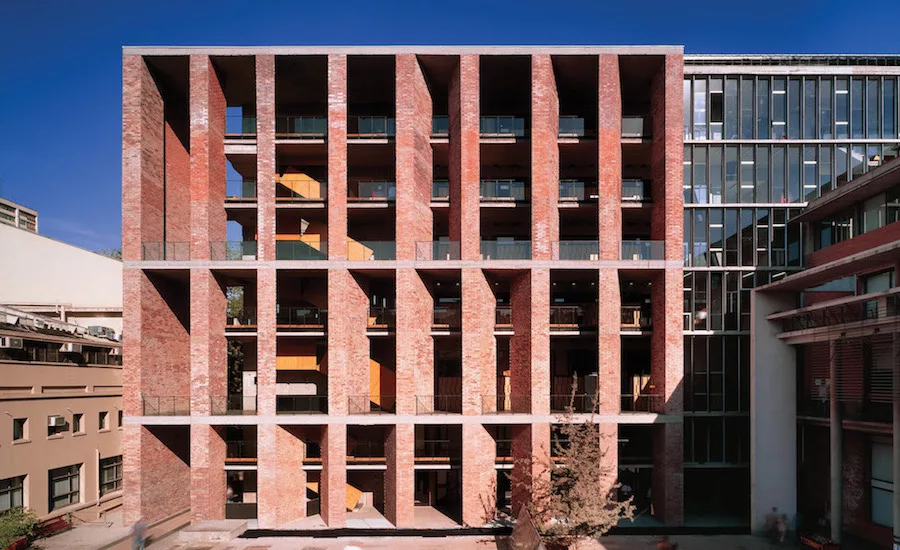
Universidad Católica de Chile | Santiago, Chile
We were asked to do all kinds of classrooms, from seminars to auditoriums, in a very dense context. The only way out, was to go high. Given that massive student occupancy in higher floors has always been hard to solve, we decided to bring the courtyard closer to each upper floor. This building is a vertical cloister.
Photo by Roland Halbe, © ELEMENTAL
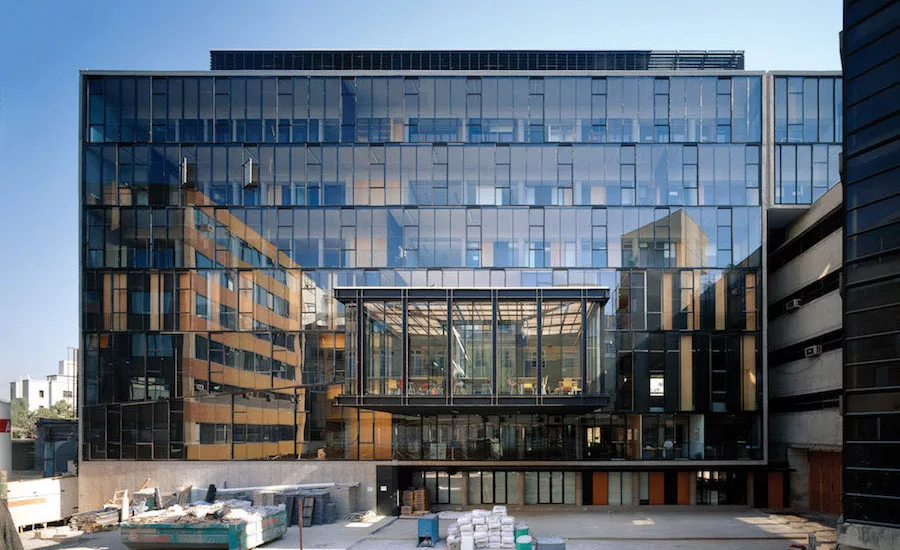
Universidad Católica de Chile | Santiago, Chile
Photo by Roland Halbe, © ELEMENTAL
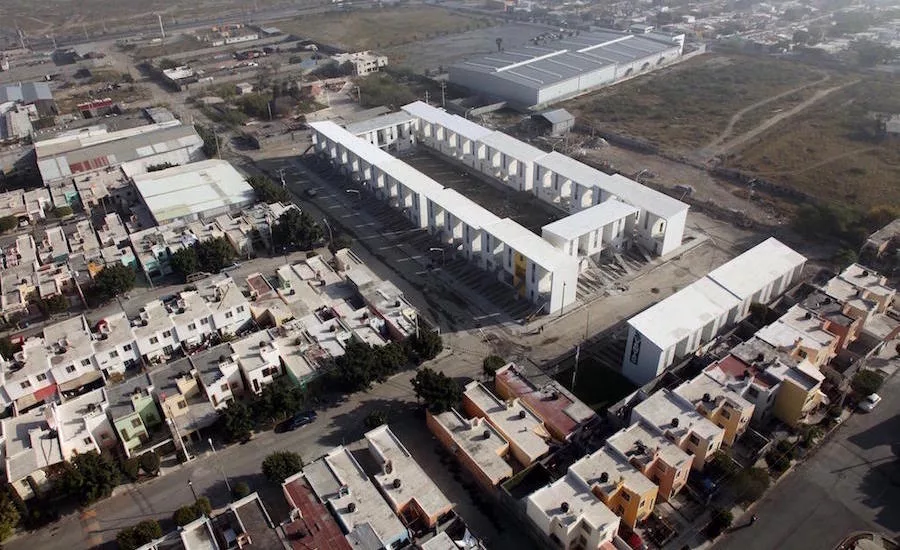
Monterrey, Mexico
In the Mexican housing market, the cheapest solution that is offered is about $30,000 dollars. We developed an improved version of the 2004 project in Iquique, Chile (see upcoming slides of Quinta Monroy Housing), where houses underneath and duplex apartments on top have an initial cost of $20,000 dollars, but can achieve a middle income standard of 72 square meters after self built expansions.
Photo by Ramiro Ramirez, © ELEMENTAL
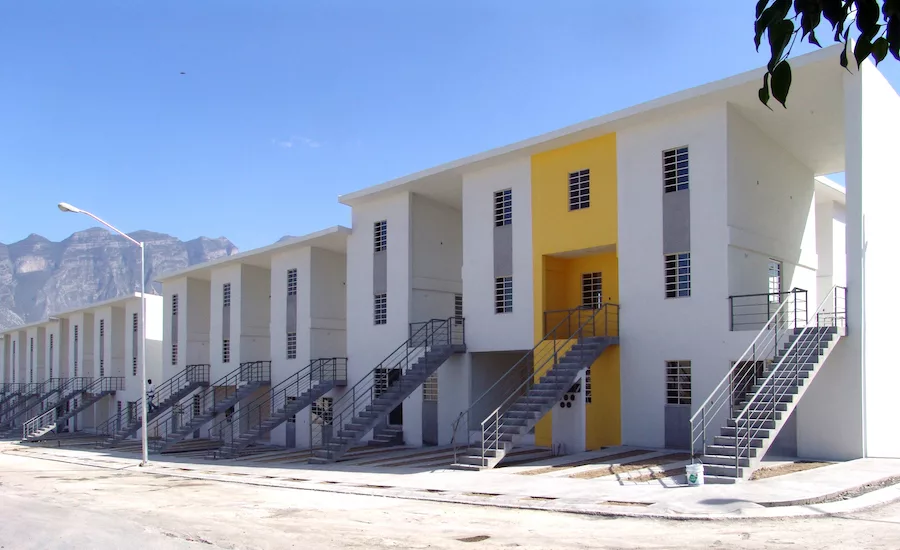
Monterrey, Mexico
An example of middle-class standard achieved by the residents themselves. The efficiency in land use without overcrowding, allowed us to purchase land in a neighborhood where the average cost is $50,000 dollars. We expect the families to benefit from that value gain, and from the fact that cost of land expresses close availability of services and opportunities.
Photo by Ramiro Ramirez, © ELEMENTAL
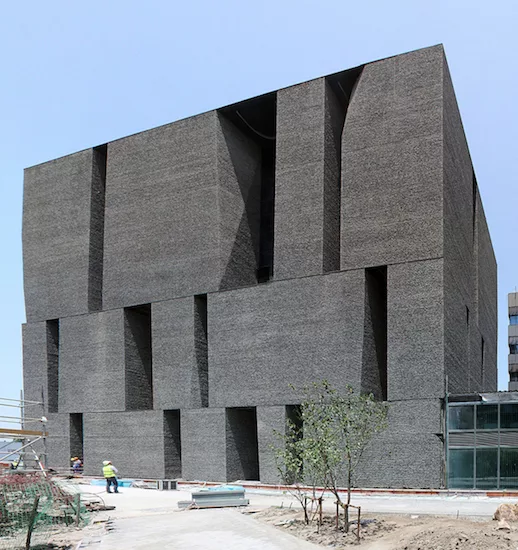
Shanghai, China
The office building in the Novartis Campus Shanghai seeks to provide spaces that encourage knowledge creation, accommodate the different modes of work, and foster interaction between the users. The outside of the building responds to the local climate with a solid facade of reclaimed brick facing south, east and west. On the north facade, the building is open to let indirect light inside the open office spaces.
Photo © ELEMENTAL
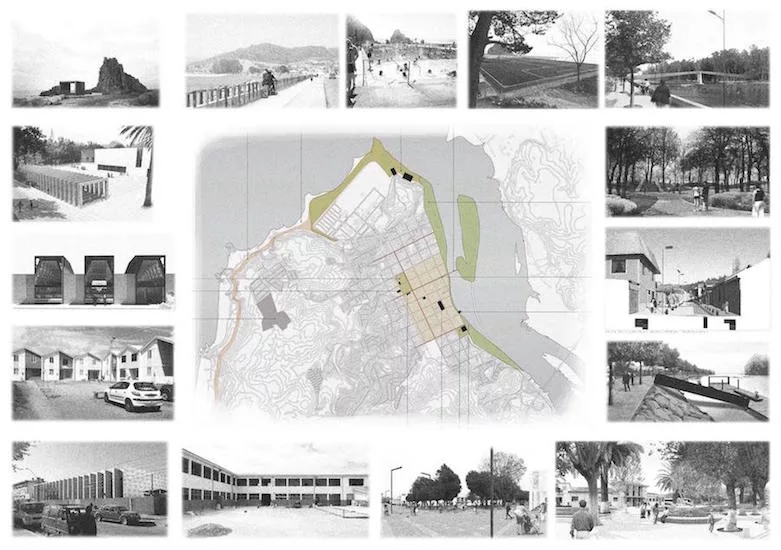
Constitución, Chile
On February 27th 2010, Chile was hit by an 8,8 earthquake and a tsunami just afterwards. We responded to the disaster at 3 different time scales: 1 day (water distribution), 10 days (elemental shelter) and 100 days (sustainable reconstruction).
Image © ELEMENTAL
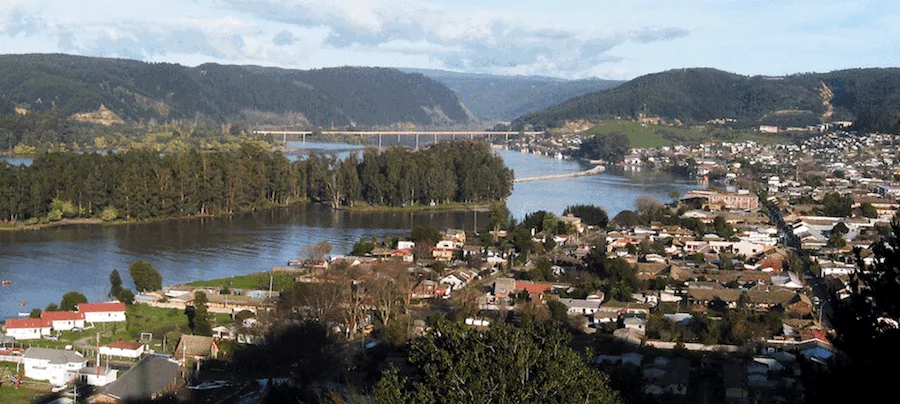
Constitución, Chile
We started by asking people, through a process of participatory design, about their complaints and dreams for the city. They said: repair the historic lack of public space and provide democratic access to the river. Being a coastal country, we cannot afford to simply abandon risky areas. Evidence shows that infrastructure is useless to resist the energy of displaced water. So we proposed a threefold strategy: first, an alert and evacuation plan so within 15 minutes people can reach a safe zone on the hillsides. Second, a coastal forest able to produce enough friction to reduce the energy of the tsunami’s waves, instead of trying to resist them. And third, a conditioned building zone with collapsible enclosures in the lower levels. By introducing a forest between the city and the sea we are responding to geographical threats with geographical answers.
Images © ELEMENTAL, GIF © Architectural Record
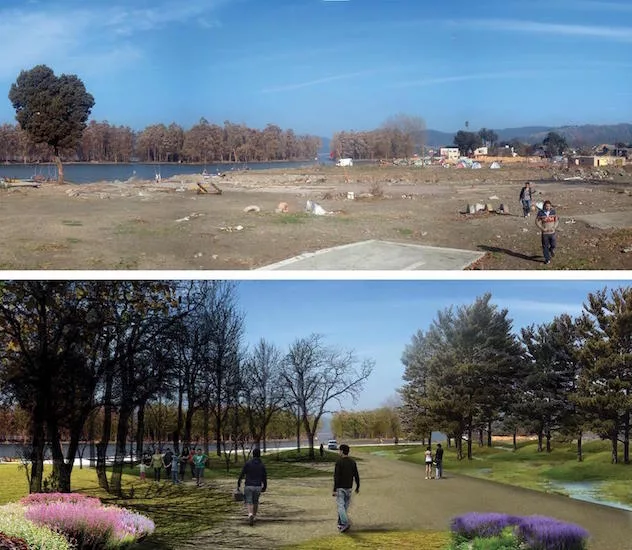
Constitución, Chile
Photos © ELEMENTAL
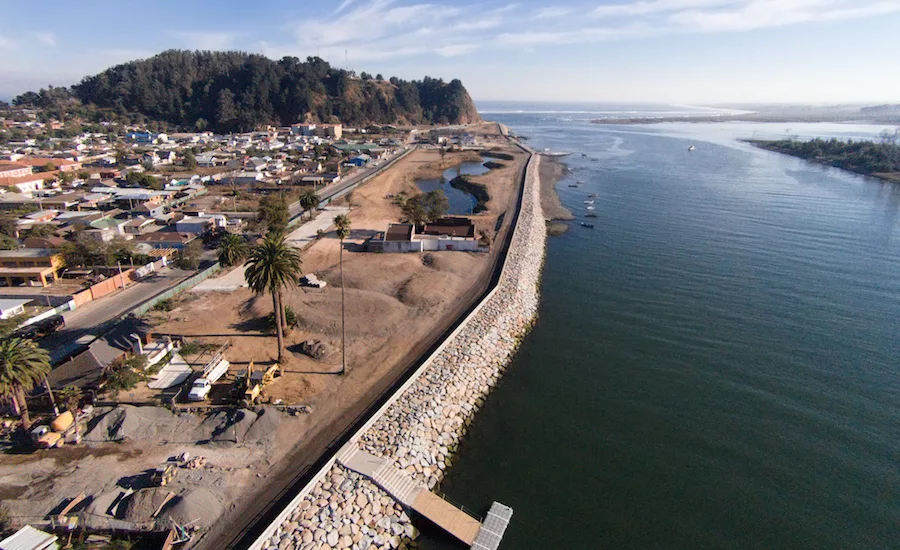
Constitución, Chile
Photos © ELEMENTAL
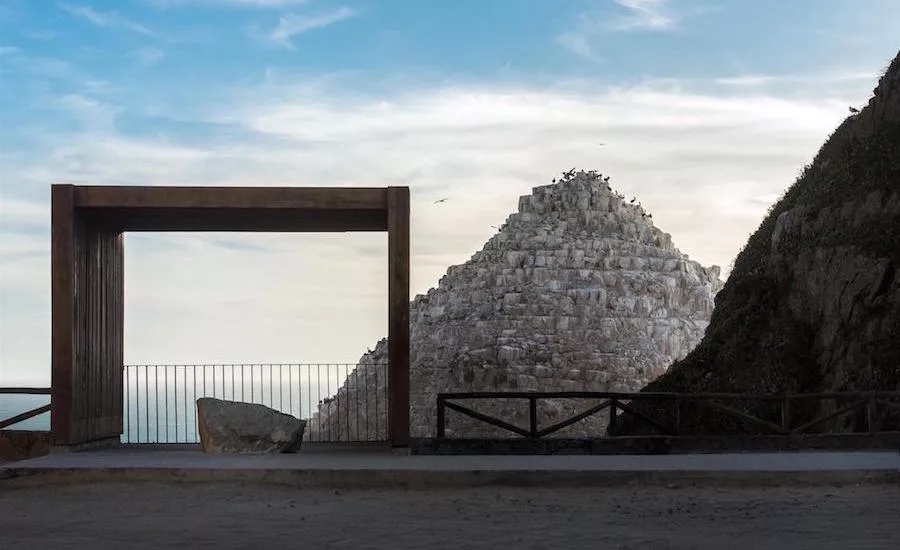
Constitución, Chile
Developed in the context of the Post-Tsunami Sustainable Reconstruction Plan of Constitución, Chile, the project consists of a series of coastal lookout points along the way from Maule River’s mouth (downtown) to Maguellines Port, in order to reinforce and highlight the natural heritage embodied by the huge rocks of this landscape. The platforms are connected to a 4.5 km bicycle lane.
Photo by Felipe Diaz, © ELEMENTAL
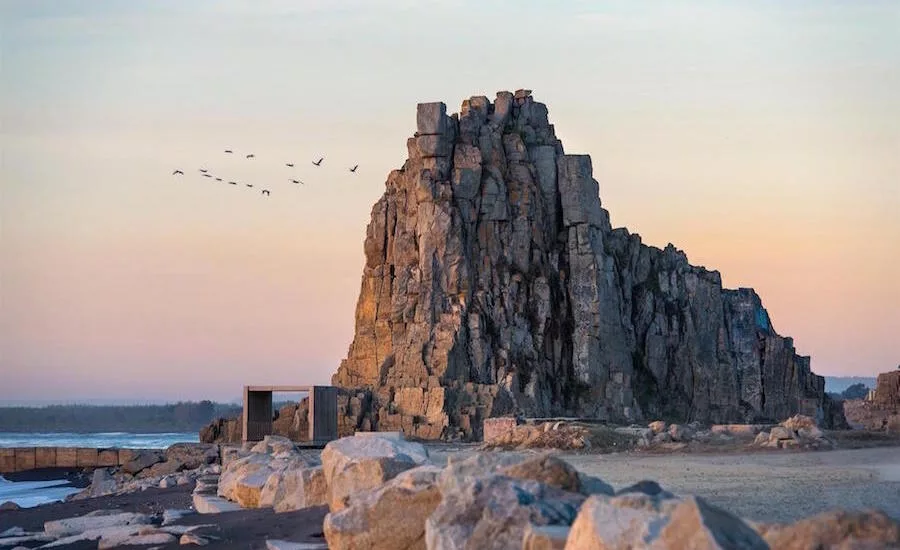
Constitución, Chile
Photo by Felipe Diaz, © ELEMENTAL
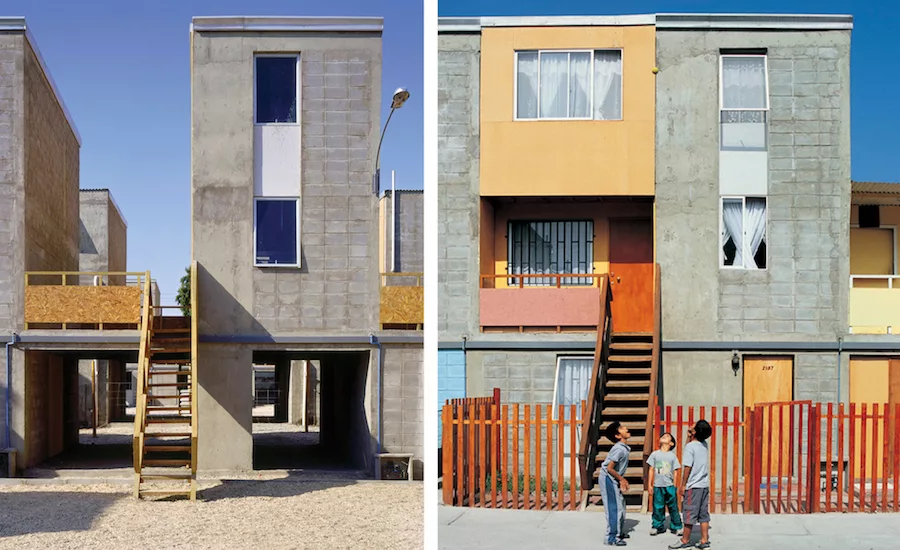
Iquique, Chile
The challenge of this project was to accommodate 100 families living in a 30-year old slum, using a subsidy of US $7,500 that in the best of the cases allowed for 36 square meters of built space in a 5,000-square-meter site, the cost of which was three times what social housing could normally afford. The aim was to keep the families’ social and economic networks, which they had created close to the center city, instead of evicting the families to the periphery.
Photo by Cristobal Palma, © ELEMENTAL
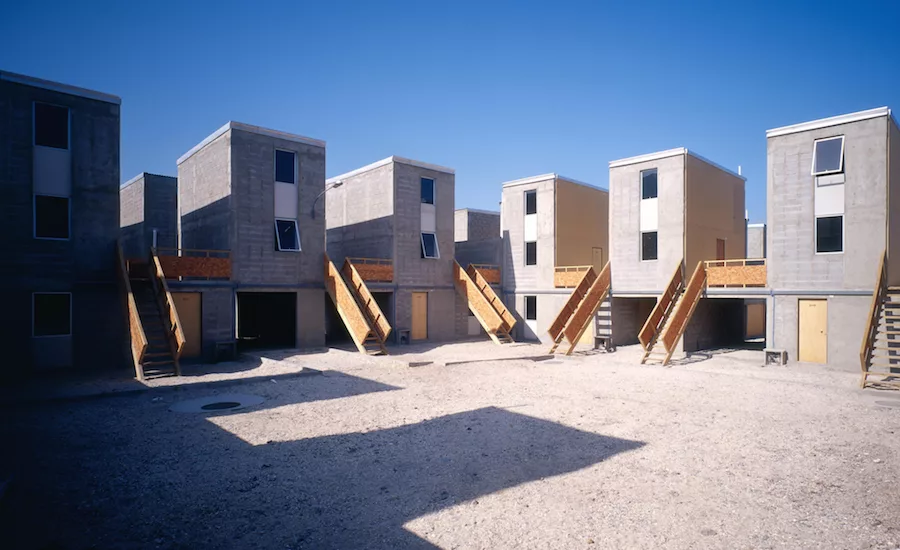
Iquique, Chile
We wanted the families to live in houses able to achieve a middle-class standard instead of condemning them to an everlasting social housing one. We thought of a typology that, as buildings — could make a very efficient use of land and as houses — allowed for expansion. We provided the families with the “half a house” that would be difficult for them to build for themselves and we gave them space to “complete the house” as their means allowed.
Photo by Cristobal Palma, © ELEMENTAL
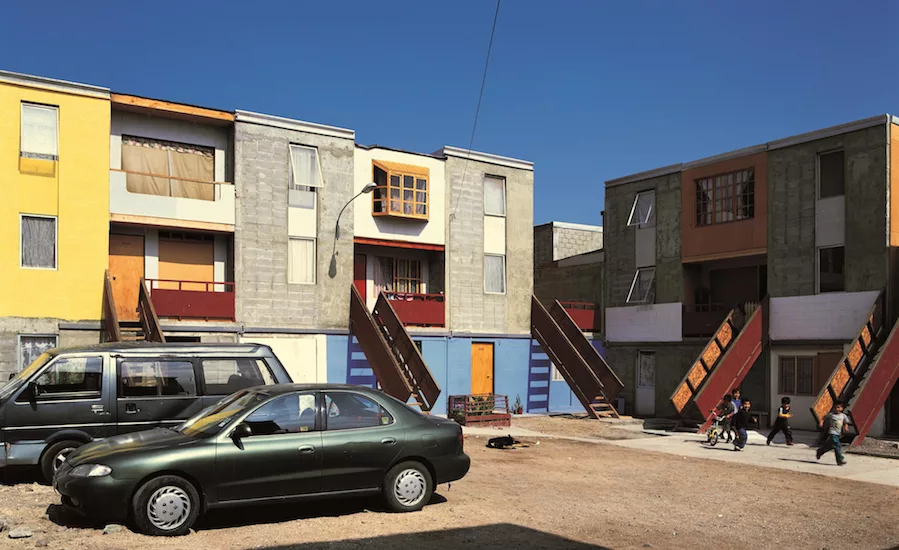
Iquique, Chile
After a year, property values tripled and yet, all the families have preferred to stay and keep on improving their homes.
Photo by Cristobal Palma, © ELEMENTAL
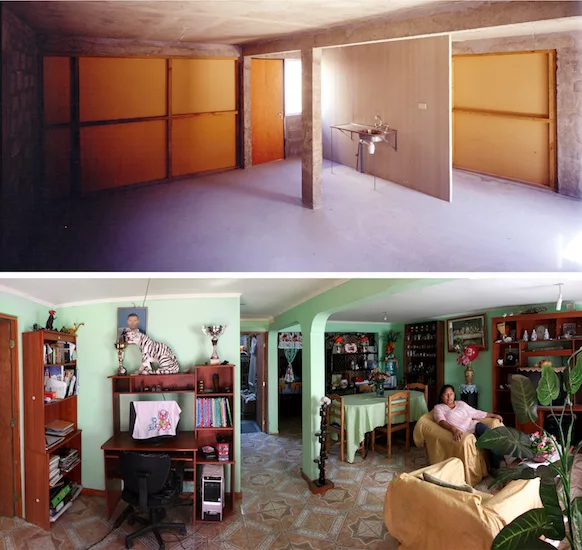
Iquique, Chile
Photo by Cristobal Palma, © ELEMENTAL
San Joaquín Campus, Universidad Católica de Chile | Santiago, Chile
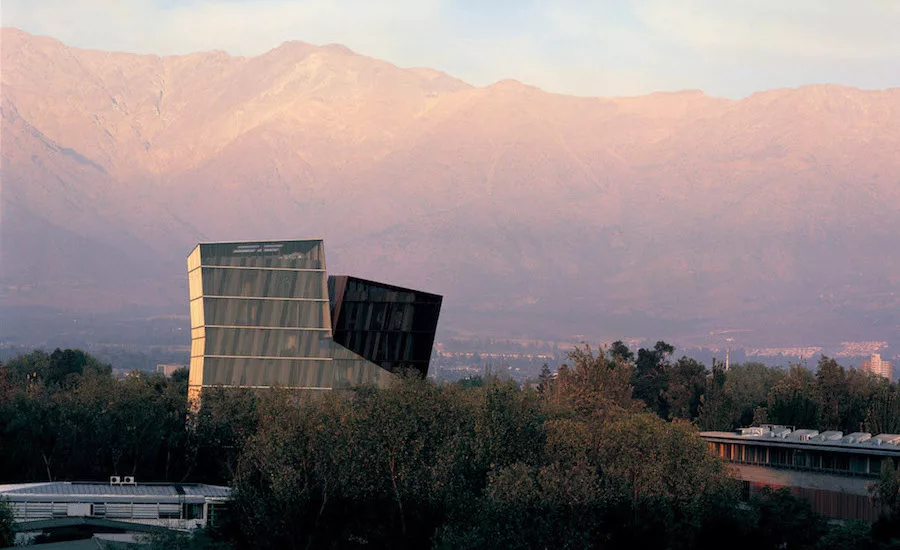
We were asked to do a glass tower, which is very inappropriate for Santiago’s climate, because although it’s a nice material to resist rain, pollution, and aging, it causes greenhouse effect. So we thought of using glass where it’s good, on the outside, then do another energy efficient building inside and allow air to flow in between the two.
Photo by Cristobal Palma, © ELEMENTAL
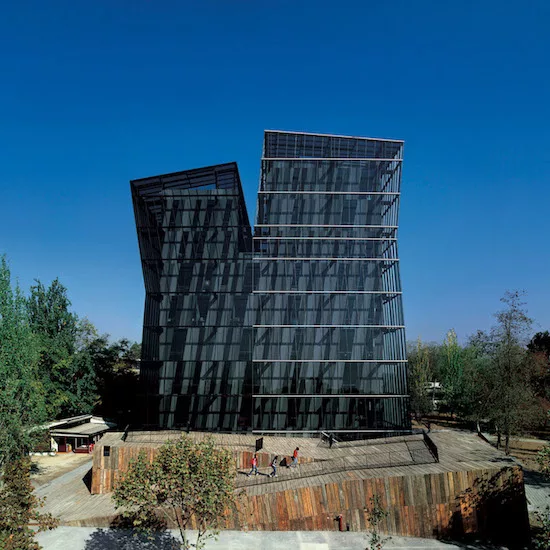
San Joaquín Campus, Universidad Católica de Chile | Santiago, Chile
Convection of hot air creates a vertical wind which is accelerated by the “waists” of the building by Venturi effect, eliminating undesired heat gains before they reach the second building inside.
Photo by Cristobal Palma, © ELEMENTAL
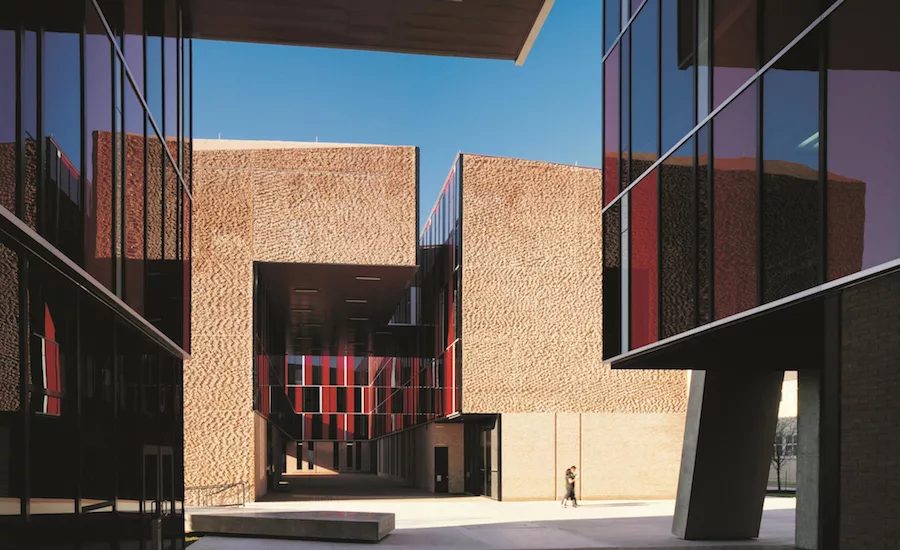
Austin, Texas
We needed to accommodate 300 beds, some social areas and some services for the whole campus in a narrow lot.
Photo by Cristobal Palma, © ELEMENTAL
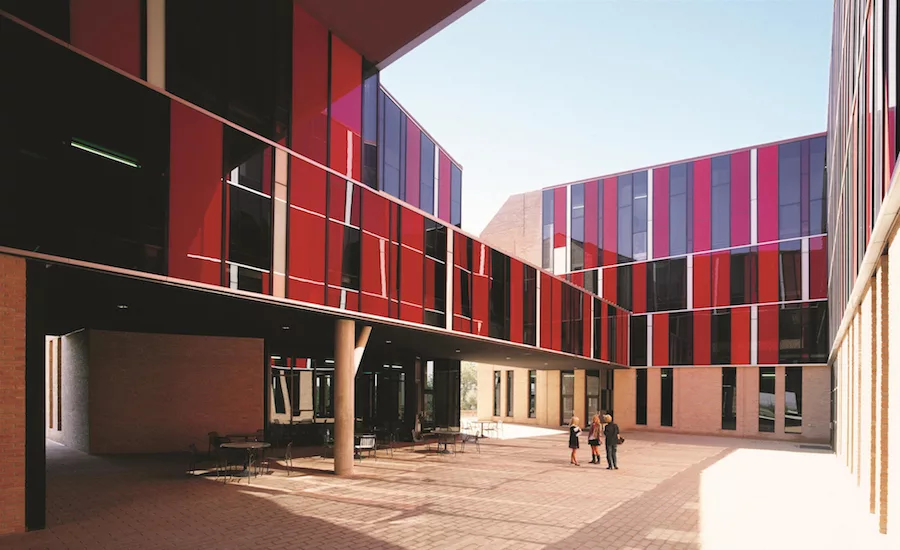
Austin, Texas
We thought of creating a plinth with the more public facilities to activate the ground floor, then the social areas carving the volume’s core and finally articulate the perimeter of the building as much as possible, increasing the linear meters of facade in order to guarantee views and natural light to each room.
Photo by Cristobal Palma, © ELEMENTAL
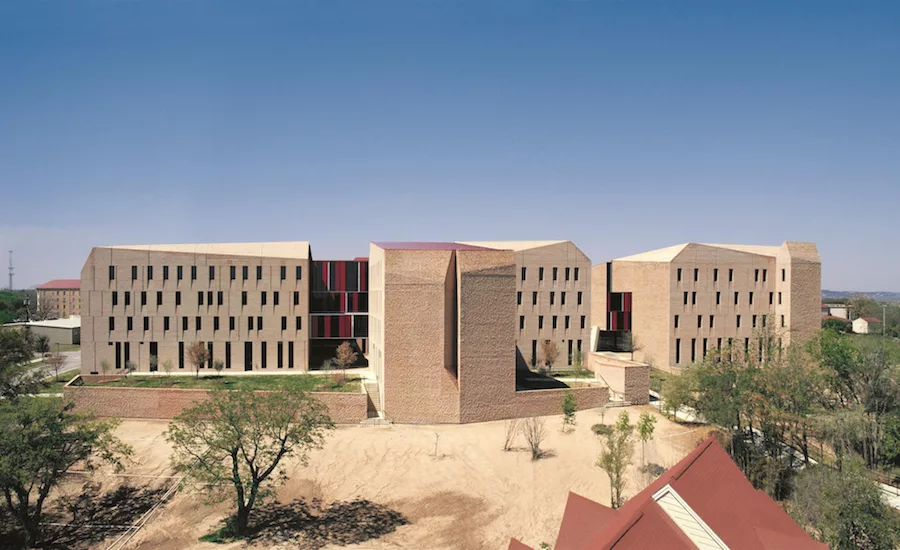
Austin, Texas
To be able to resist a tough environment we opted for a sequence of skins that are hard and rough in the outer layer and become softer and more delicate while moving towards the core.
Photo by Cristobal Palma, © ELEMENTAL
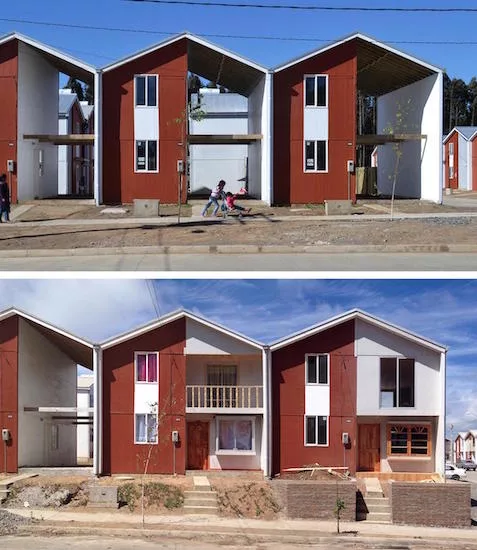
Constitución, Chile
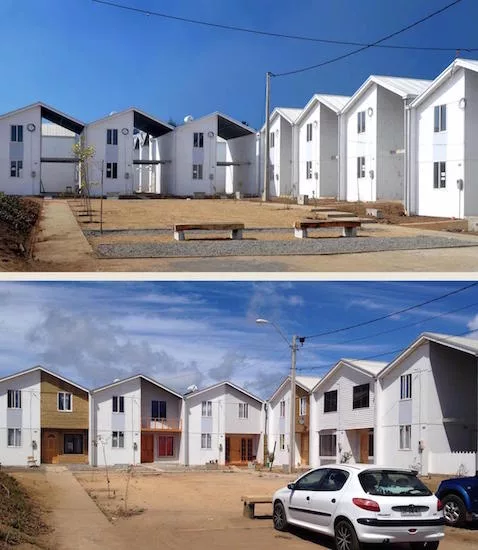
Arauco Forest Company asked us to develop a plan to support their employees and contractors so they could have access to home ownership, in the context of Chilean housing policies. This allowed us to work for the first time
with the high end of housing policy.
Photos © ELEMENTAL
Constitución, Chile
Given the greater availability of resources, instead of taking one of our less expensive housing units and delivering it more finished, we applied again the same principle of incremental housing, but with an initial and final growth scenario of a higher standard: these houses begin with an initial area of 57 square meters and can grow up to 85 square meters.
Photos © ELEMENTAL
Jan Michalski Foundation | Montricher, Switzerland
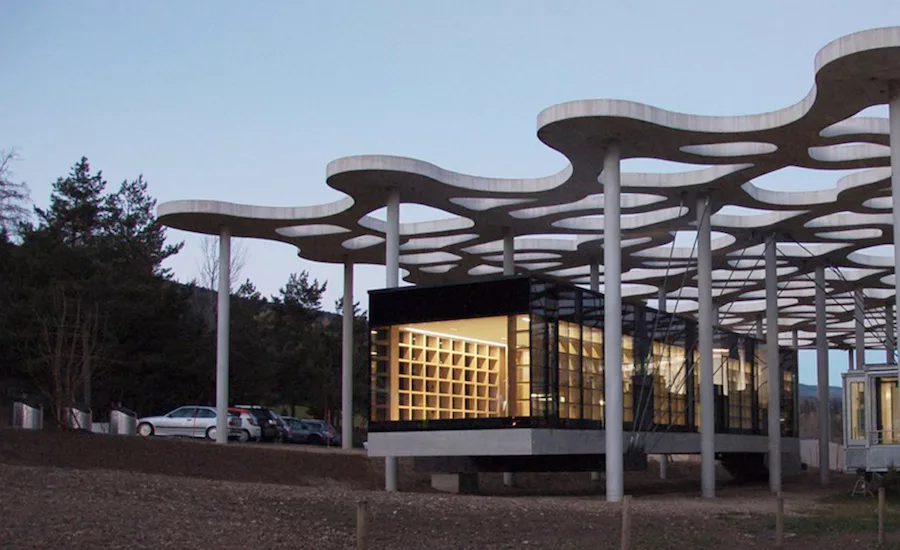
This suspended cabin had to balance comfort and compactness. We opted for a linear volume so that we could place it with freedom within the existing column grid but also as a way to counterbalance the reduction of the living area; the length of the cabin compensates and decompresses the compactness allowing the writers to transit through different situations: cooking, eating, and sharing.
Photos by +2 Architectes, © ELEMENTAL
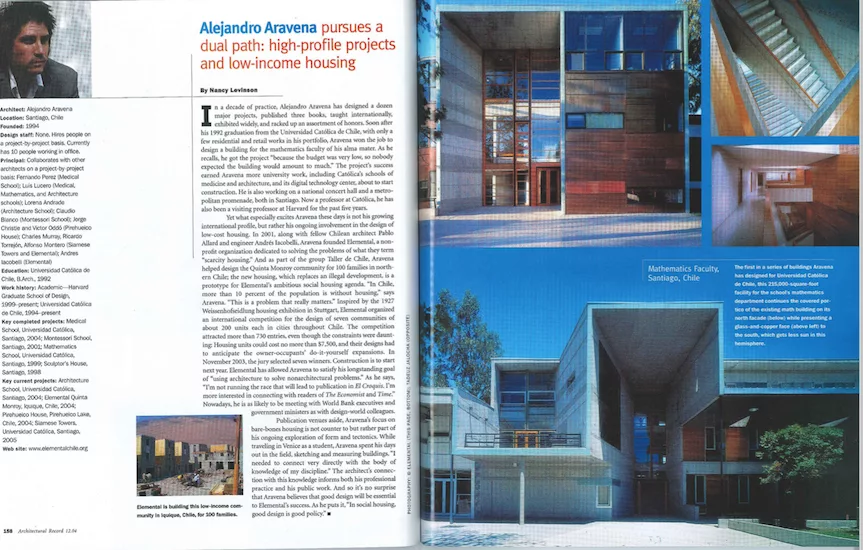
Architectural Record included Alejandro Aravena in the 2004 Design Vanguard issue. Click here to see the full PDF of the original article.
When Chilean architect Alejandro Aravena speaks about designing buildings, he invokes the language of governments and institutes: “investing in brains over bricks”; turning “forces into forms.” But unlike the abstract ideas that may emerge from a policy institute, Aravena, with his Santiago-based firm ELEMENTAL, is keen on designing solutions that not solely aid, but empower society’s neediest.
For this visionary approach, Aravena has been named the winner of the 2016 Pritzker Architecture Prize, the profession’s most prestigious honor.
“Few have risen to the demands of practicing architecture as an artful endeavor, as well as meeting today's social and economic challenges,” the Prize’s nine-member jury—which included Pritzker laureates Glenn Murcutt and Richard Rogers, and U.S. Supreme Court Justice Stephen Breyer—wrote in its citation. “[Aravena] has achieved both, and in doing so has meaningfully expanded the role of the architect.”
Aravena’s projects range from a sustainable reconstruction plan for Constitución, the Chilean city devastated by an earthquake and ensuing tsunami in 2010, to delivering some 2,500 units of housing in urban slums. He has also designed scores of institutional, civic, and cultural works, spanning the globe, from Chile to China.
The architect will receive the $100,000 prize and the iconic Louis Sullivan-inspired bronze medallion in a ceremony at the United Nation Headquarters April 4th.
When reached by phone in his Santiago office, Aravena—the first Chilean architect and the fourth South American to receive the Pritzker—told RECORD he was still in a state of disbelief. After he got the news, “for a couple of minutes I misunderstood what I was being called for,” he says. “Then when I realized, the emotion was so overwhelming I couldn’t speak. I was too touched.”
Aravena studied architecture at the Universidad Católica de Chile. In 1994, two years after graduating, he established his eponymous firm, Alejandro Aravena Architects. His first major project was the Mathematics School (1999) at his alma mater.
Looking for quick answers on architecture and design topics?
Try Ask RECORD, our new smart AI search tool.
Ask RECORD →
Over the course of his career, Aravena—a 2004 RECORD Design Vanguard winner—went on to design several other buildings for the university, most notably, the Siamese Towers (2005) a forked, glass tower with an innovative skin adapted to Santiago’s desert climate, and the UC Innovation Center-Anacleto Angelini (2014), a muscular concrete edifice, with a glazed atrium at its center.
ELEMENTAL began as an academic enterprise, too. In 2000, Aravena was invited to teach at Harvard’s Graduate School of Design. “I was so nervous,” Aravena recalls. “I wanted to identify what I could say in a context that was full of Pritzker prizes-winning faculty and the most brilliant students in the world. The only thing I felt that I could say that the others were not, was working for the dispossessed.” In Cambridge, he met a young engineer and fellow Chilean Andrés Iacobelli, studying public policy at Harvard’s Kennedy School of Government. Their discussions led back to Chile, where subsidized social housing was delivered aggressively, but was of poor quality. What if, they reasoned, social housing, instead of depreciating in value over time, could increase in value? Together, with architect Pablo Allard, they founded ELEMENTAL in 2001.
“Quantity is easy to achieve. We needed to guarantee quality in the next generation of solutions. Social housing requires professional quality, not professional charity,” says Aravena.
They put this idea to the test in Quinta Monroy, ELEMENTAL’s first social housing project in the city of Inquique. The architects needed to design housing for nearly 100 families living in a decades-old slum on the shoestring government subsidy of $7,500 per unit.
“The consequences of architecture are not easy to erase, so you need to be as careful as possible, moving from paper to reality,” he says.
Rather than seek cheaper property on the city’s perimeter to stretch the subsidy, the architects opted to provide exactly one-half of a well-designed house that residents could expand and improve over time as their individual circumstances permitted.
“We were encouraged by the positive results, but we had to prove our point in different environments—from the Chilean desert to Patagonia; from big cities to small cities; from the mountains to the sea,” Aravena says. “We needed to prove to the market that things could be done better.”
ELEMENTAL was able to secure seed funding by finding business partners—COPEC, a major Chilean oil company, and Universidad Católica de Chile—and has since created similar housing projects in Monterey, Mexico and in many more cities throughout Chile, including Santiago and Constitución. The architecture office is run by five partners—Aravena with Gonzalo Arteaga, Juan Ignacio Cerda, Victor Oddó, and Diego Torres—to whom Aravena credits his Pritzker win.
Aravena hopes to leverage both the Prizker prize and being chief curator of this year’s Venice Architecture Bienniale as global platforms. With the Biennale theme Reporting from the Front, Aravena wants to get architects thinking about concrete design solutions to problems as varied as pollution, security, climate change, and migration. “The starting point for architecture should be as far from architecture as possible. By that I mean problems that every single citizen in society understands, is affected by, and can have a say in,” he says.
The architect sees this global line of thinking as an emerging theme in Pritzker laureates, beginning with Shigeru Ban in 2014, who is well-known for his temporary disaster relief shelters. But Aravena is uncomfortable with being defined as a humanitarian. “It’s a word that we consciously try to avoid,” he says. “We never ever claim any kind of moral superiority because we are doing social work, not at all. If anything we considered ourselves good designers and we just wanted to contribute to a difficult question.”
Aravena himself just left the Prizker jury last year after seven rounds as judge. “The level of the debate was the highest I’d ever witnessed,” he says. “I think it was fair to allow new voices to enter.”
But some may find it controversial that his colleagues on the jury selected him so soon after his departure. “If there is anything in such a jury, it’s a level of integrity,” he says, slightly bristling.
Aravena prefers to dwell on the impact of his work. On opening day of the Quinta Monroy housing complex in 2004, a young mother, part of the Aymara indigenous group, pulled Aravena aside to thank him for her new home. “This housing is not just for me, but for my children, and the children of my children,” she told him as she poured wine into the ground to honor Pachamama—mother earth. “It was a very emotional moment to know you have created a benefit for a couple generations to come,” he says.
2016 Announcement Video
Alejandro Aravena's 2014 TED Talk
Looking for a reprint of this article?
From high-res PDFs to custom plaques, order your copy today!