Architectural Record
search
cart
facebook twitter linkedin youtube
  • Sign In
  • Subscribe
  • Sign Out
  • My Account
Architectural Record
  • NEWS
    • Latest News
    • Awards
    • Interviews
    • Obituaries
    • Podcasts
      • Design:Ed Podcast
      • Sponsored Podcasts
  • OPINION
    • Book Reviews / Excerpts
    • Exhibition Reviews
    • Forum
  • EXCLUSIVES
    • Videos
    • Design Vanguard
    • Top 300 Firms
    • Sponsored Content
    • Sponsored eBooks
    • From the Archives
  • CONTINUING ED
    • Editorial Continuing Ed
    • CE Center
    • CE Academies
  • PROJECTS
    • Buildings By Type
    • Reuse & Renovation
    • Museums & Arts Centers
    • Colleges & Universities
    • Multifamily Housing
    • Interiors
    • Lighting
    • Kitchen & Bath
  • HOUSES
    • Record Houses
    • House of the Month
    • Featured Houses
  • PRODUCTS
    • Products by Category
    • Record Products of the Year
    • Latest Products
  • EVENTS
    • Dates & Events
    • Record on the Road
    • Innovation Conference
    • Sustainability in Practice
    • Women In Architecture
    • Webinars
    • Ad Excellence Awards
    • Submit an Event
  • CONNECT
    • Ask RECORD AI
    • Newsletters
    • Contact
    • Advertise
    • Editorial Calendar
    • Store
    • Customer Service
  • SUBMIT
    • Submission Guidelines
    • RECORD Competitions
  • MAGAZINE
    • Subscribe
    • My Account
    • Digital Edition
    • Current Issue
    • Firm Pass
    • Historic Archive
Architecture NewsInterviews

Newsmaker: Alejandro Aravena
By Asad Syrkett
Alejandro Aravena & Elemental

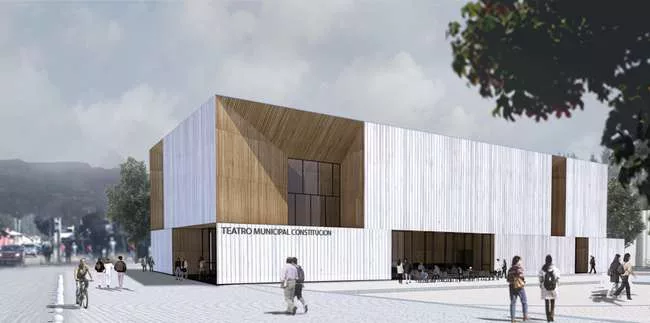
A rendering of the firm's planned Constitución Municipal Theatre, in southern Chile. 

Image © ELEMENTAL

Alejandro Aravena & Elemental

ELEMENTAL executive director Alejandro Aravena.
Photo © ELEMENTAL
Alejandro Aravena & Elemental

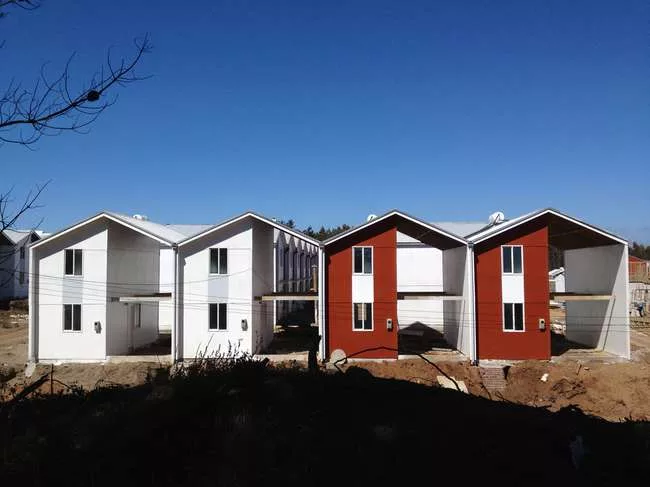
Construction is under way on ELEMENTAL's housing for forestry company workers in Constitución, Chile.
Photo © ELEMENTAL
Alejandro Aravena & Elemental

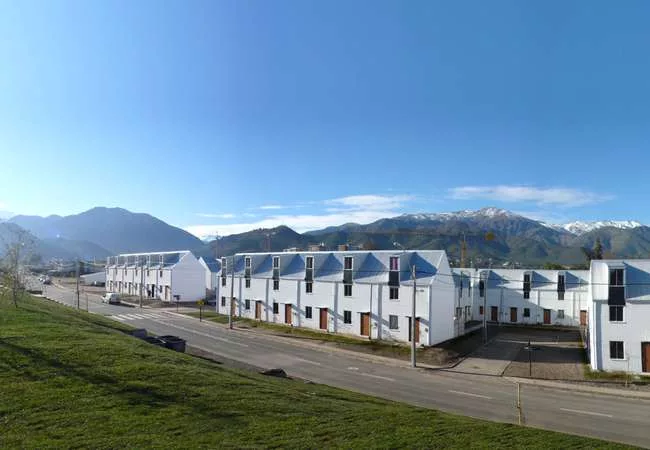
ELEMENTAL's Lo Barnechea housing in Santiago, Chile (2011).
Photo © ELEMENTAL

Alejandro Aravena & Elemental
February 15, 2013

Elemental is at the fore of socially conscious design. Gary Hustwit featured the Chilean design office’s subsidized-housing units in Santiago in his well-received 2011 documentary Urbanized. And the firm’s monograph Incremental Housing and Participatory Design Manual appeared in time for the 13th Venice Architecture Biennale last August. Record caught up with Elemental’s executive director, Alejandro Aravena, to talk about the firm, its soon-to-be-completed housing in the Chilean city of Constitución, and Aravena’s stance on the role of architects in sheltering the world’s expanding population.


How did you arrive at your firm’s name, Elemental? And why did Elemental use Incremental Housing and Participatory Design Manual as the title for the book you released last summer?

When we work on social housing, Elemental delivers the essential parts of a house and the owners add on to what we deliver. This approach to housing has been around since British architect John F.C. Turner’s work in Peru in the late 1950s, so it’s not just our philosophical view. This strategy was a consequence of not having enough financing for projects—on average, only about $7,500 per unit. Most housing costs about $10,000 to $12,000 per unit. We tried to provide only what is difficult for families to acquire: the land, the frame of the house, and a connection to utilities. It was far more important to use our limited funds to build a well-located complex of social housing—close to jobs, to education, to transportation. So incremental housing was our answer.

Was this the approach you took for the Lo Barnechea housing in Santiago?

Yes. We said, “Let’s focus on what families will never be able to achieve on their own and then allow them to complete the house.”

How has that project influenced attitudes toward social housing in that city?

The quality of public housing was always a big question mark in Chile. Quantity was OK—Chile is the only country in the world that has reduced its housing deficits. But we found that the question “What is quality?” needed to be reframed from just being about making bigger units. For us, a quality unit gains value over time. In developing nations, you get a subsidy from the state and you become an owner of your unit. We sought to harness the housing policy not just to create shelter but to use it as a tool to allow residents to take out bank loans, to start small businesses, or pay for a better education for their children. So we reframed “quality” as housing being delivered as an investment and not just as a social advancement. Our plan, based on research we’d conducted, was very well received by society, by the families, and by politicians.

Looking for quick answers on architecture and design topics?
Try Ask RECORD, our new smart AI search tool.
Ask RECORD →

What about the forestry workers’ housing in Constitución? How did Elemental get this commission?

Elemental is the result of a partnership with Santiago’s Catholic University and COPEC, the Chilean oil company. COPEC also owns Arauco, the forest company in the south of Chile in the city of Constitución. After the 8.8-magnitude earthquake in 2010, the company asked us to try and create new housing for its workers with the Elemental approach, seeing as they’re already applying for state subsidies. And we plan to build about 9,000 units for its workers. We’ll also be redesigning the entire city of Constitución, and donating to the government our studies and documents required for a coordinated, efficient reconstruction. So what we’re building in the south now is part of the process of reconstruction—they’ll be the first things built.

Not every firm is able to partner with major energy corporations or universities. What role can architects play in addressing the world’s growing need for housing?

If there’s any power in architecture or in design, it’s the power of synthesis. When you face complex issues, such as reconstruction following an earthquake, you have to think about schools, institutional buildings, housing, energy, and sewage. And that requires a level of coordination that is quite hard to achieve. Architects can offer design as a powerful tool in order to tackle more dimensions of a problem simultaneously, while keeping the problem simple enough to solve.

So what’s next for Elemental? What do you have on your agenda?

We spend one-third of our time on social housing, a third on this new city, and a third doing private architecture. We’re also currently working on projects for Novartis and Catholic University, among others.

Share This Story

Looking for a reprint of this article?
From high-res PDFs to custom plaques, order your copy today!

Post a comment to this article

Report Abusive Comment

Subscription Center
  • Create an Account
  • Start a Subscription
  • Manage My Account
  • Sign Up for Newsletters
  • Visit Customer Service
  • Update Preferences

More Videos

Sponsored Content

Sponsored Content is a special paid section where industry companies provide high quality, objective, non-commercial content around topics of interest to the Architectural Record audience. All Sponsored Content is supplied by the advertising company and any opinions expressed in this article are those of the author and not necessarily reflect the views of Architectural Record or its parent company, BNP Media. Interested in participating in our Sponsored Content section? Contact your local rep!

close
  • TAMLYN XtremeTrim Exterior Trim
    Sponsored byTamlyn

    Designing Cleaner Panel Facades: Why Exterior Trim Details Matter

  • Building with Vapor Barriers
    Sponsored byReef Industries, Inc.

    Vapor Barriers Help Control Moisture in Tighter Building Designs

  • Duct Interior with Prodeq System
    Sponsored byHenry, a Carlisle Company

    Designing Resilient Water Containment Systems

DESIGN:ED Podcast
Listen to Architectural Record’s DESIGN:ED Podcast

Events

June 10, 2026

Rethinking Stormwater – The Power of Porous Paving

Credits: 1 AIA LU/HSW; 1 AIBD P-CE; 0.1 ICC CEU

Learn how porous paving systems support stormwater management, reduce heat island effects, and enhance sustainable site design performance.

June 11, 2026

Very Early Warning Fire Detection for Mission-Critical Facilities

Credits: 1 AIA LU/HSW; 1 AIBD P-CE; 0.1 ICC CEU

Examine advanced fire detection strategies that support uptime and enhance safety in data centers and other mission-critical facilities.

View All Submit An Event

Products

2026 Architect's Square Foot Costbook

2026 Architect's Square Foot Costbook

See More Products

Popular Stories

Practice Matters illustration

What’s in a (Firm’s) Name? Thinking About Succession and Legacy

Coronado Bridge

The Architect’s Guide to San Diego

Practice Matters illustration

By the Numbers: Counting America's Architects

Riverdale House by Studio Lau

Riverdale House by Studio Lau

KRESA by DLR

In Kalamazoo, DLR Group Completes a Mass-Timber Hub for Career and Technical Education Programs

Broader Sustainability of CMU - Free Webinar - May 21, 2026

Related Articles

  • Alejandro Aravena, 2016 Pritzker Architecture Prize Winner

    Alejandro Aravena Wins 2016 Pritzker Architecture Prize

    See More
  • Alejandro Aravena

    Alejandro Aravena Wins Marcus Prize

    See More
×

The latest news and information

#1 Source for Architectural Design, News and Products

SUBSCRIBE
  • RESOURCES
    • Advertise
    • Contact Us
    • Submit
    • Store
  • ACCOUNT CENTER
    • Create an Account
    • Start a Subscription
    • Manage My Account
    • Sign Up for Newsletters
    • Visit Customer Service
    • Update Preferences
  • PRIVACY
    • PRIVACY POLICY
    • TERMS & CONDITIONS
    • DO NOT SELL MY PERSONAL INFORMATION
    • PRIVACY REQUEST
    • ACCESSIBILITY
  • SERVICES
    • Marketing Services
    • Reprints
    • Market Research
    • List Rental
    • Survey/Respondent Access
  • STAY CONNECTED
    • Linkedin
    • Facebook
    • Instagram
    • YouTube
    • X (Twitter)

Copyright ©2026. All Rights Reserved BNP Media, Inc. and BNP Media II, LLC.

Design, CMS, Hosting & Web Development :: ePublishing