Architectural Record
search
cart
facebook twitter linkedin youtube
  • Sign In
  • Subscribe
  • Sign Out
  • My Account
Architectural Record
  • NEWS
    • Latest News
    • Awards
    • Interviews
    • Obituaries
    • Podcasts
      • Design:Ed Podcast
      • Sponsored Podcasts
  • OPINION
    • Book Reviews / Excerpts
    • Exhibition Reviews
    • Forum
  • EXCLUSIVES
    • Videos
    • Design Vanguard
    • Top 300 Firms
    • Sponsored Content
    • Sponsored eBooks
    • From the Archives
  • CONTINUING ED
    • Editorial Continuing Ed
    • CE Center
    • CE Academies
  • PROJECTS
    • Buildings By Type
    • Reuse & Renovation
    • Museums & Arts Centers
    • Colleges & Universities
    • Multifamily Housing
    • Interiors
    • Lighting
    • Kitchen & Bath
  • HOUSES
    • Record Houses
    • House of the Month
    • Featured Houses
  • PRODUCTS
    • Products by Category
    • Record Products of the Year
    • Latest Products
  • EVENTS
    • Dates & Events
    • Record on the Road
    • Innovation Conference
    • Sustainability in Practice
    • Women In Architecture
    • Webinars
    • Ad Excellence Awards
    • Submit an Event
  • CONNECT
    • Ask RECORD AI
    • Newsletters
    • Contact
    • Advertise
    • Editorial Calendar
    • Store
    • Customer Service
  • SUBMIT
    • Submission Guidelines
    • RECORD Competitions
  • MAGAZINE
    • Subscribe
    • My Account
    • Digital Edition
    • Current Issue
    • Firm Pass
    • Historic Archive

In the Cause of Architecture, VIII: Sheet Metal and a Modern Instance

An essay from October, 1928, by Frank Lloyd Wright.

By Frank Lloyd Wright
In-the-Cause-of-Architecture-Frank-Lloyd-Wright-1928-10.jpg
January 22, 2016

Being likewise fabricated on a perfect unit system, the interior partitions may all be made up in sections, complete with doors, ready to set in place and designed to match the general style of the outer wall screen.

These interior partition-units thus fabricated may be stored ready to use, and any changes to suit tenants made over night with no waste of time and material.

The increase of glass area over the usual skyscraper fenestration is only about ten per cent (the margin could be increased or diminished by expanding or contracting the copper members in which it is set), so the expense of heating is not materially increased. Inasmuch as the copper mullions are filled with insulating material and the window openings are tight, being mechanical units in a mechanical screen, this excess of glass is compensated.

The radiators are cast as a railing set in front of the lower glass unit of this outer screen wall, free enough to make cleaning easy.

The walls of the first two stories, or more, may be unobstructed glass – the dreams of the shop-keeper in this connection fully realized.

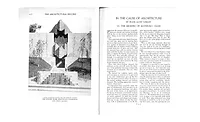
The connecting stairways necessary between floors are here arranged as a practical fire-escape forming the central feature, as may be seen at the front and rear of each section of the whole mass, and though cut off by fire-proof doors at each floor, the continuous stairway thus made discharges upon the sidewalk below without obstruction.

The construction of such a building as this would be at least one-third lighter than anything in the way of a tall building yet built – and three times stronger in any disturbance, the construction being balanced as the body on the legs, the walls hanging as the arms from the shoulders, the whole, heavy where weight insures stability.

Looking for quick answers on architecture and design topics?
Try Ask RECORD, our new smart AI search tool.
Ask RECORD →

But of chief value as I see it is the fact that the scheme as a whole would legitimately eliminate the matter of “architecture,” that now vexes all such buildings, from field construction, all such elements or architecture “exterior” or interior becoming a complete shop-fabrication – assembled only in the field.

The shop in our mechanical era is ten to one, economically efficient over the field, and will always increase over the field in economy and craftsmanship.

The mere physical concrete construction of pylons and floors is here non-involved with any interior or exterior, is easily rendered indestructible, and is made entirely independent of anything hitherto mixed up with it in our country as “Architecture.”  In the skyscraper as practiced at present the “Architecture” is expansively involved but is entirely irrelevant. But here it is entirely relevant but uninvolved.

Also the piping and conduits of all appurtenance-systems may be cut in the shop, the labor in the field reduced to assembling only, “fitting” or screwing up the joints being all that is necessary.

Thus we have, literally, a shop-made building all but the interior supporting posts and floors, which may be reinforced concrete or concrete-masked steel.

In this design, architecture has been frankly, profitably and artistically taken from the field to the factory – standardized as might be any mechanical thing whatsoever, from a penny-whistle to a piano.

There is no unsalable floor space in this building created “for effect,” as may be observed

There are no “features” manufactured “for effect.”

There is nothing added to the whole merely for this desired “effect.”

To gratify the landlord, his lot area is now salable to the very lot-line and on every floor, where ordinances do not interfere and demand that they be reduced in area as the building soars.

What architecture there is in evidence here is a light, trim, practical commercial fabric – every inch and pound of which is “in service.” There is in every reason why it should be beautiful. But it is best to say nothing about that, as things are now.

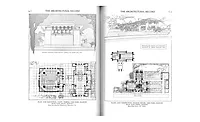
The present design was worked out for a lot three hundred feet by one hundred feet, the courts being open to the south.

There is nothing of importance to mention in the general disposition of the other necessary parts of the plan. All may be quite as customary.

My aim in this fabrication employing the cantilever system of construction which proved so effective in preserving the Imperial Hotel at Tokyo, was to achieve absolutely scientific utility by means of the Machine – to accomplish – first of all – a true standardization which would not only serve as a basis for keeping the life of the building true as architecture, but enable me to project the whole, as an expression of a valuable principle involved, into a genuine living-architecture of the present.

I began work upon this study in Los Angeles in the winter of 1923 having had the main features of it in mind for many years. I had the good fortune to explain it in detail to “lieber-meister” Louis H. Sullivan, some months before he died.

Gratefully I remember – and proudly too – “I have had faith that it would come,” he said. “This Architecture of Democracy – I see it in this building of yours, a genuine, beautiful thing. I knew what I was talking about all these years – you see. I never could have done this building myself, but I believe that, but for me, you could never have done it.”

I am sure I would never have reached it, but for what he was and what he did.

This design is dedicated to him.

KEYWORDS: Frank Lloyd Wright In the Cause of Architecture

Share This Story

Looking for a reprint of this article?
From high-res PDFs to custom plaques, order your copy today!
Previous 1 2 3 Next

Post a comment to this article

Report Abusive Comment

Subscription Center
  • Create an Account
  • Start a Subscription
  • Manage My Account
  • Sign Up for Newsletters
  • Visit Customer Service
  • Update Preferences

More Videos

Sponsored Content

Sponsored Content is a special paid section where industry companies provide high quality, objective, non-commercial content around topics of interest to the Architectural Record audience. All Sponsored Content is supplied by the advertising company and any opinions expressed in this article are those of the author and not necessarily reflect the views of Architectural Record or its parent company, BNP Media. Interested in participating in our Sponsored Content section? Contact your local rep!

close
  • cold storage facility
    Sponsored byCarlisle SynTec Systems

    How Architects Can Design More Continuous Cold Storage Envelopes

  • TAMLYN XtremeTrim Exterior Trim
    Sponsored byTamlyn

    Designing Cleaner Panel Facades: Why Exterior Trim Details Matter

  • Building with Vapor Barriers
    Sponsored byReef Industries, Inc.

    Vapor Barriers Help Control Moisture in Tighter Building Designs

DESIGN:ED Podcast
Listen to Architectural Record’s DESIGN:ED Podcast

Events

June 25, 2026

Designing Glass Railing Systems that Enhance Aesthetics and Meet Code

Credits: 1 AIA LU/HSW; 1 AIBD P-CE; 0.1 ICC CEU

Upon course completion, participants will possess a deeper understanding of glass railings to help ensure that safety, aesthetic, and performance objectives are achieved.

June 30, 2026

Generator Selection and Sizing for Outage-Ready Homes

Credits: 1 AIA LU/HSW; 1 AIBD P-CE; 0.1 ICC CEU

Explore how propane-powered systems and whole-home generators can improve energy resilience, reduce electrical loads, and lower long-term residential costs.

View All Submit An Event

Products

2026 Architect's Square Foot Costbook

2026 Architect's Square Foot Costbook

See More Products

Popular Stories

Obama Presidential Center, Chicago

The Obama Presidential Center Opens on Chicago’s South Side

Lorcan O' Herilhy

California Architect Lorcan O’Herlihy Has Died, Age 66

Spoonbill Ranch

Johnsen Schmaling Architects Integrates Spoonbill Ranch into a Pristine Landscape

Image of Bruce Springsteen Center for American Music

The CookFox-designed Bruce Springsteen Center for American Music Opens in New Jersey

Kìwekì Point, Ottawa, Canada

Perched High Above the Ottawa River, Kìwekì Point Showcases Sweeping Views of the Canadian Capital Region

Designing Glass Railing Systems that Enhance Aesthetics and Meet Code - Free Webinar - June 25, 2026

Related Articles

  • In-the-Cause-of-Architecture-Frank-Lloyd-Wright-1928-07.jpg

    In the Cause of Architecture, VI: The Meaning of Materials—Glass

    See More
  • In-the-Cause-of-Architecture-Frank-Lloyd-Wright-1927-06.jpg

    In the Cause of Architecture, II: Standardization, the Soul of the Machine

    See More
  • In-the-Cause-of-Architecture-Frank-Lloyd-Wright-1928-01.jpg

    In the Cause of Architecture, I: The Logic of the Plan

    See More

Related Products

See More Products
  • experience of arc.jpg

    The Experience of Architecture

  • 1118522532.gif

    Future Details of Architecture

See More Products
×

The latest news and information

#1 Source for Architectural Design, News and Products

SUBSCRIBE
  • RESOURCES
    • Advertise
    • Contact Us
    • Submit
    • Store
  • ACCOUNT CENTER
    • Create an Account
    • Start a Subscription
    • Manage My Account
    • Sign Up for Newsletters
    • Visit Customer Service
    • Update Preferences
  • PRIVACY
    • PRIVACY POLICY
    • TERMS & CONDITIONS
    • DO NOT SELL MY PERSONAL INFORMATION
    • PRIVACY REQUEST
    • ACCESSIBILITY
  • SERVICES
    • Marketing Services
    • Reprints
    • Market Research
    • List Rental
    • Survey/Respondent Access
  • STAY CONNECTED
    • Linkedin
    • Facebook
    • Instagram
    • YouTube
    • X (Twitter)

Copyright ©2026. All Rights Reserved BNP Media, Inc. and BNP Media II, LLC.

Design, CMS, Hosting & Web Development :: ePublishing