Architectural Record
search
cart
facebook twitter linkedin youtube
  • Sign In
  • Subscribe
  • Sign Out
  • My Account
Architectural Record
  • NEWS
    • Latest News
    • Awards
    • Interviews
    • Obituaries
    • Podcasts
      • Design:Ed Podcast
      • Sponsored Podcasts
  • OPINION
    • Book Reviews / Excerpts
    • Exhibition Reviews
    • Forum
  • EXCLUSIVES
    • Videos
    • Design Vanguard
    • Top 300 Firms
    • Sponsored Content
    • Sponsored eBooks
    • From the Archives
  • CONTINUING ED
    • Editorial Continuing Ed
    • CE Center
    • CE Academies
  • PROJECTS
    • Buildings By Type
    • Reuse & Renovation
    • Museums & Arts Centers
    • Colleges & Universities
    • Multifamily Housing
    • Interiors
    • Lighting
    • Kitchen & Bath
  • HOUSES
    • Record Houses
    • House of the Month
    • Featured Houses
  • PRODUCTS
    • Products by Category
    • Record Products of the Year
    • Latest Products
  • EVENTS
    • Dates & Events
    • Record on the Road
    • Innovation Conference
    • Sustainability in Practice
    • Women In Architecture
    • Webinars
    • Ad Excellence Awards
    • Submit an Event
  • CONNECT
    • Ask RECORD AI
    • Newsletters
    • Contact
    • Advertise
    • Editorial Calendar
    • Store
    • Customer Service
  • SUBMIT
    • Submission Guidelines
    • RECORD Competitions
  • MAGAZINE
    • Subscribe
    • My Account
    • Digital Edition
    • Current Issue
    • Firm Pass
    • Historic Archive
Residential ArchitectureHouse of the Month

Wall House by UnSangDong Architects

A house near Seoul uses a series of walls to create a dialogue between inside and out.
By Clifford A. Pearson
Wall House

Photo © Sergio Pirrone

Wall House

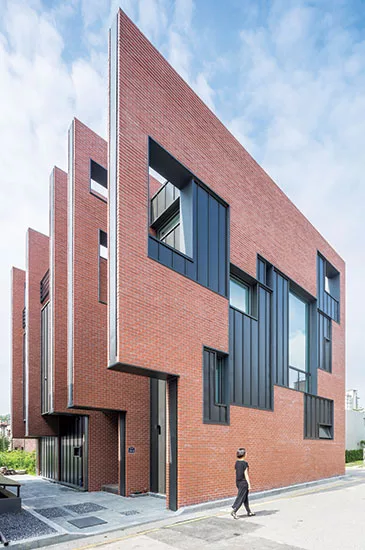
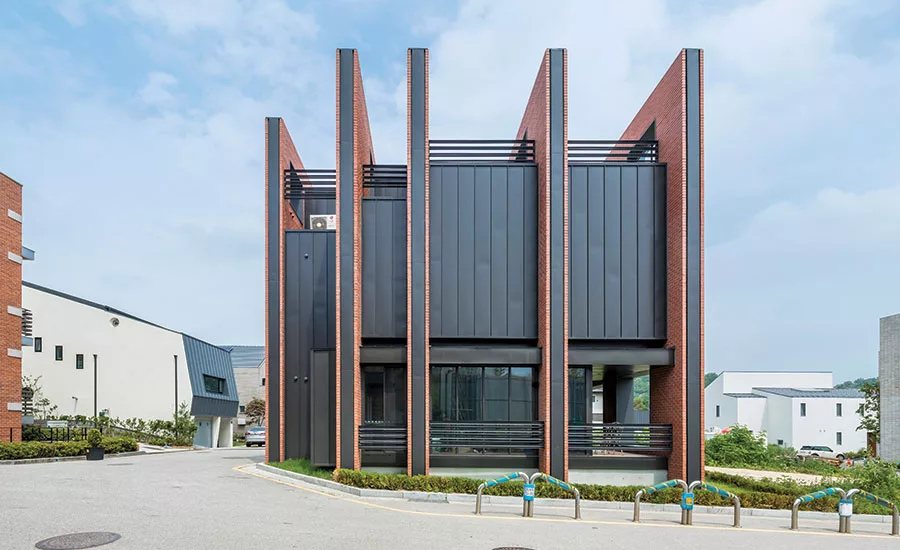
The Wall House features five 35-foot-high parallel brick walls.

Photo © Sergio Pirrone
Wall House

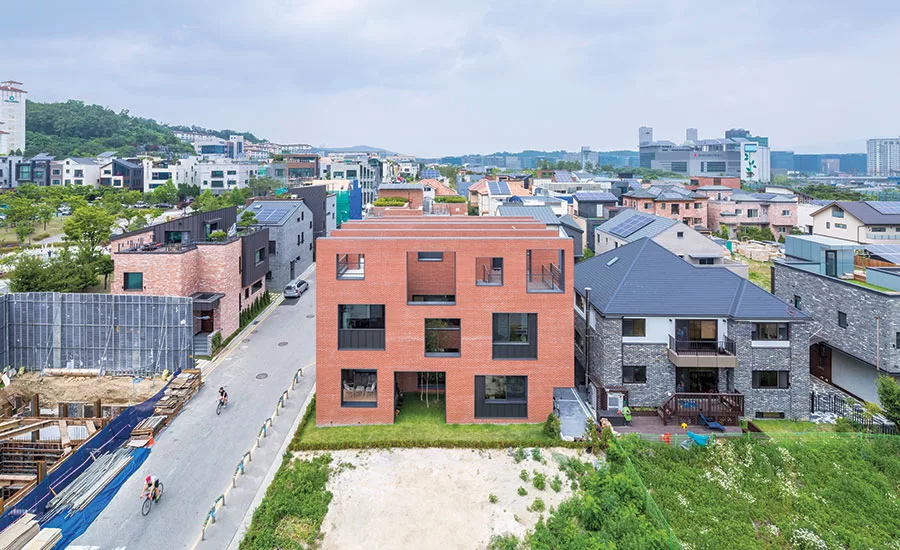
The distinctive design stands out among neighboring buildings in the low-rise residential community of Pangyo outside of Seoul.

Photo © Sergio Pirrone
Wall House

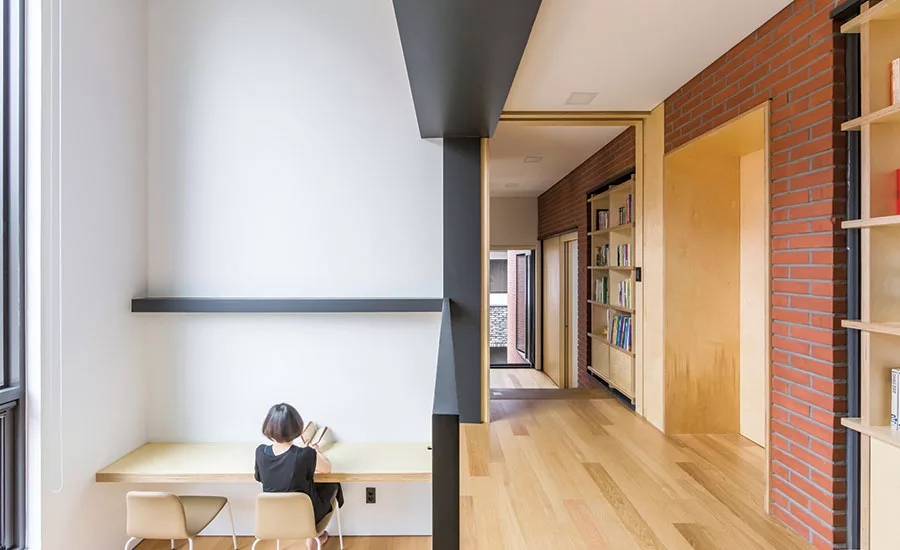
The rhythm of spaces is modulated horizontally but also vertically, with double-height spaces and views into different levels.

Photo © Sergio Pirrone
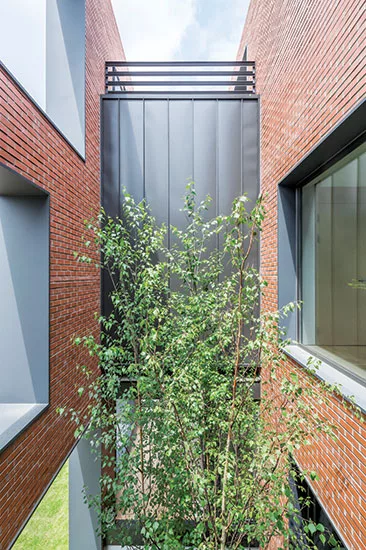
Wall House

A grassy court­yard between two of the brick walls blurs the distinction between exterior and interior, seen from the dining area.

Photo © Sergio Pirrone
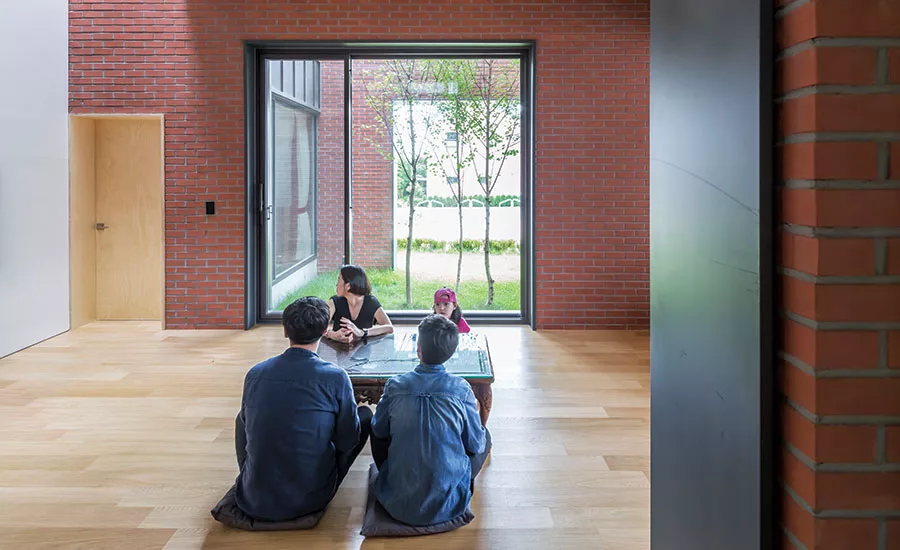
Wall House

A grassy court­yard between two of the brick walls blurs the distinction between exterior and interior, seen from the dining area.

Photo © Sergio Pirrone
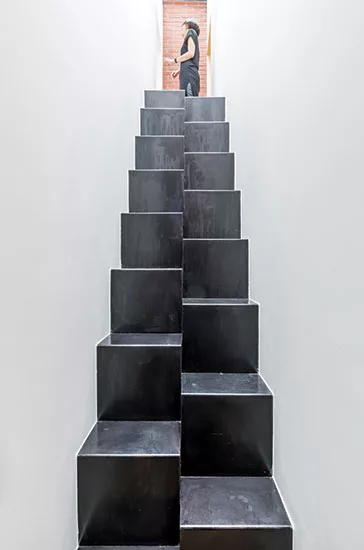
Wall House

Wider living spaces alternate with narrower service areas like this stairway that connects to the attic.

Photo © Sergio Pirrone
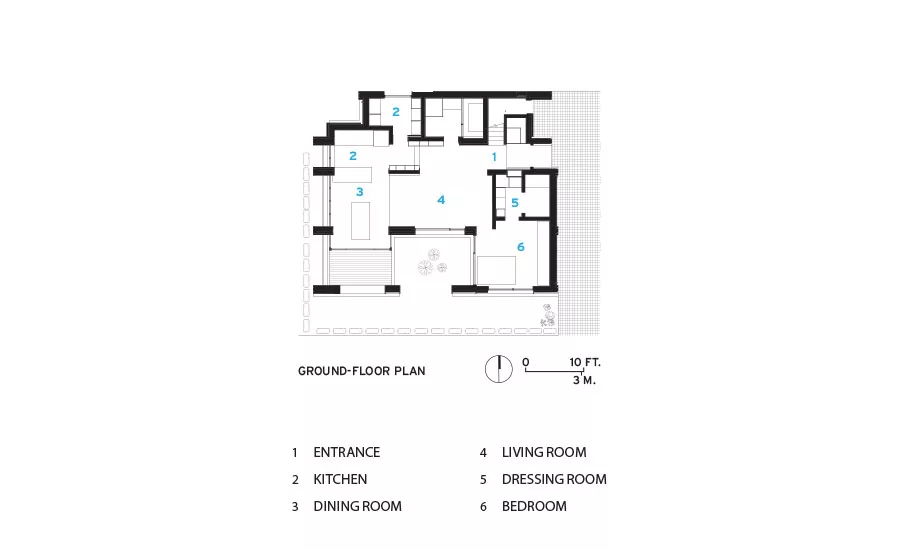
Wall House

Image courtesy UnSangDong Architects

Wall House
Wall House
Wall House
Wall House
Wall House
Wall House
Wall House
Wall House
December 1, 2016

Architects & Firms

UnSangDong Architects

Seoul, South Korea

When architects—or politicians, for that matter—speak of walls, they usually see them as boundaries dividing one place from another. UnSangDong Architects took a radically different approach at a new house outside of Seoul, punching openings through them, making them portals and creating unique opportunities to bring in light and frame views. Instead of barriers, they’re thresholds. 

UnSangDong, a RECORD Design Vanguard winner in 2006, has established a reputation for inventive designs that use folded, layered, and faceted forms to create striking identities for buildings. With Wall House, the firm defines the project’s structure and image with a set of five parallel brick walls, each 35 feet high. Spaced at different intervals from one another, the imposing brick planes create a visual rhythm that modulates interior and exterior spaces—from generous living and dining rooms to narrower service areas. 

Designed by someone less skilled, such a scheme could have been overbearing or rigid. But UnSangDong partner Mijung Kim cut away much of the brick fabric, to give the house an open and spacious feel—with views through rooms and up to the second floor in certain places. By extending the walls horizontally beyond the enclosed portions of the house, Kim created outdoor rooms on the ground level and terraces or balconies for the bedrooms on the second floor. And by extending the walls vertically above the roof, she was able to define a garden that is open to the sky but shielded from sight of neighboring houses. A grassy courtyard on the ground level brings daylight deep inside and further blurs the distinction between inside and out. “We wanted nature to penetrate inside,” says Kim. “The idea was to make people feel as if they’re outdoors when they are inside, and inside when they are out.” 

The 2,500-square-foot house sits in Pangyo, a low-rise residential community, and serves three generations of a Korean family—a married couple, their two children, and a grandmother. An acquaintance of the grand­mother recommended UnSangDong, and it was she who asked for a brick house, but a modern one. Encour­ag­ing communication between family members was important to the clients, so Kim and her team created horizontal axes that, along with double-height areas, visually connect one floor to another. For example, the grandmother likes to watch the kids doing their homework in the second-floor study as she relaxes in the living room on the first floor. “Creating the right balance between privacy and communication was important,” says Kim.

The architect sees the openings  in the parallel walls as frames for sequences of spaces, creating an almost cinematic experience. Using the term “chrono-topic,” Kim says she tried to “integrate time and space through a combination of varying surfaces and intersecting axes.”

The husband, who works for Samsung, made sure the house was equipped with the latest technology, so everything from heating and air-conditioning to lighting and security is networked and automated. Solar panels on the roof provide most of the energy needed to power the house.

Although Wall House is modern  in the way it functions and looks,  its integration of indoors and out  is a hallmark of traditional Korean  houses, or han-ok, says Kim. Such  a blurring of periods is another  way Kim has integrated “time and  space.”

Looking for quick answers on architecture and design topics?
Try Ask RECORD, our new smart AI search tool.
Ask RECORD →

KEYWORDS: modern residential architecture Seoul South Korea

Share This Story

Looking for a reprint of this article?
From high-res PDFs to custom plaques, order your copy today!

Cliff portrait 2 0t5a1761 0031

Contributing editor Clifford Pearson is the co-author, with A. Eugene Kohn, of The World By Design, and writes about architecture and urbanism.

Post a comment to this article

Report Abusive Comment

Subscription Center
  • Create an Account
  • Start a Subscription
  • Manage My Account
  • Sign Up for Newsletters
  • Visit Customer Service
  • Update Preferences

More Videos

Sponsored Content

Sponsored Content is a special paid section where industry companies provide high quality, objective, non-commercial content around topics of interest to the Architectural Record audience. All Sponsored Content is supplied by the advertising company and any opinions expressed in this article are those of the author and not necessarily reflect the views of Architectural Record or its parent company, BNP Media. Interested in participating in our Sponsored Content section? Contact your local rep!

close
  • cold storage facility
    Sponsored byCarlisle SynTec Systems

    How Architects Can Design More Continuous Cold Storage Envelopes

  • TAMLYN XtremeTrim Exterior Trim
    Sponsored byTamlyn

    Designing Cleaner Panel Facades: Why Exterior Trim Details Matter

  • Building with Vapor Barriers
    Sponsored byReef Industries, Inc.

    Vapor Barriers Help Control Moisture in Tighter Building Designs

DESIGN:ED Podcast
Listen to Architectural Record’s DESIGN:ED Podcast

Events

June 18, 2026

Rebooting the Aging Office Building

Credits: 1 AIA LU/HSW; 1 AIBD P-CE; 0.1 ICC CEU; 1 PDH

Explore façade retrofit strategies and award-winning design concepts that can transform aging office buildings into healthier, higher-performing workplaces for today’s hybrid workforce.

June 23, 2026

Enhancing Fire Resistance with Advanced PVC Solutions

Credits: 1 AIA LU/HSW; 1 AIBD P-CE; 0.1 ICC CEU; 1 IIBEC CEH

Evaluate advanced PVC solutions that improve fire resistance, support WUI compliance, and enhance resilience in residential and commercial building design.

View All Submit An Event

Products

2026 Architect's Square Foot Costbook

2026 Architect's Square Foot Costbook

See More Products

Popular Stories

SanDiegoAirport

Top 300 Architecture Firms of 2026

Lorcan O' Herilhy

California Architect Lorcan O’Herlihy Has Died, Age 66

Coronado Bridge

The Architect’s Guide to San Diego

CCA, Studio Gang

The Winners of the AIA’s 2026 Architecture Award Range from Collegiate Rowing Hubs to Housing for the Homeless

Dusk House

Design Vanguard 2026: ONO

Enhancing Fire Resistance with Advanced PVC Solutions - Free Webinar - June 23, 2026

Related Articles

  • Wall House

    See More
  • Urban House

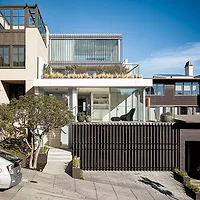
    Pacific Heights House by Jensen Architects

    See More

Related Products

See More Products
  • iconic house.jpg

    The Iconic House

See More Products
×

The latest news and information

#1 Source for Architectural Design, News and Products

SUBSCRIBE
  • RESOURCES
    • Advertise
    • Contact Us
    • Submit
    • Store
  • ACCOUNT CENTER
    • Create an Account
    • Start a Subscription
    • Manage My Account
    • Sign Up for Newsletters
    • Visit Customer Service
    • Update Preferences
  • PRIVACY
    • PRIVACY POLICY
    • TERMS & CONDITIONS
    • DO NOT SELL MY PERSONAL INFORMATION
    • PRIVACY REQUEST
    • ACCESSIBILITY
  • SERVICES
    • Marketing Services
    • Reprints
    • Market Research
    • List Rental
    • Survey/Respondent Access
  • STAY CONNECTED
    • Linkedin
    • Facebook
    • Instagram
    • YouTube
    • X (Twitter)

Copyright ©2026. All Rights Reserved BNP Media, Inc. and BNP Media II, LLC.

Design, CMS, Hosting & Web Development :: ePublishing