Design Vanguard 2016: Alexander Jermyn Architecture
Berkeley, California

Alexander Jermyn Architecture
Photo © Lucas Fladzinsk
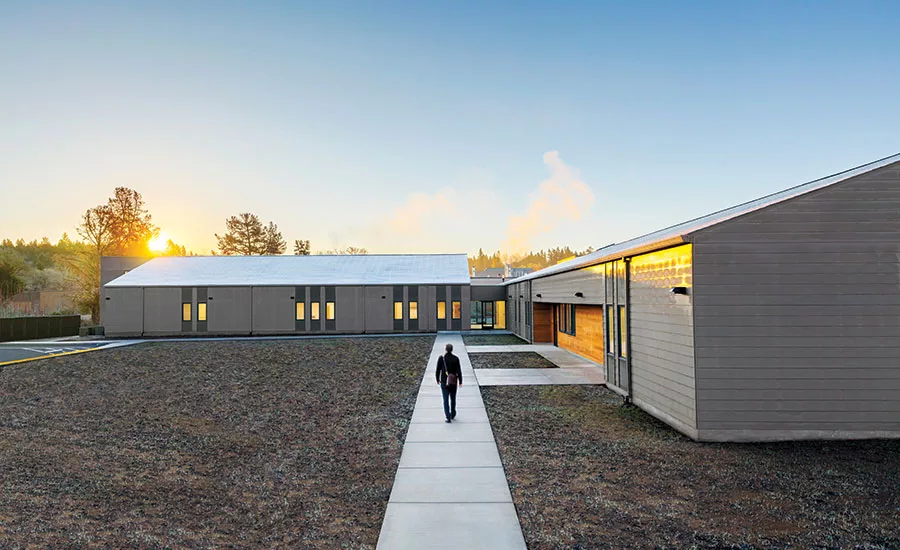
Lamprich Center
Jermyn wanted to avoid the labyrinth feeling of many healthcare facilities, so he reduced a complex program, comprising a clinic, rehabilitation center, pharmacy, and office space, to two bars in an L, placing the pharmacy and offices in one and the patient clinics in the other.
Photo © Lucas Fladzinski
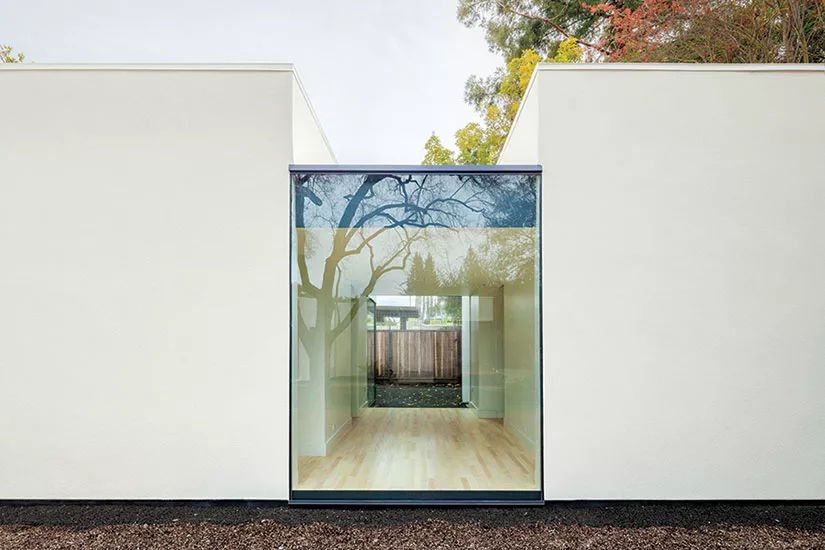
TP-H Residence
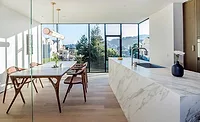
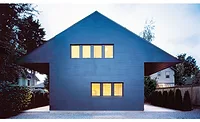
A robust connection to the outdoors was this project’s overall concept. In this renovation of a 1,000-square-foot Palo Alto home, plus a new addition, the design team played on the use of apertures to communicate the connection.
Photo © Lucas Fladzinsk
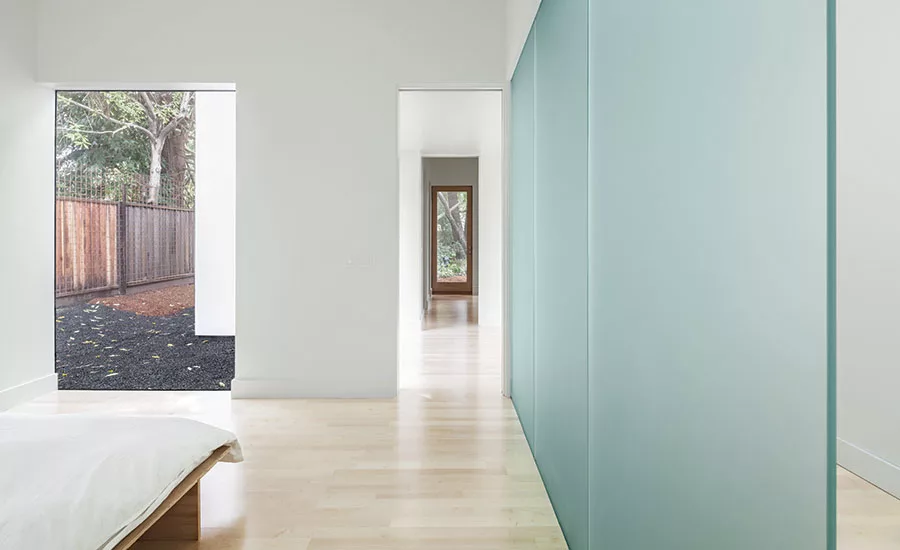
TP-H Residence
A robust connection to the outdoors was this project’s overall concept. In this renovation of a 1,000-square-foot Palo Alto home, plus a new addition, the design team played on the use of apertures to communicate the connection.
Photo © Lucas Fladzinski
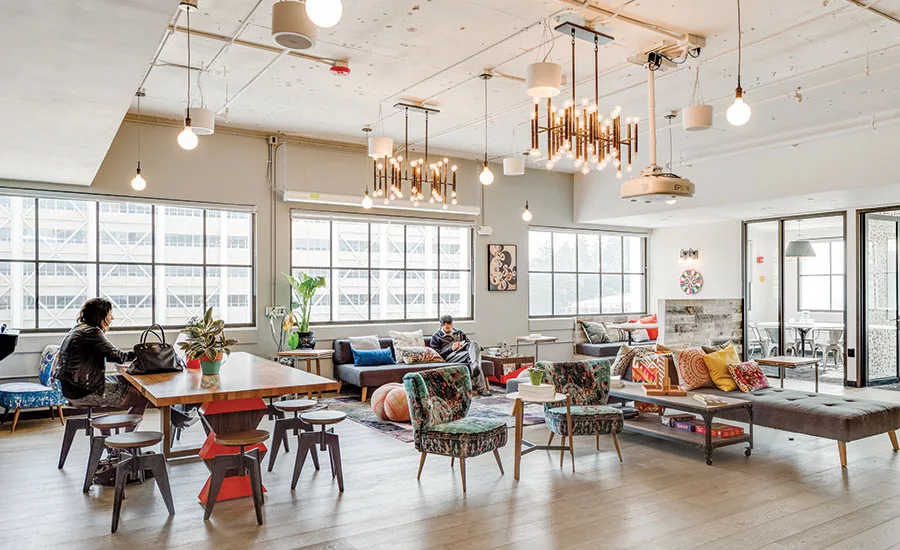
WeWork Berkeley
“Office projects are really informative for us—we like to see how people work and collaborate,” Jermyn says. For WeWork, the firm adapted the client’s planning model for a 7-story, 40,000 square-foot renovation of an existing building. The new space employs glazed offices, colorful conference rooms, and rustic, laid-back common areas to create a dynamic work environment suitable for a wide variety of businesses.
Photo © Chris Stark
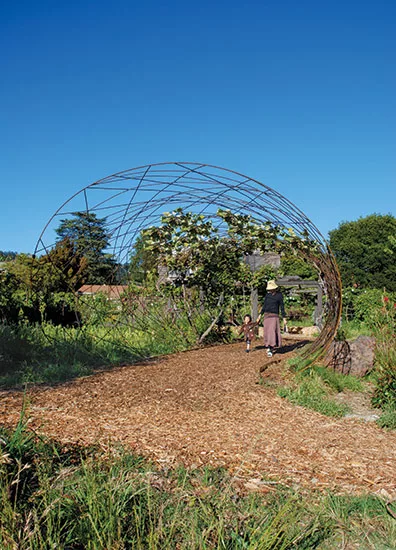
Edible Schoolyard
Sited on a former vacant lot adjacent to a Berkeley middle school, an “edible nest” made from interwoven steel rods signals a passageway and serves as a framework for kiwi vines to grow.
Photo © Terry and Terry Architecture
Architects & Firms
When he was a French Studies major at Wesleyan University, Alexander Jermyn considered becoming a diplomat. But after writing his senior thesis on Le Corbusier’s Unité d’Habitation, he was inspired to pursue architecture instead. “I couldn’t write about Le Corbusier without understanding modernism, so it was sort of a crash course in the field, which I enjoyed a lot,” he recalls. In 2010, Jermyn established his own practice—a five-person Berkeley design studio doing work ranging from residential to retail, health care, and office projects.
Jermyn, 41, received his M.Arch. from Yale and then worked for East Coast firms Architecture Research Office (ARO), Pickard Chilton Architects, and Jaklitsch / Gardner Architects, mostly in the realm of high-rises and high-end retail, before realizing he was more interested in pursuing midscale projects for mission-driven clients instead. Moving to California in 2009 provided an opening for the Pennsylvania native to delve into this type of work. “It was a clean break,” he says. “I found different opportunities here.”
After practicing for about year, he won a project to design a 7,400-square-foot barn in Sonoma County. From there, word of mouth and repeat clients offered more commissions, prompting him to tap into his network at UC Berkeley’s School of Architecture—where he taught an introductory studio course in 2010—to recruit additional staff.
Jermyn’s design philosophy draws on the perspective he gained in 2007 on a fellowship to study economic development in a village in southeastern India. “Being there inspired me to integrate a social narrative into my practice,” he says. “I’d like to find work that might have great social value, even though it might not have the right fee structure.” Striking a balance between projects such as the Edible Schoolyard, a 300-square-foot educational garden done pro bono, and more standard commissions—such as the 16,000-square-foot Lamprich Medical Center or the offices for the start-up WeWork—is important for maintaining the practice. At any given time, the studio has between three and six active projects.
Though the firm’s work is diverse, a common thread runs through it: a narrative can be read from the larger scale down to the details. “Every project has its own story, and our job is to develop that story,” says the architect. “Our process is about distilling things down to their essence.” Eliminating the intrusion of window frames in a Palo Alto residence, for example, was a way to emphasize a dialogue between the inside and outside.
Jermyn wants to sustain the collective spirit characteristic of his small studio. He also hopes to be more proactive and carve out commissions where they do not yet exist. “I would like for us to be stable enough and strategic enough to identify problems and create projects,” he says. “That’s where architecture is really valuable.”
Alexander Jermyn Architecture
Looking for quick answers on architecture and design topics?
Try Ask RECORD, our new smart AI search tool.
Ask RECORD →
FOUNDED: 2010
DESIGN STAFF: 5
PRINCIPALS: Alexander Jermyn
EDUCATION: Yale School of Architecture, M.Arch., 2002; Wesleyan University, B.A., 1997
WORK HISTORY: Architecture Research Office (ARO), 2008; Pickard Chilton, 2005–08; Jaklitsch / Gardner, 2002–05
KEY COMPLETED PROJECTS: Convert, 2016; Lamprich Center, 2015; WeWork Berkeley, 2015; Knoll San Francisco (in association with ARO), 2013; TP-H Residence, 2013; Sonoma barn, 2011; The Edible Schoolyard, 2010 (all in California)
KEY CURRENT PROJECTS: Medical Concept, 2017; KT Residence, 2017; RK Residence, 2018 (all in California)
Looking for a reprint of this article?
From high-res PDFs to custom plaques, order your copy today!