Architectural Record
search
cart
facebook twitter linkedin youtube
  • Sign In
  • Subscribe
  • Sign Out
  • My Account
Architectural Record
  • NEWS
    • Latest News
    • Awards
    • Interviews
    • Obituaries
    • Podcasts
      • Design:Ed Podcast
      • Sponsored Podcasts
  • OPINION
    • Book Reviews / Excerpts
    • Exhibition Reviews
    • Forum
  • EXCLUSIVES
    • Videos
    • Design Vanguard
    • Top 300 Firms
    • Sponsored Content
    • Sponsored eBooks
    • From the Archives
  • CONTINUING ED
    • Editorial Continuing Ed
    • CE Center
    • CE Academies
  • PROJECTS
    • Buildings By Type
    • Reuse & Renovation
    • Museums & Arts Centers
    • Colleges & Universities
    • Multifamily Housing
    • Interiors
    • Lighting
    • Kitchen & Bath
  • HOUSES
    • Record Houses
    • House of the Month
    • Featured Houses
  • PRODUCTS
    • Products by Category
    • Record Products of the Year
    • Latest Products
  • EVENTS
    • Dates & Events
    • Record on the Road
    • Innovation Conference
    • Sustainability in Practice
    • Women In Architecture
    • Webinars
    • Ad Excellence Awards
    • Submit an Event
  • CONNECT
    • Ask RECORD AI
    • Newsletters
    • Contact
    • Advertise
    • Editorial Calendar
    • Store
    • Customer Service
  • SUBMIT
    • Submission Guidelines
    • RECORD Competitions
  • MAGAZINE
    • Subscribe
    • My Account
    • Digital Edition
    • Current Issue
    • Firm Pass
    • Historic Archive
ProjectsMuseums & Art Centers

Huang Gongwang Museum by Amateur Architecture Studio

Fuyang, China

By Clifford A. Pearson
Huang Gongwang Museum

The architects choreographed a complex procession through the project, including terraces and walkways on the multipeaked roofs.

Photo © Iwan Baan
Huang Gongwang Museum

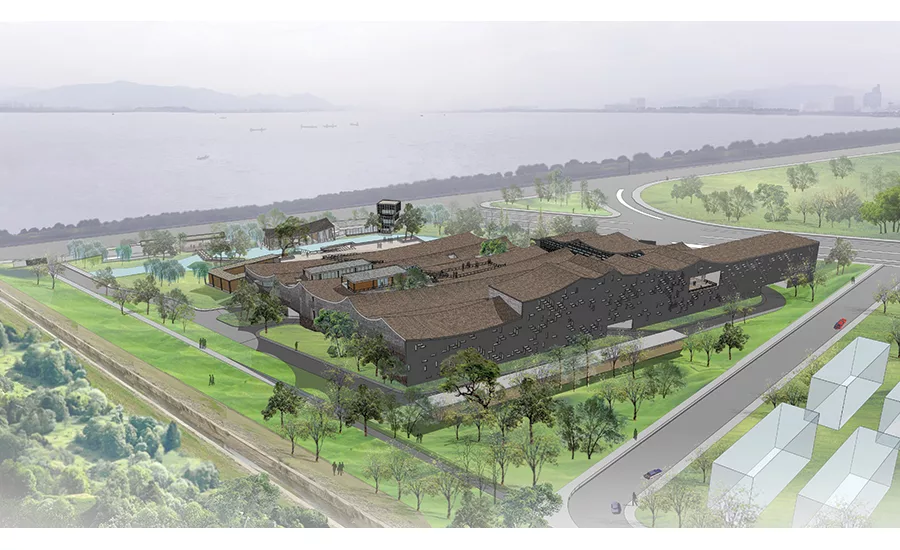
Overlooking the Fuchun River, the Fuyang Cultural Complex resembles a traditional Chinese village.

Rendering courtesy Amateur Architecture Studio
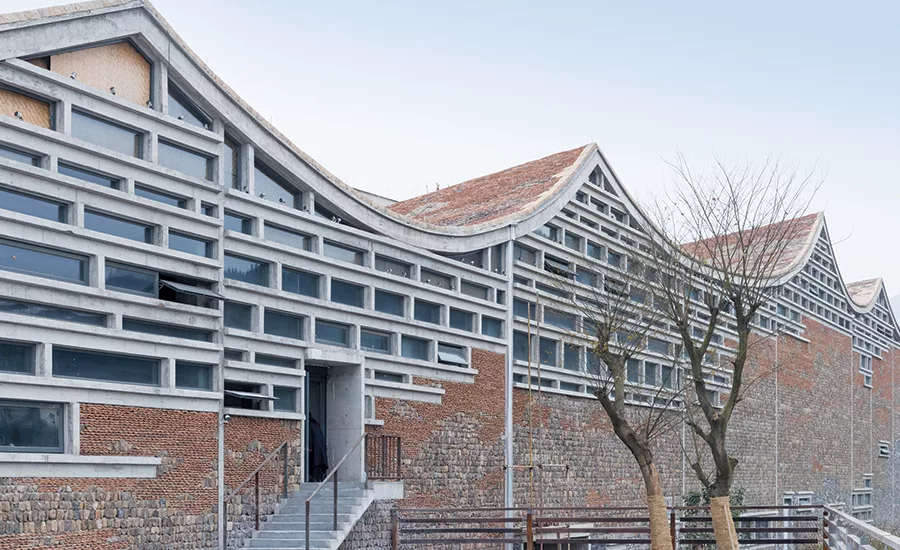
Huang Gongwang Museum

After entering the museum via a covered walkway, visitors exit at the opposite end of the complex.

Photo © Iwan Baan
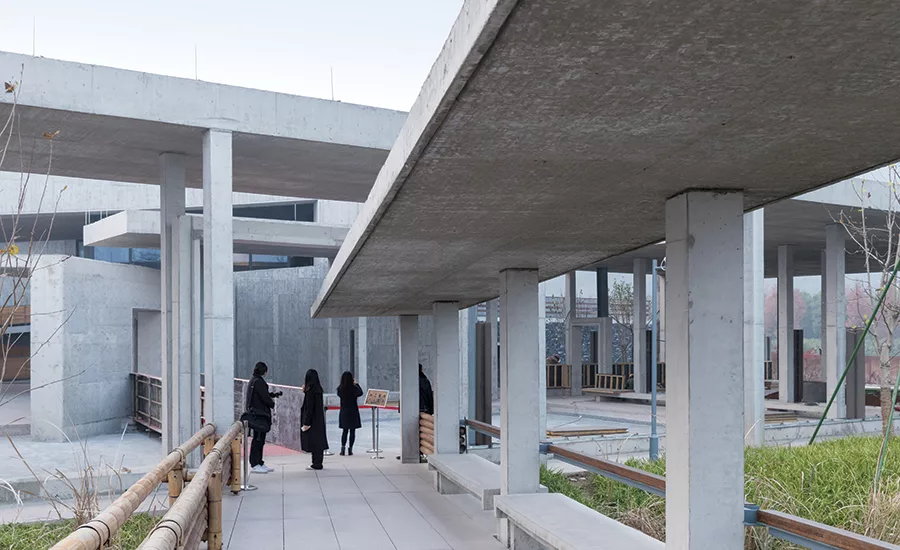
Huang Gongwang Museum

Visitors enter the museum from a covered walkway.

Photo © Iwan Baan
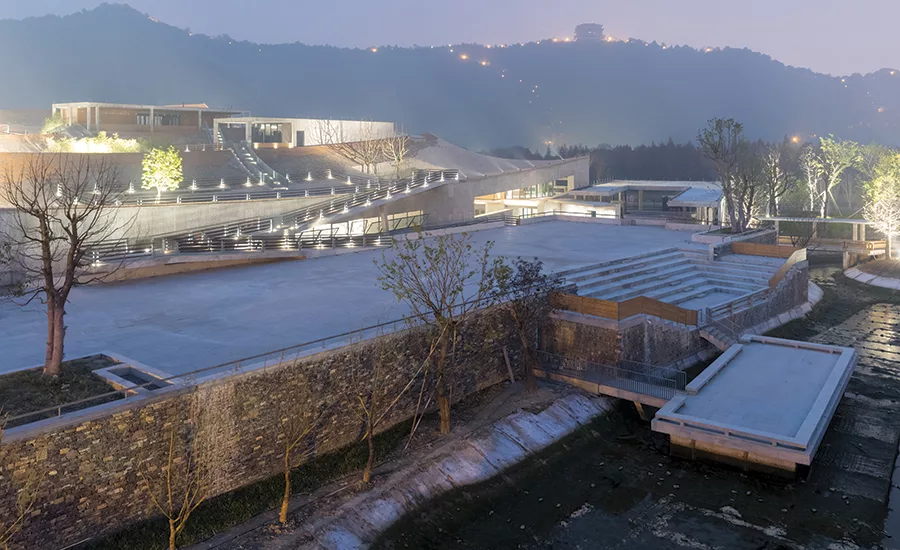
Huang Gongwang Museum

Seen from a small tower on the river side, the project unfolds as a series of terraces, courtyards, and paths.

Photo © Iwan Baan
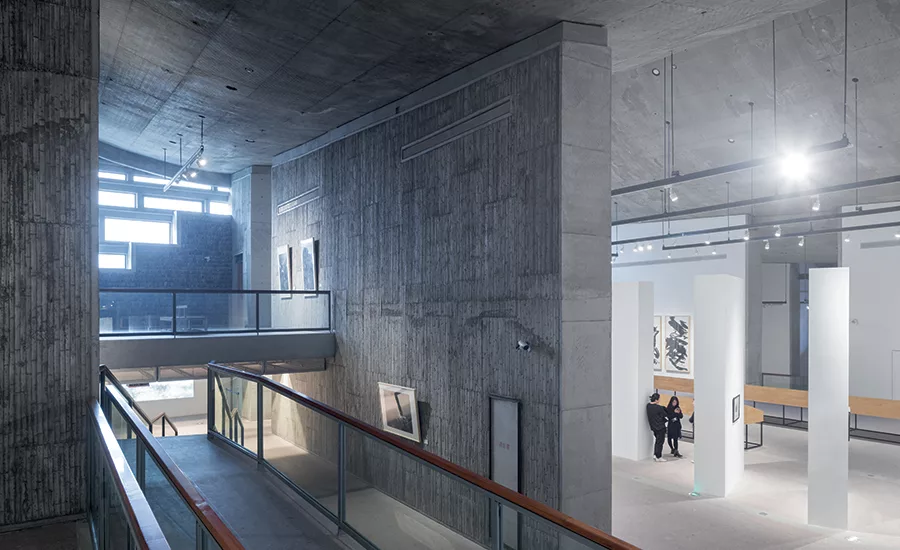
Huang Gongwang Museum

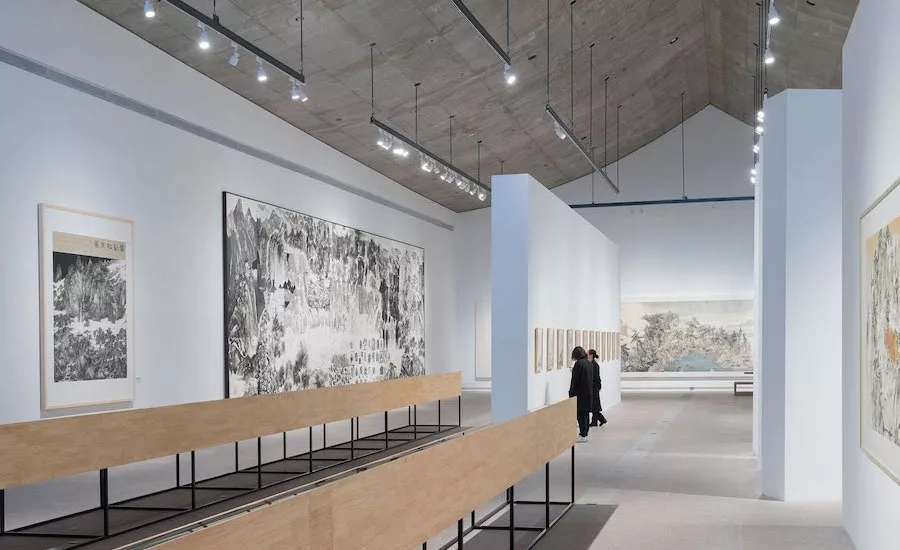
The architects love to contrast heavy elements such as concrete walls with large open spaces.

Photo © Iwan Baan
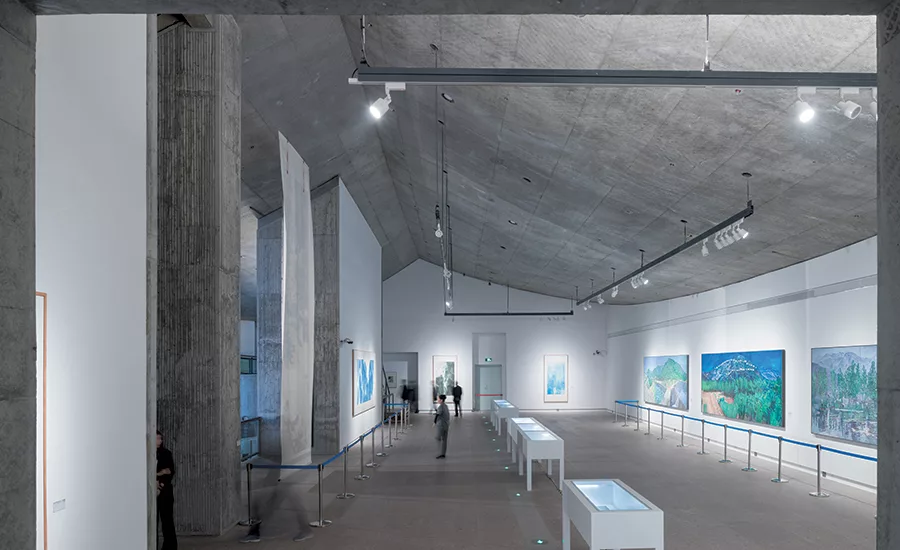
Huang Gongwang Museum

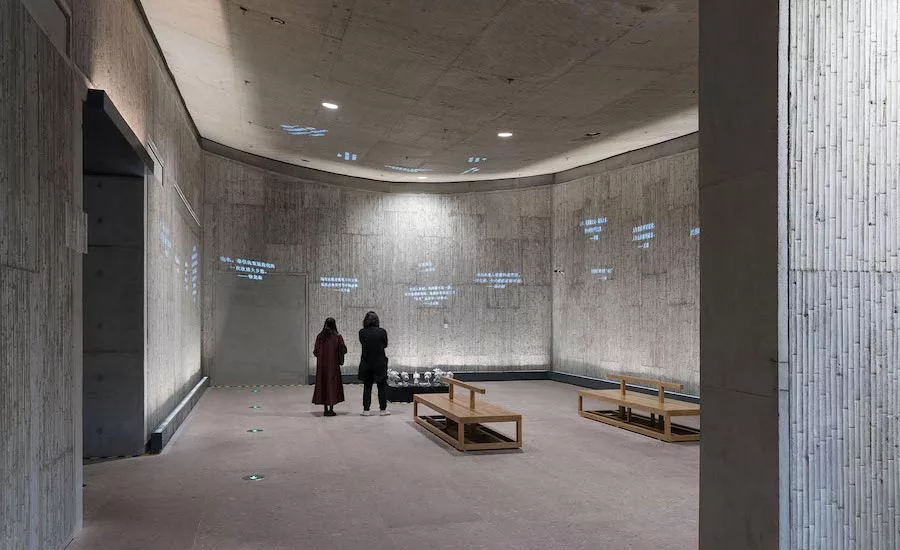
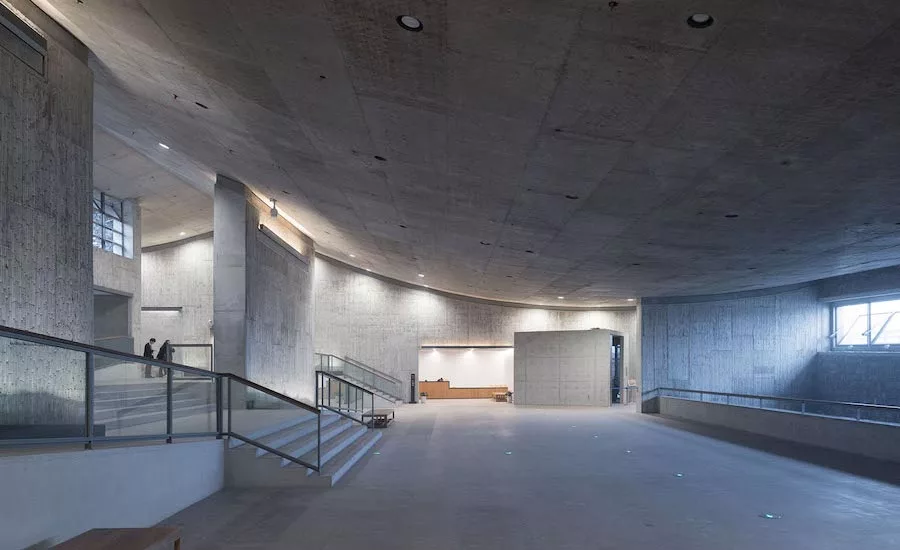
Bamboo formwork leaves its imprint on concrete in the gallery of contemporary art.

Photo © Iwan Baan
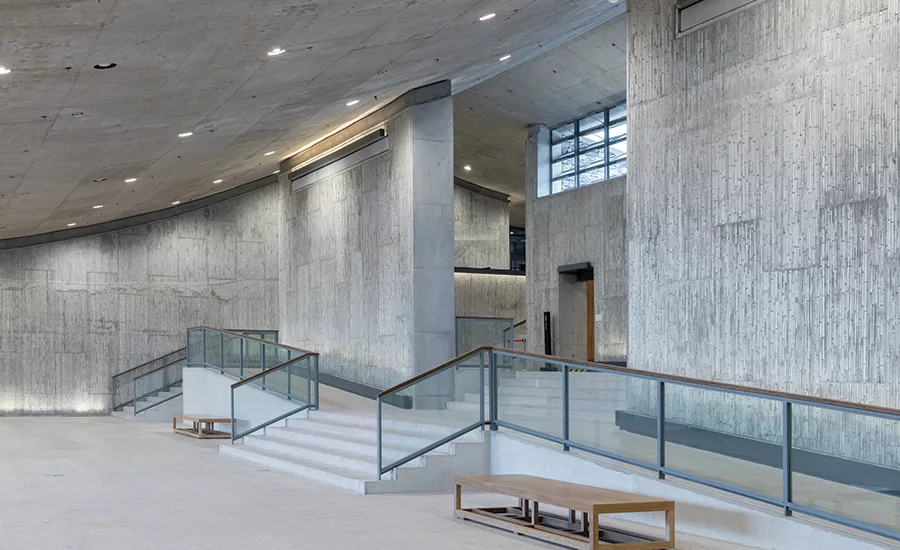
Huang Gongwang Museum

Bamboo formwork leaves its imprint on concrete in the main lobby.

Photo © Iwan Baan
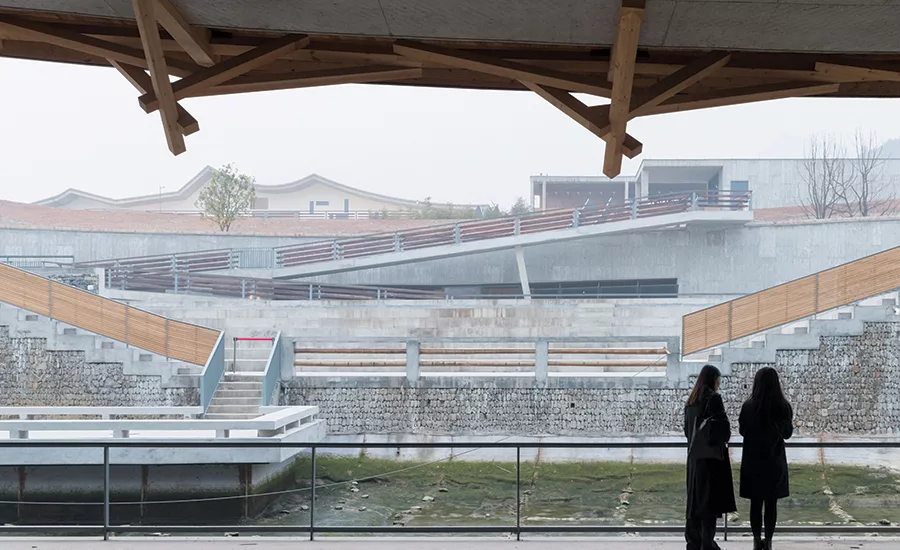
Huang Gongwang Museum

As Chinese landscape painters have done for centuries, Wang and Lu frame views of pavilions and pathways. Their architecture offers multiple perspectives, instead of a fixed point of view.

Photo © Iwan Baan
Huang Gongwang Museum

Photo © Iwan Baan

Huang Gongwang Museum

Photo © Iwan Baan

Huang Gongwang Museum

Photo © Iwan Baan

Huang Gongwang Museum
April 1, 2017

Architects & Firms

Amateur Architecture Studio
 

Since early in his career, when he worked on construction sites and got hands-on experience with vernacular building methods, Wang Shu has drawn inspiration from traditional Chinese attitudes toward architecture’s place within the larger context of landscape. So he and Lu Wenyu, his wife and partner in Amateur Architecture Studio, were logical choices to design the Huang Gongwang Museum, named after an important landscape painter who lived from 1269 to 1354. Located in Fuyang, about 20 miles southwest of Hangzhou, where Wang and Lu practice, the 160,000-square-foot museum honors one of the “Four Masters of the Yuan Dynasty,” whose work influenced Chinese artists for centuries. Appropriately, Huang painted one of his most famous works, Dwelling in the Fuchun Mountains, in the vicinity of the new building. Part of an assemblage of buildings dressed in rugged masonry and topped by multipeaked roofs, the museum resembles a village or a range of mountains, evoking community and geology in equal measure.

Additional Information:
Jump to credits & specifications

As China has experienced unprecedented urbanization over the past 30 years, a growing number of its people have begun to look at rural areas as retreats from the stress and chaos of big cities, much as Huang saw Fuyang—which was then a sleepy village but is now a city of 7 million—as an escape from the intrigues of court life. Following a long tradition of shanshui (mountain and water) art, Huang painted pavilions comfortably ensconced in a mountainous setting, with the Fuchun River flowing nearby and mists clinging to trees.

After Wang won the Pritzker Prize in 2012, the only Chinese architect to do so, city leaders in Fuyang invited him and Lu to design a cultural complex that would include the Huang museum, as well as a 130,000-square-foot gallery for contemporary landscape painting and an 86,000-square-foot archive. The architects accepted the commission on the condition that they could renovate a portion of Wencun, a small village 30 miles from Fuyang, and replace dilapidated houses for the villagers. Reconnecting the urban and rural here was important to them. In both Fuyang and Wencun, Wang and Lu approach architecture as a means of integrating building with landscape, creating a narrative experience as people move through the projects.

Most of the Huang Museum opened this past September, along with the gallery (the archive should be completed by the end of the year).

The structures unfold as a series of pavilions that wrap around courtyards and are connected by zigzagging pathways, including one atop the rolling roofscape. “When you step into the building,” says Lu, “you feel as if you walked into a landscape painting.” Just as scroll paintings give the sense of wandering through a scene rather than viewing it from a fixed perspective, the Fuyang Cultural Complex takes visitors on a journey through outdoor and indoor rooms. Creating surprises along the way, the architects designed the project so you see it from different depths, heights, and angles, says Lu. And by arranging the various parts on a sloped site, Wang and Lu built an artificial mountain that speaks to the real ones behind it.

Both inside and out, the architecture presents visitors with a series of layers. Poured-concrete buildings—some clad with the same bricolage of recycled brick, tile, and stone that Amateur Architecture famously used in projects such as the Ningbo History Museum and the Xiangshan Campus of the China Academy of Art—ascend the site in concert with pools of water, terraces, and stairs. Inside, you keep wandering, from a spacious lobby, through cutouts in thick concrete walls, and into galleries topped by the multiple peaks of the tentlike roof. Lu notes that she and Wang saw the Fuyang Cultural Complex as part of a landscape that includes Wencun village. “They form a new painting in a larger geographical space,” she says.


Credits

Architects:

Wang Shu / Lu Wenyu


Design team:

Amateur Architecture Studio/Cheng lichao/Cheng Hao/ Wang Tiantian


Engineering:

Shentu Tuanbing (structural)

Sun Mingliang (electrical)

Cheng Chunji (mechanical)


Site supervision:

Lin Mi/Yan Hongbo


Other consultants:

The Design Institue of Landscape & Architecture China Acadmey of Art


Client:

Art Gallery/History Museum/Archives


Specifications

Materials:

Earth; Local Stone; Bamboo; Wood; Concrete; Tile; Glass; Steel ; and etc

 
KEYWORDS: China

Share This Story

Looking for a reprint of this article?
From high-res PDFs to custom plaques, order your copy today!

Cliff portrait 2 0t5a1761 0031

Contributing editor Clifford Pearson is the co-author, with A. Eugene Kohn, of The World By Design, and writes about architecture and urbanism.

Post a comment to this article

Report Abusive Comment

Subscription Center
  • Create an Account
  • Start a Subscription
  • Manage My Account
  • Sign Up for Newsletters
  • Visit Customer Service
  • Update Preferences

More Videos

Sponsored Content

Sponsored Content is a special paid section where industry companies provide high quality, objective, non-commercial content around topics of interest to the Architectural Record audience. All Sponsored Content is supplied by the advertising company and any opinions expressed in this article are those of the author and not necessarily reflect the views of Architectural Record or its parent company, BNP Media. Interested in participating in our Sponsored Content section? Contact your local rep!

close
  • TAMLYN XtremeTrim Exterior Trim
    Sponsored byTamlyn

    Designing Cleaner Panel Facades: Why Exterior Trim Details Matter

  • Building with Vapor Barriers
    Sponsored byReef Industries, Inc.

    Vapor Barriers Help Control Moisture in Tighter Building Designs

  • Duct Interior with Prodeq System
    Sponsored byHenry, a Carlisle Company

    Designing Resilient Water Containment Systems

DESIGN:ED Podcast
Listen to Architectural Record’s DESIGN:ED Podcast

Events

June 10, 2026

Rethinking Stormwater – The Power of Porous Paving

Credits: 1 AIA LU/HSW; 1 AIBD P-CE; 0.1 ICC CEU

Learn how porous paving systems support stormwater management, reduce heat island effects, and enhance sustainable site design performance.

June 11, 2026

Very Early Warning Fire Detection for Mission-Critical Facilities

Credits: 1 AIA LU/HSW; 1 AIBD P-CE; 0.1 ICC CEU

Examine advanced fire detection strategies that support uptime and enhance safety in data centers and other mission-critical facilities.

View All Submit An Event

Products

2026 Architect's Square Foot Costbook

2026 Architect's Square Foot Costbook

See More Products

Popular Stories

Practice Matters illustration

What’s in a (Firm’s) Name? Thinking About Succession and Legacy

Practice Matters illustration

By the Numbers: Counting America's Architects

Riverdale House by Studio Lau

Riverdale House by Studio Lau

House on a Hill

Design Vanguard 2026: Forma

Crane Cove, ONO

Design Vanguard 2026 Winners

Broader Sustainability of CMU - Free Webinar - May 21, 2026

Related Articles

  • Tiles Hill by Amateur Architecture Studio

    See More
  • Hangzhou Teahouse.

    Tea House at Linyin Buddhist Temple by Amateur Architecture Studio

    See More
  • Amateur Studio Celadon Tile.jpg

    Amateur Architecture Studio Clads a Chinese Archive with Thousands of Celadon Tiles

    See More

Related Products

See More Products
  • 3dthinking.jpg

    3D Thinking in Design and Architecture: From Antiquity to the Future

  • american arch.jpg

    American Architecture: An Illustrated Encyclopedia

  • ribbonarch.jpg

    Ribbon Architecture: Light, Shadow, and Reflection in Architecture

See More Products
×

The latest news and information

#1 Source for Architectural Design, News and Products

SUBSCRIBE
  • RESOURCES
    • Advertise
    • Contact Us
    • Submit
    • Store
  • ACCOUNT CENTER
    • Create an Account
    • Start a Subscription
    • Manage My Account
    • Sign Up for Newsletters
    • Visit Customer Service
    • Update Preferences
  • PRIVACY
    • PRIVACY POLICY
    • TERMS & CONDITIONS
    • DO NOT SELL MY PERSONAL INFORMATION
    • PRIVACY REQUEST
    • ACCESSIBILITY
  • SERVICES
    • Marketing Services
    • Reprints
    • Market Research
    • List Rental
    • Survey/Respondent Access
  • STAY CONNECTED
    • Linkedin
    • Facebook
    • Instagram
    • YouTube
    • X (Twitter)

Copyright ©2026. All Rights Reserved BNP Media, Inc. and BNP Media II, LLC.

Design, CMS, Hosting & Web Development :: ePublishing