Architectural Record
search
cart
facebook twitter linkedin youtube
  • Sign In
  • Subscribe
  • Sign Out
  • My Account
Architectural Record
  • NEWS
    • Latest News
    • Awards
    • Interviews
    • Obituaries
    • Podcasts
      • Design:Ed Podcast
      • Sponsored Podcasts
  • OPINION
    • Book Reviews / Excerpts
    • Exhibition Reviews
    • Forum
  • EXCLUSIVES
    • Videos
    • Design Vanguard
    • Top 300 Firms
    • Sponsored Content
    • Sponsored eBooks
    • From the Archives
  • CONTINUING ED
    • Editorial Continuing Ed
    • CE Center
    • CE Academies
  • PROJECTS
    • Buildings By Type
    • Reuse & Renovation
    • Museums & Arts Centers
    • Colleges & Universities
    • Multifamily Housing
    • Interiors
    • Lighting
    • Kitchen & Bath
  • HOUSES
    • Record Houses
    • House of the Month
    • Featured Houses
  • PRODUCTS
    • Products by Category
    • Record Products of the Year
    • Latest Products
  • EVENTS
    • Dates & Events
    • Record on the Road
    • Innovation Conference
    • Sustainability in Practice
    • Women In Architecture
    • Webinars
    • Ad Excellence Awards
    • Submit an Event
  • CONNECT
    • Ask RECORD AI
    • Newsletters
    • Contact
    • Advertise
    • Editorial Calendar
    • Store
    • Customer Service
  • SUBMIT
    • Submission Guidelines
    • RECORD Competitions
  • MAGAZINE
    • Subscribe
    • My Account
    • Digital Edition
    • Current Issue
    • Firm Pass
    • Historic Archive
Architecture News

New York City Releases First Climate Resiliency Design Guidelines
By Ben Adler
NYC Releases First Climate Resiliency Design Guidelines

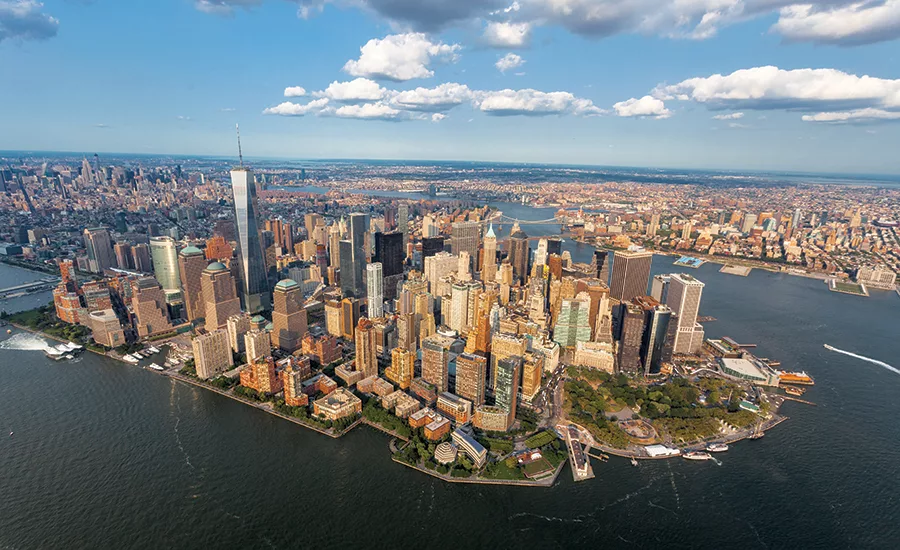
New York has released a preliminary set of design guidelines to protect city projects from the effects of climate change, especially in vulnerable coastal areas.

Photo © Daniele Pieroni / Flickr
NYC Releases First Climate Resiliency Design Guidelines

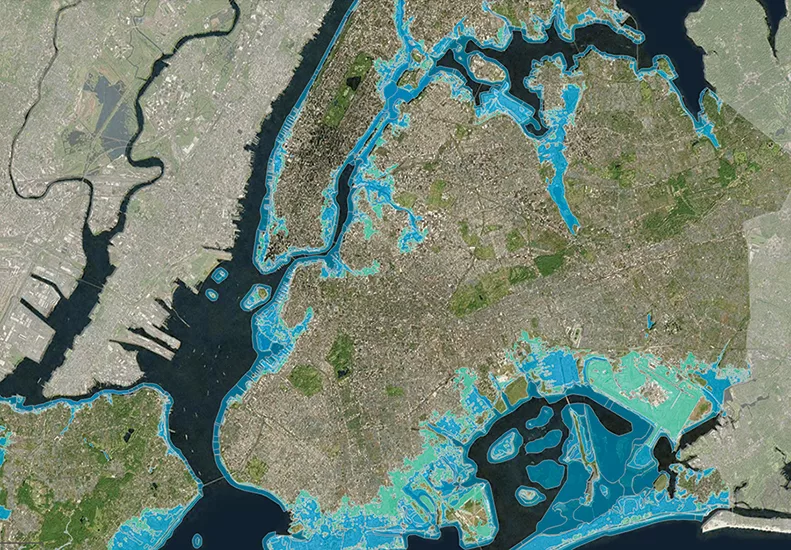
Chief among the risks identified by the report is sea-level rise. New York’s online Flood Hazard Mapper, for example, will help designers take into account both code and the rising waters of the future.

Image courtesy NYC Department of City Planning

NYC Releases First Climate Resiliency Design Guidelines
May 30, 2017

New York city, a collection of islands with 578 miles of coastline, is taking a big step in preparing for climate change. Last month, the Mayor’s Office of Recovery & Resiliency (ORR) released preliminary Climate Resiliency Design Guidelines for all of the city government’s capital projects, from libraries to bridges. The recommendations will now enter a pilot phase before being finalized in December.

While President Trump has denied climate science and is removing many of his predecessor’s climate-focused environmental regulations, highly vulnerable cities such as New York cannot afford to be unprepared. As Superstorm Sandy demonstrated in 2012, the population and economic activity threatened by more frequent extreme weather events is enormous. The new design guidelines are just one of ORR’s efforts to fortify New York against climate change. It also is surrounding Lower Manhattan with parks that serve as flood barriers and constructing a series of protective breakwaters along the coast of Staten Island.

Building regulations have relied on historical data for temperatures or storm surges, but now New York will look ahead to future projections across four areas of climate risk: storm level surges, sea-level rise, higher temperatures, and escalating peak precipitation.

Those risks over the expected lifetime of new buildings, roads, parks, and other public infrastructure projects are significant. For example, according to the New York City Panel on Climate Change (NPCC)—an independent body of scientists formed in 2008 by then- Mayor Michael Bloomberg—by 2050, New York’s average temperature is projected to increase between 4.1 and 6.6 degrees Fahrenheit. Last year, an article in the journal Environmental Health Perspectives found annual heat-related deaths in New York could increase by more than 500 percent by the 2080s.

But while the guidelines recommend features such as green roofs and lighter-colored, reflective surfaces to mitigate the urban heat island effect, they will not require any specific measures. “We’re not being prescriptive about the strategy,” says Susanne DesRoches, deputy director of infrastructure policy for ORR. “We want the design community to come back to us and say, This is how you can incorporate this climate data and resiliency.”

The city is taking the same open-ended approach to preparing for other threats. For dealing with heavier storms—New York’s rainfall is expected to increase by 4 to 13 percent by midcentury—the city will lay down permeable streets and build bioswales. But how exactly, say, a landscape architect might bring that information to bear on a new pocket park will be proposed by the designers and decided by the relevant agency on a case-by-case basis.

DesRoches and her colleagues worked closely with the city agencies responsible for actually building new projects, such as the Department of Parks and the Department of Environmental Protection, and they consulted the climatechange and resilience strategies already being employed in other coastal cities such as Boston and Miami. They also leveraged data produced by the NPCC’s biannual reports that attempt to measure how the likely global average temperature increases and related effects will be manifested in New York. ORR used those local projections to draft the guidelines.

DesRoches says that, with these recommendations— which go beyond the building code required of private developments—“the city is really going to lead by example.” The hope is that the private sector and other cities will follow suit. Climate change, and our understanding of it, is constantly evolving and so too must architecture and engineering. Says DesRoches, “This is what we see as a first step.”

Looking for quick answers on architecture and design topics?
Try Ask RECORD, our new smart AI search tool.
Ask RECORD →

KEYWORDS: cities New York City resiliency

Share This Story

Looking for a reprint of this article?
From high-res PDFs to custom plaques, order your copy today!


Post a comment to this article

Report Abusive Comment

Subscription Center
  • Create an Account
  • Start a Subscription
  • Manage My Account
  • Sign Up for Newsletters
  • Visit Customer Service
  • Update Preferences

More Videos

Sponsored Content

Sponsored Content is a special paid section where industry companies provide high quality, objective, non-commercial content around topics of interest to the Architectural Record audience. All Sponsored Content is supplied by the advertising company and any opinions expressed in this article are those of the author and not necessarily reflect the views of Architectural Record or its parent company, BNP Media. Interested in participating in our Sponsored Content section? Contact your local rep!

close
  • TAMLYN XtremeTrim Exterior Trim
    Sponsored byTamlyn

    Designing Cleaner Panel Facades: Why Exterior Trim Details Matter

  • Building with Vapor Barriers
    Sponsored byReef Industries, Inc.

    Vapor Barriers Help Control Moisture in Tighter Building Designs

  • Duct Interior with Prodeq System
    Sponsored byHenry, a Carlisle Company

    Designing Resilient Water Containment Systems

DESIGN:ED Podcast
Listen to Architectural Record’s DESIGN:ED Podcast

Events

June 10, 2026

Rethinking Stormwater – The Power of Porous Paving

Credits: 1 AIA LU/HSW; 1 AIBD P-CE; 0.1 ICC CEU

Learn how porous paving systems support stormwater management, reduce heat island effects, and enhance sustainable site design performance.

June 11, 2026

Very Early Warning Fire Detection for Mission-Critical Facilities

Credits: 1 AIA LU/HSW; 1 AIBD P-CE; 0.1 ICC CEU

Examine advanced fire detection strategies that support uptime and enhance safety in data centers and other mission-critical facilities.

View All Submit An Event

Products

2026 Architect's Square Foot Costbook

2026 Architect's Square Foot Costbook

See More Products

Popular Stories

Coronado Bridge

The Architect’s Guide to San Diego

Practice Matters illustration

What’s in a (Firm’s) Name? Thinking About Succession and Legacy

Practice Matters illustration

By the Numbers: Counting America's Architects

Inward House

Inward House by VeeV Design Studio

Riverdale House by Studio Lau

Riverdale House by Studio Lau

Broader Sustainability of CMU - Free Webinar - May 21, 2026

Related Articles

  • MoMA

    New York City Museums Reopen for First Time Since COVID-19

    See More
  • 121 East 22nd Street

    OMA’s First Ground-Up Project in New York City Now Complete

    See More
  • OMA to Design New Museum Expansion

    OMA to Design New Museum Expansion in New York City

    See More

Related Products

See More Products
  • WC_-SCA.png

    Building Great Schools for a Great City

See More Products
×

The latest news and information

#1 Source for Architectural Design, News and Products

SUBSCRIBE
  • RESOURCES
    • Advertise
    • Contact Us
    • Submit
    • Store
  • ACCOUNT CENTER
    • Create an Account
    • Start a Subscription
    • Manage My Account
    • Sign Up for Newsletters
    • Visit Customer Service
    • Update Preferences
  • PRIVACY
    • PRIVACY POLICY
    • TERMS & CONDITIONS
    • DO NOT SELL MY PERSONAL INFORMATION
    • PRIVACY REQUEST
    • ACCESSIBILITY
  • SERVICES
    • Marketing Services
    • Reprints
    • Market Research
    • List Rental
    • Survey/Respondent Access
  • STAY CONNECTED
    • Linkedin
    • Facebook
    • Instagram
    • YouTube
    • X (Twitter)

Copyright ©2026. All Rights Reserved BNP Media, Inc. and BNP Media II, LLC.

Design, CMS, Hosting & Web Development :: ePublishing