Architectural Record
search
cart
facebook twitter linkedin youtube
  • Sign In
  • Subscribe
  • Sign Out
  • My Account
Architectural Record
  • NEWS
    • Latest News
    • Awards
    • Interviews
    • Obituaries
    • Podcasts
      • Design:Ed Podcast
      • Sponsored Podcasts
  • OPINION
    • Book Reviews / Excerpts
    • Exhibition Reviews
    • Forum
  • EXCLUSIVES
    • Videos
    • Design Vanguard
    • Top 300 Firms
    • Sponsored Content
    • Sponsored eBooks
    • From the Archives
  • CONTINUING ED
    • Editorial Continuing Ed
    • CE Center
    • CE Academies
  • PROJECTS
    • Buildings By Type
    • Reuse & Renovation
    • Museums & Arts Centers
    • Colleges & Universities
    • Multifamily Housing
    • Interiors
    • Lighting
    • Kitchen & Bath
  • HOUSES
    • Record Houses
    • House of the Month
    • Featured Houses
  • PRODUCTS
    • Products by Category
    • Record Products of the Year
    • Latest Products
  • EVENTS
    • Dates & Events
    • Record on the Road
    • Innovation Conference
    • Sustainability in Practice
    • Women In Architecture
    • Webinars
    • Ad Excellence Awards
    • Submit an Event
  • CONNECT
    • Ask RECORD AI
    • Newsletters
    • Contact
    • Advertise
    • Editorial Calendar
    • Store
    • Customer Service
  • SUBMIT
    • Submission Guidelines
    • RECORD Competitions
  • MAGAZINE
    • Subscribe
    • My Account
    • Digital Edition
    • Current Issue
    • Firm Pass
    • Historic Archive
Opinion

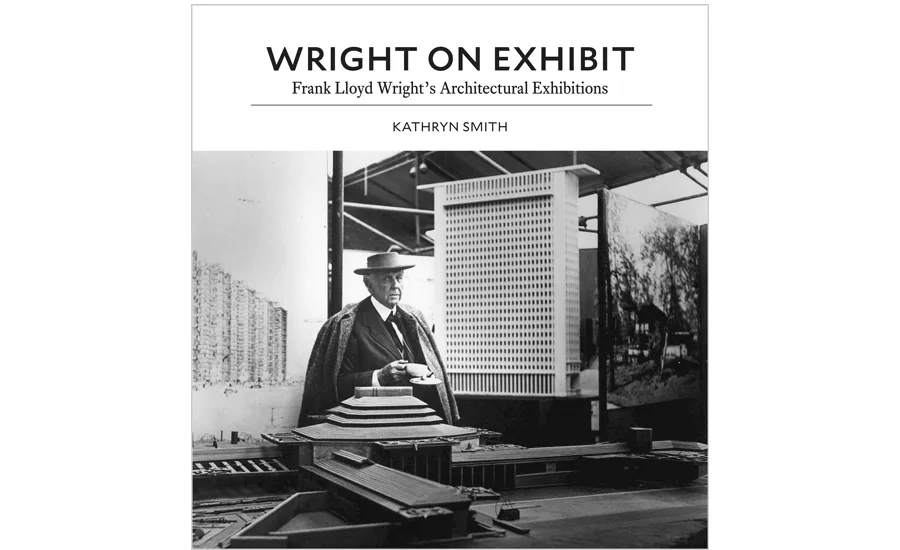
Wright on Exhibit: Frank Lloyd Wright’s Architectural Exhibitions

By Kathryn Smith
By Anthony Paletta
Greatest Showman on Earth

Wright on Exhibit: Frank Lloyd Wright’s Architectural Exhibitions, by Kathryn Smith, Princeton University Press, 288 pages, $60.

July 1, 2017

Frank Lloyd wright’s 65 years of museum exhibitions during his lifetime produced little surviving evidence in catalogue form—and the domineering manner he brought to the process of putting on a show does much to explain the dearth. Now Kathryn Smith takes us on a comprehensive tour through Wright’s exhibitions, from his first at the Chicago Architectural Club of 1894 to New York’s Metropolitan Museum of Art in 1959. The details are fascinating, especially because of what they tell about the inclusions in those presentations and why they were chosen.

Wright was not content to let curators select or arrange his own work, and he erupted with scabrous objections at their mild efforts to do so. He often provided his own drawings, models, photographs, and text, and at times had a hand in the layout of shows. Accordingly, the impression has emerged of Wright as a cantankerous traveling salesman, arranging his wares to maximize profit. This idea Smith categorically rejects. As she emphasizes, Wright’s museum displays resembled not the advertising pitch but the sermon. He reliably failed to take opportunities to meet museum trustees or other deep-pocketed grandees, and was given to omitting his most popular or venerable works in favor of projects he found more artistically important.

The overall history of his exhibitions, Smith says, reveals “an artist-architect projecting an avant-garde program, an innovator expanding the palette of installation design as technology evolved, and a social activist challenging architectural students and the public with his accompanying lectures and publications.”

The single most discernible trend in the decades of Wright shows was an increased emphasis on the modern qualities of his work with an effort—sometimes accurate, sometimes knavish—to claim credit as the source of inspiration for later modernists. In the early 1930s, Wright began to omit his more conservative or ornamental works from museum shows in favor of schemes he regarded as prototypically modern. His Mostra dell’Opera di Frank Lloyd Wright (often called the “Italian Exhibition”), which opened in 1951 in the Palazzo Strozzi in Florence, featured the Willits House and the Larkin Building, leaving out the better-known Dwight D. Martin and Robie houses. It was part of his consciously self-selective effort to stress emblematically modern developments within his work, such as the unit system, the free plan, and flat-roof buildings.

Smith’s book is a long-needed chronicle of changes in curatorial practice and technology, particularly at New York’s Museum of Modern Art (MoMA), which mounted six solo exhibitions on Wright between 1932 and 1953, and eight others in which he appeared during this time. The architect’s Chicago Architectural Club forays primarily were a showcase for delicate water-colored draftsmanship and small architectural drawings; by 1959 you might find large photomurals, 14 by 20 feet. Wright did not always embrace color in renderings and then photographs: for the expanded version of The Work of Frank Lloyd Wright, 1893– 1930 at the Art Institute of Chicago in 1930, he had early polychrome renderings redrawn as large black-and-white perspectives to show, as Smith points out, “he had anticipated the radical forms of European modernism by decades.”

The book also includes his caustic correspondence, notably with Philip Johnson. After Johnson had come back to MoMA in 1946 to once again act as the director of the department of architecture, he assured Wright he wanted to install a Usonian house in the MoMA garden. But Breuer beat Wright to it in 1949, when his design for a full-scale modern house opened in this setting. Wright wrote: “Phil . . . how could you allow the museum to buy and plug with Usonian language that shanty town version from ‘33rd Street and the tracks’ now in your garden. For Christ’s sake—what a travesty.”

MoMA, judging by its sprawling show, Frank Lloyd Wright at 150: Unpacking the Archive, is clearly fond of its substantial, newly acquired Wright collection, but it may not miss the confrontations it experienced when the master was alive.

Looking for quick answers on architecture and design topics?
Try Ask RECORD, our new smart AI search tool.
Ask RECORD →

KEYWORDS: Book Reviews / Excerpts Frank Lloyd Wright

Share This Story

Looking for a reprint of this article?
From high-res PDFs to custom plaques, order your copy today!
Anthony Paletta is a architectural writer based in Brooklyn.

Post a comment to this article

Report Abusive Comment

Subscription Center
  • Create an Account
  • Start a Subscription
  • Manage My Account
  • Sign Up for Newsletters
  • Visit Customer Service
  • Update Preferences

More Videos

Sponsored Content

Sponsored Content is a special paid section where industry companies provide high quality, objective, non-commercial content around topics of interest to the Architectural Record audience. All Sponsored Content is supplied by the advertising company and any opinions expressed in this article are those of the author and not necessarily reflect the views of Architectural Record or its parent company, BNP Media. Interested in participating in our Sponsored Content section? Contact your local rep!

close
  • TAMLYN XtremeTrim Exterior Trim
    Sponsored byTamlyn

    Designing Cleaner Panel Facades: Why Exterior Trim Details Matter

  • Building with Vapor Barriers
    Sponsored byReef Industries, Inc.

    Vapor Barriers Help Control Moisture in Tighter Building Designs

  • Duct Interior with Prodeq System
    Sponsored byHenry, a Carlisle Company

    Designing Resilient Water Containment Systems

DESIGN:ED Podcast
Listen to Architectural Record’s DESIGN:ED Podcast

Events

June 10, 2026

Rethinking Stormwater – The Power of Porous Paving

Credits: 1 AIA LU/HSW; 1 AIBD P-CE; 0.1 ICC CEU

Learn how porous paving systems support stormwater management, reduce heat island effects, and enhance sustainable site design performance.

June 11, 2026

Very Early Warning Fire Detection for Mission-Critical Facilities

Credits: 1 AIA LU/HSW; 1 AIBD P-CE; 0.1 ICC CEU

Examine advanced fire detection strategies that support uptime and enhance safety in data centers and other mission-critical facilities.

View All Submit An Event

Products

2026 Architect's Square Foot Costbook

2026 Architect's Square Foot Costbook

See More Products

Popular Stories

Practice Matters illustration

What’s in a (Firm’s) Name? Thinking About Succession and Legacy

Practice Matters illustration

By the Numbers: Counting America's Architects

House on a Hill

Design Vanguard 2026: Forma

Crane Cove, ONO

Design Vanguard 2026 Winners

House A on a Hill

Design Vanguard 2026: Santiago Valdivieso

Broader Sustainability of CMU - Free Webinar - May 21, 2026

Related Articles

  • Lead-NBM-Exhibitions.jpg

    Exhibitions at the National Building Museum Explore D.C. Brutalism and Frank Lloyd Wright in Pennsylvania

    See More
  • FSC Lead-2.jpg

    Florida Southern College To Launch a School of Architecture on Its Frank Lloyd Wright–designed Campus

    See More
  • Restoration of Frank Lloyd Wright

    Restoration of Frank Lloyd Wright’s Unity Temple Unveiled

    See More

Related Products

See More Products
  • Architectural Record - January 2026

    Architectural Record January 2026 Issue

See More Products
×

The latest news and information

#1 Source for Architectural Design, News and Products

SUBSCRIBE
  • RESOURCES
    • Advertise
    • Contact Us
    • Submit
    • Store
  • ACCOUNT CENTER
    • Create an Account
    • Start a Subscription
    • Manage My Account
    • Sign Up for Newsletters
    • Visit Customer Service
    • Update Preferences
  • PRIVACY
    • PRIVACY POLICY
    • TERMS & CONDITIONS
    • DO NOT SELL MY PERSONAL INFORMATION
    • PRIVACY REQUEST
    • ACCESSIBILITY
  • SERVICES
    • Marketing Services
    • Reprints
    • Market Research
    • List Rental
    • Survey/Respondent Access
  • STAY CONNECTED
    • Linkedin
    • Facebook
    • Instagram
    • YouTube
    • X (Twitter)

Copyright ©2026. All Rights Reserved BNP Media, Inc. and BNP Media II, LLC.

Design, CMS, Hosting & Web Development :: ePublishing