Architectural Record
search
cart
facebook twitter linkedin youtube
  • Sign In
  • Subscribe
  • Sign Out
  • My Account
Architectural Record
  • NEWS
    • Latest News
    • Awards
    • Interviews
    • Obituaries
    • Podcasts
      • Design:Ed Podcast
      • Sponsored Podcasts
  • OPINION
    • Book Reviews / Excerpts
    • Exhibition Reviews
    • Forum
  • EXCLUSIVES
    • Videos
    • Design Vanguard
    • Top 300 Firms
    • Sponsored Content
    • Sponsored eBooks
    • From the Archives
  • CONTINUING ED
    • Editorial Continuing Ed
    • CE Center
    • CE Academies
  • PROJECTS
    • Buildings By Type
    • Reuse & Renovation
    • Museums & Arts Centers
    • Colleges & Universities
    • Multifamily Housing
    • Interiors
    • Lighting
    • Kitchen & Bath
  • HOUSES
    • Record Houses
    • House of the Month
    • Featured Houses
  • PRODUCTS
    • Products by Category
    • Record Products of the Year
    • Latest Products
  • EVENTS
    • Dates & Events
    • Record on the Road
    • Innovation Conference
    • Sustainability in Practice
    • Women In Architecture
    • Webinars
    • Ad Excellence Awards
    • Submit an Event
  • CONNECT
    • Ask RECORD AI
    • Newsletters
    • Contact
    • Advertise
    • Editorial Calendar
    • Store
    • Customer Service
  • SUBMIT
    • Submission Guidelines
    • RECORD Competitions
  • MAGAZINE
    • Subscribe
    • My Account
    • Digital Edition
    • Current Issue
    • Firm Pass
    • Historic Archive
ProjectsMuseums & Art Centers

Museum of the American Revolution by Robert A.M. Stern Architects

Philadelphia
By Diana Lind
Museum of the American Revolution

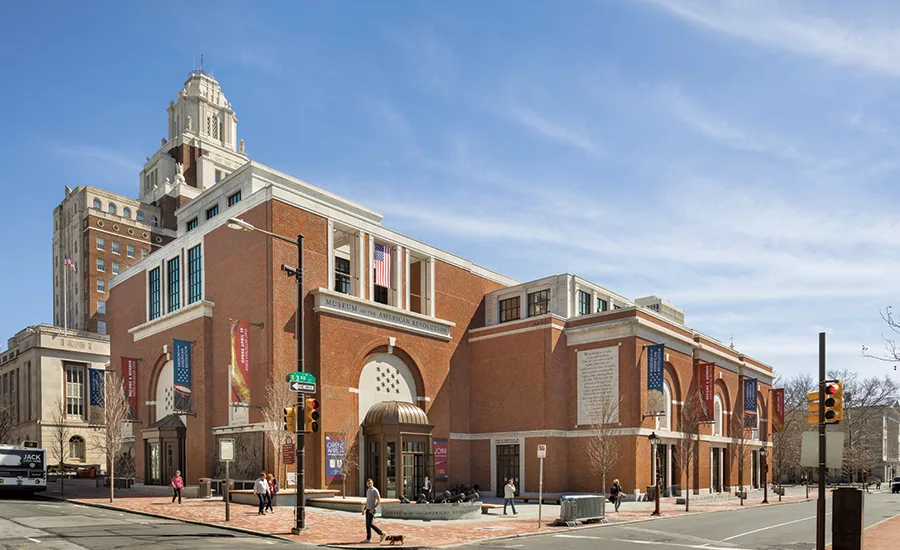
The new museum is the latest addition to the Independence Hall neighborhood in Philadelphia.

Photo © Peter Aaron
Museum of the American Revolution

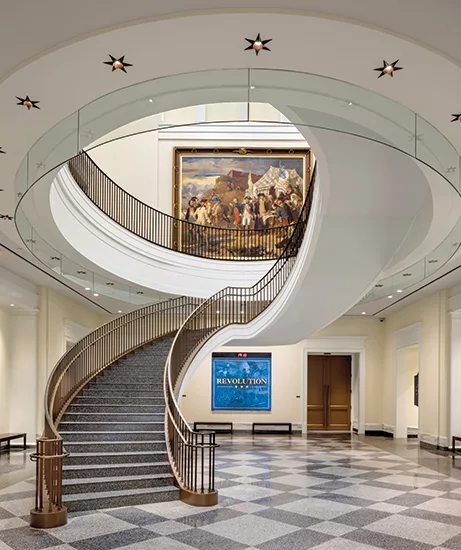
The spiral stair is the centerpiece of the interior, which has historic displays.

Photo © Peter Aaron
Museum of the American Revolution

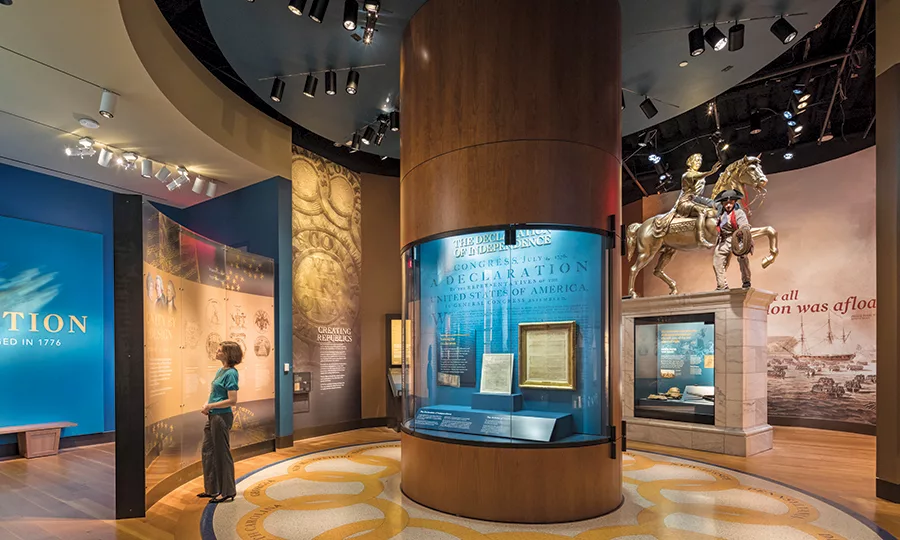
The spiral stair is the centerpiece of the interior, which has historic displays.

Photo © Peter Aaron
Museum of the American Revolution

Image courtesy Robert A.M. Stern Architects

Museum of the American Revolution
July 1, 2017

Architects & Firms

Robert A.M. Stern Architects


In the mid-20th century, Philadelphia witnessed the demolition of dozens of non-Colonial buildings, including two extraordinary Victorian ones by Frank Furness, in an effort to preserve the Independence Hall neighborhood’s 18th-century character. That approach to “preservation” was typical of the era, as the re-creation of Williamsburg, Virginia, attests, where hundreds of historic structures were destroyed to turn it into a Colonial theme park.

Nearly 70 years later, Philadelphia is still struggling with how to integrate new buildings into an urban fabric teeming with Founding Father–era gems, Greek Revival banks, and Federal rowhouses.

Within this context, who can blame Robert A.M. Stern Architects (RAMSA) for its homage to history in the design of the new $150 million Museum of the American Revolution?

“The building is meant to capture the spirit and context of the area, and capture a sense of the architectural environment that existed during the American Revolution,” says Robert Stern. “At the same time, it makes a statement that is suited to its 21st-century period.” Indeed, the central challenge of the project was to adapt Federal elegance to today’s tourism needs.

Sited on a bustling corner in the heart of Philadelphia’s tourism district, the 118,000-square-foot building fulfills Stern’s primary wish for the museum to be a good citizen. Its massing takes its cues from the neighboring historic buildings’ cornice lines, while Pennsylvania red brick, white trim, and keystone-accented arches dutifully reference the neighborhood’s aesthetic. Its dense, urban feel is enhanced by oversized retail-like windows and an outdoor café that reinforce the building’s connection to the street.

But unlike the reserved buildings of yore, this one features exaggerated blind arches and a voluptuous bronze-painted domed entrance that contribute to a sense of playfulness. “It’s very important that the building be friendly and dignified,” says Stern. The exterior conveys the message that interpreting history can be fun, and larger than life.

Inside, a more formal tone sets in. A terrazzo-tiled rotunda opens on to the design’s centerpiece, a two-story spiral staircase that winds up to a skylit atrium. These spaces, with cream-painted walls, evoke both the gentility and longevity of historic civic buildings and, with a center-hall floorplan, the hominess of a great residence. In a building that necessitated 32,000 square feet of windowless exhibition space for light-sensitive objects, such as George Washington’s war tent, this atrium offers the museum’s only natural light.

Looking for quick answers on architecture and design topics?
Try Ask RECORD, our new smart AI search tool.
Ask RECORD →

But despite the architecture’s best efforts to encourage visitors to inhabit the grand past, the often crass present is as quick to assert itself as the short walk from front entrance to gift shop. Getting this building built was a struggle that took longer than the Revolutionary War itself (which lasted eight years) and the museum seems to be at pains to acknowledge the funding that made it possible. From the museum’s abundance of donor nameplates (including one in honor of the architect himself, paid for by Comcast CEO Brian Roberts) to its several rentable events spaces, the building is no trust-fund baby. It needs to pull double duty both as a theatrical showcase for a history museum and as a revenue engine—and at times the financial priorities of a 21st-century cultural institution seem to have undermined more exciting design choices.

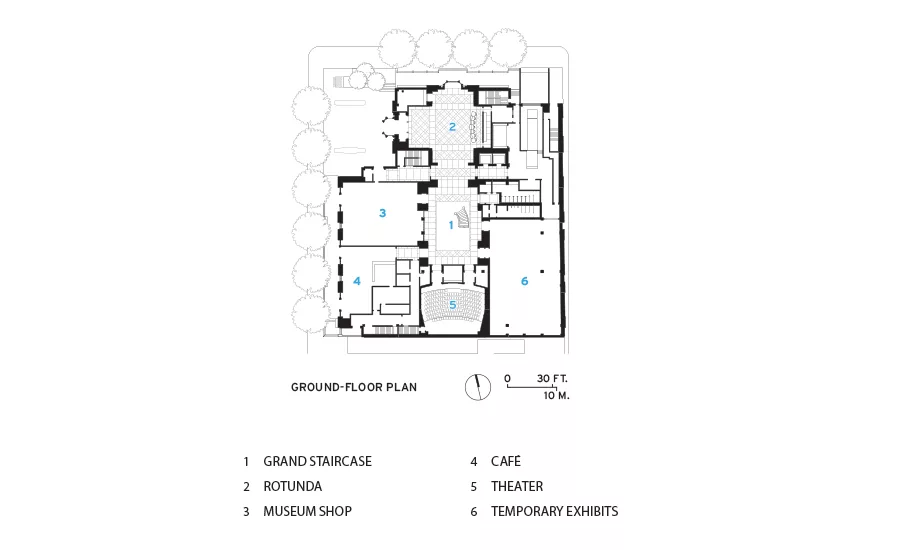
With the exception of the rotunda, the first floor is largely occupied by the uninventive gift shop, café, theater, and temporary-exhibit spaces. The outdoor plaza, designed by OLIN, and the main staircase could be contemplative respites but instead feel engineered to accommodate the reality of masses of tourists. On the exterior, details such as the cornices—bland strips instead of the delicately ornate moldings typical of historic buildings—hint that the architects were limited in how seriously to appropriate the past.

The building and museum try hard to have it all, and this may be the source of its problems. How American.

Back to America the Beautiful

KEYWORDS: Philadelphia

Share This Story

Looking for a reprint of this article?
From high-res PDFs to custom plaques, order your copy today!

Diana Lind writes the Substack “The New Urban Order” and is the author of the book Brave New Home: Our Future in Smarter, Simpler, Happier Housing.

Post a comment to this article

Report Abusive Comment

Subscription Center
  • Create an Account
  • Start a Subscription
  • Manage My Account
  • Sign Up for Newsletters
  • Visit Customer Service
  • Update Preferences

More Videos

Sponsored Content

Sponsored Content is a special paid section where industry companies provide high quality, objective, non-commercial content around topics of interest to the Architectural Record audience. All Sponsored Content is supplied by the advertising company and any opinions expressed in this article are those of the author and not necessarily reflect the views of Architectural Record or its parent company, BNP Media. Interested in participating in our Sponsored Content section? Contact your local rep!

close
  • TAMLYN XtremeTrim Exterior Trim
    Sponsored byTamlyn

    Designing Cleaner Panel Facades: Why Exterior Trim Details Matter

  • Building with Vapor Barriers
    Sponsored byReef Industries, Inc.

    Vapor Barriers Help Control Moisture in Tighter Building Designs

  • Duct Interior with Prodeq System
    Sponsored byHenry, a Carlisle Company

    Designing Resilient Water Containment Systems

DESIGN:ED Podcast
Listen to Architectural Record’s DESIGN:ED Podcast

Events

June 10, 2026

Rethinking Stormwater – The Power of Porous Paving

Credits: 1 AIA LU/HSW; 1 AIBD P-CE; 0.1 ICC CEU

Learn how porous paving systems support stormwater management, reduce heat island effects, and enhance sustainable site design performance.

June 11, 2026

Very Early Warning Fire Detection for Mission-Critical Facilities

Credits: 1 AIA LU/HSW; 1 AIBD P-CE; 0.1 ICC CEU

Examine advanced fire detection strategies that support uptime and enhance safety in data centers and other mission-critical facilities.

View All Submit An Event

Products

2026 Architect's Square Foot Costbook

2026 Architect's Square Foot Costbook

See More Products

Popular Stories

Practice Matters illustration

What’s in a (Firm’s) Name? Thinking About Succession and Legacy

Coronado Bridge

The Architect’s Guide to San Diego

Practice Matters illustration

By the Numbers: Counting America's Architects

Riverdale House by Studio Lau

Riverdale House by Studio Lau

House on a Hill

Design Vanguard 2026: Forma

Broader Sustainability of CMU - Free Webinar - May 21, 2026

Related Articles

  • Robert A.M. Stern

    Robert A.M. Stern, Former Yale Dean and Exponent of Traditional Architecture, Dies at 86

    See More
  • Newsmaker: Robert A.M. Stern

    See More
  • Robert A.M. Stern Wins Driehaus Prize

    See More

Related Products

See More Products
  • Architectural Record - January 2026

    Architectural Record January 2026 Issue

See More Products
×

The latest news and information

#1 Source for Architectural Design, News and Products

SUBSCRIBE
  • RESOURCES
    • Advertise
    • Contact Us
    • Submit
    • Store
  • ACCOUNT CENTER
    • Create an Account
    • Start a Subscription
    • Manage My Account
    • Sign Up for Newsletters
    • Visit Customer Service
    • Update Preferences
  • PRIVACY
    • PRIVACY POLICY
    • TERMS & CONDITIONS
    • DO NOT SELL MY PERSONAL INFORMATION
    • PRIVACY REQUEST
    • ACCESSIBILITY
  • SERVICES
    • Marketing Services
    • Reprints
    • Market Research
    • List Rental
    • Survey/Respondent Access
  • STAY CONNECTED
    • Linkedin
    • Facebook
    • Instagram
    • YouTube
    • X (Twitter)

Copyright ©2026. All Rights Reserved BNP Media, Inc. and BNP Media II, LLC.

Design, CMS, Hosting & Web Development :: ePublishing