Architectural Record
search
cart
facebook twitter linkedin youtube
  • Sign In
  • Subscribe
  • Sign Out
  • My Account
Architectural Record
  • NEWS
    • Latest News
    • Awards
    • Interviews
    • Obituaries
    • Podcasts
      • Design:Ed Podcast
      • Sponsored Podcasts
  • OPINION
    • Book Reviews / Excerpts
    • Exhibition Reviews
    • Forum
  • EXCLUSIVES
    • Videos
    • Design Vanguard
    • Top 300 Firms
    • Sponsored Content
    • Sponsored eBooks
    • From the Archives
  • CONTINUING ED
    • Editorial Continuing Ed
    • CE Center
    • CE Academies
  • PROJECTS
    • Buildings By Type
    • Reuse & Renovation
    • Museums & Arts Centers
    • Colleges & Universities
    • Multifamily Housing
    • Interiors
    • Lighting
    • Kitchen & Bath
  • HOUSES
    • Record Houses
    • House of the Month
    • Featured Houses
  • PRODUCTS
    • Products by Category
    • Record Products of the Year
    • Latest Products
  • EVENTS
    • Dates & Events
    • Record on the Road
    • Innovation Conference
    • Sustainability in Practice
    • Women In Architecture
    • Webinars
    • Ad Excellence Awards
    • Submit an Event
  • CONNECT
    • Ask RECORD AI
    • Newsletters
    • Contact
    • Advertise
    • Editorial Calendar
    • Store
    • Customer Service
  • SUBMIT
    • Submission Guidelines
    • RECORD Competitions
  • MAGAZINE
    • Subscribe
    • My Account
    • Digital Edition
    • Current Issue
    • Firm Pass
    • Historic Archive
Opinion

Remembering Places: A Memoir

By Joseph Rykwert

By George Baird
Remembering Places: A Memoir

Remembering Places: A Memoir by Joseph Rykwert. Routledge, 198 pages, $39.95.

February 3, 2018

Joseph Rykwert, born in 1926, is the author of Adam’s House in Paradise, The First Moderns, and The Dancing Column, books whose methodological originality and archival and anthropological depth won him the Gold Medal of the Royal Institute of British Architects in 2014, a rarity for a nonpractitioner. Rykwert has been known to have a dramatic personal history, but he usually declined to discuss it. With this memoir, he bows to requests and deploys his formidable memory—visual and otherwise—to recount his role in important developments in architectural culture during crucial years of the 20th century. The dramatic story begins in his childhood in the 1930s, within an upper-middle-class Jewish family in Warsaw, and concludes in the late 1960s in London with his first academic appointment and the publication of The Idea of a Town. In this text, which first brought him serious professional attention, he robustly reasserted the significance of ritual and myth in ancient city planning.

Rykwert’s childhood was evidently happy. But looming over his teenage years was growing anti-Semitism, with a threat that his successful engineer father failed to anticipate. The result was a panicked flight from Warsaw for his entire family in early September 1939—after the German invasion of Poland had already begun. Making use of business connections, Rykwert senior managed to get his immediate family to safety, albeit leaving almost all their possessions behind while rushing through Riga (Latvia), Stockholm, and Amsterdam, to London.

The family’s misfortunes did not end with their safe arrival in Britain. Rykwert senior was betrayed by business partners, resulting in economic jeopardy. Worse, he died of a heart attack at the young age of 48. Still, before his death, he secured entry for Joseph to attend Charterhouse, a distinguished British boarding school. There, the young Rykwert was exposed to innovative architectural scholarship in the person of the soon-to-be-eminent historian Rudolf Wittkower.

Rykwert began his architectural education at the Bartlett School at University College, London, but subsequently decided that the Architectural Association was a more intellectually appealing cultural milieu. Even more important was his immersion in a worldly intelligentsia, largely at the Student Movement House, where he met Elias Canetti, later to win the Nobel Prize for Literature, as well as the psychoanalyst Franz Elkisch. Before he had even concluded his professional education, Rykwert’s distinctive intellectual formation blended interests in myth, symbolism, and anthropology.

Upon graduation, he worked in conventionally modern architectural practices in London but, drawn to contemporary Italian architecture for its elan and its provocative responsiveness to history, Rykwert headed south. There, his luck continued as he befriended Vittorio Gregotti, Roberto Colasso—eventually to become the Italian publisher of his books—and Gio Ponti, who made him the London correspondent for his magazine Domus, where he launched the rediscovery of the forgotten Anglo-Irish designer Eileen Gray and mounted an early skeptical critique of Aldo Rossi’s ideas.

Rykwert’s activities led to an invitation to the newly founded Hochschule für Gestaltung in Ulm, Germany. There he met another dissident from the school’s hyper-rationalism, Hanno Kesting, who introduced him to phenomenological philosophy. Upon his return to London, he discovered that his Ulm sojourn had made him a desirable prospective academic, resulting in his appointment as Librarian at the Royal College of Art. More or less concurrent with this was the publication—in a Dutch magazine edited by another new friend, Aldo van Eyck—of his Idea of a Town.

With that commenced Rykwert’s half-century-long publishing career. The nonagenarian has now given us a Holocaust escape thriller and an architectural/intellectual bildungsroman in one. It is quite a tale, though it covers only the first four decades of his life. Will there be a volume two? On this point, Rykwert so far remains silent.

Looking for quick answers on architecture and design topics?
Try Ask RECORD, our new smart AI search tool.
Ask RECORD →

KEYWORDS: Book Reviews / Excerpts

Share This Story

Looking for a reprint of this article?
From high-res PDFs to custom plaques, order your copy today!
George Baird is an architect, author and educator based in Toronto. He and Charles Jencks were the co-editors of the 1970 book Meaning in Architecture.

Post a comment to this article

Report Abusive Comment

Subscription Center
  • Create an Account
  • Start a Subscription
  • Manage My Account
  • Sign Up for Newsletters
  • Visit Customer Service
  • Update Preferences

More Videos

Sponsored Content

Sponsored Content is a special paid section where industry companies provide high quality, objective, non-commercial content around topics of interest to the Architectural Record audience. All Sponsored Content is supplied by the advertising company and any opinions expressed in this article are those of the author and not necessarily reflect the views of Architectural Record or its parent company, BNP Media. Interested in participating in our Sponsored Content section? Contact your local rep!

close
  • TAMLYN XtremeTrim Exterior Trim
    Sponsored byTamlyn

    Designing Cleaner Panel Facades: Why Exterior Trim Details Matter

  • Building with Vapor Barriers
    Sponsored byReef Industries, Inc.

    Vapor Barriers Help Control Moisture in Tighter Building Designs

  • Duct Interior with Prodeq System
    Sponsored byHenry, a Carlisle Company

    Designing Resilient Water Containment Systems

DESIGN:ED Podcast
Listen to Architectural Record’s DESIGN:ED Podcast

Events

June 10, 2026

Rethinking Stormwater – The Power of Porous Paving

Credits: 1 AIA LU/HSW; 1 AIBD P-CE; 0.1 ICC CEU

Learn how porous paving systems support stormwater management, reduce heat island effects, and enhance sustainable site design performance.

June 11, 2026

Very Early Warning Fire Detection for Mission-Critical Facilities

Credits: 1 AIA LU/HSW; 1 AIBD P-CE; 0.1 ICC CEU

Examine advanced fire detection strategies that support uptime and enhance safety in data centers and other mission-critical facilities.

View All Submit An Event

Products

2026 Architect's Square Foot Costbook

2026 Architect's Square Foot Costbook

See More Products

Popular Stories

Coronado Bridge

The Architect’s Guide to San Diego

Practice Matters illustration

What’s in a (Firm’s) Name? Thinking About Succession and Legacy

Practice Matters illustration

By the Numbers: Counting America's Architects

Inward House

Inward House by VeeV Design Studio

Riverdale House by Studio Lau

Riverdale House by Studio Lau

Broader Sustainability of CMU - Free Webinar - May 21, 2026

Related Articles

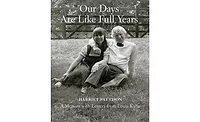
  • Our Days Are Like Full Years.

    Review of 'Our Days Are Like Full Years: A Memoir with Letters from Louis Kahn'

    See More
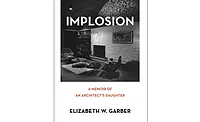
  • A Memoir of an Architect's Daughter

    Implosion: A Memoir of an Architect's Daughter

    See More
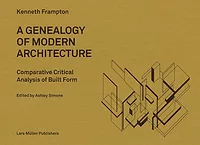
  • A Genealogy of Modern Architecture: Comparative Critical Analysis of Built Form

    A Genealogy of Modern Architecture: Comparative Critical Analysis of Built Form

    See More

Related Products

See More Products
  • book3.jpg

    If Architecture is a Language, Then a Building is a Story

  • 0470126736.gif

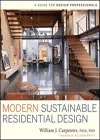
    Modern Sustainable Residential Design: A Guide for Design Professionals

See More Products
×

The latest news and information

#1 Source for Architectural Design, News and Products

SUBSCRIBE
  • RESOURCES
    • Advertise
    • Contact Us
    • Submit
    • Store
  • ACCOUNT CENTER
    • Create an Account
    • Start a Subscription
    • Manage My Account
    • Sign Up for Newsletters
    • Visit Customer Service
    • Update Preferences
  • PRIVACY
    • PRIVACY POLICY
    • TERMS & CONDITIONS
    • DO NOT SELL MY PERSONAL INFORMATION
    • PRIVACY REQUEST
    • ACCESSIBILITY
  • SERVICES
    • Marketing Services
    • Reprints
    • Market Research
    • List Rental
    • Survey/Respondent Access
  • STAY CONNECTED
    • Linkedin
    • Facebook
    • Instagram
    • YouTube
    • X (Twitter)

Copyright ©2026. All Rights Reserved BNP Media, Inc. and BNP Media II, LLC.

Design, CMS, Hosting & Web Development :: ePublishing