Architectural Record
search
cart
facebook twitter linkedin youtube
  • Sign In
  • Subscribe
  • Sign Out
  • My Account
Architectural Record
  • NEWS
    • Latest News
    • Awards
    • Interviews
    • Obituaries
    • Podcasts
      • Design:Ed Podcast
      • Sponsored Podcasts
  • OPINION
    • Book Reviews / Excerpts
    • Exhibition Reviews
    • Forum
  • EXCLUSIVES
    • Videos
    • Design Vanguard
    • Top 300 Firms
    • Sponsored Content
    • Sponsored eBooks
    • From the Archives
  • CONTINUING ED
    • Editorial Continuing Ed
    • CE Center
    • CE Academies
  • PROJECTS
    • Buildings By Type
    • Reuse & Renovation
    • Museums & Arts Centers
    • Colleges & Universities
    • Multifamily Housing
    • Interiors
    • Lighting
    • Kitchen & Bath
  • HOUSES
    • Record Houses
    • House of the Month
    • Featured Houses
  • PRODUCTS
    • Products by Category
    • Record Products of the Year
    • Latest Products
  • EVENTS
    • Dates & Events
    • Record on the Road
    • Innovation Conference
    • Sustainability in Practice
    • Women In Architecture
    • Webinars
    • Ad Excellence Awards
    • Submit an Event
  • CONNECT
    • Ask RECORD AI
    • Newsletters
    • Contact
    • Advertise
    • Editorial Calendar
    • Store
    • Customer Service
  • SUBMIT
    • Submission Guidelines
    • RECORD Competitions
  • MAGAZINE
    • Subscribe
    • My Account
    • Digital Edition
    • Current Issue
    • Firm Pass
    • Historic Archive
Opinion

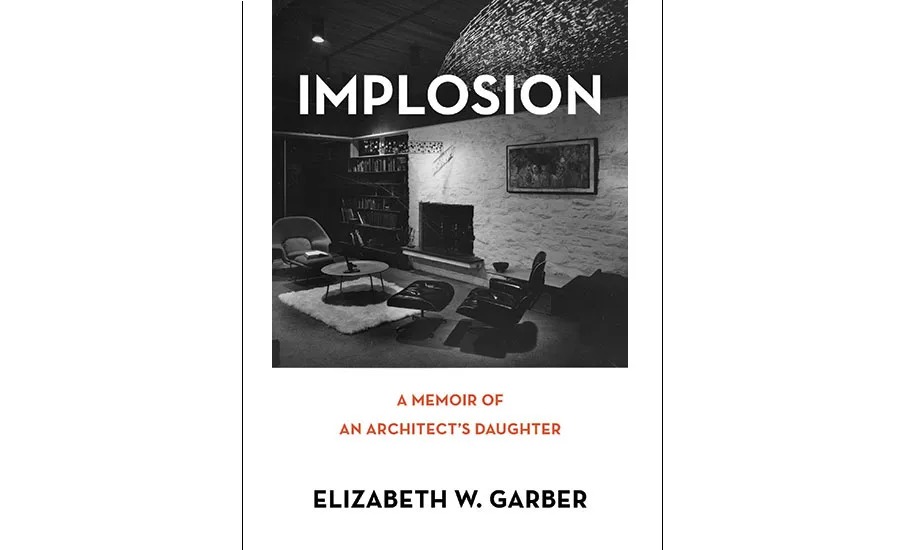
Implosion: A Memoir of an Architect's Daughter

By Elizabeth W. Garber
By Anna Shapiro
A Memoir of an Architect's Daughter

Implosion: A Memoir of an Architect’s Daughter, by Elizabeth W. Garber. She Writes Press, 342 pages, $16.95.

June 5, 2018

Woodie Garber was a Cincinnati architect, like his father and grandfather before him, but they got to design significant public buildings around the city. In 1945, then only 32, Garber did win a design competition for a glassy local high-rise, only to have it nixed by an anti-modern senator. He successfully designed, however, the Modernist but low-rise Cincinnati Public Library of 1955, which was much admired and is still in use. Mostly, he was commissioned for private residences. This memoir by his daughter is about the life she, her brothers, and mother led in the structure intended as their dream house, on which they collaborated beginning in 1966—a years-long effort that, while physically taxing, proved absolutely grueling emotionally.

Elizabeth, the eldest of three, is 13 when they move in, and happily takes on the sanding and gluing of veneers for the extensive plywood built-ins. But as the chores go on, extending to the heavy work of landscaping, she and her brothers want to see friends on weekends. This is not allowed. Their story is like a romance novel in reverse, a dystopian version in which the hero grows gruffer and wilder instead of tame and tender, and the alluring mansion becomes the place the heroine needs to flee. It’s a relationship built on architecture but destroyed by the presumptions of the architect.

Woodie monitors everything, as if the open plan of the house were a model for the life inside. He doesn’t allow his family to close bathroom doors, requires that they pose for annual nude Polaroids so he can “record their development,” and, starting when Elizabeth is 14, mandates she submit to “back rubs,” front and back, as his good-nights in her room—avoiding the hottest spots but causing her speechless anguish, a silence that lasts well into adulthood. As she says, they were trained to obey.

Elizabeth’s first disillusionment with her adored father may come when she realizes that their house, which she thought made them special, exactly resembles a famous one they pored over together: “I was shocked. My father had copied Corbu.” (Some readers may be reminded more of residences by Mies.)

As time passes, Woodie comes to rant at his frozen, terrified family and is callous about even life-threatening physical injuries the children suffer. Covertly rebelling, his 18-years-younger wife starts letting the kids watch TV during his late nights at the office. But when Elizabeth at 16 falls in love with her perfect male counterpart, who is black, Woodie blows a gasket. Color may be a pretext for the unmentionable wish to keep his daughter to himself rather than the true cause, but his craziness destroys the family’s remaining loyalty to what has essentially become a cult.

The father’s dissolution—diagnosed at some point as bipolar disorder, among other disturbances—parallels the development of his biggest commission and first realized high-rise, a 27-story dormitory called Sander Hall (1967–71), with energy-conserving mirror-glass walls unlike anything in the area. Built high by Cincinnati University to avoid encroaching horizontally on the surrounding community, Garber’s plans included features, like ample mingling areas, that would be lauded today. The edifice, however, was widely hated by local residents and the school trustees, and subject to frequent acts of arson. The book’s title refers to Sander Hall’s deconstruction, in 1991, after prolonged administrative neglect.

More primally, it refers to the implosion of Woodie Garber. He died in 1994, with all but Elizabeth refusing contact with him. In this un-put-downable book, Elizabeth, a poet, acupuncturist, and mother, has, like an architect—ecologically using salvage materials—taken the shock and trauma of the family’s disintegration and built from them a powerful narrative you are reluctant to leave.

Looking for quick answers on architecture and design topics?
Try Ask RECORD, our new smart AI search tool.
Ask RECORD →

KEYWORDS: Book Reviews / Excerpts

Share This Story

Looking for a reprint of this article?
From high-res PDFs to custom plaques, order your copy today!

Anna Shapiro is a novelist and an essayist on the arts.

Post a comment to this article

Report Abusive Comment

Subscription Center
  • Create an Account
  • Start a Subscription
  • Manage My Account
  • Sign Up for Newsletters
  • Visit Customer Service
  • Update Preferences

More Videos

Sponsored Content

Sponsored Content is a special paid section where industry companies provide high quality, objective, non-commercial content around topics of interest to the Architectural Record audience. All Sponsored Content is supplied by the advertising company and any opinions expressed in this article are those of the author and not necessarily reflect the views of Architectural Record or its parent company, BNP Media. Interested in participating in our Sponsored Content section? Contact your local rep!

close
  • TAMLYN XtremeTrim Exterior Trim
    Sponsored byTamlyn

    Designing Cleaner Panel Facades: Why Exterior Trim Details Matter

  • Building with Vapor Barriers
    Sponsored byReef Industries, Inc.

    Vapor Barriers Help Control Moisture in Tighter Building Designs

  • Duct Interior with Prodeq System
    Sponsored byHenry, a Carlisle Company

    Designing Resilient Water Containment Systems

DESIGN:ED Podcast
Listen to Architectural Record’s DESIGN:ED Podcast

Events

June 10, 2026

Rethinking Stormwater – The Power of Porous Paving

Credits: 1 AIA LU/HSW; 1 AIBD P-CE; 0.1 ICC CEU

Learn how porous paving systems support stormwater management, reduce heat island effects, and enhance sustainable site design performance.

June 11, 2026

Very Early Warning Fire Detection for Mission-Critical Facilities

Credits: 1 AIA LU/HSW; 1 AIBD P-CE; 0.1 ICC CEU

Examine advanced fire detection strategies that support uptime and enhance safety in data centers and other mission-critical facilities.

View All Submit An Event

Products

2026 Architect's Square Foot Costbook

2026 Architect's Square Foot Costbook

See More Products

Popular Stories

Coronado Bridge

The Architect’s Guide to San Diego

Practice Matters illustration

What’s in a (Firm’s) Name? Thinking About Succession and Legacy

Practice Matters illustration

By the Numbers: Counting America's Architects

Inward House

Inward House by VeeV Design Studio

Riverdale House by Studio Lau

Riverdale House by Studio Lau

Broader Sustainability of CMU - Free Webinar - May 21, 2026

Related Articles

  • Minnette de Silva with Picasso

    Minnette de Silva: The story of an “Asian Woman Architect”

    See More
  • Our Days Are Like Full Years.

    Review of 'Our Days Are Like Full Years: A Memoir with Letters from Louis Kahn'

    See More
  • Remembering Places: A Memoir

    Remembering Places: A Memoir

    See More
×

The latest news and information

#1 Source for Architectural Design, News and Products

SUBSCRIBE
  • RESOURCES
    • Advertise
    • Contact Us
    • Submit
    • Store
  • ACCOUNT CENTER
    • Create an Account
    • Start a Subscription
    • Manage My Account
    • Sign Up for Newsletters
    • Visit Customer Service
    • Update Preferences
  • PRIVACY
    • PRIVACY POLICY
    • TERMS & CONDITIONS
    • DO NOT SELL MY PERSONAL INFORMATION
    • PRIVACY REQUEST
    • ACCESSIBILITY
  • SERVICES
    • Marketing Services
    • Reprints
    • Market Research
    • List Rental
    • Survey/Respondent Access
  • STAY CONNECTED
    • Linkedin
    • Facebook
    • Instagram
    • YouTube
    • X (Twitter)

Copyright ©2026. All Rights Reserved BNP Media, Inc. and BNP Media II, LLC.

Design, CMS, Hosting & Web Development :: ePublishing