Architectural Record
search
cart
facebook twitter linkedin youtube
  • Sign In
  • Subscribe
  • Sign Out
  • My Account
Architectural Record
  • NEWS
    • Latest News
    • Awards
    • Interviews
    • Obituaries
    • Podcasts
      • Design:Ed Podcast
      • Sponsored Podcasts
  • OPINION
    • Book Reviews / Excerpts
    • Exhibition Reviews
    • Forum
  • EXCLUSIVES
    • Videos
    • Design Vanguard
    • Top 300 Firms
    • Sponsored Content
    • Sponsored eBooks
    • From the Archives
  • CONTINUING ED
    • Editorial Continuing Ed
    • CE Center
    • CE Academies
  • PROJECTS
    • Buildings By Type
    • Reuse & Renovation
    • Museums & Arts Centers
    • Colleges & Universities
    • Multifamily Housing
    • Interiors
    • Lighting
    • Kitchen & Bath
  • HOUSES
    • Record Houses
    • House of the Month
    • Featured Houses
  • PRODUCTS
    • Products by Category
    • Record Products of the Year
    • Latest Products
  • EVENTS
    • Dates & Events
    • Record on the Road
    • Innovation Conference
    • Sustainability in Practice
    • Women In Architecture
    • Webinars
    • Ad Excellence Awards
    • Submit an Event
  • CONNECT
    • Ask RECORD AI
    • Newsletters
    • Contact
    • Advertise
    • Editorial Calendar
    • Store
    • Customer Service
  • SUBMIT
    • Submission Guidelines
    • RECORD Competitions
  • MAGAZINE
    • Subscribe
    • My Account
    • Digital Edition
    • Current Issue
    • Firm Pass
    • Historic Archive
Opinion

Architects Urge Architects to Think About Embodied Energy
By Alex Klimoski
The Whole Truth About Construction

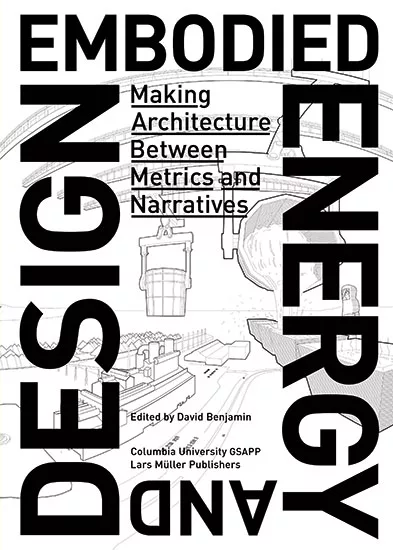
Embodied Energy and Design: Making Architecture Between Metrics and Narratives, edited by David Benjamin. Columbia University and Lars Müller, 224 pages, $39.
The Whole Truth About Construction

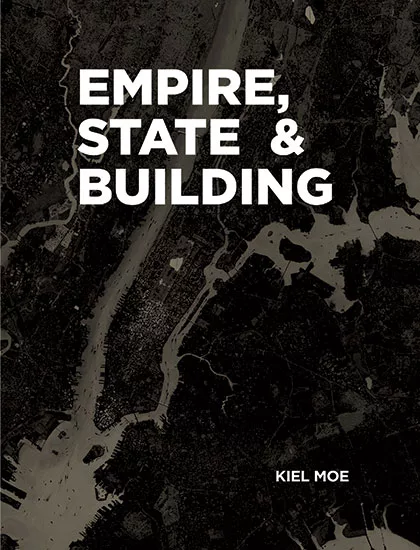
Empire, State & Building, by Kiel Moe. Actar, 255 pages, $40.

The Whole Truth About Construction
April 9, 2018

It’s time for architects to take embodied energy more seriously—the total sum of energy used to extract, manufacture, transport, and assemble materials for building—as Columbia’s David Benjamin and Harvard’s Kiel Moe make clear in their respective books on the topic. The way we design today results in buildings that consume more energy than ever before, with serious consequences. According to Benjamin and Moe, architects egregiously approach buildings as isolated objects when they are instead moving parts in a far-reaching, enduring, and complex network.

Embodied energy is difficult to calculate, especially since most metrics are insufficient; the nuanced set of conditions that govern how we build, such as the quality of human labor or the state of global trade, must also be weighed if we are to build sustainably. But, as Benjamin, founding principal of the Living, writes in Embodied Energy and Design, these aspects are outside what is normally evaluated; the insights in this book of essays bring some to light. An essay by GSAPP colleague Jorge Otero-Pailos, for instance, contemplates the influence of cultural values, writing that they “charge our relationships to architectural objects with a cultural energy that we then reify as cultural capital.”

Essays ponder the various trajectories of building; some even put forth solutions for curbing negative externalities: Mason White, professor of architecture at the University of Toronto, discusses how the geographic sources of material extraction, labor, and fuel are all part of architecture’s expanded territory; Stephanie Carlisle, environmental researcher at KieranTimberlake, suggests that design decisions be guided by rigorous material life-cycle analysis to track environmental impacts.

The stories told in Embodied Energy attempt to make sense of the overwhelming scales and intricacies involved. For example, a series of “material stories” advocates simple inquiries (i.e., which cities have steel unions?) for improving efficiency along the supply chain; Daniel Barber, professor at the University of Pennsylvania School of Design, takes a broader view, linking global energy flows to geopolitical events surrounding World War II.

Somewhat similarly, Moe, also a contributor to Benjamin’s book, chronicles embodied energy as a product of time in Empire, State & Building. Part manifesto, part history, it plots the 200-year development of the Empire State Building parcel in New York, from farmland to rowhouses, mansions, and skyscraper, illustrating how a single city block’s embodied energy is tied to patterns of urbanization. He uses archival documents, and occasional wisdom from philosophers such as Henri Lefebvre and Michel Foucault, to look at how energy and material flux within each cycle of construction and deconstruction advanced the parcel to its next phase.

The iconic skyscraper lends each term of its name for the book’s three parts: “Empire,” or geographic reach of materials; “State,” or set of relative thermodynamic, political, and socioeconomic conditions; and “Building,” or urbanization processes, involved in the various incarnations of the site. As one might suspect, each successive building embodied more energy than its predecessor. But the skyscraper’s speedy construction (just over one year), its density, and its steady occupancy, among other factors, have resulted in net efficacy as an ecological system. It may be even more efficient, suggests Moe, than a comparably sized net zero tower constructed with advanced materials and up-to-date systems, which, ironically, require astronomical amounts of energy to produce and install.

Moe’s book successfully navigates the relationships of energy, time, and space in an easily digestible format—but lacking is a compelling account of what’s at stake if we continue to build per the status quo; this is where Embodied Energy and Design is particularly useful. If there’s one crucial takeaway from both texts, it’s that architecture must be designed as a holistic system. Considered together, the books serve as a vital provocation to architects to reconsider their capacities as agents of urbanization.

Looking for quick answers on architecture and design topics?
Try Ask RECORD, our new smart AI search tool.
Ask RECORD →

KEYWORDS: Book Reviews / Excerpts

Share This Story

Looking for a reprint of this article?
From high-res PDFs to custom plaques, order your copy today!

Alexandrea klimoski web 2

Alex was an associate editor at Architectural Record. Prior to joining the magazine, she worked in marketing and communications for New York–based architecture firms. Her writing has appeared in the Architect’s Newspaper and CityLab. Alex holds a master’s degree in design criticism from the School of Visual Arts and a bachelor’s degree from Cornell University.

Post a comment to this article

Report Abusive Comment

Subscription Center
  • Create an Account
  • Start a Subscription
  • Manage My Account
  • Sign Up for Newsletters
  • Visit Customer Service
  • Update Preferences

More Videos

Sponsored Content

Sponsored Content is a special paid section where industry companies provide high quality, objective, non-commercial content around topics of interest to the Architectural Record audience. All Sponsored Content is supplied by the advertising company and any opinions expressed in this article are those of the author and not necessarily reflect the views of Architectural Record or its parent company, BNP Media. Interested in participating in our Sponsored Content section? Contact your local rep!

close
  • cold storage facility
    Sponsored byCarlisle SynTec Systems

    How Architects Can Design More Continuous Cold Storage Envelopes

  • TAMLYN XtremeTrim Exterior Trim
    Sponsored byTamlyn

    Designing Cleaner Panel Facades: Why Exterior Trim Details Matter

  • Building with Vapor Barriers
    Sponsored byReef Industries, Inc.

    Vapor Barriers Help Control Moisture in Tighter Building Designs

DESIGN:ED Podcast
Listen to Architectural Record’s DESIGN:ED Podcast

Events

June 18, 2026

Rebooting the Aging Office Building

Credits: 1 AIA LU/HSW; 1 AIBD P-CE; 0.1 ICC CEU; 1 PDH

Explore façade retrofit strategies and award-winning design concepts that can transform aging office buildings into healthier, higher-performing workplaces for today’s hybrid workforce.

June 23, 2026

Enhancing Fire Resistance with Advanced PVC Solutions

Credits: 1 AIA LU/HSW; 1 AIBD P-CE; 0.1 ICC CEU; 1 IIBEC CEH

Evaluate advanced PVC solutions that improve fire resistance, support WUI compliance, and enhance resilience in residential and commercial building design.

View All Submit An Event

Products

2026 Architect's Square Foot Costbook

2026 Architect's Square Foot Costbook

See More Products

Popular Stories

SanDiegoAirport

Top 300 Architecture Firms of 2026

Lorcan O' Herilhy

California Architect Lorcan O’Herlihy Has Died, Age 66

Coronado Bridge

The Architect’s Guide to San Diego

CCA, Studio Gang

The Winners of the AIA’s 2026 Architecture Award Range from Collegiate Rowing Hubs to Housing for the Homeless

Dusk House

Design Vanguard 2026: ONO

Enhancing Fire Resistance with Advanced PVC Solutions - Free Webinar - June 23, 2026

Related Articles

  • Dubai Expo

    Fentress Architects to Design U.S. Pavilion at 2020 World Expo in Dubai

    See More
  • Geffen Hall

    Thomas Heatherwick and Diamond Schmitt Architects to Collaborate on Geffen Hall Renovation

    See More
  • Zaha Hadid Architects Seeks to Set Record Straight About Tokyo Stadium Ouster

    See More

Related Products

See More Products
  • movable arch.jpg

    Movable Architecture: A Design Guide to Container Reuse

See More Products
×

The latest news and information

#1 Source for Architectural Design, News and Products

SUBSCRIBE
  • RESOURCES
    • Advertise
    • Contact Us
    • Submit
    • Store
  • ACCOUNT CENTER
    • Create an Account
    • Start a Subscription
    • Manage My Account
    • Sign Up for Newsletters
    • Visit Customer Service
    • Update Preferences
  • PRIVACY
    • PRIVACY POLICY
    • TERMS & CONDITIONS
    • DO NOT SELL MY PERSONAL INFORMATION
    • PRIVACY REQUEST
    • ACCESSIBILITY
  • SERVICES
    • Marketing Services
    • Reprints
    • Market Research
    • List Rental
    • Survey/Respondent Access
  • STAY CONNECTED
    • Linkedin
    • Facebook
    • Instagram
    • YouTube
    • X (Twitter)

Copyright ©2026. All Rights Reserved BNP Media, Inc. and BNP Media II, LLC.

Design, CMS, Hosting & Web Development :: ePublishing