Architectural Record
search
cart
facebook twitter linkedin youtube
  • Sign In
  • Subscribe
  • Sign Out
  • My Account
Architectural Record
  • NEWS
    • Latest News
    • Awards
    • Interviews
    • Obituaries
    • Podcasts
      • Design:Ed Podcast
      • Sponsored Podcasts
  • OPINION
    • Book Reviews / Excerpts
    • Exhibition Reviews
    • Forum
  • EXCLUSIVES
    • Videos
    • Design Vanguard
    • Top 300 Firms
    • Sponsored Content
    • Sponsored eBooks
    • From the Archives
  • CONTINUING ED
    • Editorial Continuing Ed
    • CE Center
    • CE Academies
  • PROJECTS
    • Buildings By Type
    • Reuse & Renovation
    • Museums & Arts Centers
    • Colleges & Universities
    • Multifamily Housing
    • Interiors
    • Lighting
    • Kitchen & Bath
  • HOUSES
    • Record Houses
    • House of the Month
    • Featured Houses
  • PRODUCTS
    • Products by Category
    • Record Products of the Year
    • Latest Products
  • EVENTS
    • Dates & Events
    • Record on the Road
    • Innovation Conference
    • Sustainability in Practice
    • Women In Architecture
    • Webinars
    • Ad Excellence Awards
    • AIA 2026 Videos
    • Submit an Event
  • CONNECT
    • Ask RECORD AI
    • Newsletters
    • Contact
    • Advertise
    • Editorial Calendar
    • Store
    • Customer Service
  • SUBMIT
    • Submission Guidelines
    • RECORD Competitions
  • MAGAZINE
    • Subscribe
    • My Account
    • Digital Edition
    • Current Issue
    • Firm Pass
    • Historic Archive
Opinion

Harrie T. Lindeberg and the American Country House

By Peter Pennoyer and Anne Walker
By James Gauer
Why We Should Be Wild About Harrie

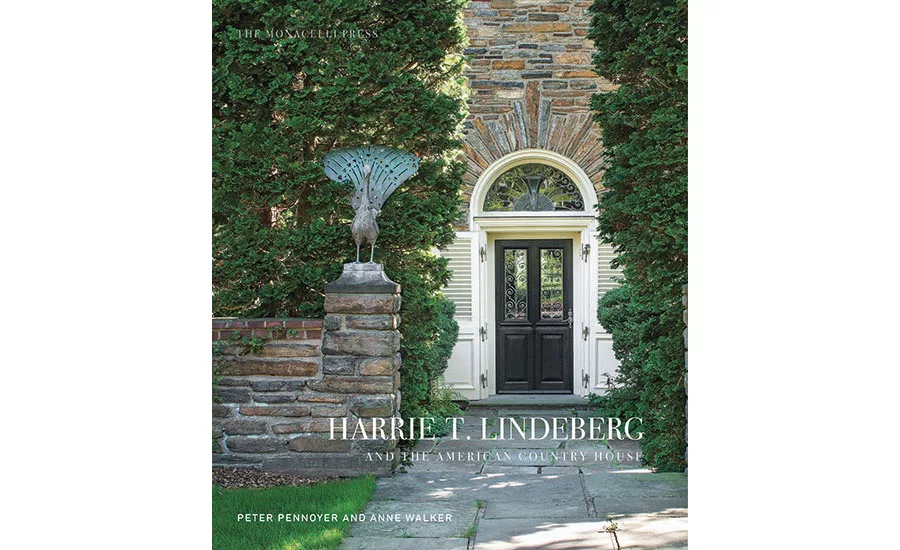
Harrie T. Lindeberg and the American Country House, by Peter Pennoyer and Anne Walker; photography by Jonathan Wallen. Monacelli Press, 256 pages, $60.

May 6, 2018

In the early part of the 20th century, American architect Harrie T. Lindeberg designed dozens of distinguished dwellings inspired by historical sources. His work is similar to that of his celebrated English contemporaries C.F.A. Voysey and Edwin Lutyens, but Lindeberg’s name is less familiar. Architect Peter Pennoyer and historian Anne Walker think his refined but idiosyncratic style, which reinterprets rather than replicates both classical and vernacular precedents, is long overdue for recognition.

Pennoyer and Walker’s book, with sumptuous photography by Jonathan Wallen, is their fifth exploration of early 20th-century architecture by eminent New York practitioners. If you’ve only seen Lindeberg’s houses in the monochromatic photos of previous monographs published in 1912 and 1940, viewing them in color—not just as architectural artifacts but as intricately detailed, richly textured settings in lush green landscapes—comes as a splendid surprise.

The son of Swedish immigrants who settled in New Jersey, Lindeberg had both talent and pluck. During a five-year stint at McKim, Mead and White in New York, he learned not only about making architecture but also about dealing with wealthy patrons. In 1906, he and Lewis Colt Albro left the firm to form a partnership. Their work was so abundant that RECORD devoted 20 pages to five of their houses in its October 1912 issue. After striking out on his own in 1914, Lindeberg created large houses for bankers, brokers, and captains of industry from Rhode Island to Texas. After the onset of the Depression, he made do with fewer and smaller residential projects and found more substantial commissions in a handful of U.S. embassies and consulates. Only one, however, the Colonial-style U.S. embassy in Helsinki (1940), was realized. He also experimented with Modernism in unbuilt houses based on prefabricated modular steel panels.

The book showcases 20 works completed between 1906 and 1940. Their selection was undoubtedly influenced by accessibility for new color photography, though five of these projects are presented only in black-and-white archival photos. Handsomely rendered plans supplement the carefully curated images, and scholarly chapters about client, site, program, and design take this book far beyond the coffee table genre. Among the featured houses is Lindeberg’s own weekend retreat in the Long Island hamlet of Locust Valley, shown on the cover. Its simple massing, articulated in variegated ledgestone and extending into the landscape with terraces and gardens, is typical of much of his work. Another example is the Armour Estate in Lake Forest, Illinois, which combines shifting axes in plan with brick-and-limestone elevations punctuated by casements, oriels, and gables.

The authors argue persuasively that Lindeberg’s genius lay in “extending the historical continuum of architecture.” His synthesis of rational but gracious planning with simple yet picturesque form-making should be an inspiration to any architect—regardless of stylistic inclination—who seeks to learn lessons from history and apply them to new work that is both subtly original and enduringly beautiful.

Looking for quick answers on architecture and design topics?
Try Ask RECORD, our new smart AI search tool.
Ask RECORD →

KEYWORDS: Book Reviews / Excerpts

Share This Story

Looking for a reprint of this article?
From high-res PDFs to custom plaques, order your copy today!


James gauer
James Gauer, an architect and author based in Chicago and San Miguel de Allende, Mexico, is a contributing editor at RECORD.

Post a comment to this article

Report Abusive Comment

Subscription Center
  • Create an Account
  • Start a Subscription
  • Manage My Account
  • Sign Up for Newsletters
  • Visit Customer Service
  • Update Preferences

More Videos

Sponsored Content

Sponsored Content is a special paid section where industry companies provide high quality, objective, non-commercial content around topics of interest to the Architectural Record audience. All Sponsored Content is supplied by the advertising company and any opinions expressed in this article are those of the author and not necessarily reflect the views of Architectural Record or its parent company, BNP Media. Interested in participating in our Sponsored Content section? Contact your local rep!

close
  • 3D configurator
    Sponsored byDoorBird

    How DoorBird’s 3D Configurator Is Redefining Customization Across Residential and Commercial Design

  • interior of modern office
    Sponsored byCurrent

    The Downlight's Second Life: Why Below-Ceiling Serviceability Is the Specification Detail That Matters Most

  • cold storage facility
    Sponsored byCarlisle SynTec Systems

    How Architects Can Design More Continuous Cold Storage Envelopes

DESIGN:ED Podcast
Listen to Architectural Record’s DESIGN:ED Podcast

Events

July 29, 2026

Adaptive Reuse Reimagined: Designing Multifamily Housing from Existing Buildings

Credits: 1 AIA LU/HSW; 1 AIBD P-CE; 0.1 ICC CEU; 1 IIBEC CEH

Examine adaptive reuse envelope strategies that improve energy performance, preserve architectural character, and transform existing buildings into high-performing multifamily housing.

July 30, 2026

Constructing Exterior Walls to Avoid Moisture Issues

Credits: 1 AIA LU/HSW; 1 AIBD P-CE; 0.1 ICC CEU

Examine exterior wall and air barrier system strategies that improve moisture control, energy efficiency, durability, and indoor environmental quality.

View All Submit An Event

Products

Architectural Detailing: Function, Constructibility, Aesthetics, 4th Edition

Architectural Detailing: Function, Constructibility, Aesthetics, 4th Edition

See More Products

Popular Stories

7480 N Delaware

A Portland Apartment Building by Daniel Toole Architecture Stands as a Study in Adaptation

Goldring Woldenberg Park

Continuing Education: Postindustrial Waterfronts

Kaya, San Diego

With San Diego’s Kaya, Jeff Svitak Melds Housing Density with Community

Chacarita Alta Housing

In Paraguay’s Capital, MOS and Adamo-Faiden Rethink Public Housing for Residents of Informal Settlements

House of the Month - Casa BL

In Chile, Alejandro Beals and Loreto Lyon Revive a 1960s House Designed by a Le Corbusier Disciple

Water Containment Waterproofing: Best Practices and System Selection - Free Webinar - July 22, 2026

Related Articles

  • Minneapolis and the End of the American Dream House

    Minneapolis and the End of the American Dream House

    See More
  • Reality Check: Developers React to MoMA's Show, 'Foreclosed: Rehousing the American Dream'

    See More
  • "Foreclosed" Reopens the American Dream

    See More

Related Products

See More Products
  • iconic house.jpg

    The Iconic House

See More Products
×

The latest news and information

#1 Source for Architectural Design, News and Products

SUBSCRIBE
  • RESOURCES
    • Advertise
    • Contact Us
    • Submit
    • Store
  • ACCOUNT CENTER
    • Create an Account
    • Start a Subscription
    • Manage My Account
    • Sign Up for Newsletters
    • Visit Customer Service
    • Update Preferences
  • PRIVACY
    • PRIVACY POLICY
    • TERMS & CONDITIONS
    • DO NOT SELL MY PERSONAL INFORMATION
    • PRIVACY REQUEST
    • ACCESSIBILITY
  • SERVICES
    • Marketing Services
    • Reprints
    • Market Research
    • List Rental
    • Survey/Respondent Access
  • STAY CONNECTED
    • Linkedin
    • Facebook
    • Instagram
    • YouTube
    • X (Twitter)

Copyright ©2026. All Rights Reserved BNP Media, Inc. and BNP Media II, LLC.

Design, CMS, Hosting & Web Development :: ePublishing