Architectural Record
search
cart
facebook twitter linkedin youtube
  • Sign In
  • Subscribe
  • Sign Out
  • My Account
Architectural Record
  • NEWS
    • Latest News
    • Awards
    • Interviews
    • Obituaries
    • Podcasts
      • Design:Ed Podcast
      • Sponsored Podcasts
  • OPINION
    • Book Reviews / Excerpts
    • Exhibition Reviews
    • Forum
  • EXCLUSIVES
    • Videos
    • Design Vanguard
    • Top 300 Firms
    • Sponsored Content
    • Sponsored eBooks
    • From the Archives
  • CONTINUING ED
    • Editorial Continuing Ed
    • CE Center
    • CE Academies
  • PROJECTS
    • Buildings By Type
    • Reuse & Renovation
    • Museums & Arts Centers
    • Colleges & Universities
    • Multifamily Housing
    • Interiors
    • Lighting
    • Kitchen & Bath
  • HOUSES
    • Record Houses
    • House of the Month
    • Featured Houses
  • PRODUCTS
    • Products by Category
    • Record Products of the Year
    • Latest Products
  • EVENTS
    • Dates & Events
    • Record on the Road
    • Innovation Conference
    • Sustainability in Practice
    • Women In Architecture
    • Webinars
    • Ad Excellence Awards
    • Submit an Event
  • CONNECT
    • Ask RECORD AI
    • Newsletters
    • Contact
    • Advertise
    • Editorial Calendar
    • Store
    • Customer Service
  • SUBMIT
    • Submission Guidelines
    • RECORD Competitions
  • MAGAZINE
    • Subscribe
    • My Account
    • Digital Edition
    • Current Issue
    • Firm Pass
    • Historic Archive
Architecture NewsCommentary & Criticism

'Genealogies of Transformation' Opens at Mori Art Museum
By Paula Deitz
Geneologies of Transformation Opens at Mori Art Museum

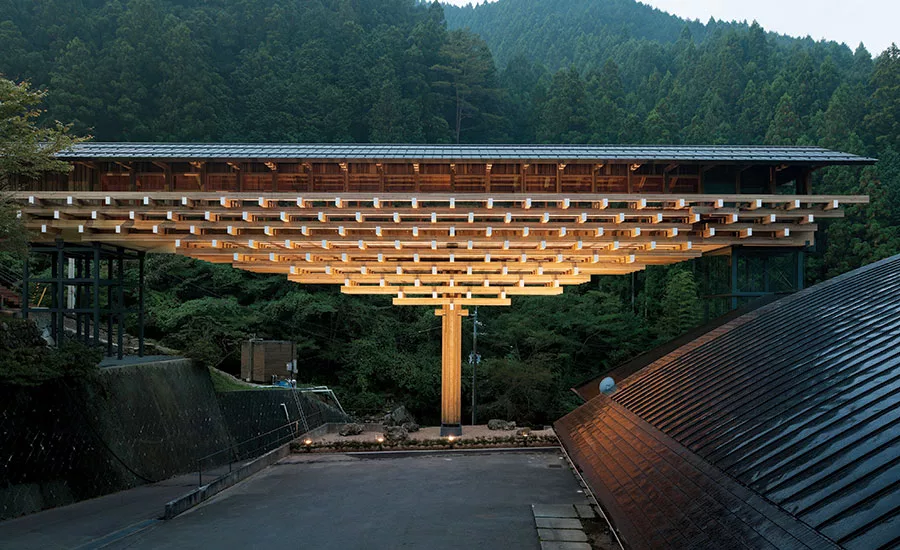
Kengo Kuma’s Yusuhara Wooden Bridge Museum, which opened in 2010 in Kochi, and the 16th-century Tai-an Tea House, seen here in a replica made for the exhibition, both share a tradition of wood craftsmanship and joinery.

Photo © Ota Takumi
Geneologies of Transformation Opens at Mori Art Museum

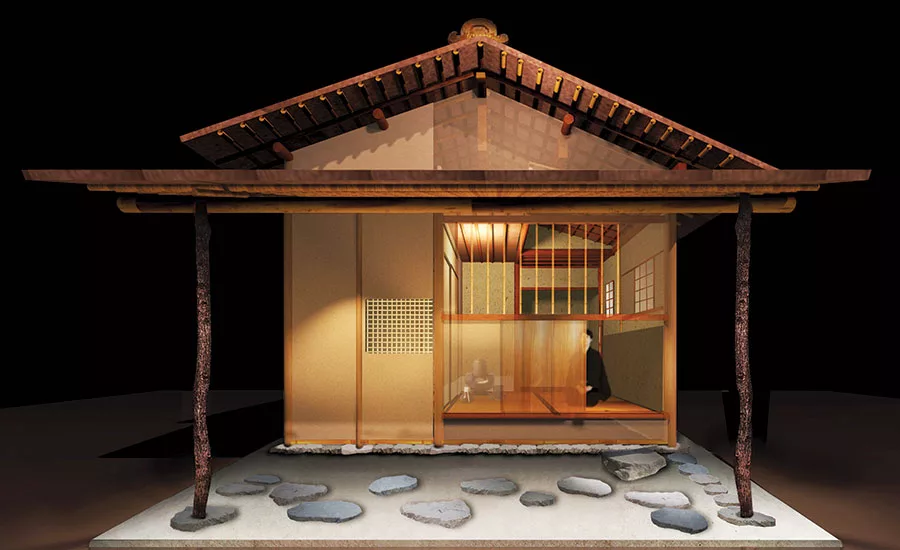
Kengo Kuma’s Yusuhara Wooden Bridge Museum, which opened in 2010 in Kochi, and the 16th-century Tai-an Tea House, seen here in a replica made for the exhibition, both share a tradition of wood craftsmanship and joinery.

Photo courtesy Mori Art Museum
Geneologies of Transformation Opens at Mori Art Museum

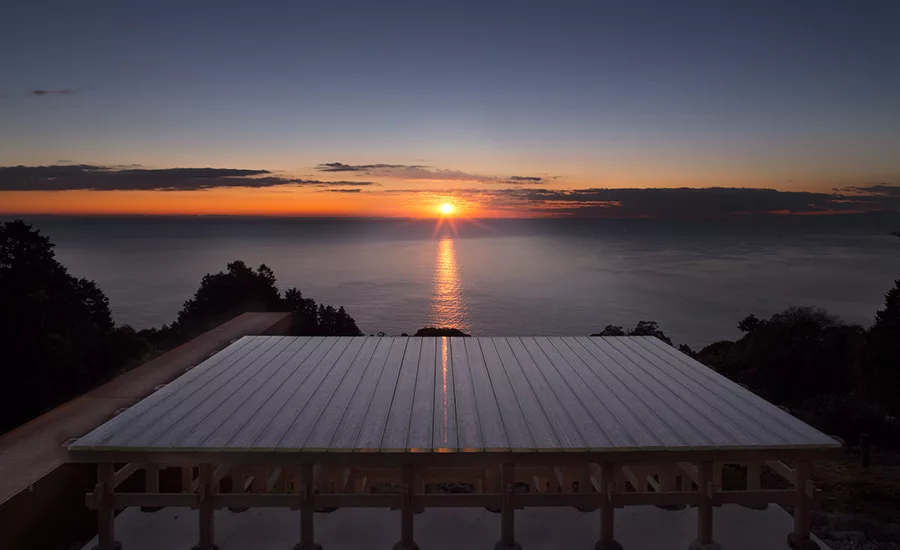
Enoura Observatory for Hiroshi Sugimoto overlooking Sagami Bay, 2017.

Photo courtesy Mori Art Museum
Geneologies of Transformation Opens at Mori Art Museum

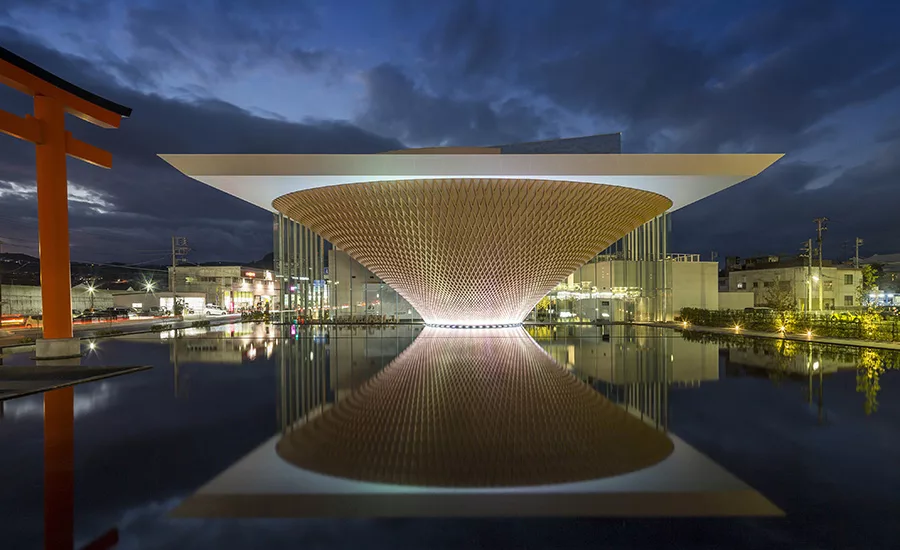
Mount Fuji World Heritage Centre, by Shigeru Ban, 2017.

Photo courtesy Mori Art Museum

Geneologies of Transformation Opens at Mori Art Museum
May 29, 2018

Japan in Architecture: Genealogies of Its Transformation, an exhibition at the Mori Art Museum in Tokyo, is like taking the entire country and its architectural history and putting it in a nutshell—well, not exactly a nutshell, since it comprises 100 separate displays, from a 3rd-century terra-cotta model found in a burial site to the present, with an emphasis on the last 150 years since the Meiji Restoration. Much has been made over time about how Japanese architects responded to Western Modernist styles, but here the curators show how the essence of Japan’s traditional, even classical, architecture, along with vernacular forms and natural settings, maintains a presence in the most contemporary of forms, which in turn have been exported elsewhere. With an abundance of stunning models, vivid photography, informative videos, and old and new sketchbooks, this composite view is as enjoyable as it is informative—a kind of travel or, better yet, an after-having-traveled experience.

Divided into nine sections, the exhibition, which runs through September 17, appropriately begins with “Possibilities of Wood,” since the concept of kigumi, the craft of interlocking joints, is endemic to Japanese architecture. (Other sections include “Transcendent Aesthetics,” “Roofs of Tranquility,” and “Crafts as Architecture.”) Carpentry books on view with diagrams of wooden shrine roof motifs imported from China and Korea were harbored in secret until they leaked out. In the exhibition the double roof of the Great Southern Gate of Tōdai-ji in Nara (1199), with bracket arms, penetrating tie beams, and fan rafters, is juxtaposed with the long span of stacked and cantilevered wooden parts of Kengo Kuma’s 2010 Yusuhara Wooden Bridge Museum, similar in appearance.

Rooftops, curved or sharply slanted, are a distinctive feature of the Japanese landscape, whether a low roof with eaves, as seen on a full-scale replica of the 16th-century Tai-an Tea House, attributed to the tea master Sen no Rikyū, or the soaring roof with ridge poles of Kenzo Tange’s National Gymnasium for the 1964 Olympics. Captivating among these exhibits is Kazuyo Sejima’s Nishinoyama House in Kyoto, a grid of 10 sleek, small-scale, single-story rental apartments, separated by pathways and courtyard gardens, all under one roof divided into 21 pitched planes shared between the glass-walled structures.

Beyond the fixed categories, there are those iconic symbols integral to Japanese culture that have proved influential. As a high school student, Shigeru Ban saw an unforgettable inverse image of Mount Fuji reflected in nearby Lake Yamanaka. Decades later, he won the competition for the Mount Fuji World Heritage Centre with a gigantic inverted cone in latticed timber, offering views of the mountain itself.

And then there is the 1615 Katsura Imperial Villa in Kyoto, whose image is woven throughout the show, first on its own, and then in the four separate volumes of photographs by Yasuhiro Ishimoto, which capture its stark modernism. Bruno Taut, the German architect who lived in Japan in the 1930s, drew long horizontal sketches of the villa with a pink ribbon of color along the garden paths between teahouses, indicating the mountains of clipped pink azaleas in bloom on his visit, as they were just now on mine.

In a section called “Living with Nature,” the design of the Nago City Government Office in Okinawa (1981) shows special attention to the landscape by Team Zoo’s Atelier ZO (Elephant) + Atelier Mobile (Running Bird). Designed like a stack of locally inspired pergola terraces, helping to increase ventilation from sea breezes, the building is constructed of two-toned pink-andgray cinder block, a material developed for postwar construction under the occupation.

And, finally, Hiroshi Sugimoto’s retreat, Enoura Observatory, overlooking Sagami Bay, is ostensibly a strolling garden with an indoor gallery, open-air stages, a teahouse, and a Cor-Ten steel tunnel aligned with the winter solstice sunrise. By lovingly selecting rocks and gates from sacred places and combining them over a 20-year period with structures of contemporary materials, Sugimoto encapsulates the entire history of Japanese architecture and garden art. His creative process is emblematic of this entire exhibition.

Looking for quick answers on architecture and design topics?
Try Ask RECORD, our new smart AI search tool.
Ask RECORD →

KEYWORDS: Exhibitions Japan modernism Tokyo

Share This Story

Looking for a reprint of this article?
From high-res PDFs to custom plaques, order your copy today!
Paula Deitz is editor of The Hudson Review. Her book Of Gardens: Selected Essays was published by the University of Pennsylvania Press.

Post a comment to this article

Report Abusive Comment

Subscription Center
  • Create an Account
  • Start a Subscription
  • Manage My Account
  • Sign Up for Newsletters
  • Visit Customer Service
  • Update Preferences

More Videos

Sponsored Content

Sponsored Content is a special paid section where industry companies provide high quality, objective, non-commercial content around topics of interest to the Architectural Record audience. All Sponsored Content is supplied by the advertising company and any opinions expressed in this article are those of the author and not necessarily reflect the views of Architectural Record or its parent company, BNP Media. Interested in participating in our Sponsored Content section? Contact your local rep!

close
  • TAMLYN XtremeTrim Exterior Trim
    Sponsored byTamlyn

    Designing Cleaner Panel Facades: Why Exterior Trim Details Matter

  • Building with Vapor Barriers
    Sponsored byReef Industries, Inc.

    Vapor Barriers Help Control Moisture in Tighter Building Designs

  • Duct Interior with Prodeq System
    Sponsored byHenry, a Carlisle Company

    Designing Resilient Water Containment Systems

DESIGN:ED Podcast
Listen to Architectural Record’s DESIGN:ED Podcast

Events

June 16, 2026

Focus on the Façade: Exploring Steel, Timber & Fire-Rated Curtain Walls and Channel Glass Systems

Credits: 1 AIA LU/HSW; 1 AIBD P-CE; 0.1 ICC CEU

Explore modern façade and glazing systems that enhance daylighting, fire safety, and thermal performance while expanding architectural design possibilities.

June 18, 2026

Rebooting the Aging Office Building

Credits: 1 AIA LU/HSW; 1 AIBD P-CE; 0.1 ICC CEU; 1 PDH

Explore façade retrofit strategies and award-winning design concepts that can transform aging office buildings into healthier, higher-performing workplaces for today’s hybrid workforce.

View All Submit An Event

Products

2026 Architect's Square Foot Costbook

2026 Architect's Square Foot Costbook

See More Products

Popular Stories

SanDiegoAirport

Top 300 Architecture Firms of 2026

Coronado Bridge

The Architect’s Guide to San Diego

Dusk House

Design Vanguard 2026: ONO

Hikma Community Complex

Design Vanguard 2026: Mariam Issoufou Architects

West Village Penthouse

Design Vanguard 2026: Brent Buck Architects

Focus on the Facade - Free Webinar - June 16, 2026

Related Articles

  • Do Ho Suh

    ‘Almost Home’ by Do Ho Suh Opens at Smithsonian American Art Museum

    See More
  • Hood Museum

    Tod Williams Billie Tsien Architects’ Modern Redo of the Hood Museum of Art Opens at Dartmouth

    See More
  • Capetown

    ZOETROPE Opens at the Zeitz Museum of Contemporary Art Africa

    See More

Related Products

See More Products
  • Architectural Record - October 2025

    Architectural Record October 2025 Issue

See More Products
×

The latest news and information

#1 Source for Architectural Design, News and Products

SUBSCRIBE
  • RESOURCES
    • Advertise
    • Contact Us
    • Submit
    • Store
  • ACCOUNT CENTER
    • Create an Account
    • Start a Subscription
    • Manage My Account
    • Sign Up for Newsletters
    • Visit Customer Service
    • Update Preferences
  • PRIVACY
    • PRIVACY POLICY
    • TERMS & CONDITIONS
    • DO NOT SELL MY PERSONAL INFORMATION
    • PRIVACY REQUEST
    • ACCESSIBILITY
  • SERVICES
    • Marketing Services
    • Reprints
    • Market Research
    • List Rental
    • Survey/Respondent Access
  • STAY CONNECTED
    • Linkedin
    • Facebook
    • Instagram
    • YouTube
    • X (Twitter)

Copyright ©2026. All Rights Reserved BNP Media, Inc. and BNP Media II, LLC.

Design, CMS, Hosting & Web Development :: ePublishing